

The year was 1987 when, unexpectedly, I received a phone call from someone whose identity I still do not know. I was told that Rabbi Moshe David Rosen, the chief rabbi of Romanian Jewry, wished to meet me. When I innocently asked where the meeting would take place and what it would be about, I was given an address on Uri Street in Tel Aviv, in an elegant apartment building, where the rabbi would be waiting.
I arrived at the appointed time and was warmly welcomed at the door by Rabbi Rosen and his wife, Rebbetzin Amalia. Even before we sat down, he asked me in fluent Hebrew: “Have you ever visited Romania?” When I replied that I had not, he immediately extended an invitation. “Then this year you will join me on the ‘Journey of the Menorahs.’” I understood even less. Menorahs are lit at home. What kind of journey is taken with menorahs? The answer came only after a long conversation.
Gallery
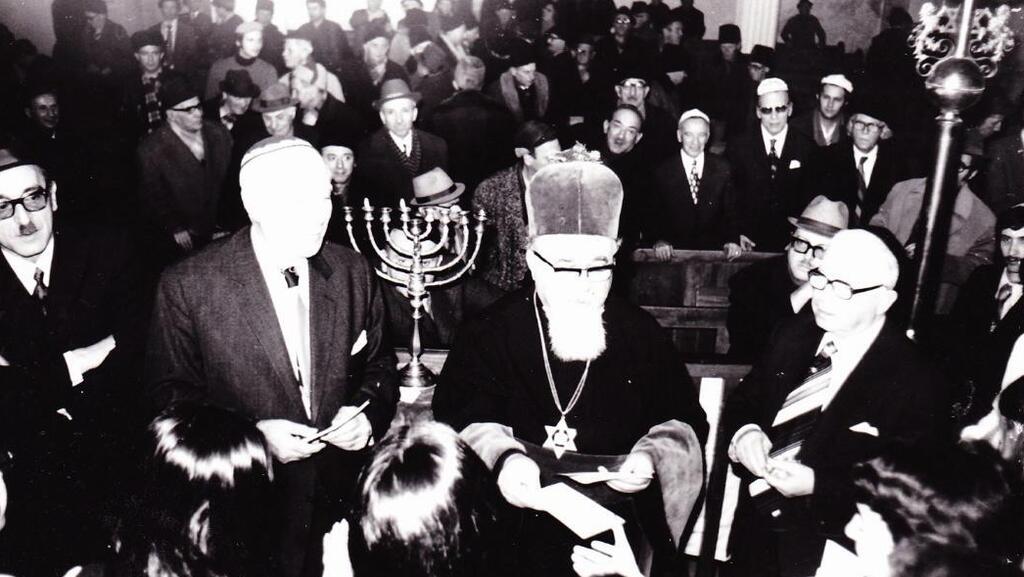
Lighting a Hanukkah menorah; Rabbi Rosen stands to the right of the menorah
(Photo: Edward Sirota – Department of Culture, Art and Media, Federation of Jewish Communities of Romania)
The reason I had been invited was Rabbi Rosen’s autobiographical book. As he explained, he was in the process of completing it and sought my help both with editing and publication. At the time, I was editing books on Israel and Judaism for Modan Publishing, and he wanted his book to be among them. I proposed the idea to Oded Modan, who agreed and soon met with Rabbi Rosen himself.
The story of publishing the book stretched over several years, ultimately not with Modan. In the meantime, there was the “Journey of the Menorahs,” which I would later describe as a “journey of awakening,” following the remnants of Jewish communities across Romania. In 1939, Romania was home to some 800,000 Jews. More than 400,000 were murdered in the Holocaust. Most of the survivors immigrated to Israel in the 1950s and 1960s. By the time Rabbi Rosen was chief rabbi, about 30,000 Jews remained, scattered across the country in cities, towns, villages and remote settlements. In our conversation, Rabbi Rosen referred to 36 communities he visited during the “Journey of the Menorahs.”
Hanukkah 1987, the year 5748 on the Hebrew calendar, fell in mid-December. Romania was blanketed in snow. Roads were icy, trees stood bare, and the cold was severe, intensified by biting winds. Leaving the hotel or traveling by car was unpleasant, especially given the poor heating and the narrow, dangerous roads, including major highways.
A week before Hanukkah, the airline tickets arrived. I packed mostly warm clothing, and on Sunday morning reported to the entrance of the Coral Synagogue in Bucharest. When I arrived, I found several dozen young people, representatives of the Federation of Jewish Communities and the rabbi’s secretary, who told me, “You’ll be traveling in the rabbi’s car, with the rabbi and the rebbetzin.”
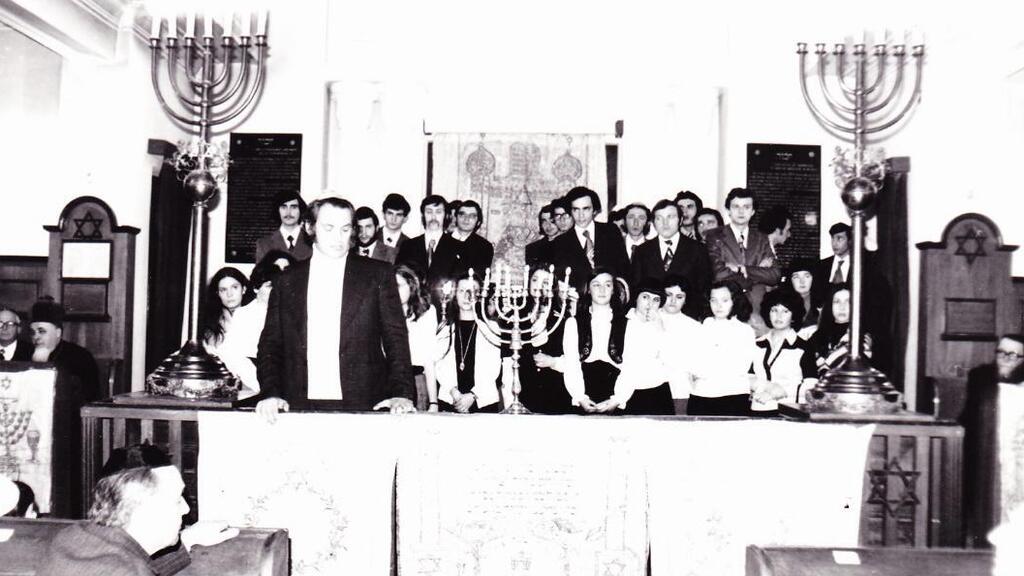
Lighting a Hanukkah menorah in communist Romania
(Photo: Edward Sirota – Department of Culture, Art and Media, Federation of Jewish Communities of Romania)
In his autobiography, which I was to edit, Rabbi Rosen wrote of the “Journey of the Menorahs”: “Given the lack of rabbis in many of our communities outside Bucharest, I instituted an annual Hanukkah visit to all regions of Romania. We would set out in a Hanukkah caravan, including hundreds of happy, smiling young people, to visit the small communities, villages and towns. The choir and orchestra that joined us brought great joy, and we all experienced something extraordinary.”
“I learned from American Jewry how to extend the Hanukkah holiday, which by tradition lasts eight days. We extended it to 14 or 15 days. I extended the Hanukkah celebrations in Romania not to raise funds, but for spiritual reasons, in order to manage visits to our 36 communities” (Rabbi Moshe Rosen, And the Bush Was Not Consumed, pp. 342–343).
In my view, Rabbi Rosen’s brief description conceals the great secret behind what I call the “journey of awakening,” known publicly as the “Journey of the Menorahs.” Traveling with Rabbi Rosen was extremely comfortable. His role as chief rabbi was a state position, which came with a relatively luxurious car provided by the communist regime of Nicolae Ceaușescu.
We traveled smoothly, escorted by police cars with flashing lights ahead of and behind us. The entire convoy included about 15 vehicles. The Romanian authorities, particularly the Ministry of Religious Affairs, were given a precise itinerary in advance, detailing where we would visit, when and for how long.
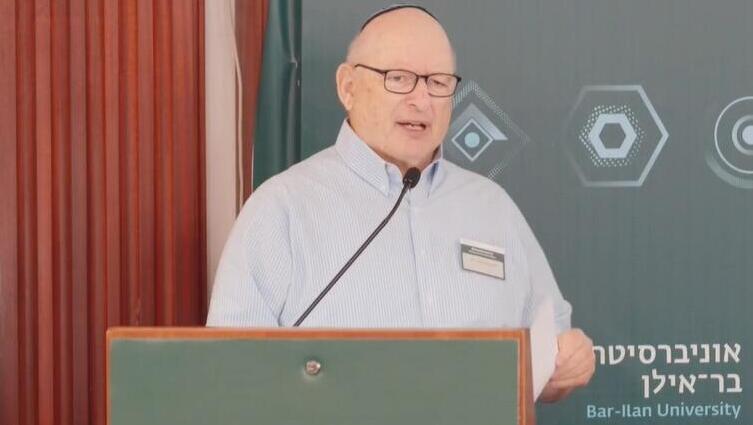
Dr. Yoel Rappel reveals the story of the 'Journey of the Menorahs'
(Photo: Dahan Center, Bar-Ilan University)
Rabbi Rosen’s office sent out a detailed schedule. In his archive, preserved at Bar-Ilan University’s Religious Zionism Archive, we found, for example, the exact itinerary of the 1978 journey. Everywhere we arrived, Jews were waiting for us, along with undercover police and KGB agents. Surveillance of the convoy was extremely strict. Yet every year, hidden within the convoy itself, was an official from the Federation of Jewish Communities. What was the role of this Jewish official, deliberately kept modest and unobtrusive?
I found the answer after two days on the road. Whenever the rabbi entered a synagogue for the candle-lighting ceremony, the orchestra played and community members gathered around him and the delegation. This happened at least twice a day. The tables were modestly set, and Rabbi Rosen delivered a sermon at each stop. While the celebration took place in the main hall, the hidden official sat in the synagogue’s secretary-gabbai room, at a rickety table on a chair about to collapse, writing and writing in notebooks. One by one, Jews entered the room to register with him. The undercover police surely saw this, but since they received the “extra compensation” promised to them each day, they kept silent.
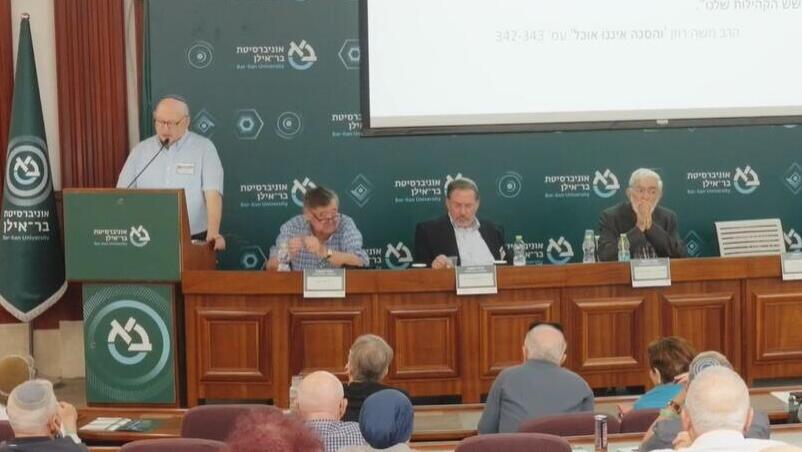
The joint conference of AMIR – the United Organization of Romanian Jews in Israel – and the Dahan Center at Bar-Ilan University
(Photo: Dahan Center, Bar-Ilan University)
That Jewish registrar recorded the names of dozens, sometimes hundreds, of Jews seeking to immigrate to Israel. I believe most participants in the journey did not know, until the end, who the man was or what he was doing. The “Journey of the Menorahs,” held over some 30 years during Hanukkah, began as a religious mission, but in practice became a Zionist awakening that led to the immigration of about 20,000 Jews, perhaps more, from Romania to Israel.
Dr. Yoel Rappel is a senior researcher at the Holocaust Research Institute at Bar-Ilan University and founder and director of the Elie Wiesel Archive at Boston University.
The story was first revealed at a joint conference of AMIR, the United Organization of Romanian Jews in Israel and the Dahan Center at Bar-Ilan University.