

New York City’s Jewish community — the largest in the United States — is anxious and divided a day before an election that could produce the city’s first Muslim mayor.
That candidate, Zohran Mamdani, has attracted many progressive Jewish voters with promises to make the city more affordable and equitable. But his sharp criticism of Israel, including saying its military campaign in Gaza amounts to genocide, has alarmed many other Jews in New York and across the country.
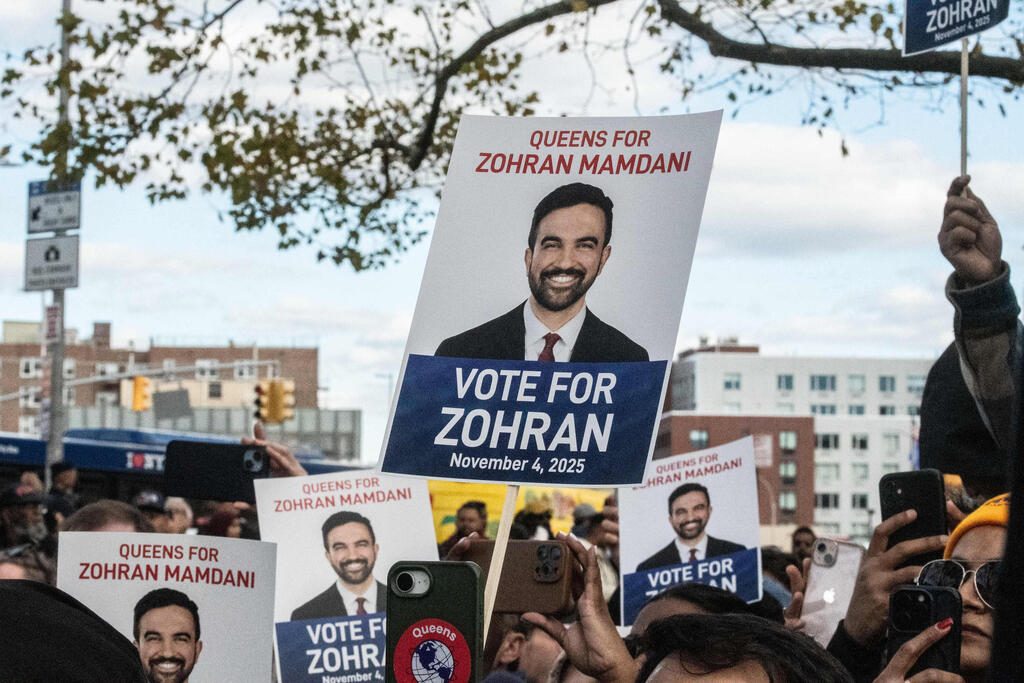
The tensions were on display Friday in a sermon by Rabbi Angela Buchdahl of Central Synagogue in Manhattan, one of the country’s most prominent Reform congregations. She criticized Mamdani’s remarks about Israel but declined to endorse either of his opponents, Andrew Cuomo and Republican Curtis Sliwa, and urged New York’s Jews to avoid virulent political infighting.
“It endangers all of us. It’s the way we are trying to impose a litmus test on other Jews, essentially saying you’re either with us or you’re against us,” she said.
Buchdahl has been criticized for not signing a statement endorsed by more than 1,000 Jewish clergy nationwide denouncing Mamdani. She said she does not endorse candidates or sign joint political statements, but she interrupted her sabbatical to return to the pulpit the weekend before the election.
In her sermon, Buchdahl said Mamdani has “contributed to a mainstreaming of some of the most abhorrent antisemitism,” adding that his words were not only “demonizing Israelis, but echoing the age-old antisemitic trope that Jews across the world are the root cause of our problem here.”
Mamdani has reached out to Jewish voters during the campaign, promising increased funding to investigate antisemitic incidents in New York and repeatedly condemning violence in the Middle East. He has denounced the Oct. 7, 2023, attacks by Hamas as “atrocities” and a “horrific war crime.”
He has not backed away from his long-standing support for Palestinian rights. He also said he would direct the city’s police department to arrest Prime Minister Benjamin Netanyahu if Netanyahu visits New York on charges brought by the International Criminal Court.
Responding to allegations of antisemitism, Mamdani has quoted an Israeli man whose brother was killed on Oct. 7, saying, “we must never give up on the conviction that all life, Israeli and Palestinian, Jewish and Arab, is equally precious.”
Buchdahl acknowledged younger Jews who argue they should not vote fearfully based on a single issue when other issues are urgent. They point to Mamdani’s outreach to Jewish leaders and his moderated public rhetoric.
“I would not quickly trust a campaigning politician changing his lifelong positions, but I hear those who believe that we must engage even with those we deeply disagree with or risk isolating ourselves,” she said.
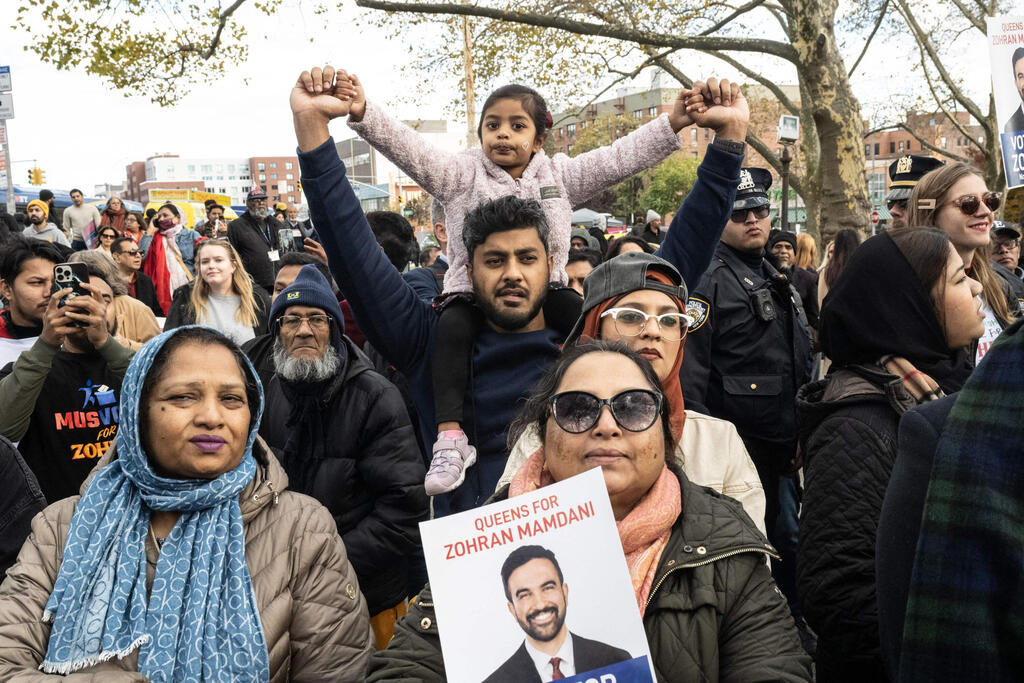
(Photo: STEPHANIE KEITH / GETTY IMAGES NORTH AMERICA / AFP)
Rabbi Rick Jacobs, president of the Union for Reform Judaism, likewise said he would not make political endorsements. In an open letter, he urged voters to consider the many urgent issues facing the city before casting their ballots.
“I can attest that Zohran Mamdani is not lacking in empathy for the Jewish community’s anxiety over regular threats to our safety. In public interviews and in a personal meeting, I’ve heard him pledge to protect the Jewish community,” Jacobs wrote, while expressing concerns about Mamdani’s positions. “Mamdani has been consistent in saying that he believes Israel has a right to exist as a state of all its citizens, but not as a Jewish state. His argument might sound tidy in a seminar; in the real world it is cause for grave concern.”
One of the signatories of the clergy statement was Rabbi Elliot Cosgrove of Park Avenue Synagogue, who said in a sermon, “To be clear, unequivocal and on the record, I believe Zohran Mamdani poses a danger to the security of the New York Jewish community.” He added, “Zionism, Israel, Jewish self-determination — these are not political preferences or partisan talking points. They are constituent building blocks and inseparable strands of my Jewish identity.”
Even within the Hasidic community there has been division. Leaders of different factions of the Satmar community issued competing endorsements of Mamdani and Cuomo. Rabbi Moshe Indig of the Ahronim branch publicly supported Mamdani after meeting him in Brooklyn, but three other leaders of the same branch soon repudiated Indig’s action and endorsed Cuomo. The pro-Cuomo leaders said the progressive movement’s agenda threatens their ability to live as Torah Jews and to educate their children with those values.
On the left, author and commentator Peter Beinart criticized the intensity of the opposition to Mamdani by many Jewish leaders. He warned that the organized American Jewish community appears willing to subordinate other values to unconditional support for Israel. “What are you willing to sacrifice in order to prevent a New York mayor who says that Israeli Jews and Palestinians should live equally under the same law? What are you willing to try to do to destroy such a candidate? The answer is: lie with almost anyone, do almost anything,” he said.