

“And these are the generations of Isaac son of Abraham; Abraham begot Isaac. Isaac was 40 years old when he took to wife Rebekah, daughter of Bethuel the Aramean of Paddan-Aram, sister of Laban the Aramean. Isaac pleaded with Hashem on behalf of his wife, because she was barren…” (Genesis 25:19 - 21). To understand more fully the family, economic, productive and ethical challenges that Isaac and his descendants must face, we should compare the events described in our portion with the three paragraphs that conclude the previous one:
“Abraham took another wife, whose name was Keturah. She bore him Zimran, Jokshan, Medan, Midian, Ishbak and Shuah. Jokshan begot Sheba and Dedan; and the sons of Dedan were the Asshurim, the Letushim, and the Leummim. And the sons of Midian: Ephah, Epher, Hanoch, Abida and Eldaah. All these were the descendants of Keturah. Abraham willed all that he owned to Isaac; but to Abraham’s sons by concubines Abraham gave gifts; and while he was still living, he sent them away from his son Isaac eastward, to the land of the East.
This was the total span of Abraham’s life: 175 years. And Abraham breathed his last and died at a good ripe age, old and contented; and he was gathered to his kin. His sons Isaac and Ishmael buried him in the cave of Machpelah, in the field of Ephron son of Zohar the Hittite, facing Mamre, the field that Abraham had bought from the Hittites; there Abraham was buried, and Sarah his wife. After the death of Abraham, God blessed his son Isaac. And Isaac settled near Beer-Lahai-Roi.
These are the descendants of Ishmael son of Abraham by Hagar the Egyptian, Sarah’s maidservant. These are the names of the sons of Ishmael, by their names, in their birth order: Nebaioth, Kedar, Adbeel, and Mibsam; Mishma, Dumah, and Massa; Hadad, Tema, Jetur, Naphish and Kedemah. These are the sons of Ishmael and these are their names, by their villages and by their encampments; 12 chieftains of as many tribes. These are the years of the life of Ishmael: 137 years. He breathed his last and died, and was gathered to his kin. They dwelt from Havilah to Shur, which is close to Egypt, on the road to Asshur. Opposite all his brothers, he spread out, collapsing.” (Genesis 25:1 - 18)
First, I want to remind us that last week’s dvar Torah focused on the third paragraph above and explained that Ishmael’s descendants took hold of the entire expanse connecting the principal zones of plenty in the ancient world. In keeping with Ishmael’s profile - “He shall be a wild ass of a man; his hand against everyone, and everyone’s hand against him” (Genesis 16:12) - they seized control of all the trade routes, imposed terror, and de facto blocked the movement of resources, products, and knowledge. As I showed last week, they damaged the economies of all the countries in the region broadly, causing a meaningful contraction.
This was the “collapse” of Ishmael and his surrounding kin, described in the last verse, and it touched both his maternal brothers in Egypt and his paternal brothers in the Land of Israel. Given the destruction of Sodom - which had originally been especially fertile, “before Hashem destroyed Sodom and Gomorrah, all the plain of the Jordan was well watered everywhere, like the garden of Hashem, like the land of Egypt” (Genesis 13:10) - we may surmise that for the inhabitants of the land, the obstructed trade routes were even harder to bear. Thus, the connective vav that opens “And these are the generations of Isaac” continues within the chronological and thematic framework of the “collapse” wrought by Ishmael.
Second, we must remember that the comparison is between events occurring simultaneously. The Torah set them one after another and we read them a week apart, but in fact we go back in time. Since Isaac was born when Abraham was 100, therefore, when Abraham died at 175 - as described in the previous parashah - Isaac was 75. When, in our parashah, Isaac is 40 years old, we actually have gone back in time (and Abraham is still alive at only 140 years of age). The Torah narrative, as it sometimes does, set aside chronological order: it ended with Abraham stepping off the stage, and only then moved to tell of Isaac - whom Abraham had designated as sole successor already during his lifetime: “Abraham willed all that he owned to Isaac.”
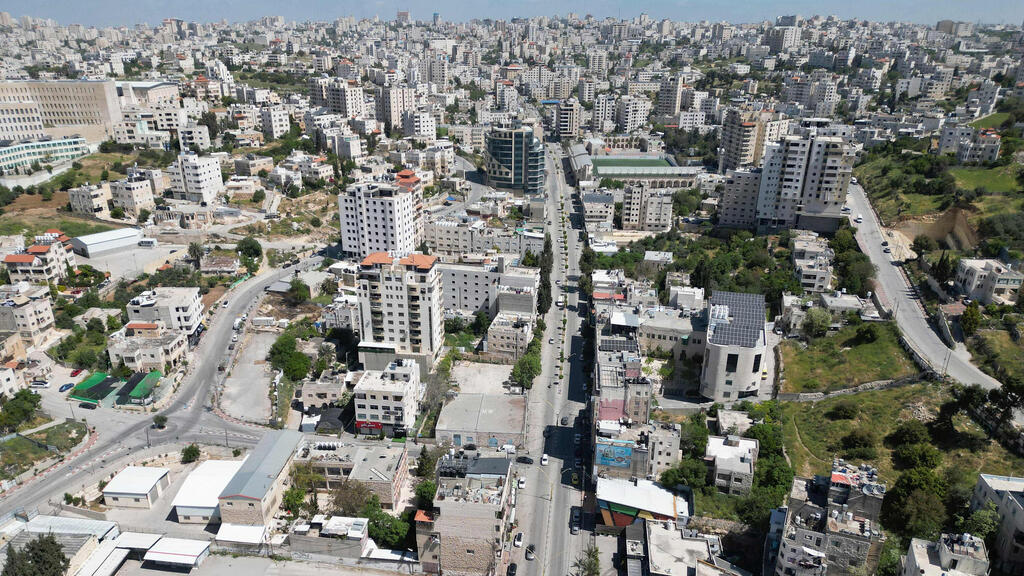
The city of Hebron, where the Cave of the Patriarchs is located
(Photo: Hazem Bader / AFP)
The actual chronological sequence yields a dramatic multi decade reordering of geopolitics and the economics of the region. At the very time when Ishmael fathers 12 tribes, and his sons spread out from the borders of the promised land - which Isaac alone is to inherit - southward and eastward, taking all the surrounding zones and choking off trade in the region, that is when in our parashah Isaac confronts barrenness, and also famine:
“There was a famine in the land, aside from the previous famine that had occurred in the days of Abraham, and Isaac went to Abimelech, king of the Philistines, in Gerar. Hashem appeared to him and said, ‘Do not go down to Egypt; stay in the land that I point out to you. Reside in this land, and I will be with you and bless you; for to you and to your offspring I will assign all these lands, fulfilling the oath that I swore to your father Abraham. I will make your offspring as numerous as the stars of heaven, and assign to your offspring all these lands; so that all the nations of the earth shall be blessed through your offspring. Inasmuch as Abraham obeyed Me and kept My charge: My commandments, My laws and My teachings.’ So Isaac stayed in Gerar”. (Genesis 26:1 - 6)
Isaac wants to move to Egypt, but Hashem tells him to remain in the land, and he relocates to Gerar (adjacent to today’s Gaza Strip). There he enjoys phenomenal agricultural success after he changes the nature of the business enterprise he inherited from Abraham, and develops new technologies, as I elaborate in my book "The Tree of Life and Prosperity."
Even after Abimelech, king of Gerar, who feels threatened by Isaac’s growing economic power, expels him - “And Abimelech said to Isaac, ‘Go away from us, for you have become far too wealthy for us’” (Genesis 26:16) - Isaac does not vanish from the scene. He digs wells, contends with the Philistines over the wells, and, in the end, after the Philistines have profited from his activity, he digs more wells and finds himself a region to live and prosper in. He builds infrastructure and capabilities to compensate for the lost productivity of the Sodom area, and to be able to cope with the Ishmaelites spreading out just beyond the border.
The first question is: Why should Isaac not move to Egypt and instead have to face grain shortages, dig wells, and conceal his marriage to Rivka out of fear that they might kill him? That relationship is later exposed and requires him to engage in a moral and ethical reckoning with Abimelech and the local social norms in Gerar: “So Abimelech sent for Isaac and said, ‘So, she is your wife! How then could you say, “She is my sister”?’ Isaac said to him, ‘Because I thought I might lose my life on account of her’ Abimelech said, ‘What have you done to us! One of the people might have lain with your wife, and you would have brought guilt upon us’”. (Genesis 26:9 - 10).
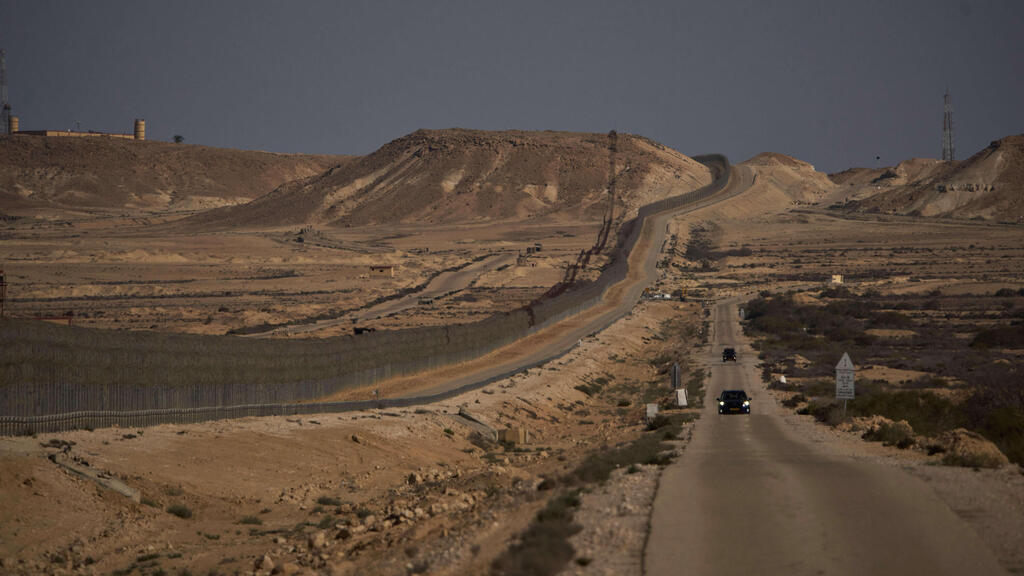
The border between Israel and Egypt
(Photo: Leo Correa/AP)
The second question is: If Egypt is a refuge from famine, that means that even after economic collapse there is still food there. But if there is food there and not in the land where Isaac resides, why don’t markets close the gap? Why doesn’t food flow to Canaan/Israel? Scarcity could make for good business and handsome profits.
The most reasonable answer is that, as noted, Ishmael’s descendants sit as highwaymen along the routes; therefore food does not reach here. So why do Isaac and his family not go to Egypt? Because Isaac inherits Abraham, and as the verses explicitly state, he also, importantly, received Abraham’s mission of being a blessing to others: “so that all the nations of the earth shall be blessed through your offspring”. Unlike the Ishmaelites who, at that time, not only failed to produce and develop the region but brought on an economic crisis and slump, Isaac is called upon to build infrastructure, invent new agricultural methods, and provide food security to the land’s and region’s inhabitants.
Isaac may have thought that as long as he had no children he could “float” for now and move freely to Egypt (for it is not likely that the episode of concealing his marriage to Rivka could occur once they already birthed Jacob and Esau). If there is famine in the land - described in the verse itself as “aside from the previous famine that had occurred in the days of Abraham” (Genesis 26:1) - Isaac’s instinct is to follow his father and go down to Egypt as Abraham did. Hashem tells him that while the famine may be similar, the geopolitical situation is entirely different, and so he must take that into account. Now that the Ishmaelites are seizing the region and choking it, going to Egypt is very different from Abraham’s time.
After Abraham and Isaac have become a significant feature of the Canaanite landscape - “a prince of God are you among us” - Isaac’s departure to Egypt would leave a vacuum in the Land, and he might even lose it. Hashem tells him that in his day maʿaseh avot siman le-banim (children carry on their parents' legacy) is not imitation, but the application of principles. What he truly inherits is that: in response to the destructiveness of Ishmael and his descendants, he must generate economic blessing from which the peoples of the region will benefit, and be a spiritual anchor.
That was the first stage. If we continue our reading of the intertwined stories: when the previous parashah says that after Abraham’s death Isaac dwells near Be’er Laḥai Ro’i, and God blesses him, this is after many years of the struggles I have just described. At Abraham’s death, when Isaac is 75, he has already walked a long road of action. Why, at 75-plus, does Hashem suddenly bless him? Were the promises given him before he went to Gerar - “Reside in this land, and I will be with you and bless you” - which indeed were fulfilled, not sufficient? In my understanding, something different happens specifically with his settling at Be’er Laḥai Ro’i. This place, mentioned twice already in Genesis, may be one of the keys to understanding what is happening.
As described in chapter 16, when Avram is 86 the story of Ishmael begins at Be’er Laḥai Ro’i. As the verses explicitly tell us, this is the place where the story of all of Ishmael’s descendants begins, in the Shur region that will later become a marker of their settlement, “from Havilah to Shur”:
“An angel of Hashem found her by a spring of water in the wilderness, the spring on the road to Shur… And the angel of Hashem said to her, ‘I will greatly increase your offspring, and they shall be too many to count’. And the angel of Hashem said to her further: ‘Behold, you are pregnant and shall bear a son; you shall call his name Ishmael, for Hashem has paid heed to your suffering. He shall be a wild ass of a man; his hand against everyone, and everyone’s hand against him; he shall dwell alongside all his kinsmen’. And she called Hashem who spoke to her, ‘You Are El-roi,’ meaning, ‘Have I not gone on seeing after He saw me!’ Therefore the well was called Beer-Lahai-roi; it is between Kadesh and Bered. Hagar bore a son to Abram, and Abram gave the son that Hagar bore him the name Ishmael. Abram was 86 years old when Hagar bore Ishmael to Abram.” (Genesis 16:7 - 14 )
In addition, some 50 or 55 years later, when Abraham is around 140, Rivka comes from Ḥaran with the servant whom Abraham sent to find a wife for Isaac. Then, when Rivka and Isaac lock eyes for the first time, it is stated: “And Isaac had just come back from the vicinity of Beer-Lahai-roi; for he was settled in the region of the Negeb. And Isaac went out walking in the field toward evening and, looking up, he saw camels approaching. Raising her eyes, Rebekah saw Isaac…” (Genesis 24:62 - 64).
What was Isaac doing at Be’er Laḥai Ro’i? According to the midrash, he went to bring Hagar back to his father Abraham, and Hagar is Keturah, the woman Abraham took in his latter years, who bore him the entire long list of sons described in the verses I cited above at the beginning. If so, in line with the ancient practice by which marriage ties were also political ties, perhaps this was Isaac’s attempt to draw near to the rising regional power, and, in parallel, to bring Ishmael and his offspring closer to the Abrahamic ethos that spreads blessing. After all, the Ishmaelites have ties both in Egypt and in the Land, and they could actually be a bridge.
But whether Keturah is actually Ishmael’s mother Hagar as the midrash claims, or not, the expulsion of all “the sons of the concubines” noted in the verses alongside the making of Isaac the sole successor - “But to Abraham’s sons by concubines Abraham gave gifts; and while he was still living, he sent them away from his son Isaac” - likely stirred old resentments. Abraham may have feared that the multiplication of his younger offspring would threaten Isaac’s hegemony, and so he repeated the move he had made a generation earlier when he expelled Hagar and Ishmael (at Sarah’s request and with Hashem’s approval).
But either way, the incident undermined the relationship between Isaac and Ishmael, and consequently Isaac returned empty-handed from Be'er Lahai Roi, and began his journey with Rebecca described in our portion. Per the above, Isaac and Rebecca’s journey included contending with the severing of trade routes and the isolation of the Land of Israel by the Ishmaelites surrounding it before returning to the third appearance of Be’er Laḥai Ro’i - near which Isaac settled after Abraham’s death - I wish to note a midrash that asks why Ishmael’s years are recorded, and that offers a different answer from the one in the Babylonian Talmud that I presented last week:
“‘And these are the years of Ishmael’: Why did Scripture see fit to reckon the years of a wicked man here? Because he came from the edge of the wilderness to perform kindness for his father (to bury Abraham).” (Bereishit Rabbah, Parashah 62)
That is, the midrash calls Ishmael a “wicked man," and then raises the possibility that the mention of his years indicates that he himself repented. In other words, his coming to Abraham’s burial - “His sons Isaac and Ishmael buried him in the cave of Machpelah” - expresses deference toward his father Abraham. Although Abraham gave everything to Isaac while pushing Ishmael to more remote locations - from Shur onward - there was reconciliation with Abraham, even if only after his death, and even if it was very hard for Ishmael to stand alongside Isaac, who received everything.
If so, we can imagine that, around Abraham’s death, Ishmael softened - perhaps simply because many years had passed, and perhaps because he had already become significantly established, which dulled the sting of rejection. Therefore, after Abraham’s death Be’er Laḥai Ro’i (located “on the road to Shur”) is recalled a third time. The verse “After the death of Abraham, God blessed his son Isaac. And Isaac settled near Be’er-Lahai-roi” is a code for the establishment of a covenant with Ishmael. This time Isaac succeeded in forging a lasting pact with the Ishmaelites who controlled the distribution channels and lived beyond the border in Shur down the road. That partnership was a new kind of blessing granted him after Abraham’s death. After Abraham’s own time and the alliances he forged with Aner, Eshkol and Mamre, the linkage of Isaac and Ishmael were the first “Abraham Accords."
It may be that this partnership - granting Isaac access to trade routes and even the ability to influence movement throughout the region via the Ishmaelites - constituted, in a sense, the fulfillment of the double promise to Isaac before his going to Gerar: “for to you and to your offspring I will assign all these lands”; “...and assign to your offspring all these lands, so that all the nations of the earth shall bless themselves by your offspring.”
If before that Hashem promised the Land to Isaac and demanded that he reside in the land, how did we shift to the promise that we will receive “all these lands” in the plural? And which “lands” are these? The Torah is laconic so clearly Isaac himself understood this shorthand notion. With our explanation of the geopolitics and the rapprochement between Isaac and Ishmael, we can now understand the promise.
The context of the verses is Isaac’s desire to go down to Egypt, a specific place. Since at that stage the spread of the Ishmaelites around the Land of Israel led Hashem to enjoin Isaac not to go down to Egypt and thus challenged him, Hashem told him that in the future the challenge would turn into capability: “I will assign to your offspring all these lands” - the lands of the Ishmaelites. And then He said again and clarified: that the lands, which exceed the borders of the Land of Israel will not necessarily become Isaac’s by conquest and settlement, but rather through the mechanism called blessing: “so that all the nations of the earth shall be blessed through your offspring." That is: through partnerships and trade in line with the ethos Abraham shaped.
And this, as noted, happened only many years later. Only after Isaac stabilized his hold on the Land was he in the right position for the great opportunity - to influence “all these (additional) lands” through covenants of partnership and commerce including with the descendants of Ishmael.

Signing the Abraham Accords
(Photo: Reuters)
Again, as I wrote last week: Israelis are meant to spread abundance in the world. Returning to this mission is precisely what we must advance right now. This week, the journal Sapir published my essay titled “Building Israel’s Trillion Dollar Economy.” There are Abrahamic opportunities in the region in the wake of the war. We must look them in the eye, build border-defying infrastructure that connects with those beyond the border along the “Shur route” of our day, forge alliances, and prevent the terrorists of the hour from sabotaging trade.
We have been blessed with a resilient economy. We must strengthen it further through investment in infrastructure and innovation - as Isaac did in the first stage. And then we must share the blessings with our neighbors, as Isaac did in the second stage with Ishmael. Spreading blessing dramatically helps to spread Israel’s message.
Isaac, who quarreled with Abimelech, king of Gerar, was not naïve. But the core of his teaching is an expansive heart - even toward those with whom he quarreled in the past. Even amid dispute, and perhaps especially despite misgivings, widening economic abundance to our neighbors is exactly what is asked of the seed of Isaac - then and now.