

Twice in this week torah reading, we are commanded to cleave to God. First, the Torah states: "You shall fear the Lord your God, serve Him, cleave to Him, and swear by His name" (Deut. 10:20). Later, it says: "To love the Lord your God, to walk in all His ways, and to cleave to Him" (Deut. 11:22). What does this cleaving add to fearing, serving, loving, and walking in His ways? And why is it repeated?
The Sifrei explicitly distinguishes between "walking in His ways" and "cleaving." "Walking in His ways" means imitating God’s attributes: just as He is merciful and compassionate, you too must be merciful and compassionate. "Cleaving," however, poses a theological challenge. How can a mortal cleave to a "consuming fire"? The Midrash answers: cleave to Torah scholars. Thus, walking in God's ways is an imitation of the Divine, while cleaving means forming a human connection with those who embody this path. The Midrash remarkably concludes: "If you do what is upon you - I will do what is upon Me." How does this relate to cleaving?
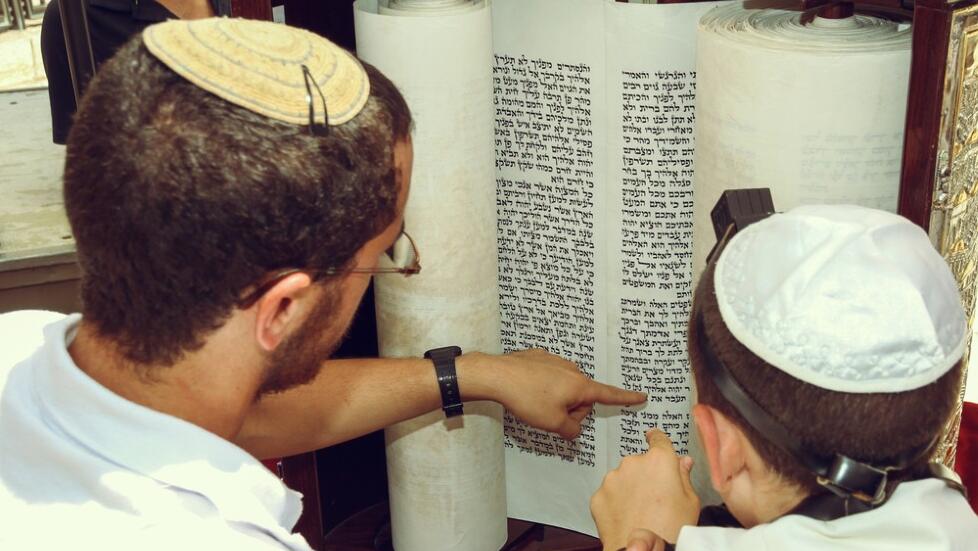
(Photo: Shutterstock)
To understand “devekut” (cleaving), let us examine three other appearances of the root in the Torah. First, at creation: "Therefore a man shall leave his father and his mother and cleave to his wife, and they shall become one flesh" (Gen. 2:24). Rashi explains "one flesh" refers to the child formed by both. Ramban argues that “devekut” or cleaving means building a new, permanent framework of loyalty and belonging. Leaving the family of origin to establish a new home. For both, cleaving is not about self-nullification; it is a fruitful partnership. It overcomes an initial state to create something new that carries the essence of both partners.
Conversely, the Torah presents a destructive form of cleaving. When Shechem violated Dina, it says: "And his soul cleaved to Dina... and he loved the maiden" (Gen. 34:3). Here, the same root is used for a forceful, non-consensual act. Shechem and Hamor later suggest to Jacob: "We will become one people," attempting to absorb Jacob’s family through contrived cleaving. This teaches that not all cleaving is holy. Aggression can masquerade as love; absorption can disguise itself as unity.
This may be why our torah portion precedes cleaving with "walking in His ways." God's ways - mercy, justice, and kindness - are the compass determining whether a connection is a covenant or exploitation. Without compassion, devekut turns from a creative partnership into a destructive, abusive black hole.
Ruth presents to perfect contrast: "But Ruth cleaved to her" (Ruth 1:14). Driven by loving-kindness, Ruth clings to Naomi, her mother in law, a grieving widow. This individual cleaving leads Ruth to join the Jewish people, it gives birth to Oved, the grandfather of King David, beautifully merging Rashi’s view (offspring) with Ramban’s (a new covenantal framework). Personal devekut (cleaving) transforms into a national and political reality.
Cleaving to God is similar. It is not merely an emotion, but an action meant to birth a new reality. A different person, society, and framework of responsibility. "Walking in His ways" asks: How does God act, and how can I imitate Him? "Cleaving" asks: What new reality can be created when human action partners with the Divine?
Considering the commandment to love the stranger next to which the commandment to cleave sits, we are told, "For you were strangers in the land of Egypt." Rabbi Yosef Bekhor Shor explains that the shared memory of being strangers should create solidarity. We don't just imitate God who "loves the stranger"; we draw from our own human experience of alienation to build an inclusive society and so we cleave Him.
When Rabbi Yehuda Amital asked what to do if there are no Torah scholars to cleave to, he passionately replied: "If there are no Torah scholars, cleave to simple, everyday people!" The simple person often embodies the profound Godly humanity the Torah seeks to cultivate.
Why is this going side by side with God necessary? The Midrash notes the Torah promise that God will drive out "nations greater and mightier than you", and then paradoxically adds: "You are also great and mighty, but they are mightier." though it is totally irrelevant if God will drive out our enemies. The thing is that God will drive them out, but we must take part to conquer them. This cleaving, which appears alongside the discussion of might, generates new capabilities born of this partnership, empowering Israel to face the impossible challenges of conquering the Land and establishing a state. Joshua (chapter 23) echoed this: cleaving to God is generative and it is what allows one man to chase a thousand enemy combatants.
This partnership is beautifully illustrated by Rabbi Akiva's debate with Turnusrufus: God provides wheat, but man's work of baking bread is greater. The wheat is an invitation for human partnership. "Walking in His ways" teaches us to bake nourishing bread rather than poison; "cleaving" is the readiness to take God's raw materials - land, memory, commandments - and create something new, more powerful, more valuable and more nourishing. The Torah provides values like protecting the vulnerable and honoring human dignity, but humans must transform these into a living society with laws, welfare systems, and a just public sphere.
Ultimately, devekut is an active covenant. Someone who sanctifies the wheat but refuses to bake bread rejects the partnership God desires. In a Jewish state, foundational laws should not merely declare a Jewish identity; they must draw real institutions of justice, belonging, and solidarity. We receive a land, a state, and a Torah from God, and are required to actively shape them into a new framework of shared existence.