


A recording of an online conversation between two former employees at a Sydney hospital, during which one of them allegedly made threats of violence against Israelis, will be used as evidence in their trial following a decision of the Court of Appeal in the Australian state of New South Wales. The decision overturned a ruling by the District Court in Sydney. The trial is expected to open at the end of the month.
Australia’s ABC reported that the Court of Appeal ruled that the full, unedited video would not be disqualified as evidence. The full reasons for the decision were provided only to the parties, so they could examine which parts of the ruling should be subject to suppression orders or confidentiality. At this stage, publication of the reasons is prohibited.
Australian hospital workers boasted they would kill Israelis and were suspended


The two, Ahmad “Rashad” Nadir and Sarah Abu Lebdeh, were documented last year in a clip shared by Israeli content creator Max Veifer, in which they confirmed they worked at Bankstown Hospital in Sydney. When Veifer told Nadir that he was from Israel, the health care worker said he would be killed and sent to “Jahannam,” or hell.
“It makes me so upset that you’re Israeli,” he said. “Eventually you’re going to get killed and go to hell, inshallah.” When Veifer asked why he would be killed, Abu Lebdeh burst into the video: “It’s Palestine’s country, not yours, you piece of s**t.”
Nadir hinted: “You have no idea how many Israeli dogs came to the hospital, and I send them to hell.” Abu Lebdeh also attacked Veifer: “When you die, I want you to remember my face so you understand — you will die the most disgusting death.”
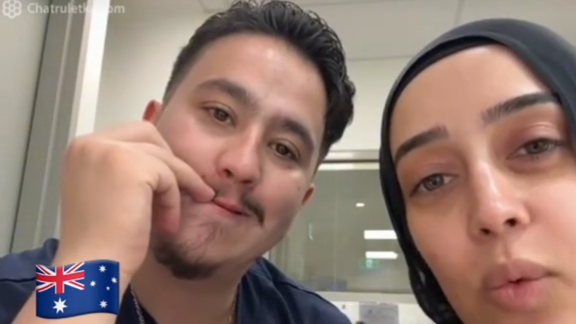
Ahmad “Rashad” Nadir and Sarah Abu Lebdeh
At that point, Abu Lebdeh boasted that she would not help Israelis, declaring: “I will not treat them. I will kill them.” Nadir joined her remarks and said he would send Israelis to hell, while waving his hand threateningly. Following publication of the video, the two, both nurses by profession, were suspended for two years.
One of the central questions discussed in the appeal was where, legally, the video was recorded. The prosecution argued that the recording was made in Israel, where Veifer was located during the conversation, and therefore did not violate New South Wales law. The defense, by contrast, argued that part of the recording was made in Australia because the microphone used to capture the voices of the two was at the hospital in Bankstown.
“The conversation may also have been in Israel, but it also took place in New South Wales,” argued attorney Peter Lange, who represents the two.
ABC Australia also reported that the prosecution stressed that without the video, jurors would struggle to understand the full context of the conversation. According to the prosecution, watching the recording would allow them to assess the statements, tone of voice, gestures and facial expressions of the defendants.
“Without the video, the prosecution case is very significantly weakened,” a prosecution representative argued.