

Behind seder night lie four great revolutions.
The first revolution stems from the fact that on the most important family gathering night of the year, we place the children—the young—at the center. This is not a display of tribal elders preaching wisdom to the younger generation. On the contrary, it is an evening in which we emphasize that those who seek the future invest in their children.
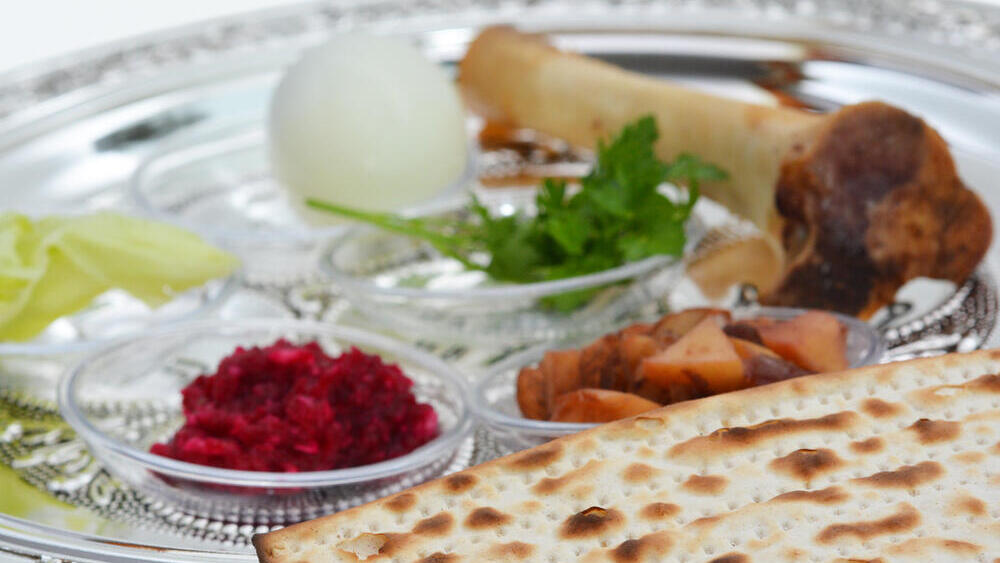
Seder night is the night of great questions
(Photo: Shutterstock)
The second revolution is no less dramatic. Long before artificial intelligence, our ancestors understood that the task of parents and educators is to teach their children to ask questions. From a young age, we educate every boy and girl to observe their surroundings critically, not to accept reality as it is.
The legacy of the Seder night—the night of great questions—has turned the Jewish people into inventors, revolutionaries, entrepreneurs and innovators. No nation has produced such a high proportion of Nobel Prize laureates relative to its population as the Jewish people. This did not happen because we memorized. It did not happen because we were fed answers. It happened because we were taught to ask questions.
The people who excelled at asking questions were also a people who excelled at dreaming. We knew how to translate dreams into action. We are a dreaming people, but not a foolish one. We dreamed long-term dreams, but not delusional ones. The phrase “Even though he may tarry” is not only a prayer but also a work plan. It may take a day, a year, a hundred years. We have never shelved our dreams, never abandoned them. In every generation, great leaders arose who dreamed great dreams that became reality. We seek to make clear to our children that asking questions is not enough: we ask in order to change.
When the table is set and the aroma of traditional food fills the air; when the tablecloth is spread and the holiday candles illuminate our table—we encounter the third revolution. The children see the Seder leader begin reading the Haggadah. It does not open with praise and glorification of the Creator, but with an invitation to the poor: “Let all who are hungry come and eat.” Our children learn that we must not shut ourselves within our own four walls, that we must open our homes and extend a hand to every hungry person and every lonely individual.
The third revolution emphasizes that we must not stand idly by, that we must not respond with indifference to the suffering of others. Judaism demands that we not be satisfied with just providing food; it demands that we respond to the lonely, the hurting, the scarred—those who carry life stories that weigh them down and clip their wings. It calls on us to look into people’s faces, to see who is wearing a mask that conceals deep emotional pain, to recognize the darkness in dimmed eyes. The past three years have left many by the wayside. They need us. As the holiday begins, we will not leave them alone.
 Shai PironPhoto: Alex Kolomoisky
The fourth revolution is expressed in a striking fact: Moses, the agent of redemption, is absent from the Haggadah. We sought to make clear that we are not a people enslaved to our leaders; we oppose cults of personality. We wished to emphasize that perhaps among our children sits the next “Moses.”
We conclude the Seder with the words: “Next year in rebuilt Jerusalem.” This is not merely a prayer, but a commitment. We—all of us, together—will not stand idly by. We will mobilize, extend a hand, protect the state, the weak, the elderly, the sick. We will embrace the orphan and strengthen the widow. No one will be left alone. This is how Jewish parents have educated their children for thousands of years, and now this responsibility rests upon us.
Shai Piron is president of the Pnima movement and a former minister of education.
First published: 22:50, 03.31.26