

Coordinating an interview with Oded Revivi to mark his first year as CEO of ANU – Museum of the Jewish People proved challenging. In addition to leading the national institution, Revivi serves as a reserve colonel commanding the Har Tov district in the Home Front Command.
Revivi entered the role in the midst of the war sparked by the Oct. 7, 2023 Hamas terrorist attack, and as antisemitism surged worldwide, including in countries where it had previously been rare.
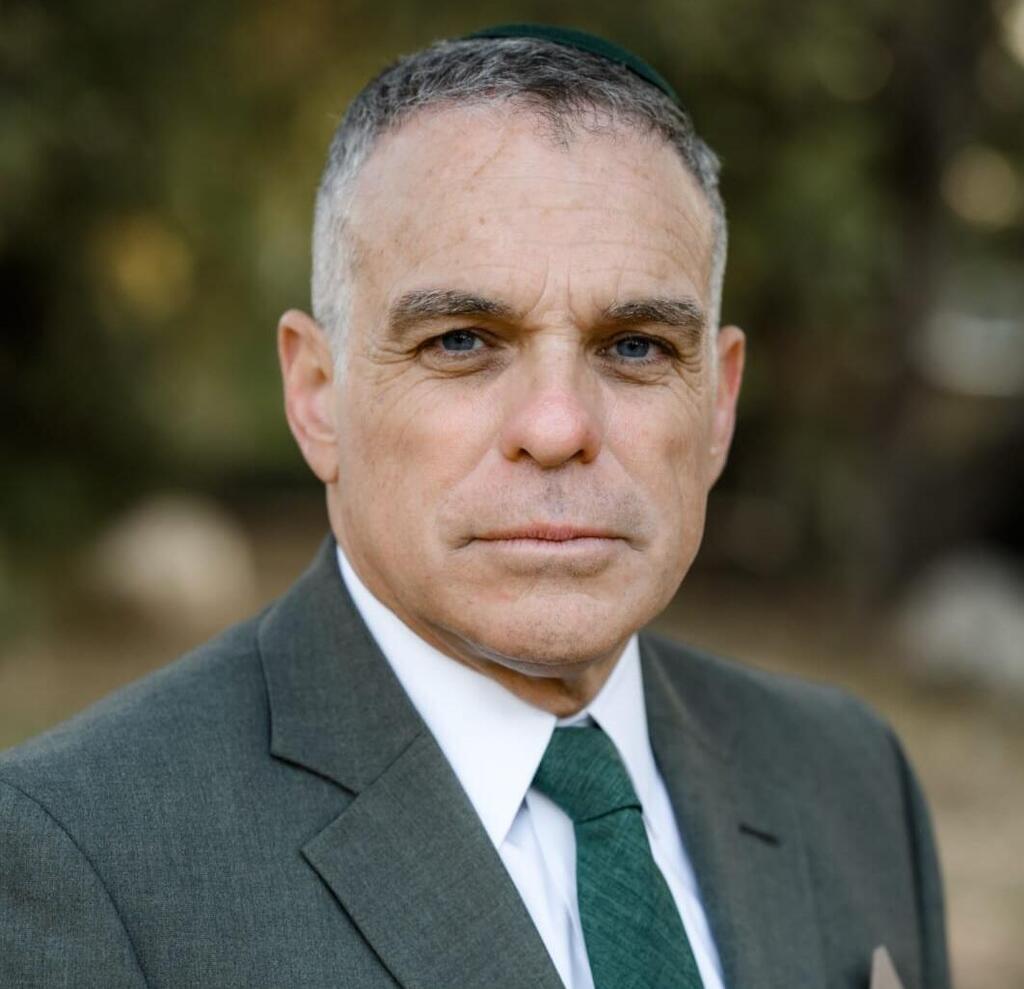
“I came into the position wanting to deepen the museum’s relevance and expand the conversation it generates,” Revivi said. “But entering during wartime changed our perspective. We had to consistently ask what the Museum of the Jewish People means and what its role is precisely at a moment of fracture.”
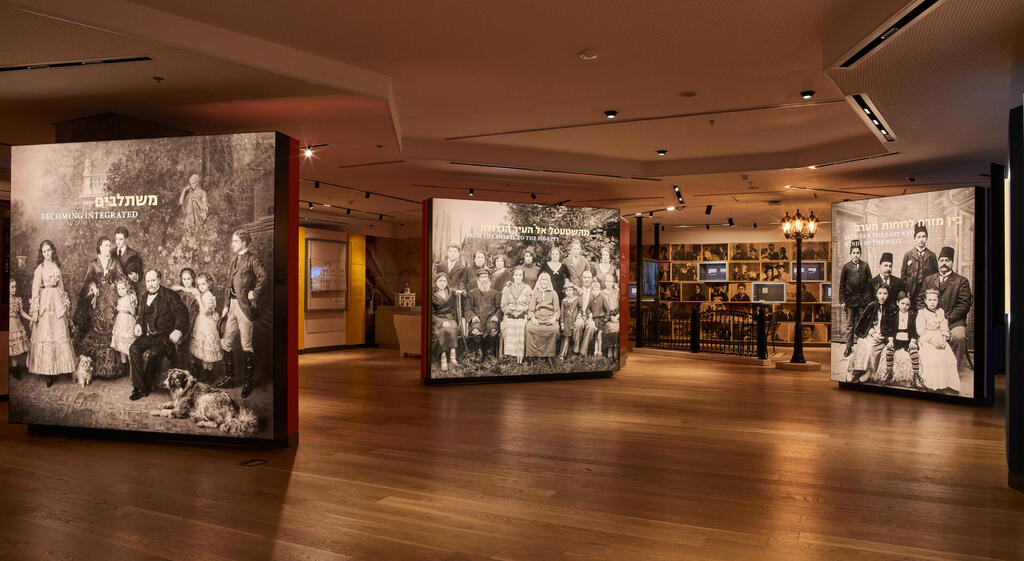
ANU, formerly known as Beit Hatfutsot, defines itself as a national home for the story of the Jewish people and Jewish communities in Israel and around the world. Revivi said the events of Oct. 7 reshaped its exhibitions and programming.
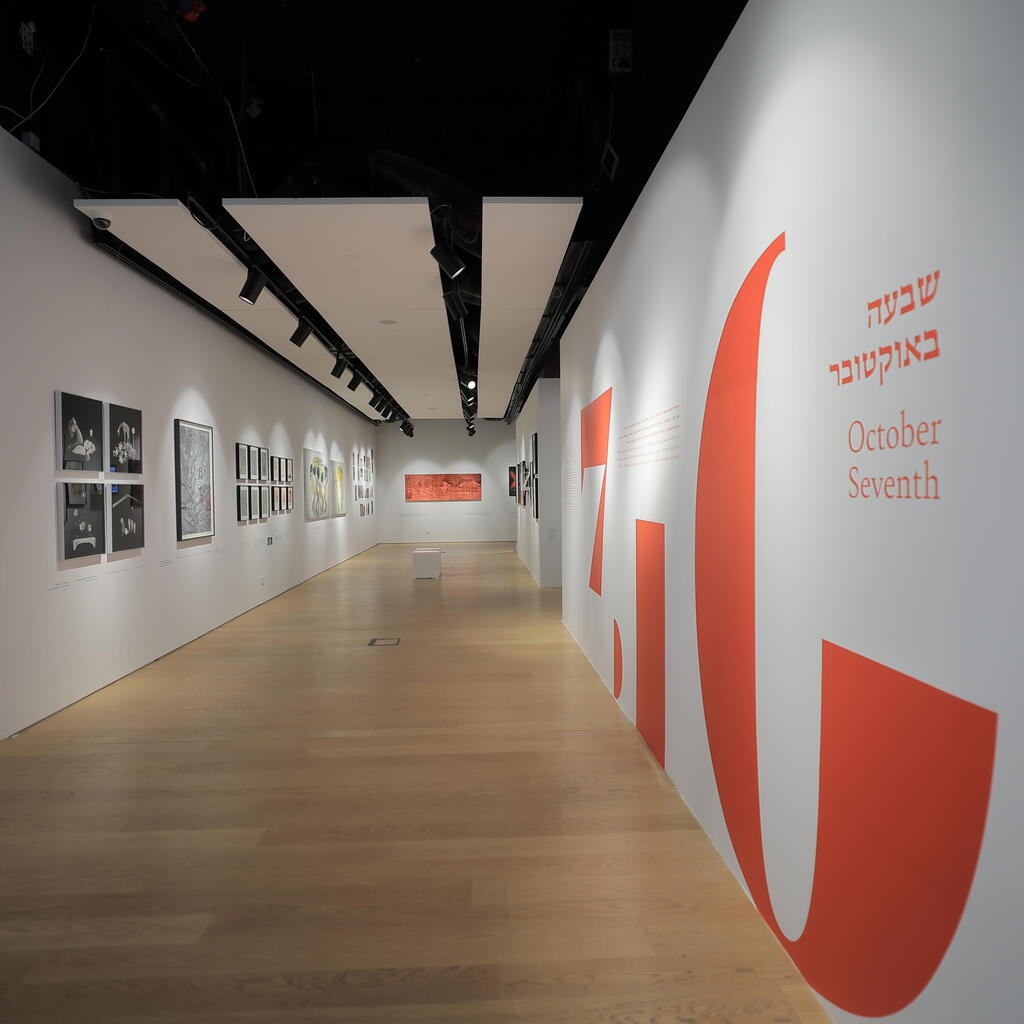
The museum currently hosts “October 7,” an exhibition examining the cultural world’s response to the first weeks of the war. Among the works on display is a 2018 painting by artist Ziva Yelin, originally created in red tones meant to express life and joy. After terrorists from Hamas’ Nukhba force infiltrated Kibbutz Be’eri and entered the local gallery, the artwork was damaged by smoke and pierced by two bullets. It is now displayed at ANU without restoration, with the damage itself forming part of the narrative.
(Photo: Oz Shechter)
Two days before the Oct. 7 attack, the Sassoon Codex — the oldest nearly complete Hebrew Bible, dating back about 1,100 years — arrived in Israel. Within 48 hours of the attack, the manuscript was transferred to a secure vault in the museum’s basement, and a replica was placed on display.
“Oct. 7 underscored the museum’s mission as a space for connecting to shared identity and as a source of resilience and hope,” Revivi said. ANU was among the first cultural institutions in Israel to reopen, about three weeks after the war began.
Over the past year, the museum has expanded initiatives for diverse audiences, including the education system, security forces and the military, senior citizens, families, new immigrants and culture enthusiasts. Visitors in the lobby reflect “the full spectrum of society — from Israel and abroad,” Revivi said.
Last week, ANU launched a new two-year educational program called Identity Works, conducted in Russian and English for two initial cohorts of 25 participants each. The initiative, funded by the Pincus Fund and in partnership with the Nadav Foundation, provides professional and personal support to Jewish educators in communities abroad.
(Photo: Shahar and Ziv Katz)
Fifty participants were selected from a broad pool of applicants. The program aims to invest long term in European teachers leading community processes around Jewish identity, belonging and resilience, inspired by the museum’s content and message. It recently opened with an intensive conference in Budapest.
Revivi, a former mayor of the settlement of Efrat, said his personal background shaped his approach. He spent time as a youth on two missions with his parents in Jewish communities abroad, an experience he said highlighted what it means to live as a minority.
“Some of the phenomena we see now stem from the fact that people here are used to being the majority,” he said. “We sometimes forget we also need to care for minorities and think about them.”
He said that perspective informs his leadership at ANU, which has focused on strengthening ties between Israel and Jewish communities worldwide and emphasizing mutual responsibility and shared destiny.
Among new initiatives is “Oleh Oleh,” a program for new and veteran immigrants, alongside expanded multilingual programming. The museum has also worked with the Foreign Ministry to mount capsule exhibitions abroad, host solidarity delegations and provide educational tools for government employees and teachers.
“All my life I chose paths through which I could unite and create connections,” Revivi said. “Even today, in a complex reality for the Jewish people, my team and I will continue working toward that goal.”