

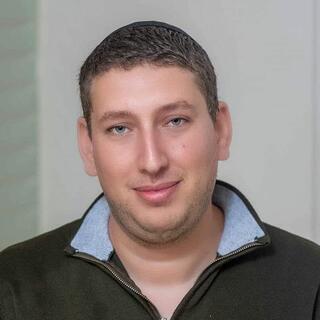
For most of his teenage years, Sgt. M. never imagined he would enlist in the Israeli military. Like many young men in Israel’s ultra-Orthodox community, he opposed military service for a range of reasons.
That changed on October 7, when a close friend, Sgt. Nahman Dekel, was killed during the Hamas-led assault on southern Israel. Dekel was stationed at the Sufa military post near the Gaza border. When militants stormed the base, he and his fellow soldiers were caught off guard, some still wearing boxer shorts, and fought for several hours. It took days to identify his body.
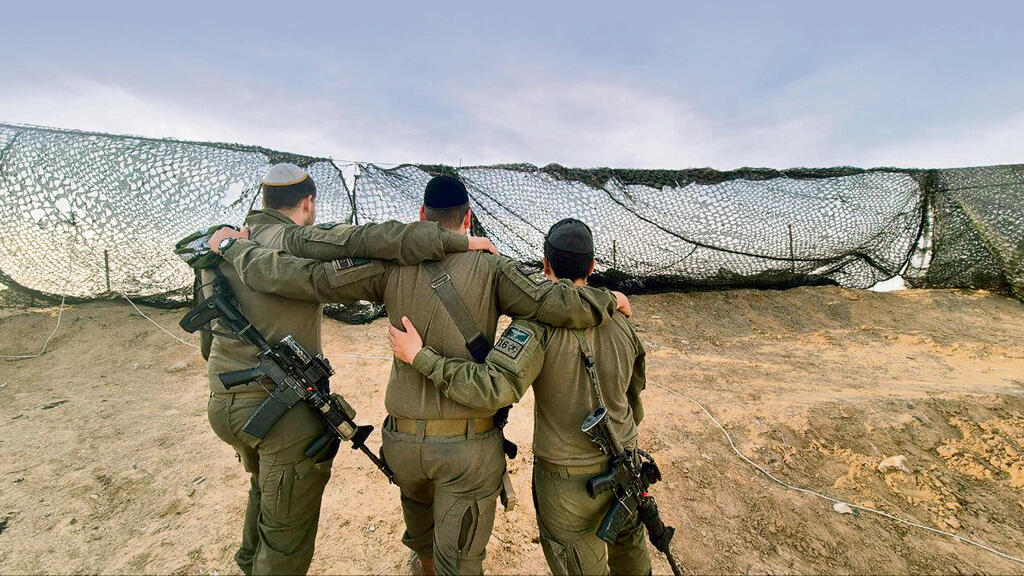
“We were a group of eight to 10 friends from our community, and some of us were strongly opposed to enlistment until then,” Sgt. M., 22, said in an interview this week. “That event shook us. After it happened, we decided to enlist and carry on his legacy. That’s why I’m here today.”
Sgt. M., who comes from the ultra-Orthodox settlement of Emanuel in the northern West Bank, is now serving with the Netzah Yehuda Battalion, a unit in the Israeli military designed to accommodate ultra-Orthodox soldiers. He and his fellow troops are currently deployed in northern Gaza.
Their service comes as the issue of ultra-Orthodox enlistment has become one of the most contentious debates in Israeli society and in parliament. But in northern Gaza, the soldiers say those political arguments feel distant. Aside from the occasional explosions from training or operational activity, the area is relatively quiet.
“The protests and the arguments from the Knesset don’t reach us here,” said Sgt. Y., 19, from the ultra-Orthodox city of Bnei Brak, another fighter in the battalion. “We try to do the best we can without getting involved in politics or trying to influence what’s happening outside.”
Like Sgt. M., Sgt. Y. decided to enlist after the war began. In the early days, he volunteered with civilian aid organizations before concluding he wanted to take part directly in combat. “When I decided to enlist, I wanted a place that would preserve my religious environment,” he said. “I understand the fears many ultra-Orthodox people have about military service and leaving the yeshiva framework. But here, from a religious standpoint, it actually strengthens you.”
Netzah Yehuda operates in Gaza
(Video: IDF)


He pointed to daily prayer services, communal encouragement and a structured religious routine. “Praying three times a day as a civilian, if you’re not in yeshiva, is much harder,” he said. “Here, it’s always possible. The guys organize it and push each other. My parents are happy I’m in Netzah Yehuda.”
Many soldiers in the battalion come from deeply ultra-Orthodox backgrounds, while others are from religious Zionist or traditional families. For Sgt. M., enlistment was particularly difficult despite the fact that one of his brothers had already joined the military. “My parents didn’t really support it,” he said. “They were worried about the religious aspect and had other concerns. My father is a religious convert who fought in the 1982 Lebanon war and lost many friends there, but he never thought his children would enlist.”
He said his father initially tried to dissuade him but eventually accepted the decision. “Today we’re on good terms,” Sgt. M. said. “I love going home for Shabbat. It’s my chance to sit quietly, wake up calmly, without army tasks. I take a religious book and study for three or four hours straight. I feel very at peace with the decision I made.”
Another soldier in the unit, Sgt. A., who will soon turn 20, studied in Breslov Hasidic institutions in Jerusalem before enlisting. He said the battalion offers a religious environment unmatched elsewhere in the military. “Three daily prayers, an active synagogue, Torah classes, Shabbat with a real Shabbat atmosphere — that’s something you won’t find in another battalion,” he said. “This place really makes it possible.”
According to Sgt. A., religious accommodations continue even during deployments outside Gaza. Rabbis visit the outposts, and the battalion has a rabbi who gives regular Torah lessons. On Shabbat, a tent becomes a full Shabbat meal with singing and a religious atmosphere, he said, adding that the same applies on Jewish holidays. “During Hanukkah, for example, I really felt the holiday, even though I wasn’t at home or in yeshiva,” he said.
Like the others, Sgt. A. said the war pushed him to enlist. “I thought about it from a young age, but I didn’t really know if or how it would be possible,” he said. “After October 7, I specifically wanted to enlist here.” He said ultra-Orthodox parents often fear enlistment not because of opposition to the state, but out of concern their children will abandon religious observance. “The fact that I’m in a place that makes all the adjustments for ultra-Orthodox soldiers makes my parents happy,” he said.
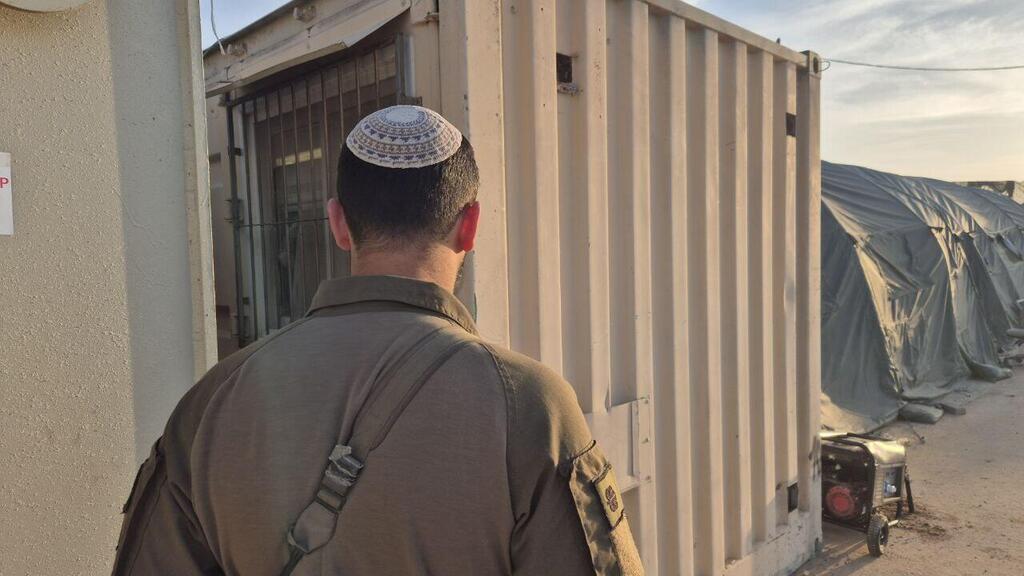
Maj. Y.
(Photo: Shilo Freid)
A personal loss further strengthened his sense of duty. A childhood friend, Staff Sgt. Meir Shimon Amar, was killed last year in a mass-casualty incident in Gaza in which 15 soldiers were wounded and five were killed. “Since then, I feel much more connected to what we’re doing,” Sgt. A. said. “My ‘why’ has become stronger. It hurts deeply, but it also connects you and strengthens you.”
Commanding a unit designed for ultra-Orthodox soldiers presents unique challenges, according to Maj. Y., the company commander. Although he comes from a religious Zionist background, he said he is acutely aware of the sensitivities involved.
“There are challenges here that don’t exist to this extent in other battalions,” he said. “Our command focuses a lot on individual care. Many of the soldiers are considered lone soldiers. Beyond being their commander, you need to make sure they have somewhere to sleep, somewhere to spend Shabbat, and help paying rent.”
He said the soldiers’ motivation is distinctive. “Because they come from a place where people didn’t want them to enlist, they want to prove to themselves that they belong here,” he said. “They want to show they’re not weakening religiously — on the contrary. They’re getting stronger, more encouraged, and deeply committed both to their religious world and to the military mission.”