


For nearly a year, Or Elharar Spielman has once again been a married woman. Her first husband, Maj. Itamar Elharar, was killed in a friendly-fire incident that shook Israel in 2022. He was 26, and they had been married for less than two years when the tragedy ended their life together.
Today, she lives in Jaffa with her husband, Yotam, who served alongside Itamar in the IDF’s Egoz commando unit. “I believe there are people who can marry widows and people who cannot,” she says with a smile. “He is one of the people who can.”
Gallery
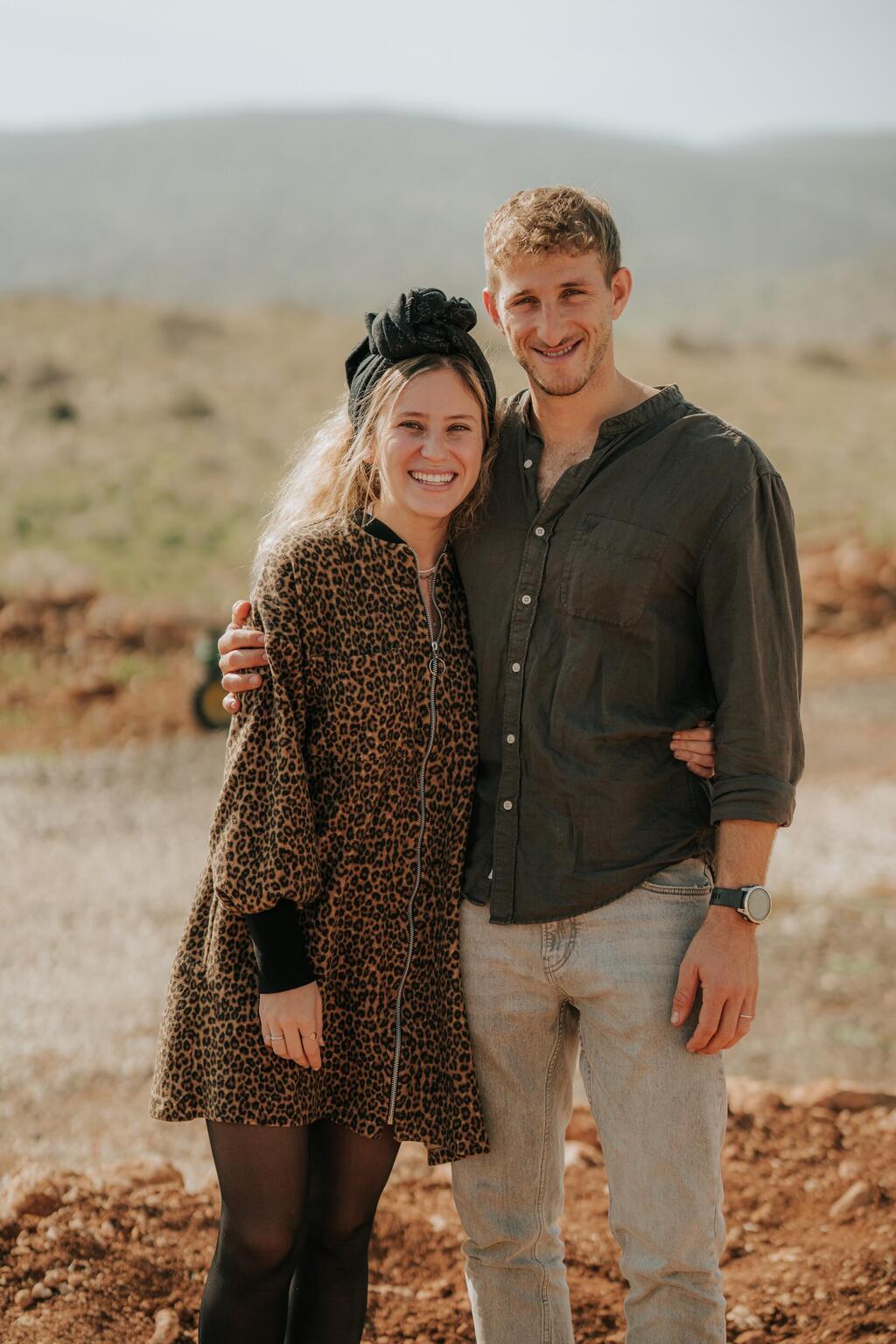
Or Elharar Spielman with her husband, Yotam. 'Some people can marry widows, and some cannot'
(Photo: Courtesy)
This is Yotam’s first marriage. He had been single before meeting her. “I didn’t date many people before him, but with the few men I did meet, I knew within minutes that I was going to end it and that it would not continue,” she recalls. “With Yotam, there was something different.
“The fact that he knew Itamar made it simpler. I felt I didn’t need to try to explain who Itamar was because he already knew him. On our first date, he told me that Itamar used to speak about me and tell him about me. That allowed me to enter the relationship more easily and to place my heart in his hands more easily.”
The couple met through a mutual friend who connected them. “When Itamar was killed, Yotam was also an officer in the unit,” she says. “Yotam knew who I was because he attended the funeral, the shiva and the memorial ceremonies, but he never approached me.
“It was not as though he immediately agreed to date me. Many people were involved, people who knew both of us, soldiers and commanders from the army who encouraged him and told him it was the right thing.”
Did he have reservations?
“Absolutely. It took him three months to agree to go out with me. I only discovered that afterward because no one told me anything until he agreed.
“It turned out that more and more people had to persuade him. He knew me as Itamar’s wife and felt I was too much for him. He understood what it would mean. He knew I came with a story, that I came into this relationship with Itamar. But once he agreed, he was all in. It was clear to him that Itamar would be part of a relationship like this.
“What is special about Yotam is that he is very secure in himself. He knows how to give Itamar space alongside his own place, so he does not see the two as contradictory.”
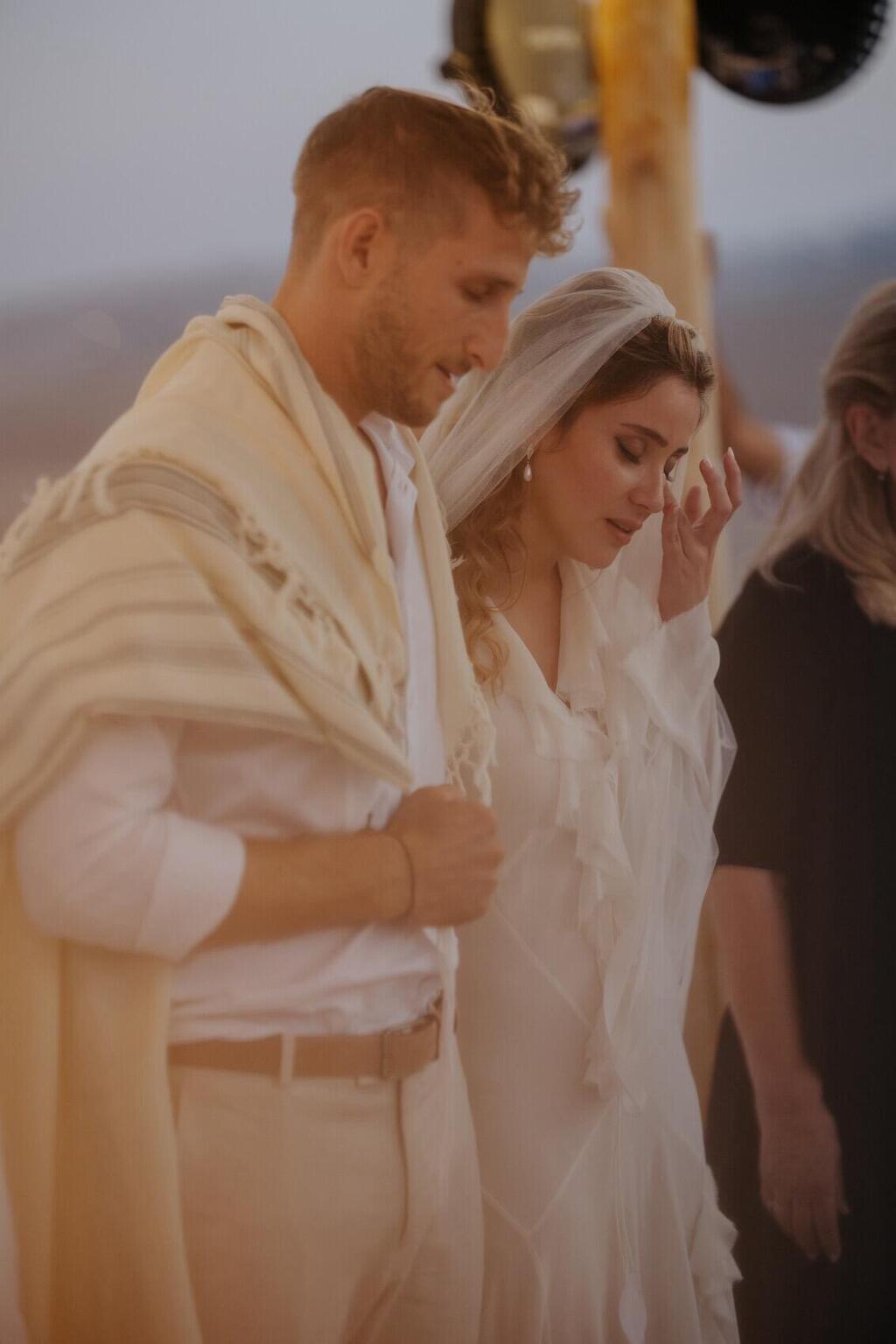
'It doesn’t replace him; it exists alongside him.' Or Elharar Spielman at her wedding to Yotam
(Photo: Yoni Laufer)
Some people who have never experienced what you went through still react judgmentally. What do they fail to understand?
“I think people do not understand that everyone has their own baggage, and that is what we bring with us. Everyone enters a relationship with a story, and this is a widow’s story. People often see widows speaking about their husbands or crying at cemeteries and say, ‘They are not ready, they are not prepared, they are not there yet, they are still with their husbands.’
“But what they do not understand is that this is something that never disappears. It will always be there. It will always be part of us. We will always love them. I always say, ‘Itamar is my husband.’ That has not changed. It does not come instead of him. It does not clear space for something else. It comes alongside him. It is simply part of life.”
Footage from Or and Yotam’s wedding was included in a music video created for Tu B’Av as a tribute to widows who remarried. The video features dozens of women from the Shomron Hadar Ganim Choir, conducted by Naama Zenbar, performing Shuli Rand’s “White Heart” together with the song “Wear White” by the Dudaim and Parvarim.
It also includes a bridal bench provided by a charitable organization established in memory of Staff Sgt. Sahar Midani, who was killed at the Nahal Oz outpost on October 7, 2023, and a wedding canopy dedicated to the memory of Lt. Eitan Avner Ben Yitzhak, who was killed in combat in Rafah last year.
Killed in a case of mistaken identity
Maj. Itamar Elharar was killed on January 12, 2022, near the Nabi Musa base in an operational accident caused by mistaken identification. Another Egoz officer, who had gone searching for stolen night-vision equipment, mistakenly identified Elharar and Maj. Ofek Aharon, both company commanders in the unit, as terrorists and fatally shot them.
Under a plea agreement, the officer admitted to exceeding his authority in a manner that endangered life or health. Two years ago, he received a suspended prison sentence and was demoted to the rank of sergeant. Elharar Spielman has previously criticized what she described as the leniency of the plea agreement.
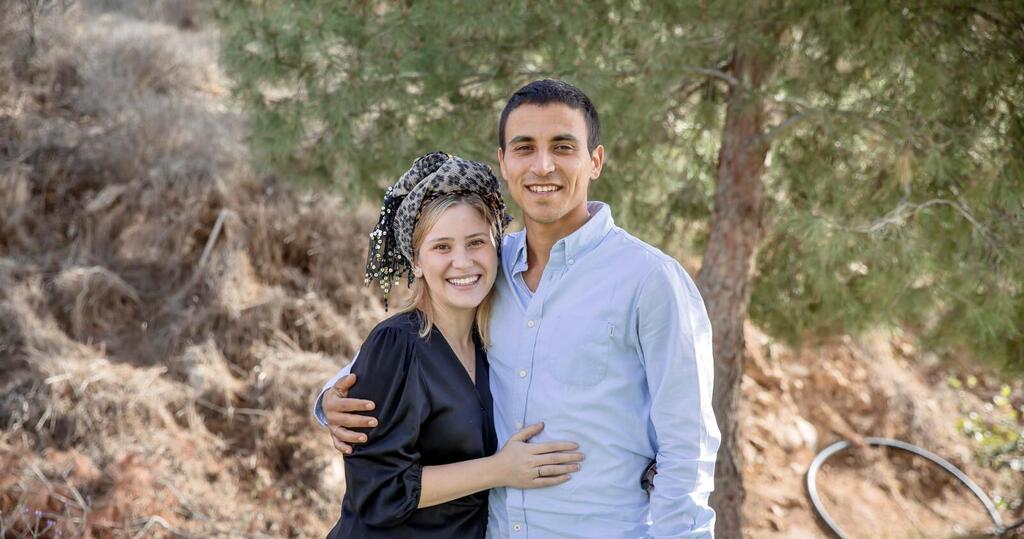
Or with Itamar Elharar, who was killed in 2022
(Photo: Courtesy)
Or and Itamar did not have children. After his death, she was required to undergo halitza, a Jewish religious ceremony conducted by a rabbinical court when a man dies without descendants. The ceremony serves as an alternative to levirate marriage, the biblical commandment under which a man is expected to marry the childless widow of his deceased brother.
“It is not a simple experience, especially because arriving at a rabbinical court usually carries a different association, and it was not somewhere I had planned to be,” she says. “Witnesses came and had to say that we had been married, that Itamar was killed and that we had no children.
“The words of the ceremony are very difficult. I cried for most of it. I remember they told me to remove my rings, which was also a symbolic moment that was difficult for me. I think the hardest moment in the ceremony was when they told me that I was permitted to marry any man. That is a very difficult sentence for someone who, at that stage, had absolutely no desire to be permitted to anyone. It is deeply unsettling, but it is also a step along the way.”
She underwent the ceremony with Itamar’s brother. Itamar’s mother, Debbie, also accompanied her. “We have a close relationship, and that made the situation a little easier,” she says. “You have to remove the shoe from the deceased man’s brother, and there is a stage in which you spit on the floor near his foot. It is not a pleasant event.
“I did it for two reasons. Many people spoke to me about the spiritual aspect, that when two people marry, their souls become connected, and when one person dies, he must be released. So I did it partly for myself emotionally, to release Itamar’s soul to wherever it needed to go, and also because I thought it would allow me to marry later in accordance with Jewish law in Israel.”
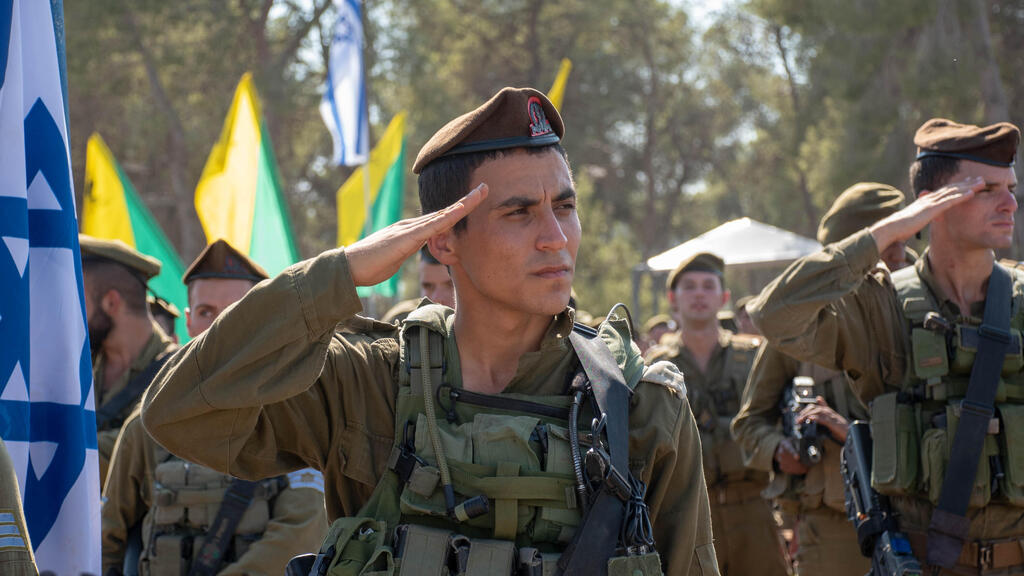
The late Maj. Itamar Elharar. 'I still say he is my husband. That hasn’t changed'
(Photo: Danny Lachmi)
Was the rabbinical court sensitive?
“The rabbinical judge who accompanied the process knew the story and was very sensitive. They gave the ceremony a spiritual dimension and lit memorial candles. That was my experience.
“I know that since the war there is much greater awareness, and the IDF has made significant changes in how it deals with widows in this situation. But I know women from the period of the helicopter disaster, for example, whose experience was more traumatic than mine. In my case, I felt they were sensitive and gave space to the pain and the absence.”
Many women have lost their partners during the war, including some who were married for only a short time. Is there something you learned that you would like to pass on?
“I think one of the most important things I learned over these years was, first of all, to take care of myself and do what is right for me, even when the people around me are judgmental and do not understand.
“I have to do what is best and most correct for me. In the end, I am the widow. I am alone. If I do not take care of myself, no one else will do it for me. I learned not to be afraid to hope and believe that it is possible to love again, and that it is possible to be happy.”