


The Hamas attack on Israel sparked an anti-Israel and antisemitic wave unlike anything Australia had experienced before, she says. “Everything changed. It became a very difficult time for Jews in Australia, and especially for artists and creative people,” Kraus told ynet. “There were a lot of cancellations of exhibitions and performances, and I personally felt blocked, like I could no longer create or exhibit. No one wanted to collaborate with me or see my work.”
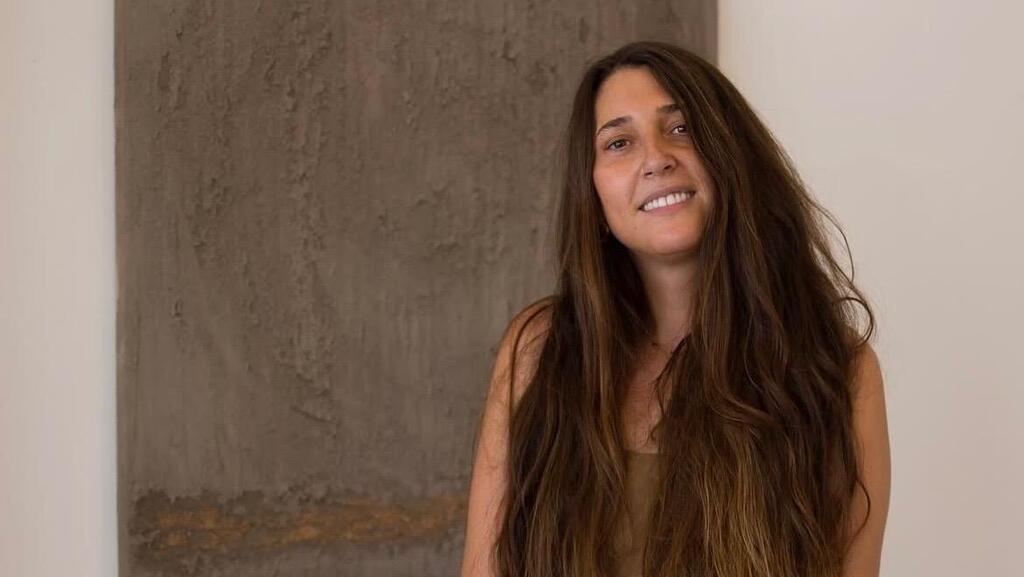
As a Jewish-Australian artist, Kraus said she came to understand that she no longer had a place in the country’s art community. “Suddenly, no one wanted me in their studio or in their galleries. I had two exhibitions planned for 2024 and both were canceled. I reached a point where I felt lost,” she said.
What did the organizers say? How did they explain the cancellations?
“Most of them didn’t respond to my inquiries at all, or they made nasty comments. It became an environment where it was impossible to create in a culturally safe way. There were also Jews who left influential positions on university boards, and there were galleries that decided to stop accepting funding from Jewish donors, and then they simply closed.
“I decided that I wanted to keep making art, and not only for a Jewish museum, but for the entire art world. That is why my decision was to make aliyah, and I am very happy I was accepted to Bezalel. I feel like it is a second chance. It is a place where I can work freely.”
So everything changed in one moment? On October 6, Australia was wonderful, and the next day it became impossible to live and work there?
“I would not say everything was fine. Even when I was at university, there was dormant antisemitism, but I think it was always there beneath the surface. I had to use specific language every time I spoke, and I really had to think and be especially careful whenever I presented something. Then, slowly after October 7, things began to deteriorate.”
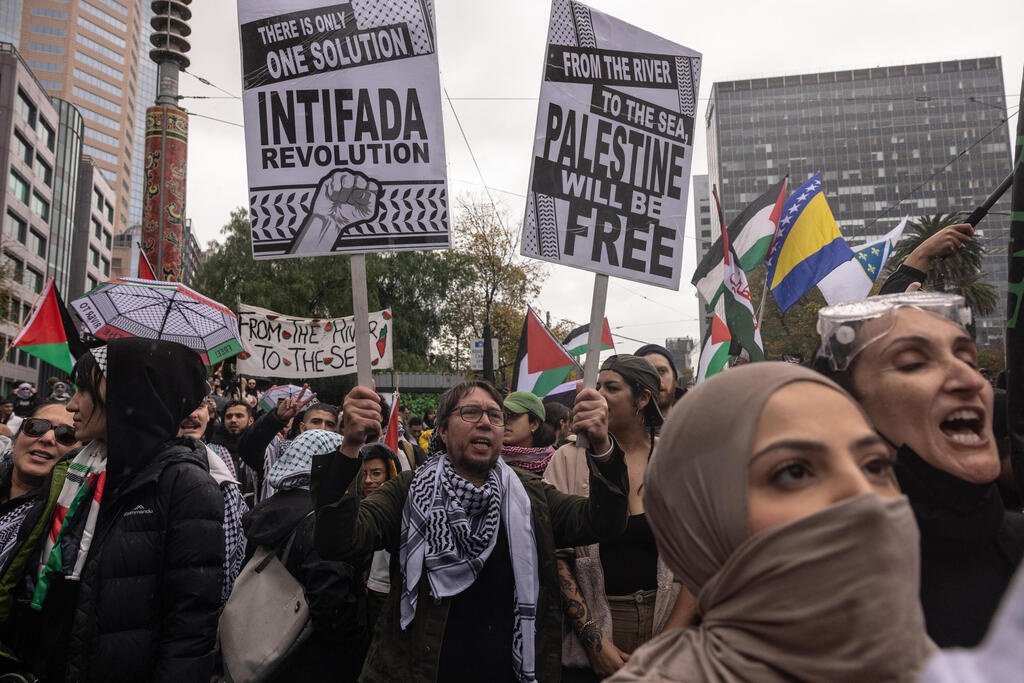
A pro-Palestinian protest in Melbourne with calls for intifada
(Photo: Diego Fedele/Getty Images)
How do you explain Jews being targeted over a war taking place so far away?
“I think Australia is built on a certain level of guilt over its own history. The art world in Australia likes to create and work from a position of victimhood, and they need a cause to attach themselves to. This was the cause they chose.
“I hope the royal commission on antisemitism may be able to change the situation and have a more positive effect. My view is to look forward. I am no longer an artist in Australia, and I am going to write a new chapter in my story.”
‘I work a lot with what is hidden and ancient’
Kraus, who immigrated to Israel about two years ago, grew up in Melbourne’s Jewish community, the daughter of an Israeli mother and a father whose parents survived the Holocaust and came to Australia after the war.
“I grew up in Australia, but I did not feel connected to the place,” she said. “I didn’t know if I would leave one day. It was where my family lived, but we came on many visits to Israel, and the first language in my home was Hebrew. When I felt blocked in Australia, my decision to come to Israel took shape.”
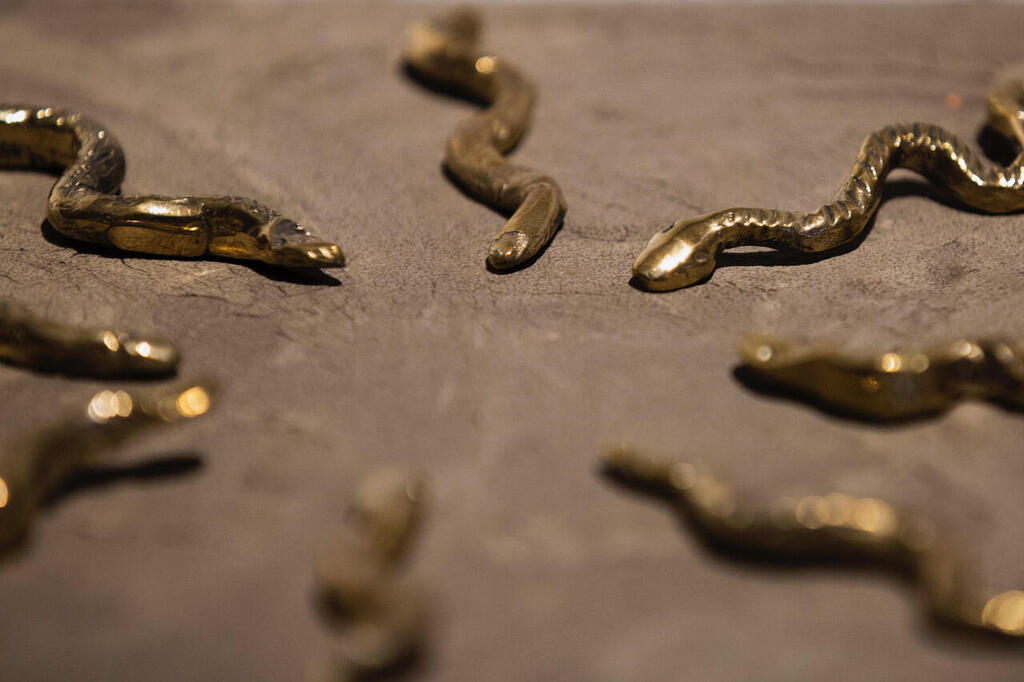
The snake symbol in one of Adina Kraus’ works
(Photo: Courtesy)
Kraus was accepted into the master’s program at Bezalel Academy of Arts and Design, and one of the advantages she finds in studying in Israel is the cultural context.
“It is very rewarding to be in a space where faculty members can give feedback on a subject they know and understand,” she said. “In Australia, no one understood even a single letter of Hebrew. Every letter in the language looked to them like a foreign symbol. Now I have the privilege of sitting with local artists who can offer proper criticism.”
Kraus is now preparing to present her work at the graduate exhibition of Bezalel’s master’s program in fine arts, which will open to the public on June 25 at 119 Herzl Street in Tel Aviv and close on July 4.
In her final project, Kraus returns to the biblical story of the bronze serpent, in which the image of the snake, usually associated with danger and venom, becomes a means of healing. Alongside her engagement with the Bible, Kraus also researched other sources, including the Zohar and Sefer Yetzirah.
“The project I am working on is essentially a personal journey, or a pilgrimage in a certain sense. I work a lot with what is hidden and ancient,” she said.
“I always try to create a space that people can enter and experience, or feel like they are on a journey. People need to look, and the more time you spend in the space, the more you notice things. There are secrets, and something familiar suddenly appears that you did not see before.
“I look a lot at ancient processes and methods, and then I apply those methods to materials that are also ancient in a certain way. I find rocks fascinating. I feel they are like dinosaurs. They are really, really old, and every line tells the story of what the rock has been through and what the rock is, how it changed itself and its structure.”
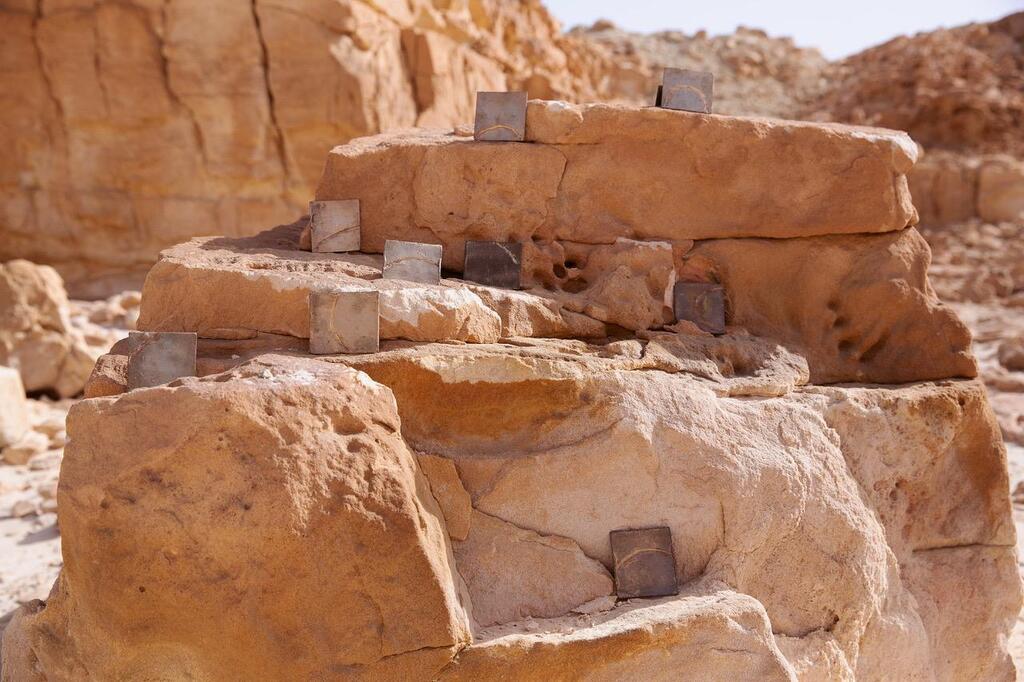
Artworks Adina Kraus presented in Timna
(Photo: Courtesy)
Among other things, Kraus researched the Timna Valley, where small copper objects shaped like snakes from the Bronze Age have been found. She used materials from the site and drew inspiration from its ancient copper mines.
In Timna, she collected soil, stones, clay and natural materials, and created a work inside one of the ancient pits in the area. The work itself remained there as a site-specific action. In Bezalel’s graduate exhibition, she is presenting what remains of it: remnants, maps, materials that survived fire, bronze and copper castings, Dead Sea mud and stones engraved as a coded system of signs.
What has your personal experience in Israel been like, given the war and the challenges?
“I live in Jaffa and I love this area. There is a multicultural mix here, a lot of art, and we are close to the sea. Life here definitely has challenges, but I would much rather live here in a war zone than deal with antisemitism abroad.”
First published: 07:29, 06.23.26