


The U.S. Supreme Court has agreed to hear the case of Daniel Grand, an Orthodox Jew from Ohio who says local authorities barred him from holding Jewish prayer gatherings at his home and that neighbors harassed him over the practice.
The decision by the nation’s highest court to take up the case is considered highly unusual in the American legal system, as the Supreme Court hears only about 50 cases a year.
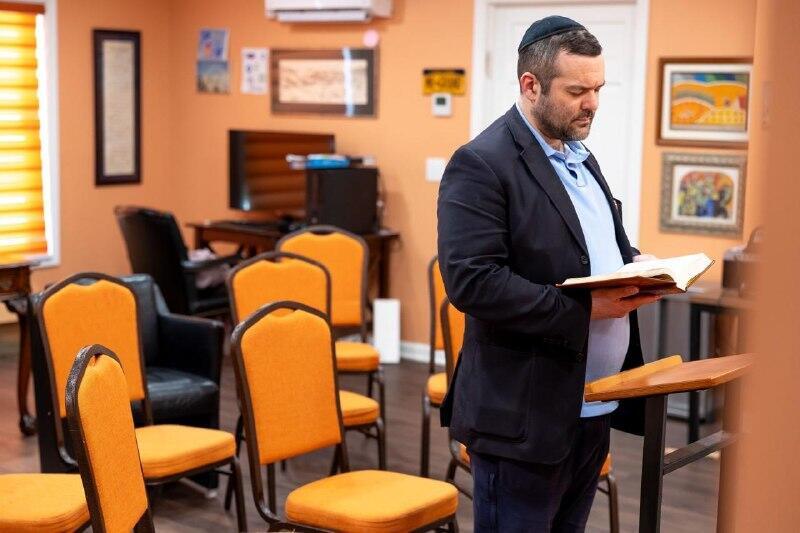
The dispute began in 2021. Grand, who lives in University Heights, wanted to pray with a minyan, the quorum of 10 Jewish men required for certain communal prayers. Because Jewish law prohibits driving on Shabbat and holidays, and the local synagogue was too far away to reach on foot, he decided to host worshippers in his private home.
To accommodate the gatherings, Grand built a spacious recreation room as an addition to his house. He then sent an email to about a dozen friends and neighbors inviting them to Shabbat prayers. One neighbor who saw the message quickly contacted the mayor and asked him to stop the gathering.
Before the first prayer service even took place, the city sent Grand a cease-and-desist order barring him from using the property for religious purposes. Officials argued that the gatherings violated zoning laws and amounted to operating a synagogue in a residential area. The city also threatened him with criminal prosecution.
In court, the city argued that Grand had understated the size of the planned gatherings and that the proposed use would create traffic, fire safety and parking problems.
The pressure campaign continued when then-mayor Michael Dylan Brennan publicly encouraged residents to monitor Grand’s home and report any sign of Jewish worship. According to the lawsuit, one neighbor set up cameras aimed directly at Grand’s house, local police began regular patrols around the property, the city delayed occupancy approval and tax benefits, and garbage workers deliberately skipped his home on collection days.
Grand’s attempts to resolve the matter, according to the lawsuit, met with hostility. He applied for a special permit but discovered that if it were approved, he would no longer be allowed to use the property as a residence and would have to leave his home. Neighbors also sent letters of objection to the city. One said: “I am not Jewish and I do not want our neighborhood to be labeled Jewish.”
Grand then withdrew his permit application and filed a federal lawsuit, but both the federal district court in Ohio and the appeals court rejected his claims.
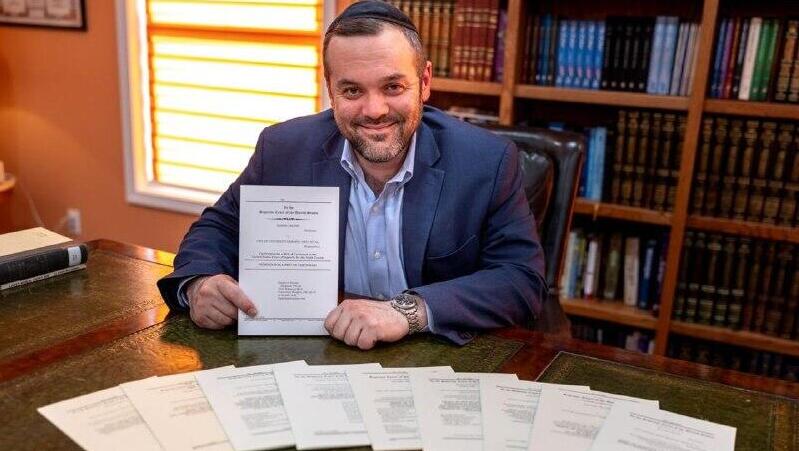
Daniel Grand with the petition
(Photo: Alliance Defending Freedom)
The conservative Christian legal organization Alliance Defending Freedom joined Grand’s legal team, along with several Jewish organizations, including Agudath Israel of America.
Attorneys for Agudath Israel warned that if cities are allowed to issue immediate shutdown orders in such cases, religious gatherings across the United States could be at risk.
“A small prayer gathering in a private home is not merely a zoning matter. It is the exercise of the core of faith,” Agudath Israel wrote. The group said government officials were turning building and zoning rules into “weapons against people of faith,” while allowing comparable gatherings such as book clubs or poker games to take place without interference.
Grand welcomed the Supreme Court’s decision to hear the case, with arguments expected in October.
“They tried to tar and feather me, and it didn’t work,” he said. “People have the right to pray to God because they want to, and the city should not tell them they can’t do that without a permit.”
Grand said the ruling could affect millions of Americans and help not only Jewish worshippers but also Christian and Muslim study groups.
“Everyone is entitled to speak to God directly, without intermediaries,” he said.