

The weekly Torah portion, Bereishit, opens with two distinct accounts of how everything began. Over the generations, scholars have explored the differences between these two chapters from countless angles. However, by examining the distinct environments shaped in each chapter, I want to explore a uniquely economic perspective as well as an educational one.
In Chapter 1, the world is built through boundaries. Light is separated from darkness, upper waters from lower waters, sea from dry land. The waters do not flow; they are static and contained: "And the gathering of the waters He called Seas."
Gallery
The quest for knowledge and the awareness that comes with it immediately expose human vulnerability: 'they knew that they were naked'
(Photo: Shutterstock Gen AI)
This is a world of categories, order, law and fixed purpose. Man is given a defined mission with allowances for his livelihood. The structure is set, the map is drawn and humans are simply required to operate within its borders.
Chapter 2 paints a drastically different picture. It begins with scarcity: no plants, no rain, no humans to work the soil. Then, life emerges, centered around a flowing river that branches out to the ends of the ancient world:
“And a river issued from Eden to water the garden, and from there it divided and became four branches. The name of the first is Pishon, the one that winds through the whole land of Havilah, where there is gold. The gold of that land is good; bdellium is there, and onyx stone. The name of the second river is Gihon… The name of the third river is Tigris... And the fourth river is the Euphrates.” (Genesis 2:10-14)
The text deliberately mentions resources. Suddenly, the world is not merely geography; it is an economic ecosystem. We see raw materials, transportation routes and comparative advantages. This is a world of trade, supply chains and power struggles.
If Chapter 1 draws the map, Chapter 2 introduces the actors. While Chapter 1 describes human creation in the perfect, boundary-driven "image of God," Chapter 2 is grittier, describing man formed from dust.
Here, humanity must navigate a dynamic environment. Operating in a world of rivers and trade routes requires identifying opportunities, taking risks and deciding where to go and, crucially, where not to go.
In this competitive arena, the Tree of Knowledge seems like the ultimate resource. The serpent markets it as a supreme competitive advantage: "You will be like God."
But knowledge operates differently from gold or stone. Acquiring it fundamentally alters the human economy. It turns capabilities into desires, shifting the whole system to a state where intention, conceptualization and impulse rule.

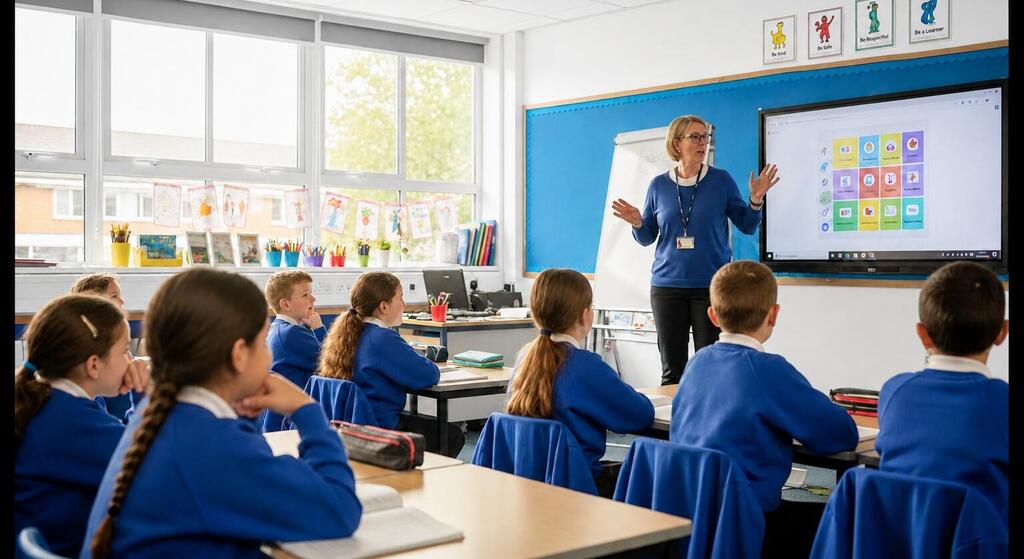
When children complain that school is boring, it is often because there is no meaningful challenge to crack, no rushing river to explore
(Photo: shutterstock)
The quest for knowledge and the awareness that comes with it immediately expose human vulnerability: "they knew that they were naked." The attempt to gain control ironically shatters their basic security, introducing the perpetual burdens of choice, fear, guilt and relentless competition. The harmonious arena becomes a pendulum of cognitive and political war.
Placing Chapter 2 immediately after Chapter 1 reveals a profound truth: a functioning world requires both. Boundaries do not block the river; banks prevent it from becoming a destructive flood.
Without Chapter 2's flowing energy, the world freezes. Without Chapter 1's framework of purpose and vision, that energy destroys everything. It is a perpetual war for progress as the pendulum of breakthrough and boundary swings.
This dual model has profound implications for modern education. Today, our system's central ideal is "accessibility." We strive to remove barriers, break down tasks, spoon-feed materials and guarantee every student a safe, frictionless path to success.
But a space where everything is pre-marked and risk-free requires no strategy development. It doesn't force students to forge paths, manage risks or overcome friction. We create optimal conditions for following instructions, but in doing so, we produce excellent order-takers instead of creative thinkers.
When children complain that school is boring, it is often because there is no meaningful challenge to crack, no rushing river to explore.
Adam is the proto-student. We can learn from him and from how God set up his education. Good education must know when not to be accessible.
Just as the Edenic river flows into unknown territories fraught with discovery and risk, we must intentionally design learning spaces where not everything is immediately available. We need to introduce genuine choice, scarcity and the real possibility of failure. Friction is the prerequisite for initiative and creativity.
An educator's role is not merely to establish the boundaries of knowledge, as in Chapter 1, but to intentionally place "serpents" and scarce resources within them, as in Chapter 2. This may force learners to develop resilience, strategy and adaptability.
We must shift from an education that tries to pave a smooth path to one that teaches students how to navigate a world that has no smooth paths.
Introducing friction doesn't mean abandoning struggling students; it means changing the architecture of competition. The current system forces everyone to compete for a single resource: test grades. Naturally, some have an inherent advantage.
But Genesis 2 features four rivers, diverse minerals and various destinations. An educational space should function similarly, creating multiple currencies of success.
Analytical ability, rhetoric, creativity, social intelligence and technological skill shouldn't be secondary decorations; they must become tangible, tradable resources that provide genuine value to every student.
For students to willingly engage in this dynamic, unequal competition, they must be assured of an unconditional safety net. This is where Chapter 1 returns.
We must establish a "core of rights and responsibilities," such as basic dignity, emotional support and the universal "image of God," that is never up for auction.
A student who feels their fundamental place in the world is secure will boldly navigate the turbulent, rewarding rivers of scarcity and challenge.
"From the river, the river Euphrates, to the western sea shall be your territory" (Deuteronomy 11:24).