

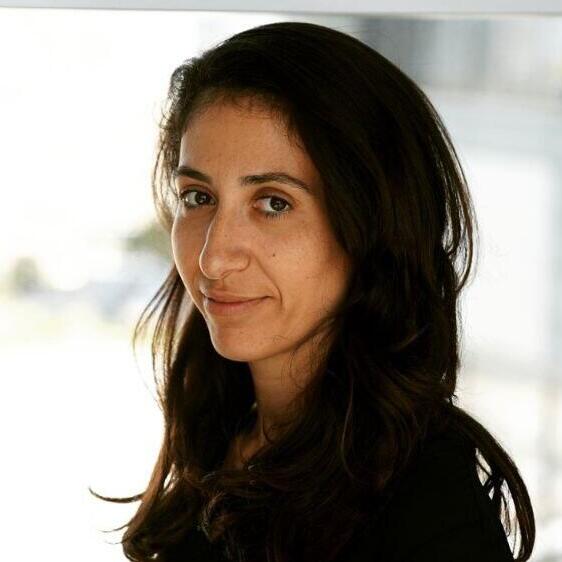
Aaron Dahan is the owner of Caffè Aronne on New York’s Upper East Side. Two flags hang outside the café: one Israeli, one American. Inside, stickers bearing the faces of fallen Israeli soldiers share space. Dahan has no intention of removing the Israeli symbols, despite an employee revolt in recent years and repeated harassment targeting the business.
Dahan, whose father is a Lebanese Jew who immigrated to the United States, began his coffee career in 2018, running coffee stands at events after deciding that New York’s coffee scene was missing something. “Even if you went to a $100,000 wedding, it was the same coffee,” he says. “We started with a small machine, and it grew and grew until we began working with big companies.”
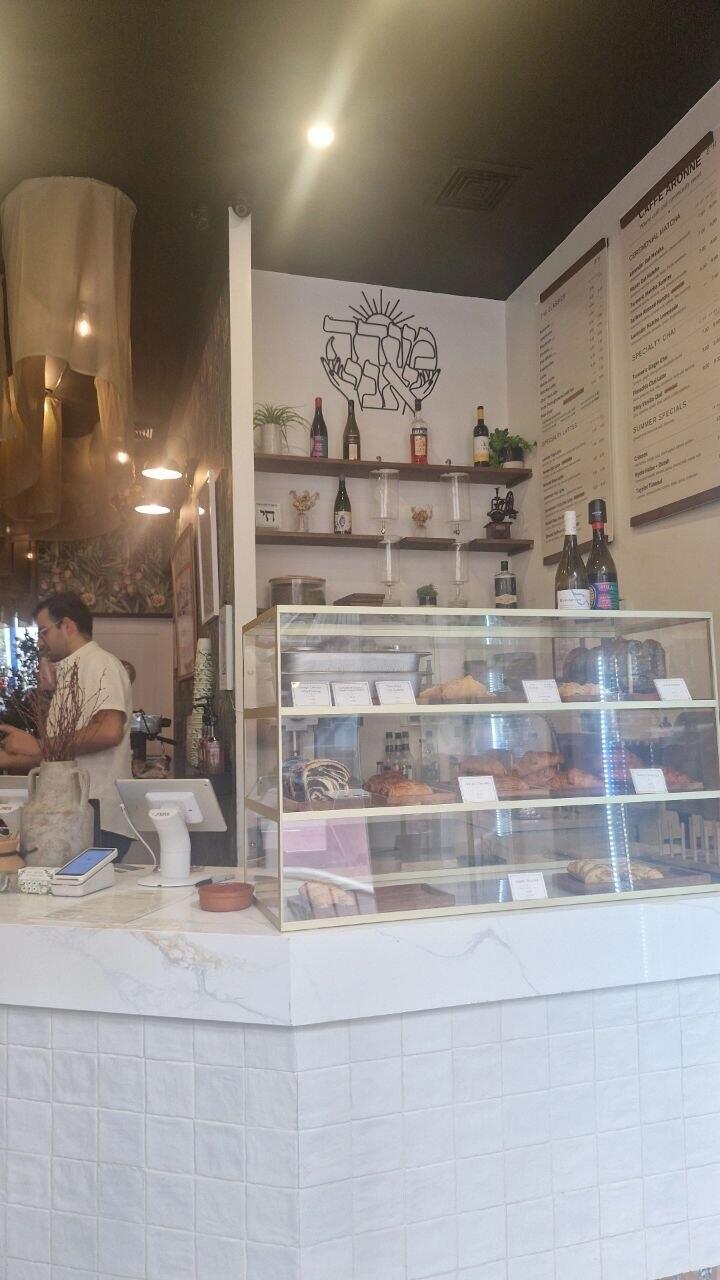
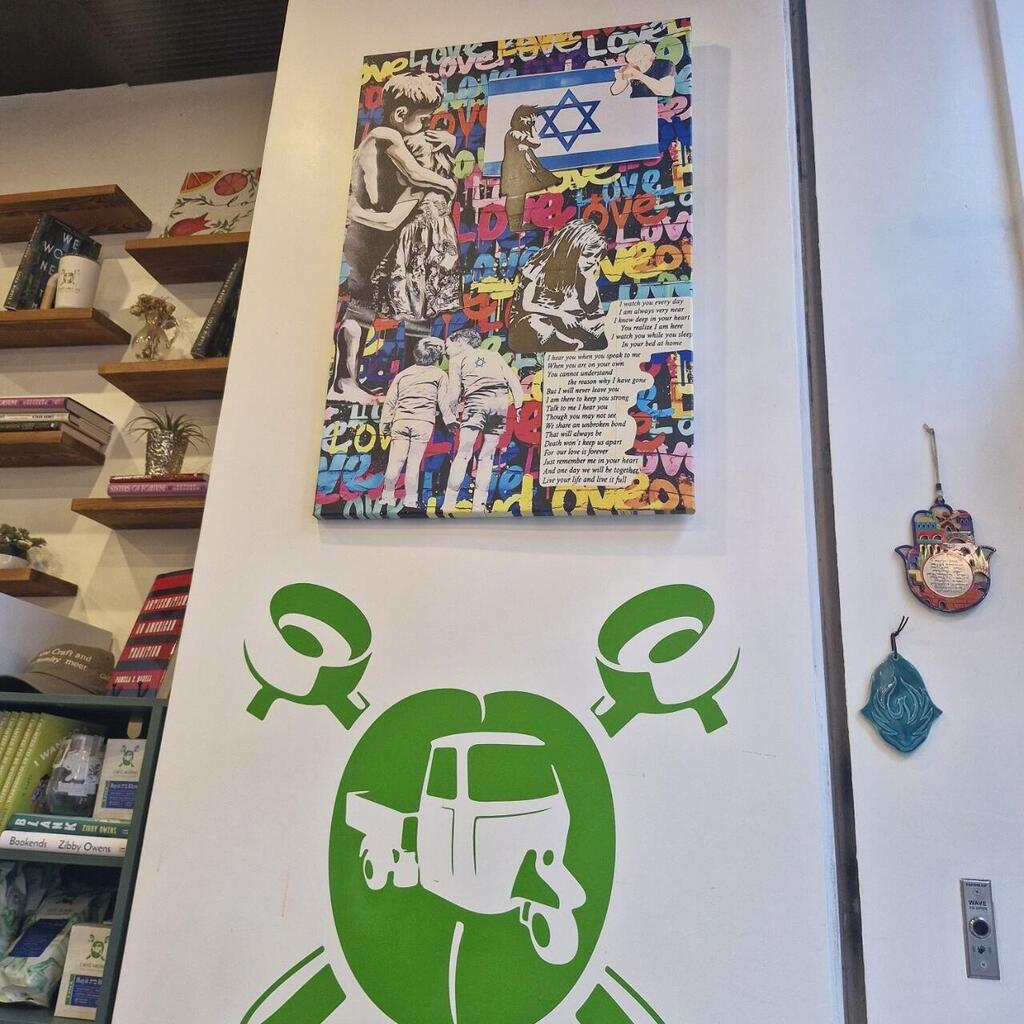
Caffè Aronne; Jewish and Israeli imagery adorns the café walls
(Photo: Lior Ben Ari)
One day, a man called asking whether Dahan could provide coffee on very short notice for the final day of a movie shoot. The request was for four hours of coffee service as a way of thanking the crew.
Only after the call did Dahan realize who had placed the order: Steven Spielberg. “I told my father, ‘You won’t believe who called! It’s Steven Spielberg!’ And my Lebanese father said to me, ‘Who is that?’” Dahan recalled, laughing. The production was Spielberg’s “West Side Story.”
From there, the business grew. “That’s how it started,” Dahan said. “Then we opened a café in the West Village. At first, it was all about the coffee. Today, it’s become about much more than that, and involves Zionism, Judaism and creating a fully kosher space.”
The West Village location was eventually sold to one of the company’s clients, who continues to operate it. Dahan’s family now owns the Upper East Side café, opened another location on the Upper West Side about a month ago and plans to open a third in Midtown Manhattan.
The Upper East Side location opened in December 2022, less than a year before the October 7 Hamas attack on Israel. "After the attack, we began raising money for Magen David Adom (Israel’s national emergency medical service). Caffè Aronne donated $1 from every drink sold and placed a QR code in its window so even passersby who did not enter the café could donate."
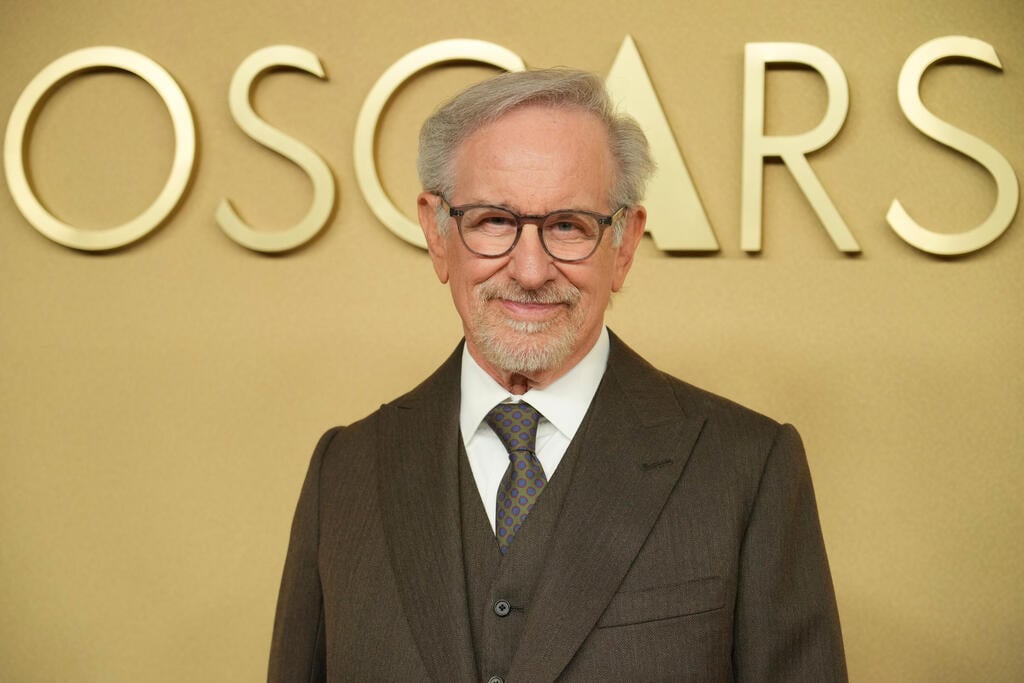
Steven Spielberg, Aaron Dahan’s most famous customer
(Photo: Jordan Strauss/Invision/AP)
Photos of the hostages held in Gaza were also placed in the windows. “At the time, people would put up hostage posters and within an hour or two someone would come and tear them down,” Dahan said. “I said that if we put the posters inside the café windows, behind the glass, people couldn’t just come in and take them. And that’s what we did.”
Then came a confrontation with his own employees. After about a month of fundraising, Dahan said staff members arrived in the morning and replaced the cafés’ menus with protest messages, including one reading “blood of Palestinian babies.”
“I don’t know what they thought would happen. It was coordinated across all three locations, and at the time we had 17 employees.”
Despite the anger and disruption, Dahan said he ultimately viewed the incident differently. “I actually thank them for what they did, because it blew up and people learned from it about October 7,” he said.
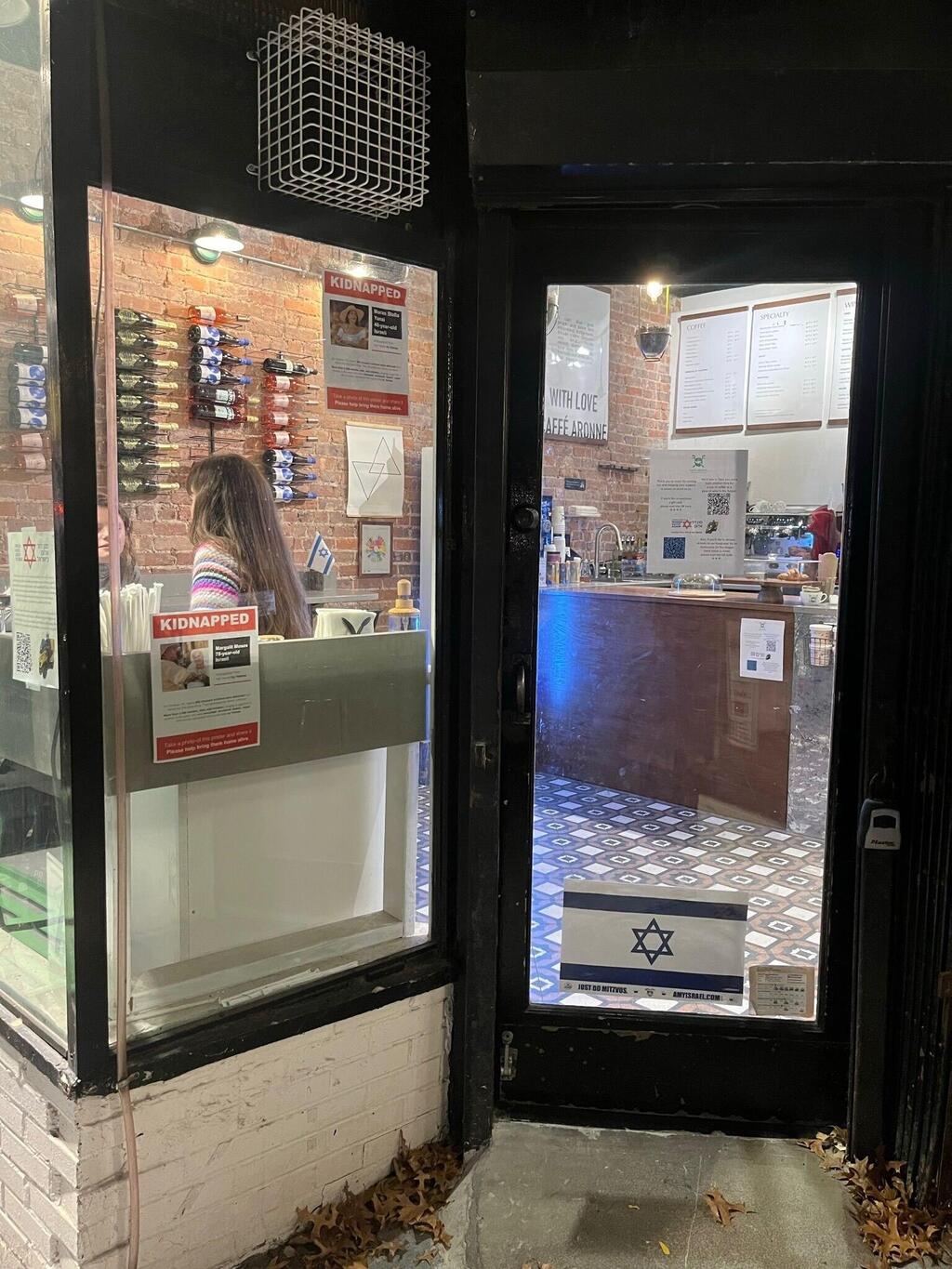
Caffè Aronne; an Israeli flag and a hostage poster, placed behind the window so they could not be torn down
(Photo: Aaron Dahan)
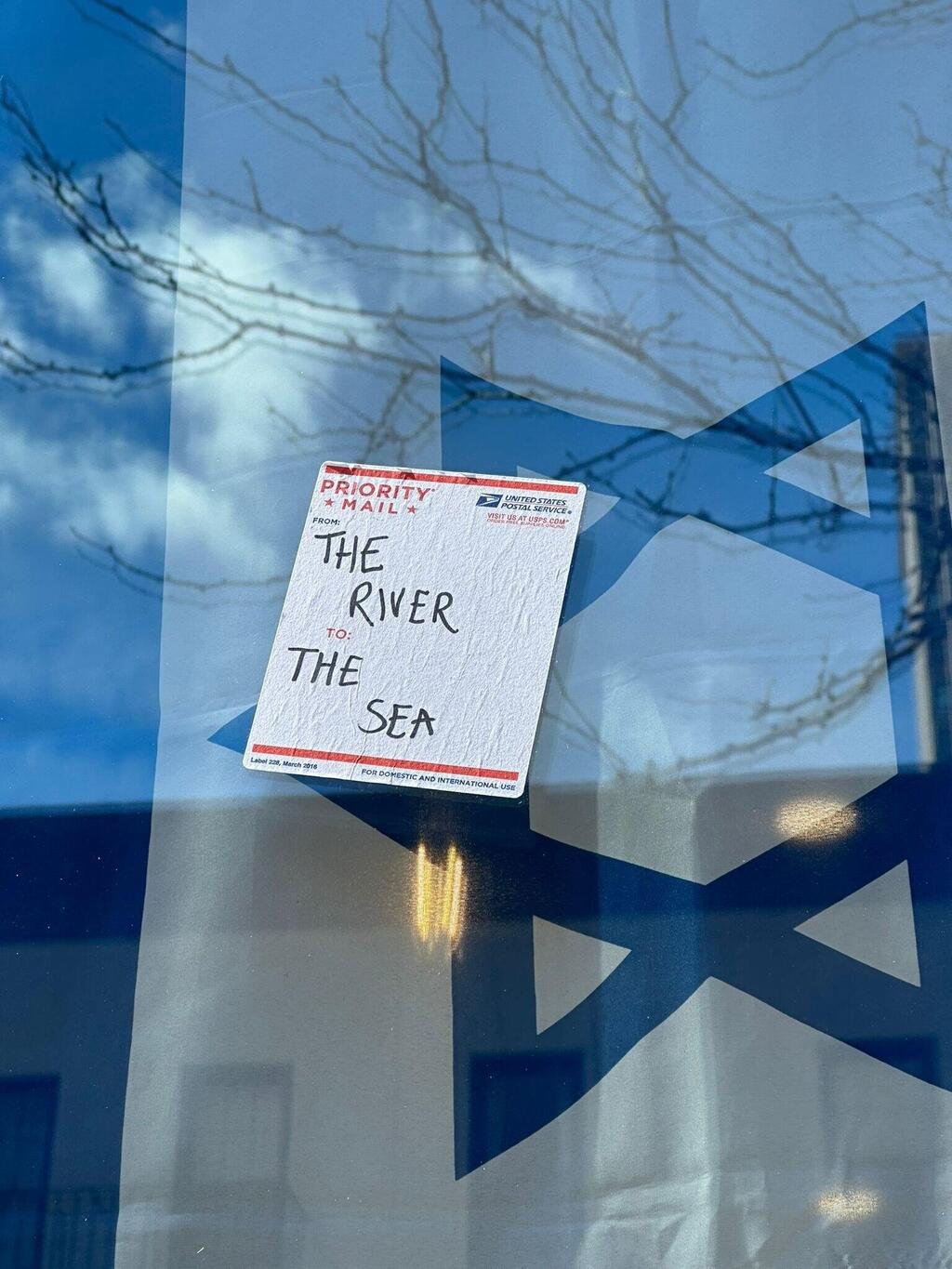
Caffè Aronne; an Israeli flag in the café window alongside a pro-Palestinian protest sticker; members of the staff joined the revolt against Dahan
(Photo: Aaron Dahan)
Following the revolt, Dahan and his family closed their locations for several days while trying to recruit new staff. Finding replacements proved difficult in the West Village and at the High Line location, he said. But on the heavily Jewish Upper East Side, the response was markedly different.
People contacted the family and even walked into the café offering to work. One Jewish owner of another neighborhood café came to Dahan with an even broader offer of support. “My staff is your staff,” Dahan recalled him saying. “I’ll even pay them.”
The support extended beyond the Jewish community. “Even the company we ordered our cups from called and said they were willing to donate cups,” Dahan said. “We didn’t ask for money, but people wanted to be part of it. That was very meaningful and moving, because most of the people we work with aren’t Jewish.”
The cafés have continued to draw hostility. In another incident, vandals defaced the windows and wrote “Gaza” in red. Dahan said the people responsible had previously worked for him. “They had once been part of our staff,” he said. “That was hard.”
Dahan is married and has a child, and the coffee business is a family operation. He speaks fluent Hebrew, which he attributes to his mother’s side of the family. Growing up, he said, the family visited a kibbutz in northern Israel every summer. His grandmother was born in Tel Aviv in 1941 and spoke only Hebrew with the family.
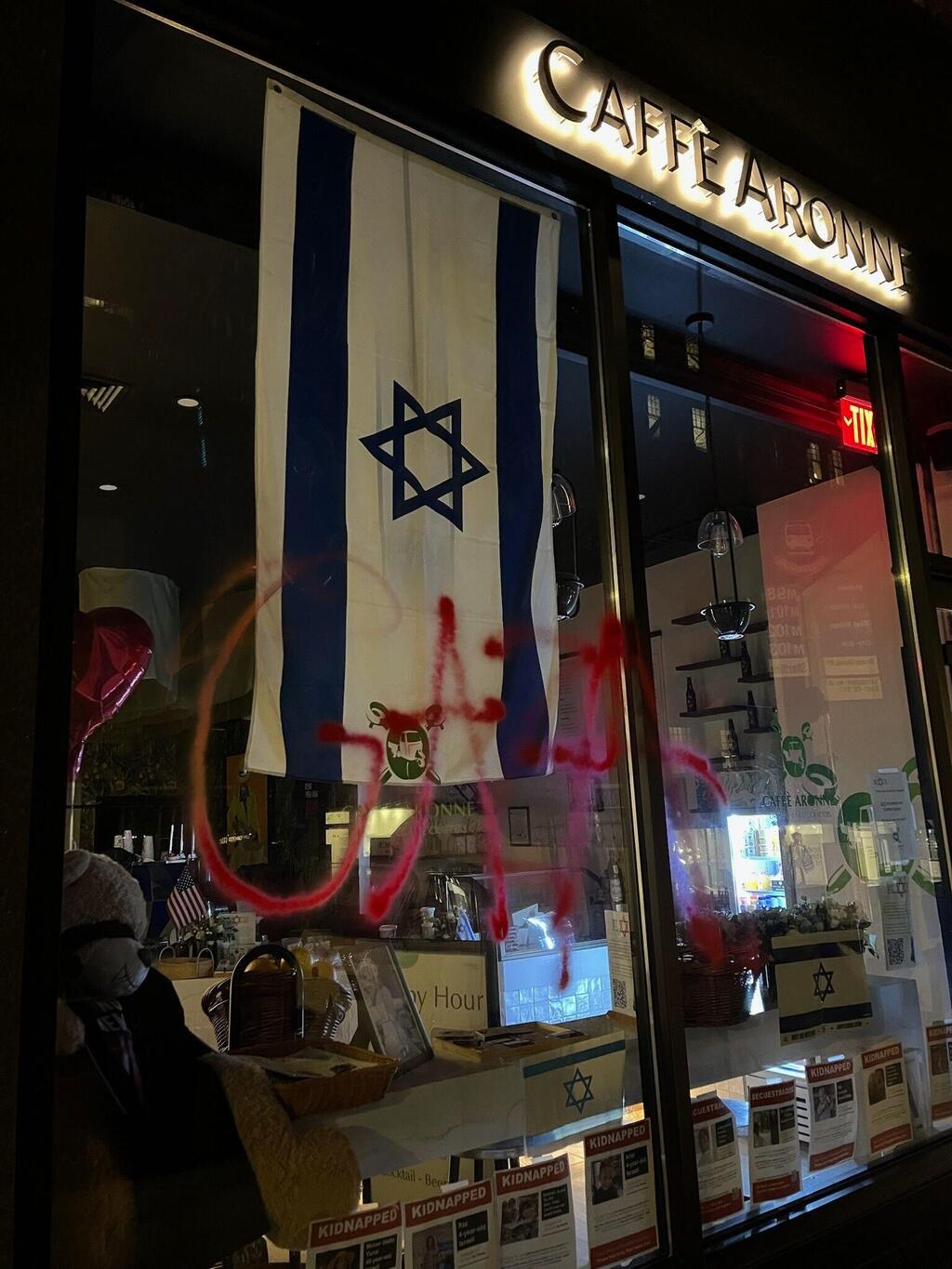
'Gaza' graffiti scrawled across an Israeli flag at Caffè Aronne
(Photo: Aaron Dahan)
His father’s story begins in Lebanon. “My father was born in Lebanon in 1967,” Dahan said. “They lived in Beirut and later moved to Jounieh, farther north. When he was 16, he was called up to the Lebanese army. My grandmother objected, and within 24 hours she put my father and my uncle on a flight to Paris, and from there to New York.”
Six years ago, Dahan said, the family bought tickets to finally visit Lebanon. A week before the planned trip, his grandfather died.
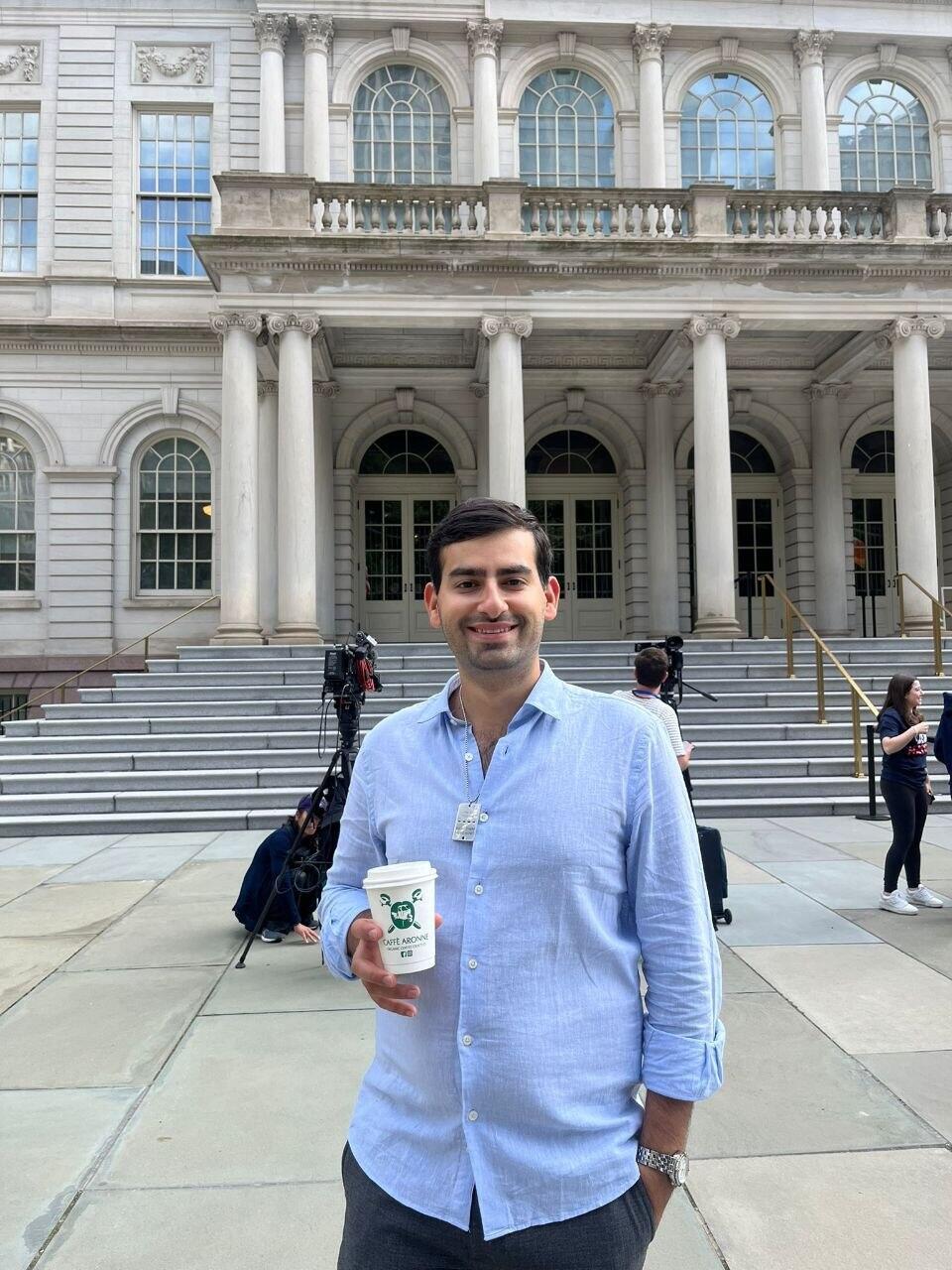
Aaron Dahan; his mother is Israeli and his father is Lebanese
(Photo: Private album)
Lebanon maintains a boycott law that prohibits contact and business dealings with Israelis. Dahan’s family, however, is Jewish-American and has maintained connections with people in Lebanon over the years. Dahan himself also knows people and customers who have visited the country.
Today, the Israeli and American flags outside Caffè Aronne have become a kind of filter. Some people see them and enter, even if only to buy a bottle of water and feel that they are taking part. Others stay away.
The flags also prompted a break with one employee who, Dahan said, gave him an ultimatum: her or the flags. He chose the flags. Another employee, he said, told him that the business received far more affection than hostility because of them.
Dahan does not see displaying them as an act of particular courage. “I don’t think we’re doing anything special by displaying the flags,” he said. “We’re not heroes. We’re doing here what every café in Israel does.”
“You don’t need courage, you need insurance,” he said. “Ours renews on September 1. Two weeks ago, I upgraded it to ‘terrorism insurance,’ because when you have a mayor talking about a global intifada, that’s what happens.”