


Imagine that, before the October 7 massacre, a Hasidic rebbe had sent a letter to then-Military Intelligence chief Aharon Haliva, warning him against the prevailing “conception” that Hamas had been deterred and that Israel was protected by the “smart fence” surrounding the Gaza Strip.
As it turns out, something strikingly similar actually did happen.
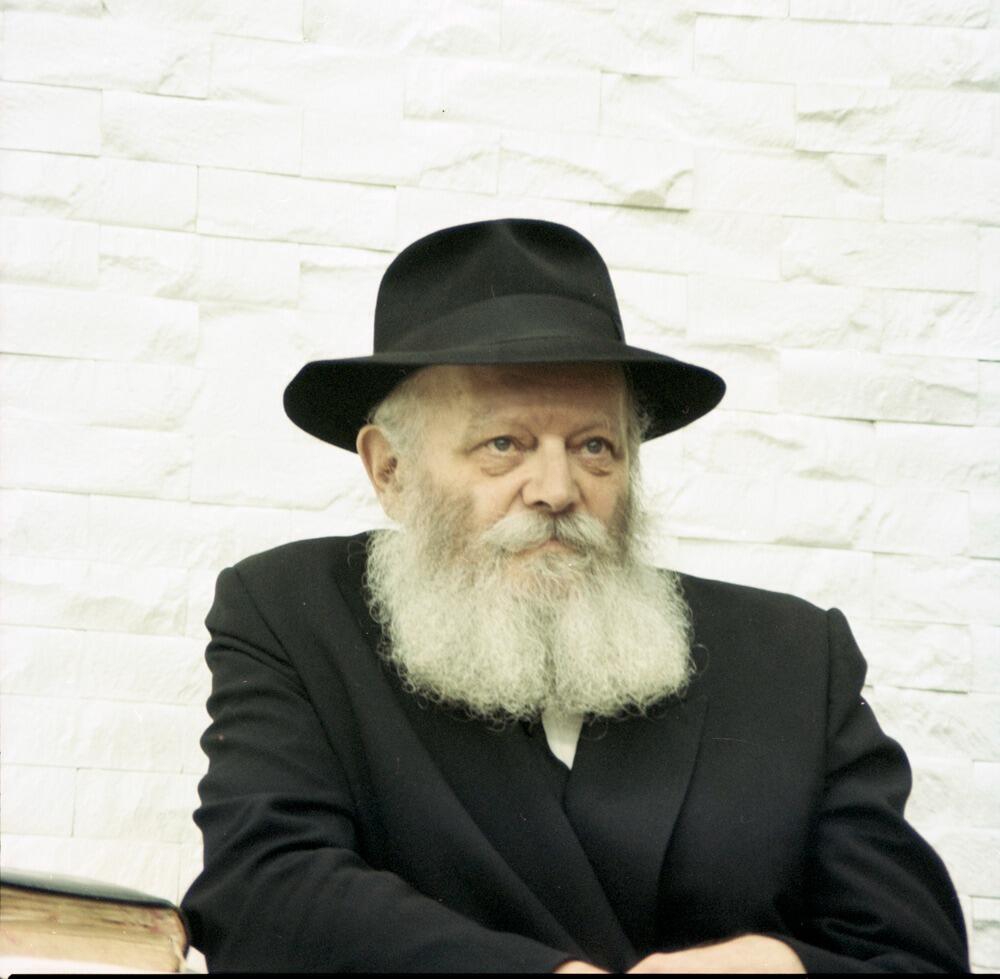
Two years before the Yom Kippur War, the Lubavitcher Rebbe sent a letter to Maj. Gen. Aharon Yariv, then head of Israel’s Military Intelligence Directorate. In it, he warned that reliance on the Bar-Lev Line and on partial agreements with Egypt resembled the mistake made in Europe when military planners relied on the Maginot Line, only to see it bypassed during Nazi Germany’s blitzkrieg in World War II.
A copy of that historic letter appears in Make Peace: A Strategic Guide for Achieving Lasting Peace in Israel, by Rabbi Elisha Pearl — a study of the political and strategic thought of Rabbi Menachem Mendel Schneerson, the Lubavitcher Rebbe and seventh leader of the Chabad-Lubavitch movement.
“The war that broke out on October 7 was really the reason I wrote the book,” says Pearl, a Chabad Hasid who moved to Israel from New York four years ago. “I was at 770, Chabad’s world headquarters in Brooklyn, that day, and of course I was deeply shaken by what had happened in Israel. The following day, I met with Rabbi Shmuel Avtzon, who heads Sichos In English, the official English-language publishing house for Chabad literature, where I work.
“We agreed that everything else had to be set aside and that we needed to focus on the Rebbe’s teachings about the Land of Israel. We believed there was an urgent need, given the situation, to spread the Rebbe’s message about Israel’s security. At first, I thought it would become an op-ed, but people urged me to turn it into a full book. After nine months of research and writing, the book was published in English and sold more than 20,000 copies. My friend Rabbi Levi Avtzon, a community rabbi in South Africa, encouraged me to translate the book into Hebrew, and eventually we partnered with Sella Meir Publishing to translate and publish it in Israel.”
From the Lubavitcher Rebbe’s letter to the head of Military Intelligence before the Yom Kippur War:
“Since you touched upon the question of a partial agreement, I will allow myself to ask whether you might be able to explain something that has greatly puzzled me for approximately three years. It is well known and universally accepted among experts, without exception, that in our era a defensive approach modeled on the Maginot Line and the like — that is, relying on fortifications and on military units that are ‘fixed and bound’ to bunkers and so forth — is simply not the proper method in an age of jet aircraft and paratroopers, particularly when the front extends for hundreds of kilometers, combining the Suez Canal front with the Mediterranean front.
“Rather, the strength of an army lies in its mobility and in its ability to move rapidly from place to place. This is true even where there are natural defensive positions — mountains, hills and the like — behind the line, and all the more so when one is situated in a desert. Even when such a line is several kilometers deep, the minimum territory involved in a partial agreement would certainly extend beyond the depth of the line itself. And yet enormous sums of money and tremendous energy have been invested in this defensive line.”
What do you think Israelis need to know?
“The book was originally intended to educate the English-speaking public, which views the conflict from afar. In Israel, we all live it up close. So I wouldn’t presume to tell Israelis what to do. At the same time, I would humbly suggest that the book has something to offer Israelis as well.”
“A bold intellectual movement”
Pearl, 33, was born in Brooklyn to a Chabad family that wanted their son to receive a broad education. He studied at Yeshivas Rabbeinu Chaim Berlin, and came to Israel at 18, where he spent two years at Yeshivat Har Etzion, a hesder yeshiva that combines Torah study with IDF service. It was there that he began studying the Lubavitcher Rebbe’s writings on the Land of Israel in greater depth.
“I had a Chabad study partner from Boston, and we learned together. After two years, he enlisted in the IDF, while I returned to New York to study philosophy, psychology and rabbinic studies at Yeshiva University,” he says.
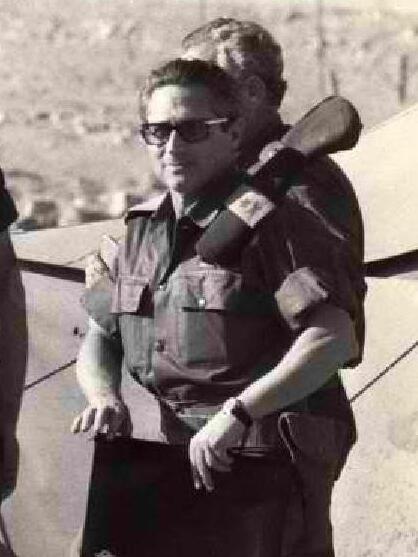 Maj. Gen. Aharon Yariv Photo: The State Archives
“At the same time, I began working in Chabad outreach, particularly through the Chabad on Campus initiative across the United States. That took me to campuses across the country and exposed me to very different kinds of Jews, including many Israelis who had left the country. One experience that stood out was a month spent running a Chabad House in Nepal for Israeli backpackers who had arrived there after completing their military service.”
Pearl, who also studied at Chabad’s world headquarters, eventually began working full-time as a researcher of Chabad texts.
“At first I focused on writing about Jewish law, but I was drawn toward Hasidic thought, and I mainly wrote and researched theological and psychological themes in Hasidism. In 2022, I decided to move to Israel for good, drawn by what I saw as the richness and vitality of Jewish life, and a spirit of depth and innovation in Torah study, Talmud, Jewish law, Kabbalah and Hasidism.”

Rabbi Elisha Pearl
(Photo: Nechama Leitner)
In recent years, several books analyzing the Lubavitcher Rebbe and his teachings have been published in Israel. What they have in common is that they were written by people who did not come up through Chabad’s classical yeshiva system. Why is that happening?
“From its very beginning, Chabad was a bold intellectual movement. Rabbi Shneur Zalman of Liadi, known as the Alter Rebbe and the founder of Chabad Hasidism, was deeply versed not only in Talmud, Jewish law and Hasidism, but also in Kabbalah, Maimonides’ Guide for the Perplexed, psychology and even the science of his time. Many of the followers drawn to him had similar intellectual interests.
“When the Rebbe Rashab, Rabbi Shalom Dovber Schneersohn, established the Tomchei Temimim yeshiva in 1897, it was during a turbulent period marked by the rise of the Jewish Enlightenment and communism. He created an educational system designed to produce ‘warriors of the House of David’ — young men capable of transmitting Judaism to the Jewish people as a whole, to every Jew.
“The students of Tomchei Temimim were the ones who sustained Jewish education underground in Soviet Russia with extraordinary self-sacrifice, and they later became the backbone of the worldwide army of Chabad emissaries.
“Later, the Lubavitcher Rebbe built an infrastructure — an enormous enterprise that presented Chabad thought in clear and accessible language. Today, that enterprise is bearing fruit. In the American Chabad world, Rabbi Naftoli Hertz Pewzner wrote The Basics of Chassidus. Rabbi Levi Shmotkin wrote Letters for Life, on the Rebbe’s psychological teachings, which became a bestseller. And Eli Rubin, a Chabad Hasid who did come through the yeshiva system, published Kabbalah and the Rupture of Modernity with Stanford University Press, an intellectual history of Chabad centered on the concept of tzimtzum.”
Warnings against strategic mistakes
In Make Peace, Pearl analyzes the Lubavitcher Rebbe’s warnings regarding ceasefire agreements with Egypt at the end of the War of Attrition. The Rebbe argued that the Egyptians had no intention of honoring those agreements.
The Rebbe also warned against Israel’s willingness to pay what he regarded as an excessive price for the return of captives, and opposed the principle of “land for peace,” arguing that such concessions would not bring peace but would instead encourage the enemy to attack.

The Lubavitcher Rebbe
(Photo: Israel Ze'ev Goldshmidt)
“We saw that happen in 1993, after the Oslo Accords,” Pearl says. “And in the wake of the October 7 massacre, many Israelis began reconsidering their assumptions. Those who had regarded unilateral withdrawal as a path to peace ran up against a simple reality on October 7 — they really do hate us, and they want to kill us.
“More broadly, it seems to me that the world is abandoning Francis Fukuyama’s ‘end of history’ thesis, and several developments are driving that process — the rise of artificial intelligence, the COVID-19 pandemic and the Russia-Ukraine war. All of them are forcing us to reassess long-held assumptions.
“In Israel, of course, all of that comes on top of a very local sense of existential threat that October 7 brought home.”
Pearl examines cases in which the Lubavitcher Rebbe warned against mistakes Israel was making, including its reliance on the Bar-Lev Line against Egypt and its policies toward the Palestinians. This raises another question: Why did neither the Lubavitcher Rebbe nor his predecessor and father-in-law, Rabbi Yosef Yitzchak Schneersohn, warn of the danger facing European Jewry during World War II?
During the Holocaust, the Nazis murdered the Rebbe’s younger brother, Dovber Schneerson, as well as his wife’s younger sister, Sheina Horenstein, who was killed at Treblinka along with her husband.
“I know there are people who will say that the Rebbe foresaw everything. But the Rebbe himself did not claim that,” Pearl says.
“Before the Six-Day War, he began warning that Israel was in grave danger. He wanted to use his standing as one of the leaders of the Jewish world to strengthen the morale of Israelis; he also believed that Jewish men putting on tefillin and Jewish women lighting Shabbat candles generated spiritual merit that could protect the Jewish people.
“That was why he launched the mitzvah campaigns encouraging the observance of these commandments. At the same time, he wanted to strengthen the morale and courage of the soldiers, based on the idea that if people believe in something, and if they connect with the Jewish tradition, they will inevitably become better soldiers.
“The next stage came when the Rebbe began addressing these questions publicly, both in his talks and in letters to senior figures such as Ariel Sharon. He encouraged a firm security posture based on deterrence and offensive action rather than defense. He called on Israel not to return territory and opposed granting autonomy to the Palestinians.”

Make Peace: A Strategic Guide for Achieving Lasting Peace in Israel, by Rabbi Elisha Pearl
(Illustration: Roy Kedem)
And yet the Rebbe did not broadly encourage Chabad Hasidim to enlist in the military.
“First of all, in the 1950s and 1960s, many Chabad Hasidim served in the army, including many well-known contemporary Chabad rabbis and teachers. But during the 1970s, Chabad in Israel moved more toward the Haredi world, and fewer Hasidim enlisted.
“It’s also worth remembering that, as a matter of principle, the Rebbe did believe Israel needed a ‘tribe of Levi’ — a cadre of people who serve as the repository of Jewish values, devoting themselves to Torah and to study in yeshivas. His concern was that blanket conscription at 18 would put that at risk.
“There is a military logic to it too. The IDF already sends young men and women off to study political science, intelligence or physics, because an army is a complex organism. Front-line soldiers are the ones taking on the greatest personal risk, but an army also needs people who are exemplars of religious values and virtue.
“But unlike much of the broader Haredi world, the Rebbe did not support the idea of an entire ‘society of learners.’ And over the past decade there has been a sharp increase in the number of Chabad Hasidim enlisting in the IDF, including in combat units, for both pragmatic and ideological reasons.
“Today, enlisting is a standard option in mainstream Chabad yeshivas in Israel. A young man who chooses to draft is not stepping outside his community, and in many yeshivas the staff will help him plan it. Alongside that, there has been a large influx of Chabad Hasidim from Diaspora communities who come to Israel specifically in order to serve as lone soldiers.”
Where does Israel go from here?
“I believe the Rebbe had remarkable clarity on several levels — regarding what does not work militarily, what does work militarily, questions of narrative and values, and a wide range of practical insights concerning the international community and Jewish settlement of the land.
“To my mind, part of the Rebbe’s uniqueness lay precisely in this combination. Obviously, he was a profoundly religious man who regarded the Torah and the Jewish tradition as concrete realities in every sense. At the same time, he was also a man of the wider world, with broad horizons and a bold strategic mind.
“Ironically, Israel today seems to me to swing between runaway messianism and excessive idealism on one side and defeatism on the other. The Rebbe, by contrast, charted a sober path that can offer direction and inspiration to Israel today.”
“I do not presume to claim that I possess the solutions to Israel’s challenges, nor do I believe this book is some kind of miracle cure,” Pearl concludes.
“My claim is much more modest: on this question, as on so many others, the Rebbe’s teachings are a gateway to deeper and clearer thinking — for this generation of Jews and the next — about how to build a vibrant Israel.”