

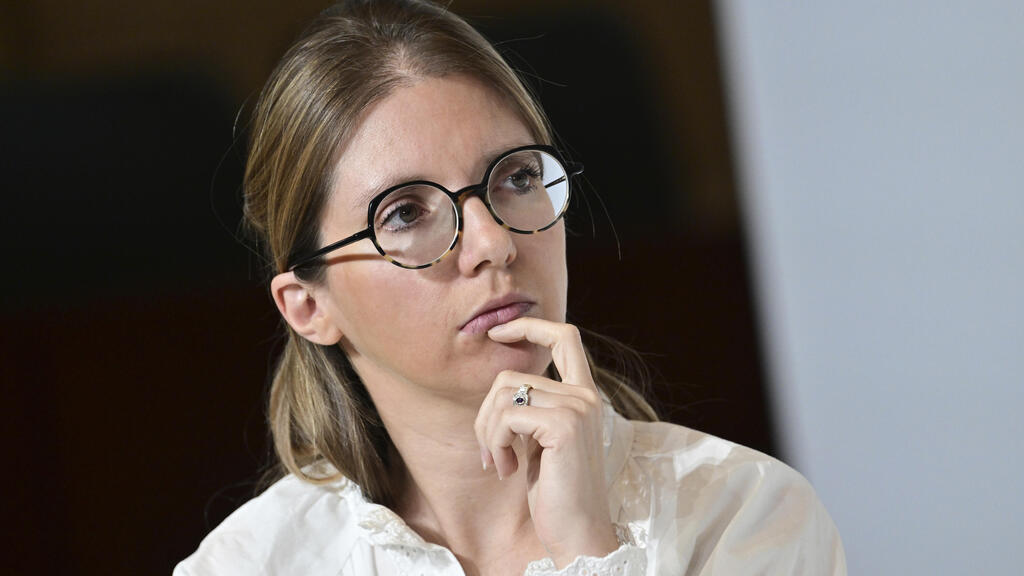
Aurore Bergé is the French government official responsible for policy on combating antisemitism, serving as minister for gender equality and the fight against discrimination. She arrived in Israel for a two-day visit aimed at holding discussions on the sensitive issue, amid a rise in anti-Jewish incidents since October 7.
In an exclusive interview with ynet and Yedioth Ahronoth, she declared: “In the coming weeks we will pass a new law against antisemitism.” The maximum penalty under the proposed legislation is five years in prison and a fine of 75,000 euros.
The bill includes under the definition of antisemitism incitement to destroy the State of Israel or comparisons between current Israeli policy and the Nazis. It sets penalties for glorifying terrorism, defined as public statements expressing support for terrorism, expands the offense of Holocaust denial and broadens the definition of terrorism and public advocacy of terrorism. Bergé, who served for two years as chair of the France-Israel Friendship Group in the National Assembly, said “the gravest danger in antisemitism is indifference to evil and its normalization — that it becomes routine, that we think it is inevitable and that nothing can be done.”
Regarding the new law, she said: “France is honored to become one of the only countries in the world with such a clear law on this issue. We hope other countries will follow our example.”
The bill was introduced by lawmaker Caroline Yadan, who represents French citizens living abroad, including in Israel. She and a delegation of National Assembly members will join the minister during her visit. France has already adopted the International Holocaust Remembrance Alliance definition of antisemitism, which includes certain expressions directed against the State of Israel when it is perceived as a Jewish collective.
According to Bergé, “Already on October 8, instructions were issued to protect French Jews. We ordered that all complaints related to antisemitism be expedited so that justice would be delivered swiftly. In 2024 I convened all the organizations dealing with the issue, including those representing all religions, because I believed it was essential to present a united front in the fight against antisemitism. We focused particularly on young people, because both the victims and the perpetrators are increasingly young. We are incorporating the IHRA definition of antisemitism into teacher training so they can explain what antisemitism is in its new forms.”
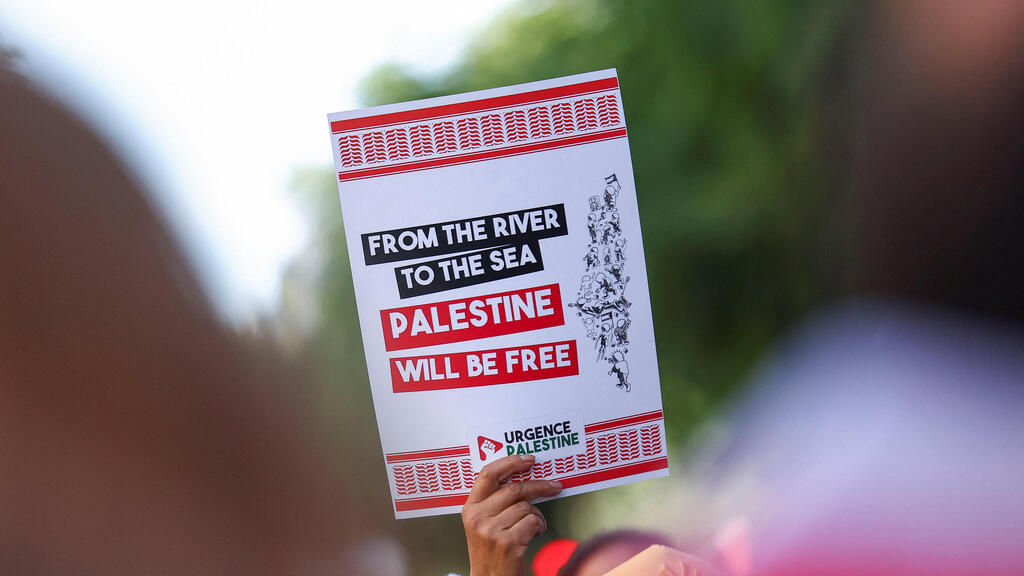
An anti-Israel protest in Paris
(Photo: Abdul Saboor )
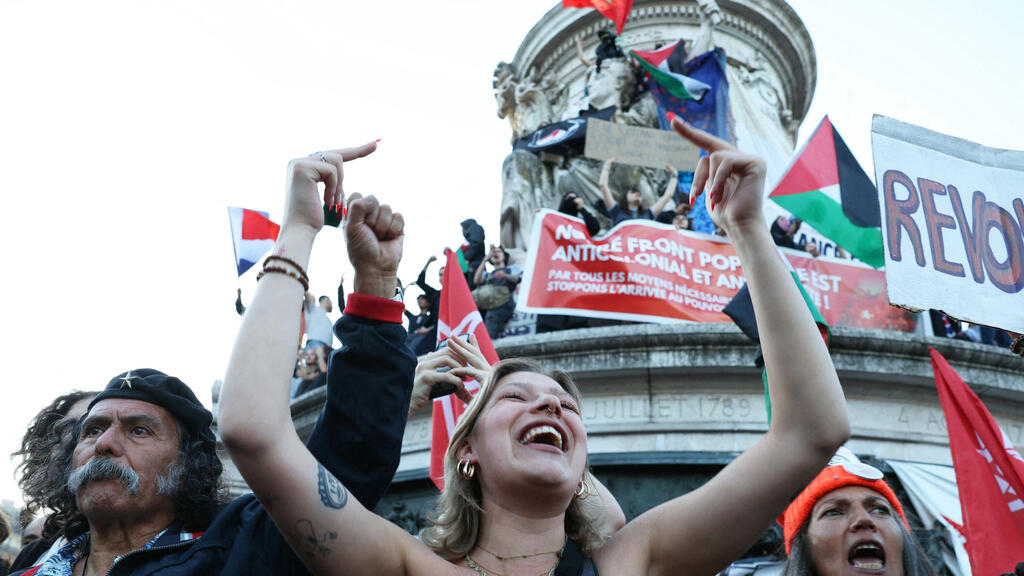
(Photo: Alain JOCARD / AFP)
Bergé also criticized antisemitism on the far left. “‘La France Insoumise’ (the left-wing party led by Jean-Luc Mélenchon) demonstrates electoral cynicism,” she said. “It presents a distorted portrait of France that fuels the atmosphere of antisemitism in our country. It is a noisy party that contributes to the violence of public debate, but in the end it serves as a smokescreen and a ladder for the rise of the far right.” By contrast, regarding statements by the far-right National Rally party on antisemitism, she said: “The messages of the National Rally are an attempt to launder its image. Many try to do so on Israel’s back. They are not allies we can rely on or whose support we should seek.”
'France stood firm'
Bergé, 39, previously served as spokesperson for President Emmanuel Macron’s party, government spokesperson and later minister for families. She has visited Israel many times, she said, both in her official capacity and privately. “This visit is different for me because it is the first time I am coming as a member of the government. It is a clear sign that it is important to me for the dialogue between Israel and France on combating antisemitism to resume after October 7, at the level of all ministries in both countries.”
The Israeli-French dialogue on the issue resumed after a two-year pause, and Bergé acknowledged: “The initiative for the visit came from me.” Diplomatic relations between Israel and France have been particularly strained in recent months, against the backdrop of French President Emmanuel Macron’s decision to recognize a Palestinian state.
Bergé’s brief visit to Israel will be mostly devoted to paying respects at the memorial site for those murdered at the Nova music festival massacre, visiting Kibbutz Nir Oz, the grave of Israeli-French hostage Ohad Yahalomi who was killed in captivity, and the grave of Ilan Halimi, whose brutal antisemitic murder by a gang known as the “Barbarians” marked its 20th anniversary on Friday in a ceremony led by Macron. The minister will then visit the post-trauma treatment department at Sheba Medical Center and Yad Vashem, Israel’s Holocaust memorial. She will also meet French citizens living in Israel.
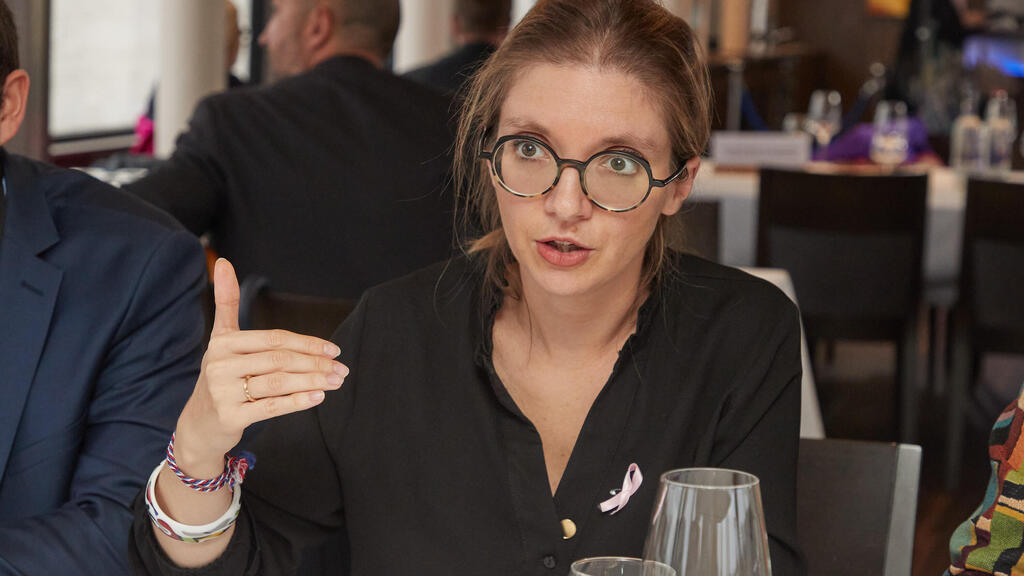
(Photo: Georg Wendt - Pool / Getty Images)
In 2025 there was a significant rise in immigration from France to Israel, reaching between 20,000 and 22,000 people, about 50% more than in the same period in 2024.
“Immigration must remain a matter of free choice and not something imposed out of fear or a sense of inevitability. I refuse to accept a reality in which French Jews feel they must leave their country, our country. No one should have to give up life in their homeland. France must guarantee that for all its citizens, including French Jews. As President Macron said on Friday: France without Jews is not the same country, and that is not the country we wish to live in.”
French Jews feel unsafe. Yonathan Arfi, president of CRIF, the umbrella body representing Jewish organizations in France, said last week in an interview that a Jew is attacked in France every three days. What steps are currently being taken to combat this antisemitism?
“Instructions have been given not to ignore any act, threat or insult. We are protecting more than 800 Jewish institutions and it is important to emphasize that we continue to invest resources in this area.”
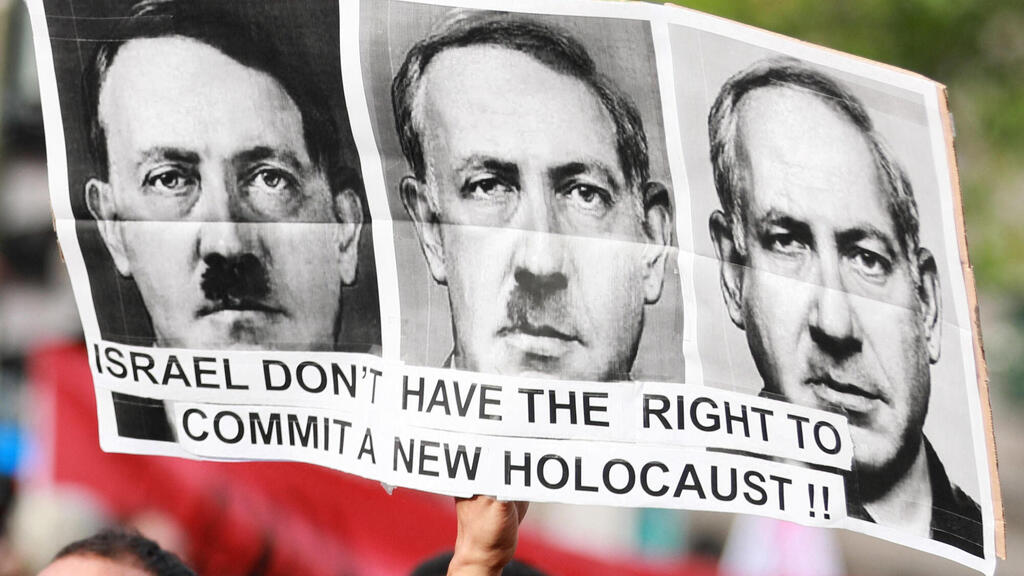
A protest outside the Israeli Embassy in Paris
(Photo: Sami KARAALI / AFP)
In an ideal world, Jews would not require constant protection. That does not address the root of the problem. How many attacks against the community have you thwarted?
“Every year dozens of attacks are foiled in France. We never publicize details about these successes, including those involving Jewish institutions. There is broad international cooperation against Islamist terrorism.”
Synagogues are attacked, for example by foreign actors spraying graffiti. Holocaust memorials are vandalized and there has been an overall rise in antisemitic incidents. How can you say you are protecting Jews?
“It is important to mention foreign actors, for example Russia, which is trying to destabilize France. They are attempting to create confrontations against communities in the country. That will not happen.”
What are the next steps?
“We are changing the law to ensure clearer definitions. We will address the root of the problem, namely education. We will increase penalties for those spreading hatred on social media. It is important that teachers do not censor themselves out of fear of the consequences. We are a country that has suffered attacks in schools: Ozar Hatorah in Toulouse, and the murders of teachers Dominique Bernard and Samuel Paty for teaching freedom of thought. We have added human and financial resources and increased the number of visits by high school students to Holocaust memorial institutions, and we intend to expand them to all age groups.”
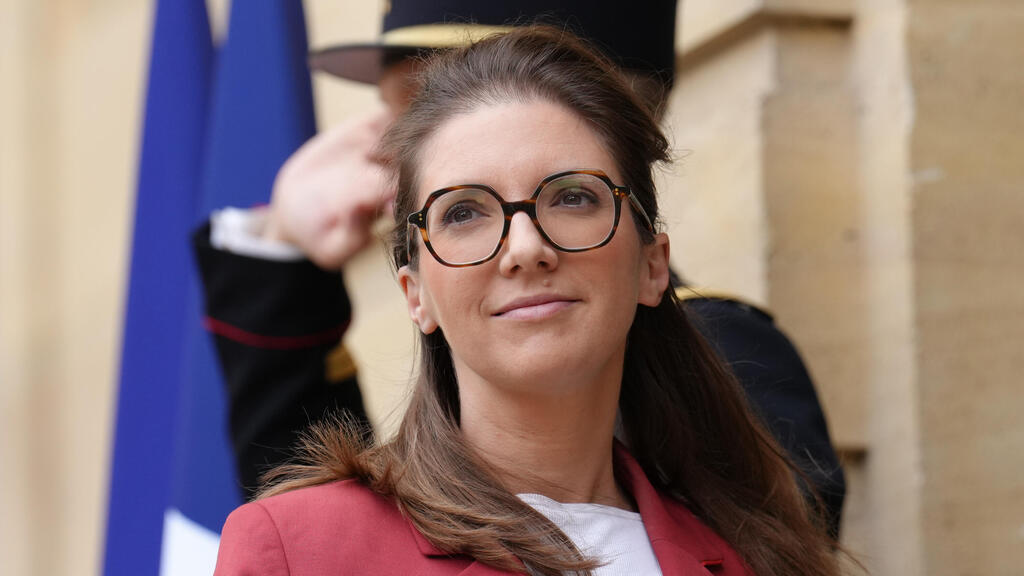
(Photo: Aurelien Morissard / AP)
It is becoming increasingly difficult to separate attacks on Israel from antisemitism.
“I think the general confusion between the terms Zionism and anti-Zionism and antisemitism is deliberately created by antisemites. Anti-Zionists who call for the destruction of Israel and deny its right to exist in security try to claim this is merely a ban on criticizing Israel. Anti-Zionism is fuel for antisemitism and I will not allow it to ignite in France. We are a democracy and criticism is legal and free in France, just as in Israel. By the way, the harshest debates about the Israeli government take place within Israel. It is permitted to criticize France. But we are witnessing people who are so obsessed with Israel that it is the only country whose destruction they call for. None of them calls for the destruction of Afghanistan or Iran, despite the regime and its impact on human rights, particularly women’s rights. This is the obsession we denounce. Anti-Zionism is a new form of antisemitism.”
Nevertheless, France is not very popular in Israel. Many Israelis feel that the condemnations France issues regarding Israel are more numerous than those directed at Hamas and the Palestinian Authority, which encourage antisemitism.
“I think France is always expected to do more than other countries in the world when it comes to human rights. All democracies have experienced a rise in antisemitic incidents since October 7. Some have fought back and some have given up. France, as a democracy, has stood firm.”
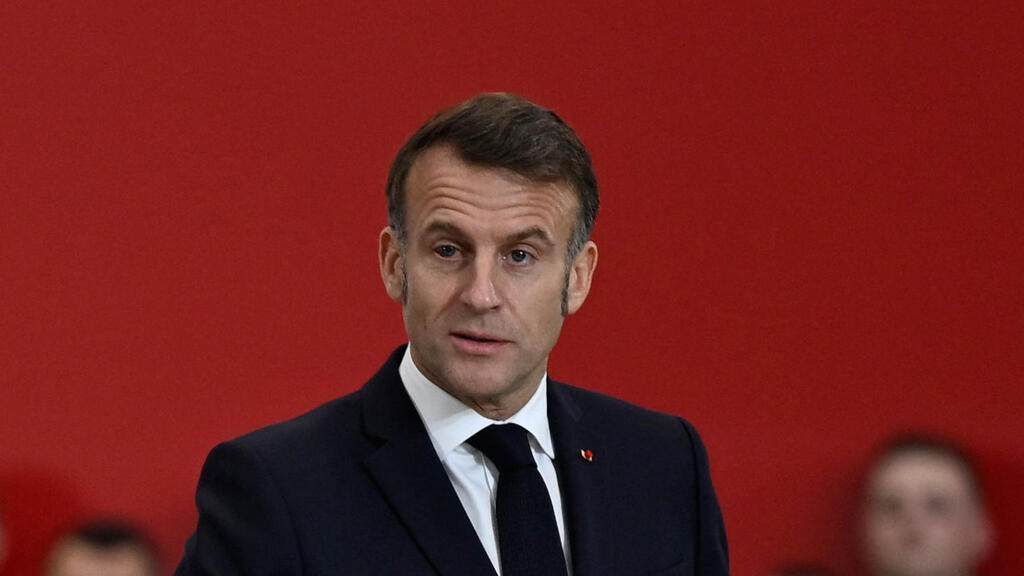
French President Macron
(Photo: Philippe Magoni / POOL / AFP)
Bergé’s visit, accompanied by a delegation of lawmakers, follows a week of statements against antisemitism that began with calls for the dismissal of Francesca Albanese, the U.N. special rapporteur for the Palestinian territories, after she referred to Israel as “an enemy of humanity.”
On Friday, a significant ceremony was held at the Élysée Palace, where an oak tree was planted in memory of Ilan Halimi and Macron delivered a speech presenting the law his government intends to advance in the National Assembly. Macron referred directly to “the antisemitism of radical Islam, which was the source of the October 7 pogrom and seeks to spread preachers of hatred in our country,” as he put it. He also declared that “the time has come for a patriotic and republican mobilization” and announced a national day of remembrance for Alfred Dreyfus on July 12. In his speech, Macron’s proposal to bar anyone who engages in or expresses antisemitic or racist and discriminatory conduct from running for office was met with applause.
Is it too late for measures against antisemitism in France?
“If I were pessimistic I would not be involved in politics,” Bergé concluded. “It may be a quarter to midnight, but it is not yet midnight. It is never too late. It is very important for me to convey, through my visit, a message of hope and friendship.”
First published: 05:22, 02.16.26