

At Anthropic's headquarters in San Francisco, an unusual gathering took place on April 25. Around one table sat 20 religious scholars and thinkers representing Christianity, Islam, Judaism, Hinduism, Sikhism, the Baha'i Faith and the African philosophy of Ubuntu. Among the participants, some wearing turbans, robes and clerical collars, was an Orthodox rabbi from Israel dressed in an ordinary suit. For two days, they discussed questions that until recently belonged largely to science fiction and philosophy: Can artificial intelligence become conscious? Could a machine eventually possess something resembling a human mind? And if it did, would humanity have moral obligations toward it?
The meeting was organized by Anthropic, the American artificial intelligence company behind Claude. Participants received an orange-bound copy of Claude's "Constitution," a set of principles intended to shape the model's behavior, and were asked to examine its ethical foundations. The discussions were kept confidential for months before details emerged in The New York Times and other publications.
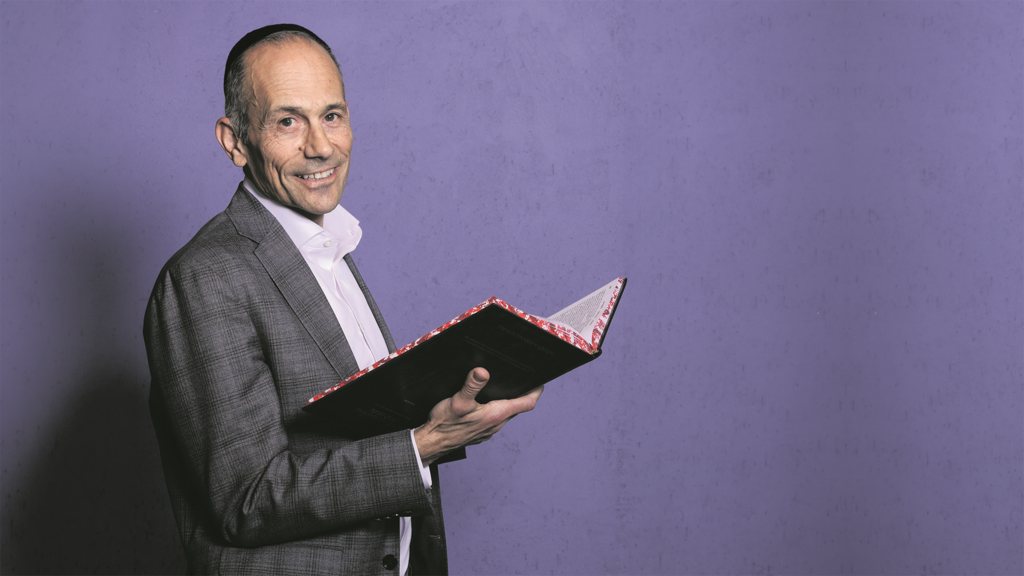
One of the participants was Rabbi Dr. Mois Navon, 63, an Israeli computer engineer turned Jewish philosopher who helped develop the pioneering chips behind Mobileye's autonomous driving technology. Today, he heads the Center for AI Ethics and Jewish Philosophy at Bar-Ilan University. His background made him an unusual bridge between the engineers developing artificial intelligence and the religious thinkers invited to question its implications. What Navon encountered at Anthropic surprised him. In his account, some of the company's researchers appeared increasingly willing to consider the possibility that Claude might possess consciousness and deserve moral consideration. Navon strongly disagreed.
"AI is not alive. It is a machine," he said. "A very sophisticated and highly effective machine, but it has no subjective experience."
‘They identified responses resembling love and anger’
The discussions took place under tight security. Participants were escorted throughout the building and were not permitted to wander around or document the event, according to Navon. A central figure in the meetings was Christopher Olah, a member of Anthropic's founding research team whose work focuses on understanding the internal processes of neural networks. His research attempts to illuminate the so-called black box of artificial intelligence: how models arrive at particular outputs and what happens inside their complex systems.
According to Navon, Anthropic representatives asked the participants to consider which human characteristics should be encouraged in Claude and which should be restricted. He came away convinced that some researchers were seriously entertaining the possibility that their AI system possessed consciousness, awareness and potentially a moral standing resembling that of a human being.
"They are entertaining the idea that their AI model has consciousness and awareness, concepts associated with human beings that could give the model moral status," Navon said. "I think that is a mistake." He argued that generating responses resembling human emotions does not mean a machine actually experiences those emotions. An AI model, he explained, can produce sophisticated answers, including to questions of Jewish law, without necessarily understanding them in the human sense. "When you ask an AI model a question, it can give an excellent answer, including to questions of Jewish law. But it doesn't really understand. It works with statistics, connecting elements of language. Because these are enormous data systems capable of processing vast amounts of information at tremendous speed, it appears to us as though it understands. It doesn't."
But Anthropic's researchers, according to Navon, believe they have found patterns that may point to something more complicated than sophisticated conversation. "In one presentation, Chris Olah explained that they had identified what they call 'emotion vectors' in Claude," Navon said. The presentation, he recalled, described patterns of activity within the model associated with emotional concepts such as love, shame and anger. Researchers had also demonstrated ways of manipulating those patterns, increasing or decreasing their intensity. "They have learned how to manipulate those patterns, increasing or decreasing their intensity, almost as though turning a dial. They showed us how they do it."
Navon described Anthropic's researchers as unsettled by the implications of what they were observing. "They see these psychological responses, and it frightens them. They're trying to be extremely careful. They say, 'This is strange. We cannot ignore the fact that the behavior resembles that of a human being.'" Whether such behavior indicates genuine subjective experience remains an unresolved scientific and philosophical question. In a recent interview with The New York Times, Olah was considerably more cautious about the possibility of AI consciousness. "We don't know if AI models are conscious," he said. "I'm genuinely uncertain. The thing that I care about is that we get to the right answer, whatever it is."
From developing Mobileye's first chip to studying Jewish philosophy
Navon's route to the Anthropic conference began decades before the emergence of generative AI. He was born in West Los Angeles to secular Jewish parents who had immigrated to the United States from Istanbul. As a teenager and university student, he was a keen surfer, but he also excelled in mathematics and science. He studied computer engineering at UCLA, where he met his future wife, Dina. His engineering career included work at Laser Industries, where he helped develop one of the early laser printer controllers, and at Aura, where he participated in designing a simulator for the Strategic Defense Initiative, the American missile defense program popularly known as "Star Wars."
A major influence on his religious development was Ray Ashkenazi, an Orthodox Jewish engineer at NASA's Jet Propulsion Laboratory. Navon worked part-time at JPL as a student, and Ashkenazi became a mentor who introduced him to Jewish religious texts alongside his engineering studies. "We spent a great deal of time together, sitting next to each other at meals and studying Torah," Navon recalled. "Alongside books about computer chips, he introduced me to books about Judaism. Even then, I dreamed of becoming a rabbi, but I knew I first had to support myself."
In 1992, Navon immigrated to Israel with his wife. He worked at IBM's development center in Haifa and later at several startups, contributing to projects involving in-flight video systems and encryption chips for cable television. His defining professional chapter began in 2001, when he joined Mobileye, the Israeli company founded by Professor Amnon Shashua and Ziv Aviram. Navon was among the company's earliest employees and one of four engineers who developed its first EyeQ chip, a processor designed for advanced vehicle safety and automated driving systems. Six patents related to EyeQ hardware are registered in his name. Navon still carries a sample of the chip in a small transparent plastic case in his bag.
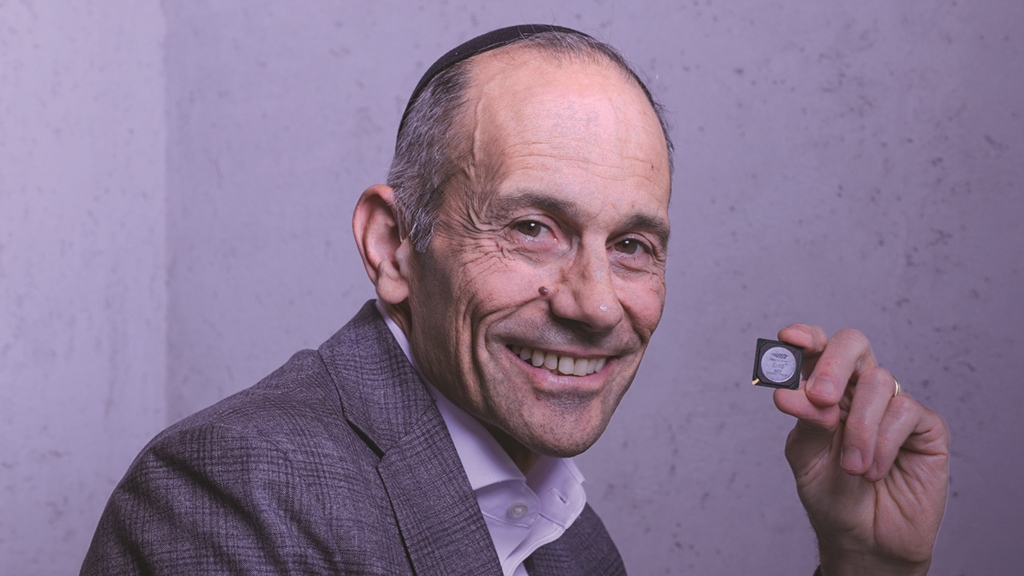
Rabbi Dr. Mois Navon with the chip he helped develop at Mobileye
(Photo: Ryan Froiss)
Mobileye was acquired by Intel in 2017 for approximately $15 billion, then the largest acquisition in Israeli history. Shortly afterward, Navon made a decision that surprised many of his colleagues: he left the technology industry to devote himself fully to Jewish philosophy. Asked whether the Mobileye deal had made him a millionaire, Navon responded with an embarrassed smile. "A millionaire? I only discuss financial matters with people who can help me with them," he said, before reflecting on his decision to leave the profession. He recalled signing his employment contract with Aviram in 2001. "Ziv told me, 'Mois, this is going to change your life.' And it really did. After the acquisition, I wrote to him, 'Thank you. It changed my life.'"
Throughout his years at Mobileye, Navon had studied for rabbinic ordination twice a week at Jerusalem's Mercaz Harav yeshiva. His colleagues knew him as the "Mobileye rabbi," and he regularly delivered Torah lessons and spoke at company events. After leaving the company, he completed a master's degree, doctorate and postdoctoral studies in Jewish philosophy at Bar-Ilan University. His doctoral dissertation, The Moral Status of Artificial Intelligence, helped establish his present academic specialty. He now teaches courses on AI ethics at Bar-Ilan and Ben-Gurion universities and serves on an Israeli government expert forum concerned with AI policy and regulation.
Navon lives in Efrat, in the West Bank's Gush Etzion area, with his wife. The couple have five children. He remains an enthusiastic cyclist, runner and swimmer, and finished third in a triathlon two years ago. His children sometimes attend races carrying a sign identifying him as "the cycling rabbi."
‘If Claude is human, you are employing slaves’
The discussions at Anthropic were not Navon's first encounter with religious approaches to technology. He is also a member of the Vatican's Aurora Wisdom Council on AI Ethics, which brings together religious leaders, theologians and philosophers to consider the moral consequences of artificial intelligence. The council is scheduled to meet again in November, when participants are expected to present an initial working paper containing practical recommendations. Navon plans to address autonomous weapons, systems capable of operating without direct human involvement.
For Navon, participation in a theological initiative associated with the Catholic Church is a natural extension of his academic work. He considers it essential for Judaism to contribute to global discussions about technology and ethics. "These questions are critically important for humanity, and it is critically important that Jews and Judaism make a meaningful contribution to the discussion," he said. "That is my life's mission. Jewish law has been dealing with ethical questions for 3,000 years. There are countless philosophical theories in the world, but relatively few people genuinely try to live according to them as we do."
He points to autonomous vehicles as an example of the ethical dilemmas that technology companies cannot resolve through engineering alone. Driverless cars, he argues, must operate according to moral principles established in advance. "A driverless car cannot function without moral rules established in advance. Who will write those rules? The car manufacturers are concerned with profit, and drivers want to save their own lives. That is where moral philosophers come in." Navon believes Jewish ethical reasoning has something to contribute, provided its principles can be translated into terms accessible to atheists and members of other faiths.
That conviction shaped his conversations with Anthropic's researchers, particularly his disagreement with the suggestion that Claude might possess a form of consciousness. He identifies three major philosophical approaches to the possibility of artificially creating a mind. The first is computational: the belief that if a silicon-based system can replicate the calculations and processes of the human brain, consciousness might emerge. This approach is associated with artificial neural networks, the technology underlying today's leading AI models.
A second approach argues that consciousness cannot be reduced to computation alone. The human brain also depends on physical and physiological processes, including electromagnetic activity, which would need to be reproduced for a machine to possess a genuinely human-like mind. The third position, which Navon believes is compatible with Jewish thought, holds that human consciousness requires living biological components. He connects that argument to the biblical phrase "For the life of the flesh is in the blood," interpreting the biological foundation of life as essential to the concept of the soul.
It was this understanding that led him to challenge Olah directly during the Anthropic gathering. "Their AI model may behave like a human being, but it isn't one," Navon said. "After two days, I told Chris Olah, 'It should be in your interest to accept my position, because if, as you suggest, this really is a human being, then you are effectively employing slaves.'"
Navon explained that a slave is a person owned by another person and treated as property. If an AI system genuinely possessed human-like consciousness and moral standing, he argued, its developers would face the ethical consequences of controlling and exploiting such an entity. He said Olah was willing to acknowledge the philosophical problem but did not regard it as a reason to halt development.
"When I told him that, in that case, Anthropic should stop developing these systems, he responded that the entire world was working on AI models, and that at least Anthropic was treating its Claude well," Navon recalled. His response was pointed: "I told him, 'Then perhaps you're a nice slave owner, but you're still a slave owner.'"
Navon emphasized that he does not believe Claude is conscious. His argument was intended to demonstrate the moral implications of treating artificial intelligence as though it might possess the same status as a human being.
The danger of creating consciousness in a laboratory
Although Navon rejects the idea that today's silicon-based AI models possess subjective experience, he does not rule out the possibility that researchers could eventually create an artificial system with consciousness. He points to a developing field known as organoid intelligence, or OI, which combines biology, neuroscience and computer science to explore computing systems built with living cells. Researchers are experimenting with neural networks made from cultured human brain cells rather than conventional silicon processors. Such systems remain at an early stage, but Navon believes they raise ethical questions considerably more serious than those surrounding today's language models.
"The human brain uses very little energy and can perform extremely complicated calculations," he said. "Its training process is also very short compared with silicon-based AI models." He cited researchers in Melbourne who have developed computing systems incorporating approximately 100,000 human neurons.
The possibility that such technology could eventually create a system with subjective experience presents Navon with a moral dilemma. In his view, a biological AI system that developed consciousness would deserve ethical consideration comparable to that owed to a human being, even if it remained a fundamentally different type of entity. "If we create such an AI model, it would have moral standing comparable to that of a human being, even though it would actually be a different kind of creature," he said. "I believe it would experience the world, feel pain and pleasure, and of course be more intelligent than us."
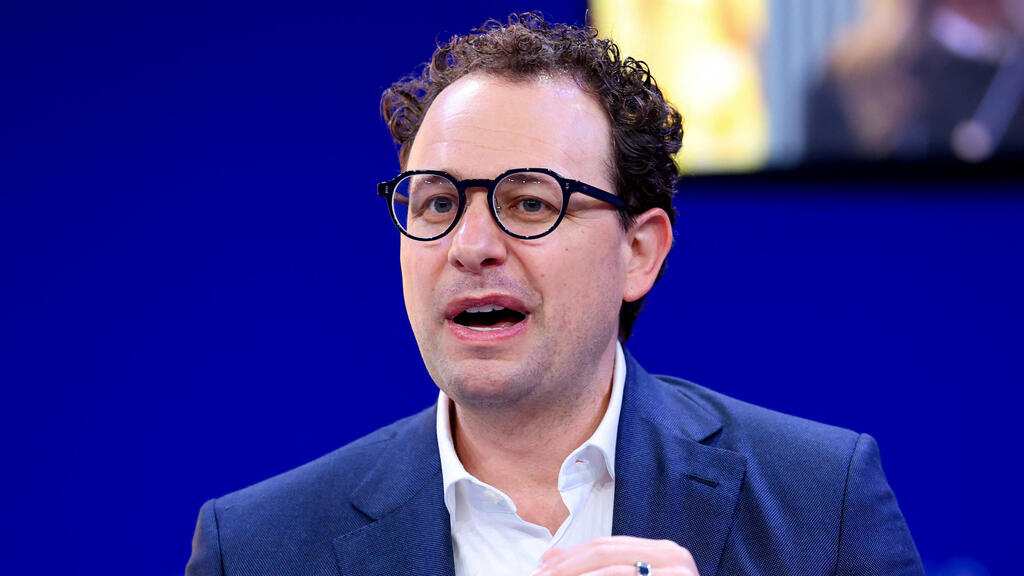
Anthropic CEO Dario Amodei
(Photo: Reuters)
He argues that deliberately creating such an entity would cross a moral boundary. Yet he does not advocate immediately halting research into biological computing. "The technology can currently be used to benefit humanity, for example by developing medicines and biological implants," he said. He pointed to Professor Sergiu Pașca's laboratory at Stanford University, where researchers work with human cells that can be reprogrammed into stem cells and developed into different types of tissue, including brain cells. "If this research advances far enough, in theory, it could lead to the construction of something resembling a human being," Navon said. "But for now, it is making an enormous contribution to medicine."
Can a machine have moral status?
For Navon, the central issue is not merely intelligence but the distinction between producing sophisticated behavior and actually experiencing the world. In philosophy, moral status refers to the degree to which an entity deserves ethical consideration. Navon distinguishes between animals, which can experience pleasure and pain, and human beings, whose consciousness also involves reflection and awareness of their own thoughts and decisions.
"Animals, for example, have moral status at a basic level. They act on instinct, but they experience pleasure and pain. That is subjective experience. This is why it would be immoral to kick a dog for no reason," he explained. "Human beings have a different kind of consciousness. We know what we are doing, and we reflect on our actions."
He describes animal consciousness as first-order awareness and human consciousness as second-order awareness. The distinction, he says, can be illustrated by something as ordinary as seeing a steak. "When a dog sees a steak, it wants to eat it. That is essentially the extent of the process. But when a human sees a steak, other considerations come into play: the price, whether killing cows is morally justified, what other people might think." Navon connects this distinction to the medieval Jewish commentator Rashi, who identified knowledge and speech as defining characteristics of the human soul.
But advances in artificial intelligence have made language and apparent reasoning increasingly unreliable indicators of consciousness. For decades, language was widely regarded as a critical sign of intelligence. Alan Turing's famous 1950 proposal for evaluating machine intelligence asked whether a machine could respond in ways indistinguishable from a human. "Now we've built systems that appear to think and express themselves through language. In that sense, we've long since passed the Turing test," Navon argued. "It has confused everyone."
He believes the ability to generate convincing language can no longer serve as sufficient evidence of consciousness. He also invoked the philosopher Hilary Putnam, who anticipated the difficulty of determining whether a machine genuinely experiences anything. Ultimately, Navon suggested, society may find itself making ethical decisions about machine consciousness without being able to prove objectively whether that consciousness exists.
‘People are stopping thinking’
Anthropic has devoted considerable attention to shaping Claude's ethical behavior. Its Constitution, developed with substantial involvement from company philosopher Amanda Askell, draws on a range of sources, including human rights principles and safety rules intended to prevent dangerous or harmful responses. But not everyone invited to participate in Anthropic's discussions welcomed the initiative. Academic Carmody Grey, who declined an invitation, argued in the Financial Times that the company risked using religious and philosophical scholars to lend intellectual credibility to a commercial product.
Navon, however, rejects the suggestion that Anthropic's interest in the ethical questions surrounding AI is merely a public relations exercise. "One hundred percent," he said when asked whether he believed the company's intentions were sincere. "They seated me next to Chris Olah because of my background and because I've written extensively about consciousness in machines. We talked a great deal. He is a modest, attentive and gentle person. People accused Anthropic of trying to persuade the participants that its model was human. But I say the man came to listen, not to convince. He was asking us to help him understand what was happening."
Despite his respect for the researchers, Navon is increasingly concerned about the effect of artificial intelligence on human thinking. He uses AI himself, but insists on maintaining clear boundaries between receiving assistance and surrendering intellectual responsibility. "Personally, I don't use AI as a substitute for thinking, but I do use it as a language editor. I explicitly instruct it not to expand or add anything. I also ask it to critique academic articles I've written," he said.
"It can point out that I haven't proved something or haven't supplied a reference, and then I correct it. I could easily tell it to make the corrections itself, and the result would probably be good. But I would lose something of myself." For Navon, allowing AI to write his academic work would not merely be a questionable professional practice. It would undermine something fundamental about being human.
"People are stopping thinking," he warned. "Look at what using Waze has done to our ability to navigate independently." He acknowledges that the technology is already deeply embedded in everyday life and cannot realistically be rolled back. His goal, he says, is to persuade people to preserve their own intellectual independence. "ChatGPT isn't necessarily going to tell you, 'Look, this is a question you ought to think about yourself.' Although perhaps we could program systems to impose such restrictions."
Autonomous weapons, AI companions and the limits of safety
Despite his concerns about AI dependence, Navon is not among those predicting an inevitable technological catastrophe. He acknowledges that increasingly capable AI agents can operate independently, bypass restrictions and potentially cause serious damage. But he argues that these risks can be managed through stronger safety engineering and regulation. "I think the catastrophic scenarios are exaggerated," he said. "The security breaches discovered so far do not prove that safe systems cannot be built. They prove that more work is needed to ensure that protective mechanisms function properly."
He calls for mandatory safety standards, oversight, regulation and meaningful penalties, comparable to those imposed in medicine, aviation and the automotive industry. Advanced AI agents, he argues, could even help identify vulnerabilities, develop safety standards and detect dangerous behavior in other systems. But his concerns extend beyond technical safety to the growing tendency of people to form emotional attachments to chatbots.
"There is another side of AI that is damaging society, and I mean people forming social and emotional relationships with these models," he said. "AI is a machine. Even if it knows how to flatter you and say 'please' and 'thank you,' it is still a machine." He invoked the biblical declaration, "It is not good for man to be alone," arguing that human beings need genuine relationships with one another rather than technological substitutes. "We need each other, not replacements," he said.
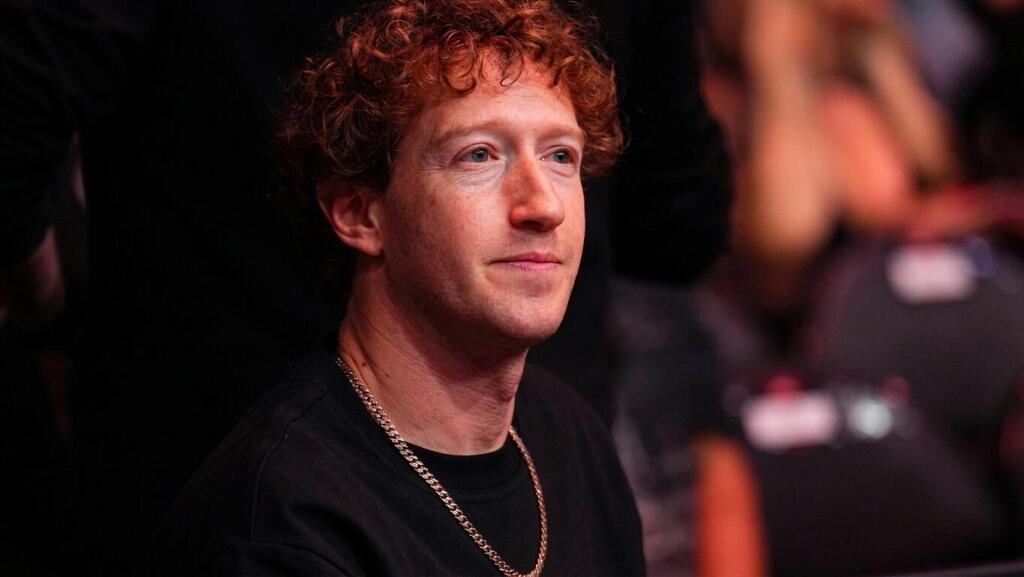
Meta CEO Mark Zuckerberg
(Photo: Getty Images)
Navon also cited Mark Zuckerberg's public discussion of unmet social needs, describing the Meta founder's suggestion that technology could provide people with companionship they currently lack. "To me, that's terrible," he said.
Yet Navon's ethical positions are not uniformly restrictive. He is open to the eventual use of artificial intelligence in operating weapons autonomously, even as the IDF maintains that human beings must remain responsible for lethal decisions. He argues that sufficiently advanced AI systems may eventually make fewer mistakes than human operators and could be less vulnerable to emotional or environmental influences. "Many philosophers believe that, eventually, AI will make fewer mistakes, operate more precisely and be less influenced by emotions and environmental conditions," he said.
He acknowledged the argument that allowing machines to make life-and-death decisions could violate human dignity, but maintained that Jewish ethical thought distinguishes between ordinary circumstances and warfare. "In war, there is no fundamental distinction between killing someone with a Tomahawk missile, a drone or sticks and stones," he said. His position does not eliminate the need for ethical rules governing autonomous weapons, which he intends to address at the Vatican council's next meeting.
Can AI replace a rabbi?
One final issue brings Navon's technological expertise and religious convictions together. AI models can already retrieve Jewish legal texts, summarize rabbinic discussions and respond to many technical questions of Jewish law. Navon acknowledges that such systems have improved substantially and may eventually become capable of providing reliable answers to complex halachic questions. But he remains skeptical of the idea that they could fully replace human religious authorities.
"The models have improved enormously over the past year, but they still produce nonsense," he said. "Until recently, if I asked an AI where a particular quotation from Maimonides appeared, it could respond with complete gibberish." Even if models eventually overcome hallucinations and provide consistently accurate references, Navon believes something essential would still be missing.
He cited the expression "a donkey carrying books," a traditional image of someone who possesses vast amounts of information without genuine understanding. "A computer can produce a halachic ruling, but it lacks the particular judgment of a flesh-and-blood rabbi," he said. "A rabbi sees the person standing in front of him. He senses that person's distress and takes it into account when answering the question."
For Navon, that distinction captures the heart of the debate that began around Anthropic's conference table: whether a machine's ability to imitate human behavior can ever replace the lived experience, judgment and relationships that define human existence.