

The banker Jules Strauss was an avid art lover. He arrived in France from Germany at the age of 19 and was so grateful to his new homeland that he became one of the Louvre Museum’s largest donors. In the 1920s and 1930s, Strauss and his wife Marie-Louise donated numerous valuable works of art and 17th-century frames to the museum, which can still be seen lovingly encasing Leonardo da Vinci’s masterpieces hanging at the heart of the famed institution.
But in June 1941 everything changed. The Nazis entered Paris and confiscated all their property — from the art collection to the piano, down to the last plate in the kitchen. As if that were not enough, the unit responsible for looting Jewish art even set up headquarters in their apartment. Their collection was “sold” through galleries run by collaborators. Some of it was destroyed or lost. Only one masterpiece — a drawing by 18th-century Italian painter Giovanni Battista Tiepolo — made its way to the Louvre’s storerooms.
Gallery
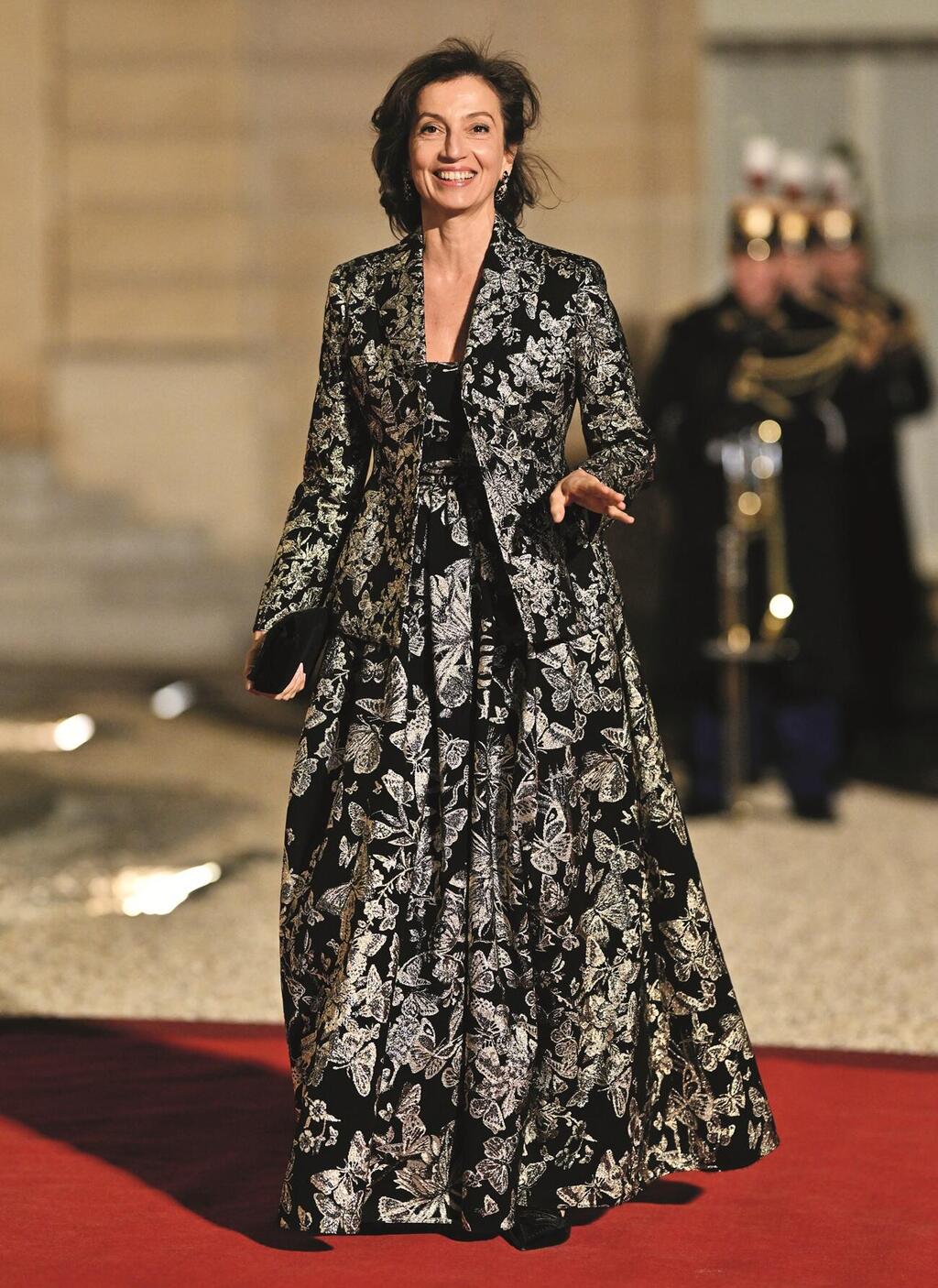
Audrey Azoulay, France’s Minister of Culture from 2016 to 2017
(Photo: Mustafa Yalcin/Anadolu/AFP)
No one on the museum staff made any effort to locate the Strauss family or repay them for their years of generosity. “It was the family’s own search efforts that made the restitution of the work possible,” Audrey Azoulay, France’s minister of culture from 2016 to 2017, told Yedioth Ahronoth and ynet. During her brief tenure, she was a driving force behind initiating the process of returning confiscated property to the descendants of looting victims.
“It is our moral duty to do justice, and to ensure that lack of cooperation and denial are not added to the crimes of confiscation, denunciation and greed that fed on private individuals’ love of art. It is never too late to return property, which is also the theft of the victims’ story and memory,” Azoulay, who is Jewish, declared in her speech at the 2017 ceremony in which Tiepolo’s painting "The Shepherd" was returned to Strauss’ descendants.
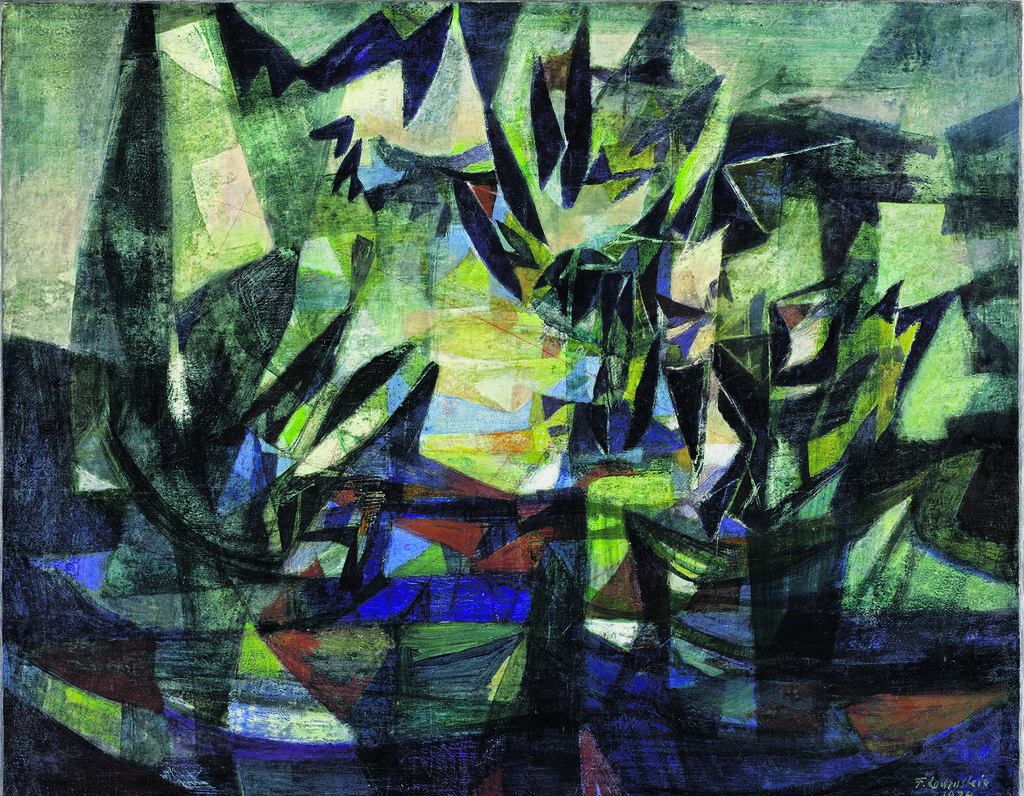
'Composition' by Fedor Lowenstein
(Artwork: Courtesy of Richard Brook, Bertrand Prévost, Centre Pompidou)
Many works of art were saved from Nazi hands thanks to Rose Valland, after whom the French Culture Ministry’s archive for tracing relatives is named. Those who saw George Clooney’s 2014 film "The Monuments Men" may recall the character played by Cate Blanchett. Valland was a volunteer at the Musée Jeu de Paume in Paris, where artworks looted by the Nazis were brought starting in 1940, before being shipped to museums in Germany, to the private collections of Hitler and Hermann Göring, or destroyed as “degenerate art” and works by Jewish artists.
Officially, Valland cataloged the works for the Germans on a voluntary basis. In reality, she sent detailed reports to the Resistance on the collected works, their destinations and the timing of shipments. Her meticulous work made it possible, after the war, to return most surviving artworks to France.
In 1950, the MNR (National Museums Recovery) was established, bringing together all confiscated and recovered art. The central repository is located at the Louvre, although the items are dispersed across museums throughout France.
Sold at a loss
Some 61,000 looted artworks were found in France after World War II. About 45,000 were quickly returned to their rightful owners. From the 1950s until September 2025, only 200 works were restituted. However, since 2013 the pace has accelerated, with 87 works returned.
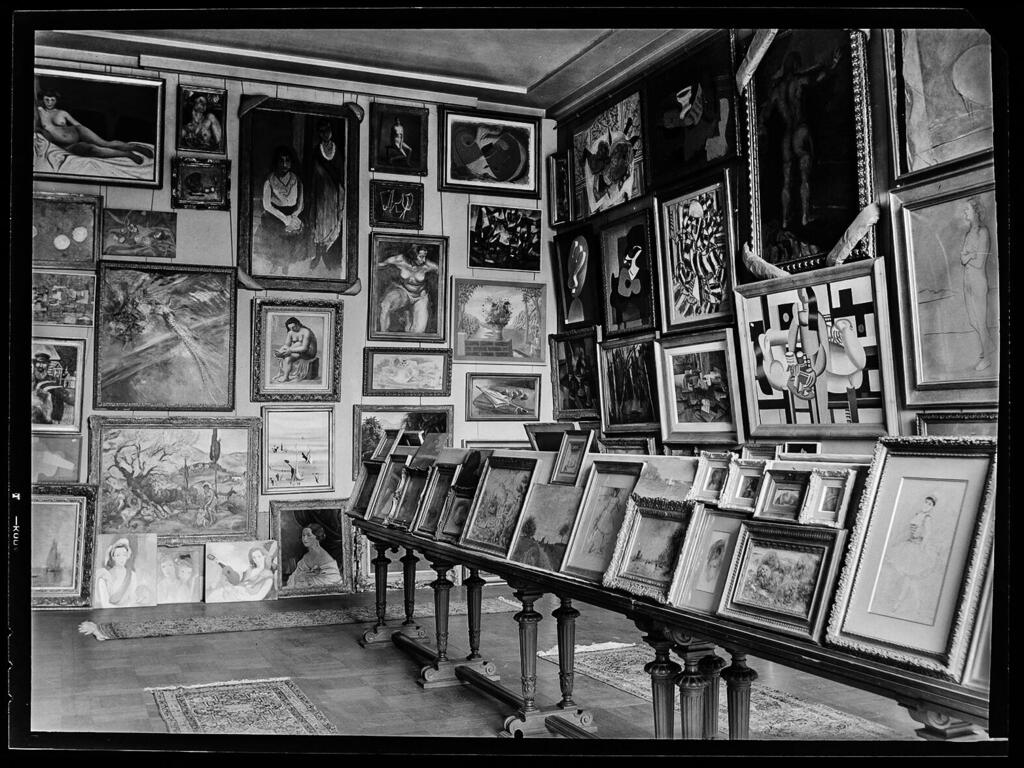
The photos designated for destruction at the 'Jeu des Pommes' museum, the diplomatic archive of the French Foreign Ministry
Until the end of the 20th century, many curators were alarmed by the idea that works preserved in public collections might end up sold on the private market, at prices public institutions could not match. Since then, attitudes have shifted significantly. “Starting in 2012, under the governments of President François Hollande, my predecessors and I took steps to change this perception,” Azoulay explained. “The idea was that the state or museums would invest more effort in locating heirs rather than waiting for them to come forward.”
Each case is unique, and the path artworks take back to families is often complex. A small exhibition curated by Pascale Samuel at the Museum of Jewish Art and History in Paris is currently dedicated to painters Diane Esmond and Fédor Löwenstein.
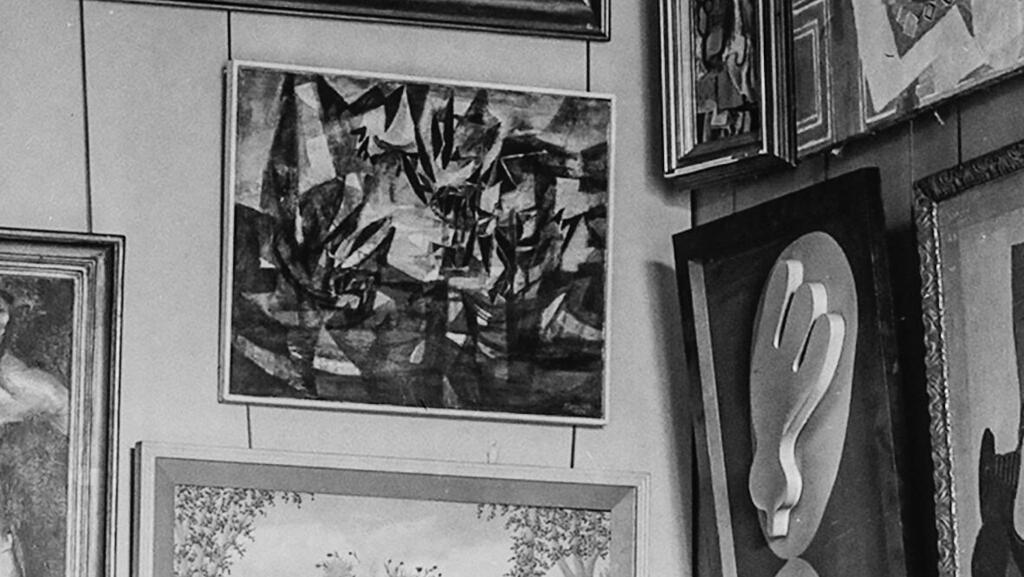
(Photo: French Foreign Ministry Archives)
“Löwenstein’s paintings were confiscated at the port of Bordeaux. He tried to send them to the United States. The works ended up at the Musée Jeu de Paume, and some were marked with a red cross, indicating they were slated for destruction. We don’t know why they were spared,” Azoulay said.
Löwenstein died shortly after the end of World War II. Three paintings were returned to a family representative only in September 2025, after being identified in the collection of the Musée d’Art Moderne in France. “My father never spoke about his family, except for his sister who was murdered in Auschwitz," said Richard Brook, a relative of the painter. "I discovered the rest on my own.” It was the CIVS (Commission for the Compensation of Victims of Spoliation) that located him, with the help of a genealogy website offering its services free of charge.

'The Clown' by Diane Esmond - Museum of Jewish Art and History, Paris. Gift of Adrianna and Victor Wallis
(Photo: Christophe Fouin)
“France is the only country that still compensates victims of the looting of Jewish property without a time limit, when the asset cannot be returned,” explained David Zivie, head of the department for the search and restitution of cultural property stolen between 1933 and 1945. Other countries may not limit restitution claims, but they do not offer compensation.
Zivie is a key figure in efforts to recover looted property and authored a comprehensive report on the issue at Azoulay’s request. “It’s important to stress that we devote the same effort to locating the owners of books worth €100 as we do to highly valuable works of art. Value is not the criterion," he said. "Some people don’t know what their families once had at home. Through these objects, they discover and come to terms with their family story, which can sometimes be difficult. It’s very moving.”
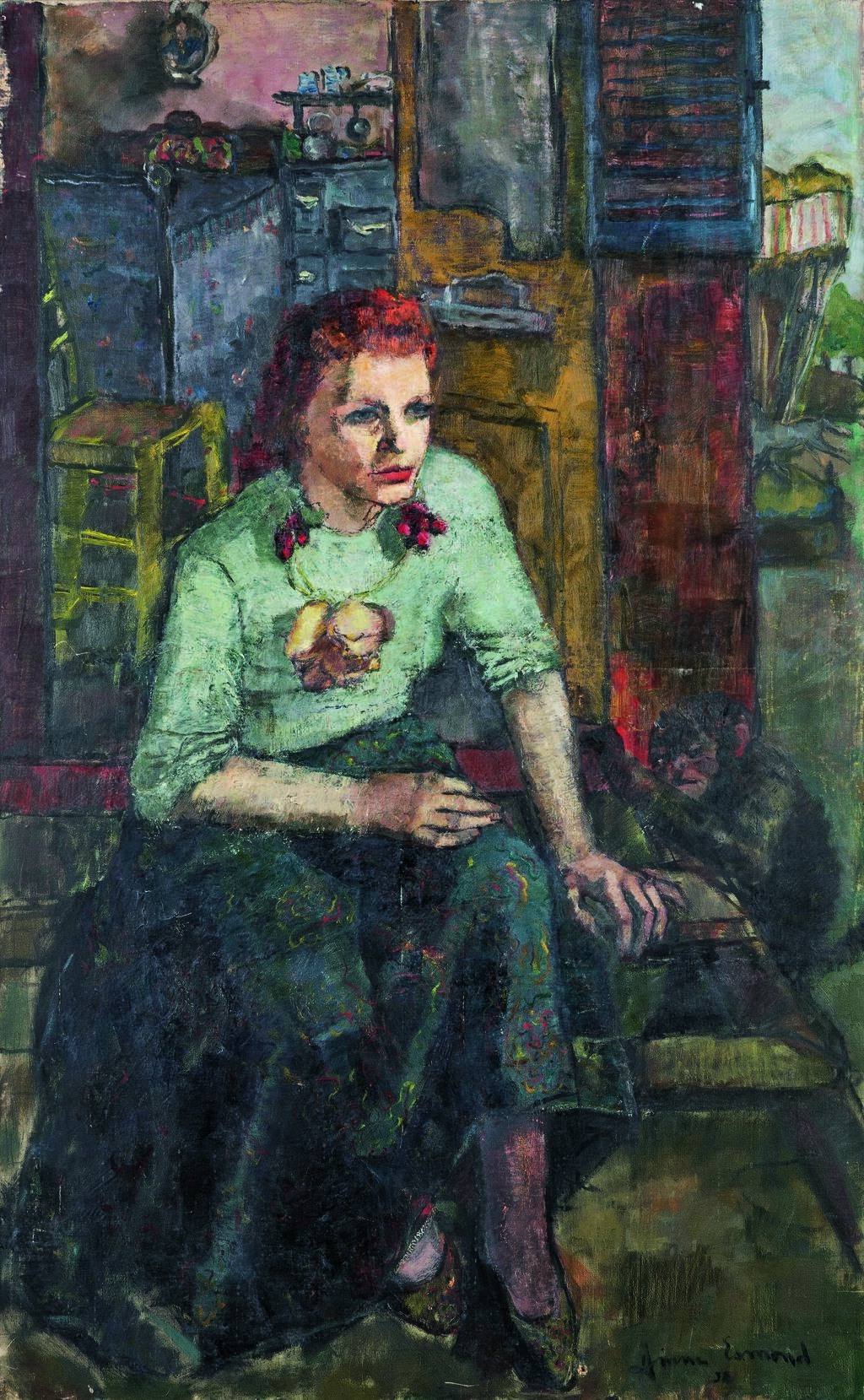
""The Lady with the Monkey" - Diane Esmond - Museum of Jewish Art and History, Paris. Gift of Adrianna and Victor Wallis
(Photo: Christophe Fouin)
In the past, efforts focused on tracing works that entered museums or the private market after the war. “Today, proving the provenance of a work is the main requirement for approving its acquisition, donation or display in a museum,” curator Pascale Samuel explained. “The source of provenance information must be specified, and ownership history between 1933 and 1945 must be proven, since Jewish collectors were forced to sell their assets at a loss before the war.”
Zivie recounted an unusual case involving Marc Chagall’s work "The Father."
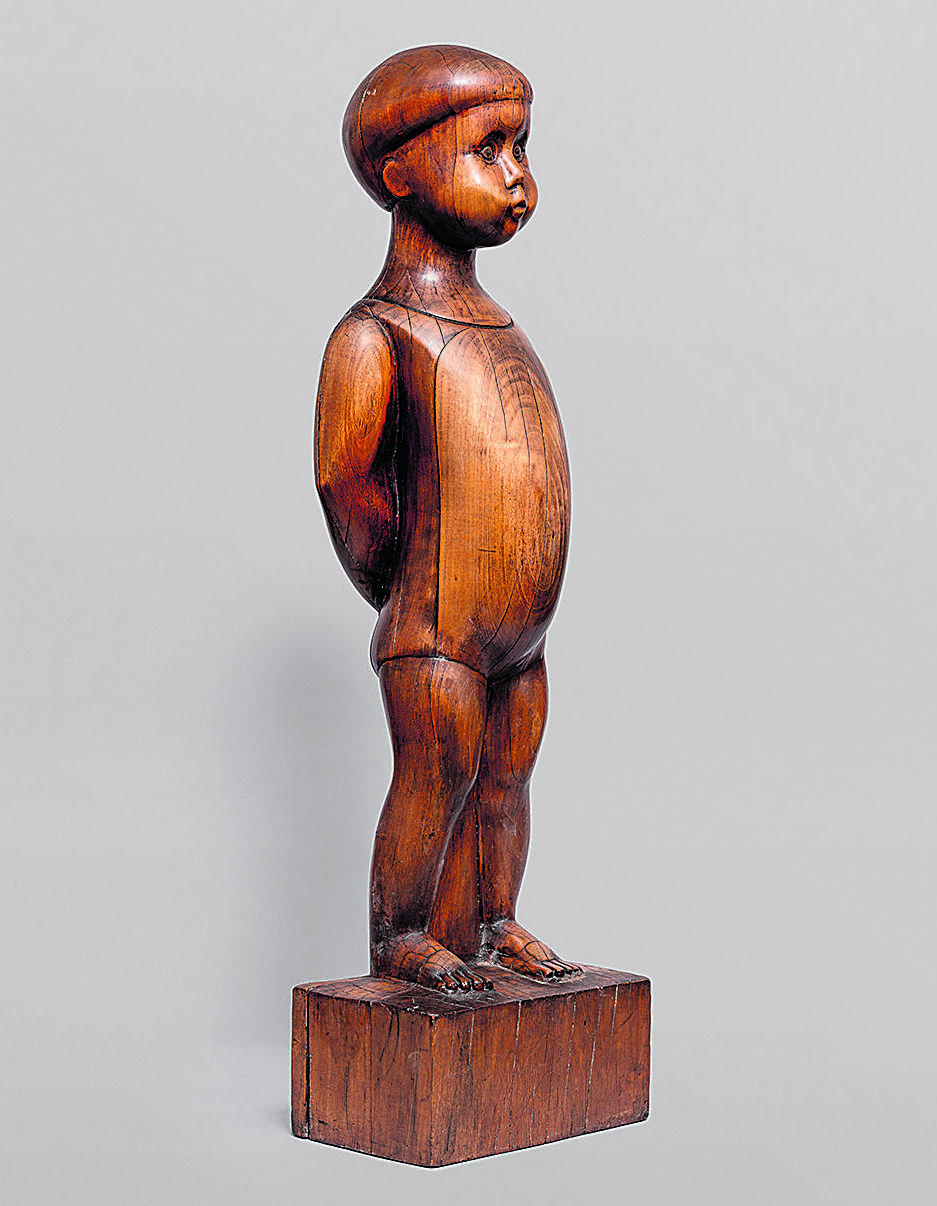
'The Child Didi,' by Jeiwsh sculptor Chana Orloff
(Photo: Nicolas Brasseur)
“It was donated to the Jewish Museum from Chagall’s personal collection after his death. No one could have guessed it had been looted. Upon investigation, it emerged that Chagall had repurchased it in the 1950s. It had belonged to Polish violin maker David Sender, who was sent to Auschwitz, where he lost his wife and daughter,” according to Zivie.
Without the technological tools developed in recent years, the heirs who identified the painting would likely not have been able to prove their connection to a work that initially appeared never to have left Chagall’s studio.
Lives left behind
Alongside Löwenstein’s recovered works, the Museum of Jewish Art and History is also displaying paintings by Diane Esmond. One depicts a colorful clown at the center of a circus ring; another shows a red-haired woman with a piercing gaze, with a monkey extending an arm toward her.
“They both hung on the wall in my grandparents’ home, but no one knew their story,” recalled Esmond’s granddaughter, artist Adrianna Wallis. “They received 14 paintings back in 1946. Later it turned out the Germans had confiscated 46 works and destroyed 32 of them. The assumption is that they were burned in 1943 in the square near the Musée Jeu de Paume.”
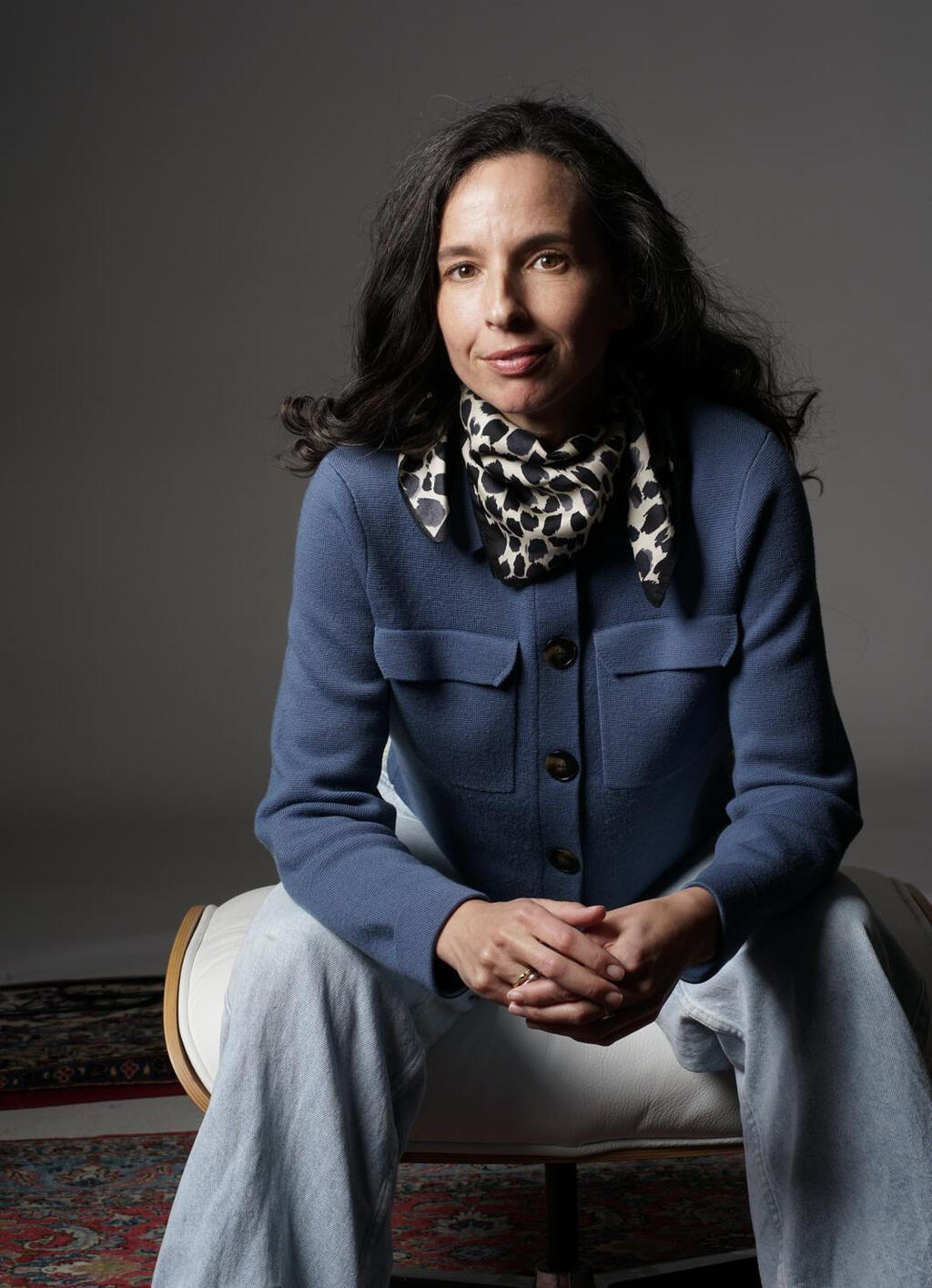
Artist Adrianna Wallis
(Photo: Sébastien Malga)
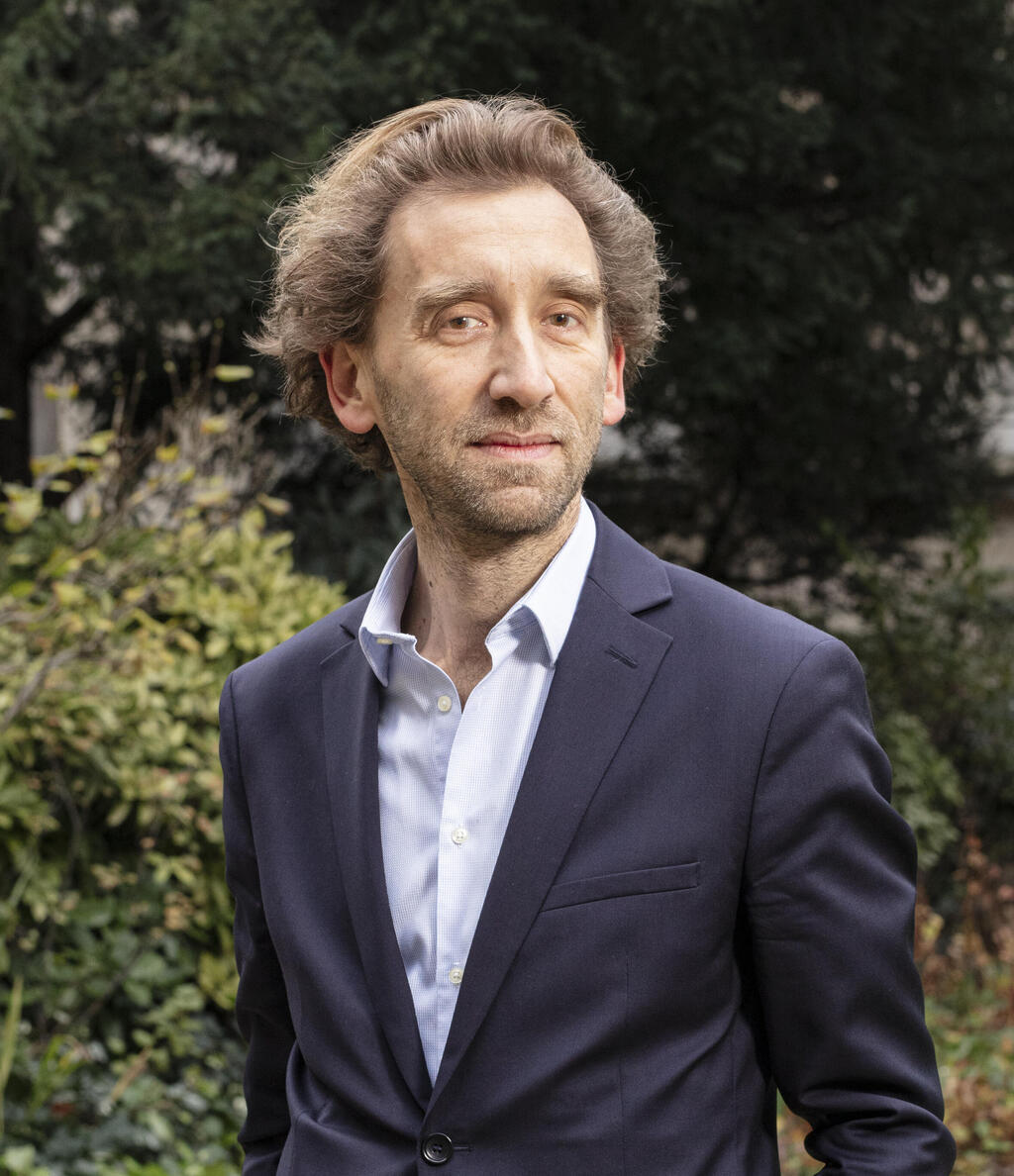
David Zivie, Director of the Department of Search and Return of Cultural Property Stolen in the Holocaust
(Photo: Julia Genet)
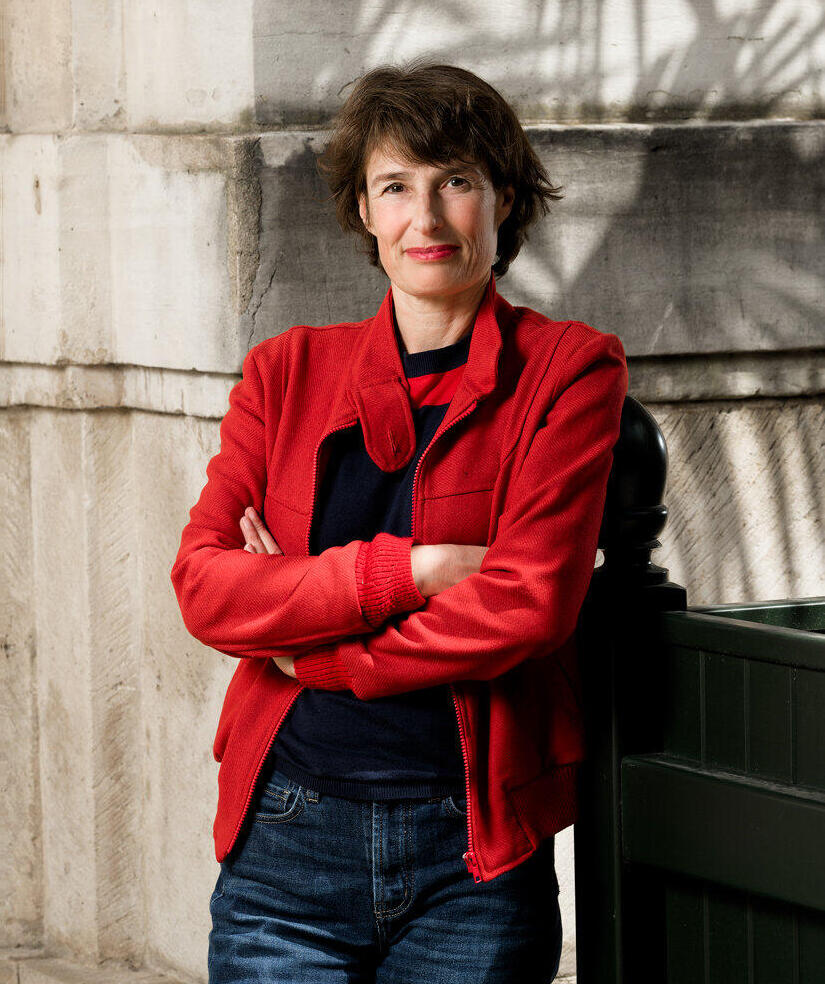
Pascal Samuel
(Photo: Orlean Moll)
One day, Wallis received a call from lawyer Corinne Hershkovitz, who had heard about the paintings. She flew to the United States and found them gathering dust in the attic of an 85-year-old uncle. “I began to wonder whether I studied art in order to correct the injustice done to my grandmother. After all, all my works, even before this discovery, dealt with material decay.”
Wallis chose to delve into the world of lost property. While artworks are the most visible aspect of looting, those who survived the war reported hundreds of thousands of everyday items they had carefully chosen in their former lives — furniture, tablecloths, scrubbing brushes, sewing machines and spoons — that were destroyed. In a podcast she recorded, a long list of such objects can be heard in the background, sketching lives left behind with no possibility of repair.
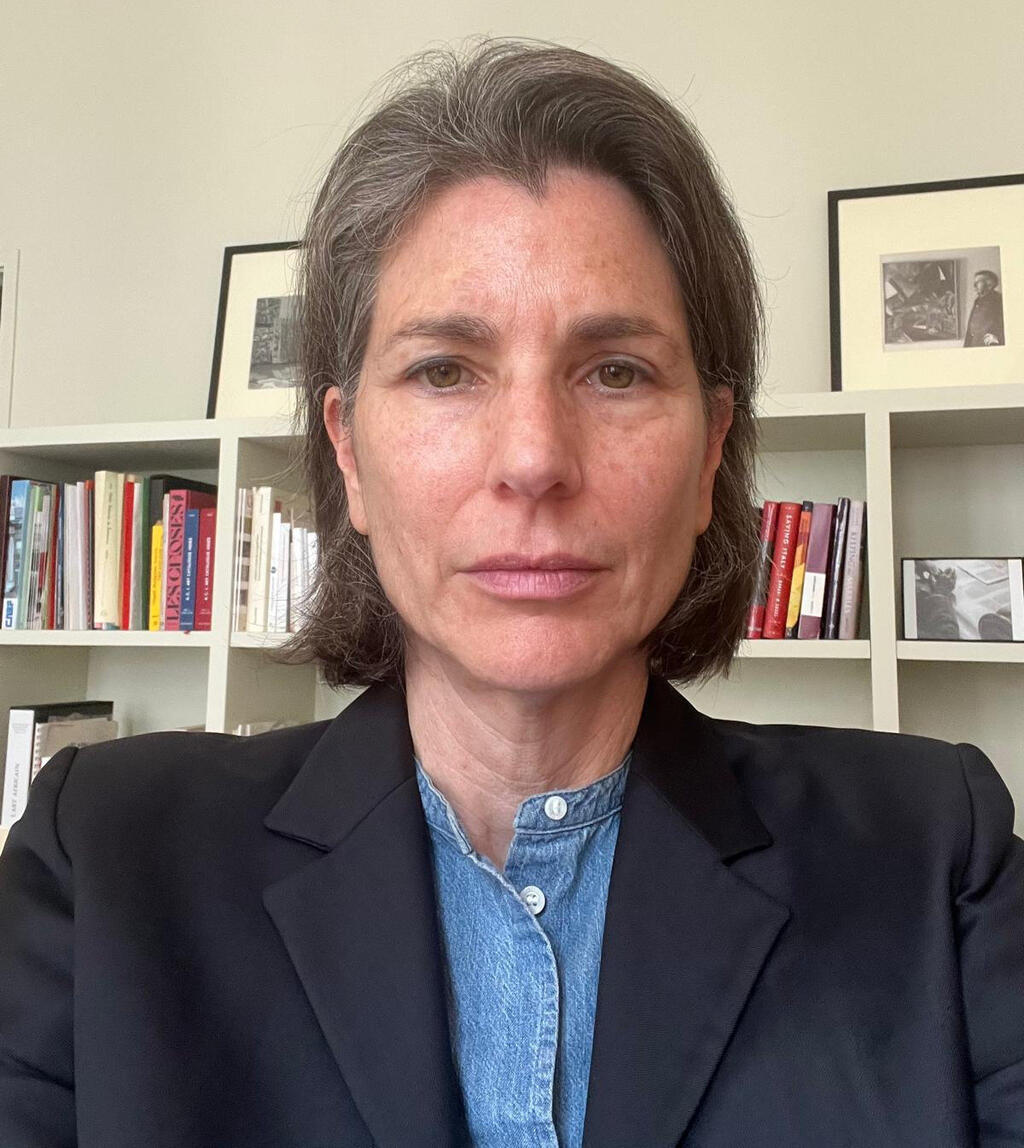
Lawyer Corinne Hershkovitz
“After the war, many people received books they had reported lost, but not necessarily their own copies — sometimes those of other looted families. They confronted others’ loss every time they opened them. Their world was shaken to its core, and they said nothing,” she said, summing up the unimaginable pain.
Not for the money
Still, high-profile disputes over multimillion-dollar works cannot be ignored, such as Gustav Klimt’s "Portrait of Adele Bloch-Bauer," also known as "The Woman in Gold." The model’s niece, Maria Altmann, succeeded — after a bitter seven-year legal battle — in reclaiming it from Vienna’s Belvedere Gallery. The painting was later sold for a record $135 million to businessman and collector Ronald Lauder, a former president of the World Jewish Congress, under an agreement that it would be displayed publicly in his New York gallery. The story inspired a 2015 film starring Helen Mirren.
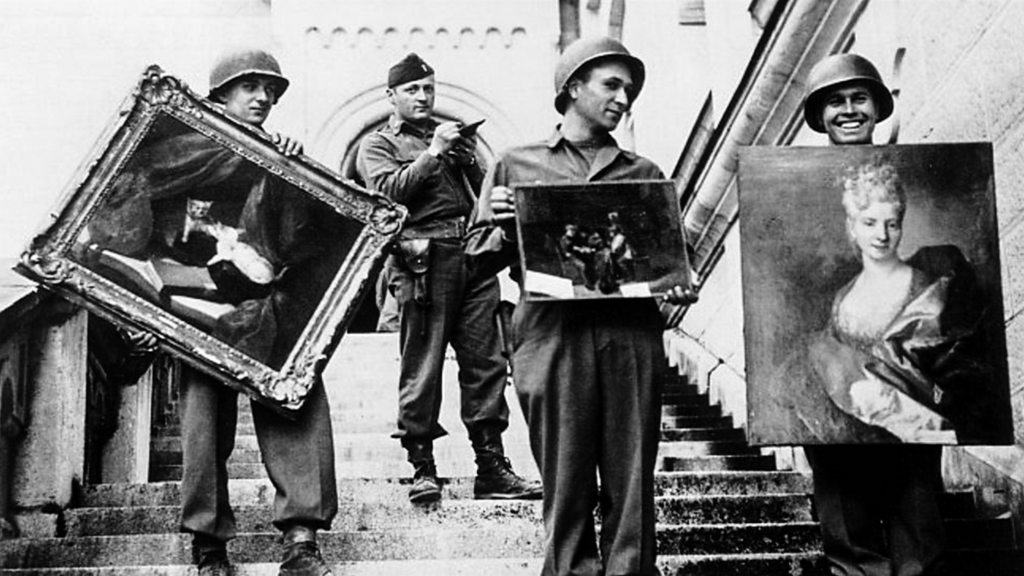
American soldiers collect looted art at Neuschwanstein Castle in Germany, May 1945
(Photo: Getty Images)
Another notable case with a less favorable outcome is the Emil Bührle collection, amassed by the wealthy arms dealer and collaborator, much of which was looted from Jews or purchased with the proceeds of their suffering. The Kunsthaus Zurich sparked controversy when it refused to close the new wing built to house the collection of Impressionist masterpieces.
And then there is the Gurlitt collection, discovered in Munich in 2012, originally comprising 1,500 masterpieces worth tens of millions of euros, which ultimately ended up in Bern, Switzerland — minus 21 works proven to have been stolen.
Hershkovitch, who has spent 30 years pursuing justice for victims’ descendants through complex legal battles, offers another explanation for the difficulty of restitution. “For a long time, the French suppressed the period of collaboration between the Vichy regime and the Nazis. The French tend to obey regulations and laws. Jews were considered citizens without rights, and as early as October 1940, 150 regulations were enacted against them. After World War II there was a period of silence, followed by a moment of recognition. I have a feeling we are returning to a prewar atmosphere. I attended a conference marking 80 years since the repeal of the law stripping Jews of their property, and some experts argued that the historic court ruling meant to correct that injustice is no longer valid.”
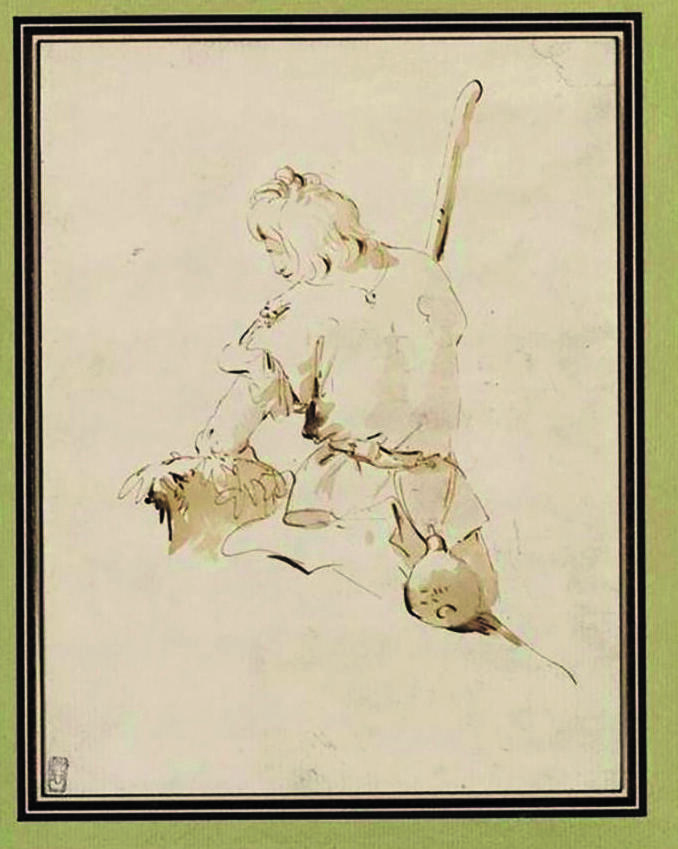
'Shepherd' - Giovanni Battista Tiepolo - looted from the Strauss collection
(Photo: RMN,Louvre-Urtado Michel)
Hershkovitch also represented the family of Jewish sculptor Chana Orloff, whose studio was completely emptied by the Nazis in 1943. Her grandson, Éric Justman, described how a wooden sculpture of his father, known as “The Child Didi,” was one of 146 works that disappeared. It resurfaced in 2008 at an auction in New York, and the family was asked to verify its authenticity. Only in 2023 was the sculpture returned.
“Money is not the main issue,” Hershkovitch stressed. “The family had to pay more for the legal process than the sculpture was worth. It’s about justice. I am moved every time I see the sculpture in the Jewish Museum.” The Orloff family chose to loan it for display to raise awareness of the looting of Jewish property.
Another sculpture by Orloff failed to return to her Paris studio. In this case too, Eric’s sister, Ariane Tamir, was asked to verify the authenticity of a piece put up for auction — this time in Israel. The sale was ultimately canceled, but the owner claimed to have purchased it in good faith and returned with it to Britain.
In countries such as France, Germany and the United States, a work whose provenance is in doubt cannot leave the country. In Israel, the issue remains in a gray area. “You know how Holocaust survivors who arrived here after the war were treated with contempt. Israelis thought there were more urgent matters than returning paintings to people, and nothing has changed,” Hershkovitch said angrily.
“A society cannot heal the wounds of families,” Pascale Samuel concluded. “This is precisely where French legislation should serve as a model for Israel — and pave the way toward justice.”