

There are moments when an organization needs a clear show of authority. A customer has been harmed, a commitment has not been honored, a problem has been concealed or a critical target has been missed. The manager must interrupt business as usual, make the seriousness of the incident clear and demand change. Sometimes there is nothing inherently wrong with expressing anger. In those extreme situations where anger is called for, it can establish boundaries, restore accountability and make it clear that what happened is unacceptable.
The problem begins when anger becomes the action plan.
You can leave such a meeting with a strong sense that "the message got through," only to discover a week later that the organization has not really changed. Employees may know exactly what they must not do, but they still do not know what they should do when the same dilemma arises again. Who has the authority to stop a process? Who should be notified? Where is the line between independent judgment and the need to consult others? Is it acceptable to raise a problem before having a solution?

This, in my view, is one of the most powerful management lessons in the Torah portion of Noah. The Flood brings an end to a world that has become corrupt, but the Torah does not conclude when the waters cover the earth. It continues with the receding waters, the departure from the ark, the blessing, the covenant and the rebuilding of an order that allows life to continue. Stopping the corruption was necessary, but it was not enough.
Psalm 29 develops this same progression. It is a psalm of praise and divine kingship attributed to David, with no clearly identifiable biographical event associated with its composition. That is precisely what makes it interesting in the context of leadership. David, a man who spent much of his life amid conflict, war, flight and the exercise of royal authority, reflects here on power itself. Seven times the psalm invokes the "voice of the Lord," and the entire world trembles. The voice moves over the waters, breaks the cedars, flashes forth flames of fire and shakes the wilderness.
But the psalm does not end with thunder. It moves from "The Lord sat enthroned at the Flood" to "The Lord will give strength to His people," and finally to "The Lord will bless His people with peace."
Rabbi Meir Arama, son of Rabbi Isaac Arama, author of "Akedat Yitzhak", explains in his work "Meir Tehillot" two expressions of the same divine strength: the power to administer judgment and the strength bestowed upon others. He also emphasizes that this strength is given to each person according to their capacity.
In other words, strength is not measured solely by the ability to stop something, make a decisive ruling or impose authority. Its more mature expression is the ability to give others direction, responsibility and the tools to act.
This is precisely the managerial distinction that matters after a crisis.
A manager who became angry because no one raised the alarm in time must, the following day, build a mechanism that enables employees to raise concerns. A manager who discovered that promises were made to a customer without the ability to fulfill them must define who has the authority to make commitments and under what conditions. A manager who was forced to intervene because no one made a decision must establish who will make that decision next time.
If all that remains of the crisis is the memory of the boss getting angry, the organization may have learned little more than to fear the next crisis.
The philosopher Hannah Arendt distinguished between power, coercion and violence. In her view, genuine power is not simply an individual's ability to impose their will, but a capacity that emerges when people are able to act together.
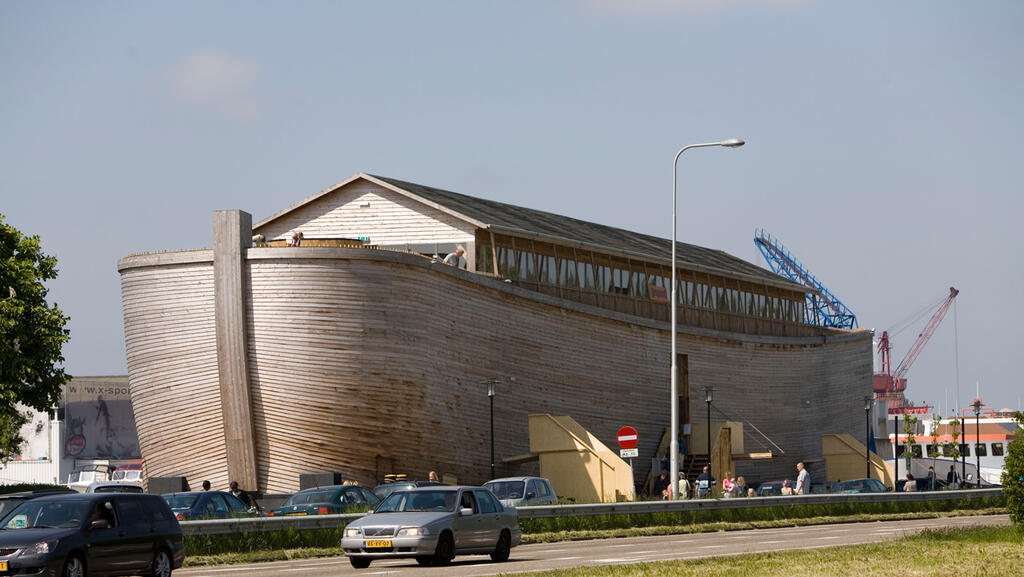
A full-scale replica of Noah’s Ark, built by Dutch carpenter Johan Huibers, stands on display in the Netherlands
(Photo: Getty Images)
In a management context, this is an important distinction: A manager can have an exceptionally strong presence while leaving behind a weak organization. If every change depends on that manager's intervention, genuine organizational capability has not been built.
This gap becomes particularly evident after a serious incident. During a crisis, there may be a need for a single center of authority, a rapid decision and a clear voice. But if, weeks later, everything still depends on that same individual, the response to the crisis has not become organizational learning. It remains an isolated event.
I have experienced this many times around the boardroom table. Over the years, I have worked with directors from the United States, the Netherlands, Germany and Israel, and I have seen how profoundly presence, culture and authority shape the nature of a discussion.
I, too, as a CEO, responded differently to different groups of people. The pace of decision-making changed, the level of directness changed and, at times, so did the process through which we reached decisions.
For me, the lesson was not that people were "playing roles," but that influence is a real form of power that must be managed. A manager must understand that their very presence changes the dynamics in the room.
The question, therefore, is not merely whether everyone agreed with the manager, but whether a process has been established that allows high-quality decisions to be made even when the most powerful person in the room is not leading the discussion. Otherwise, it becomes all too easy to confuse consensus with deference to authority.
The expanding security cooperation between Israel and Morocco illustrates a similar principle. When a country purchases advanced defense systems, it is not merely buying a product. The real value also comes from knowledge, training, operational capabilities and processes that enable it to use the system effectively over time.
In other words, transferring power does not end with delivery. It is measured by the capability that remains with the recipient afterward.
The same is true in management. Success is not simply demonstrating that you can solve a problem better than anyone else, but leaving behind an organization capable of solving more problems on its own.
This is where Rabbi Meir Arama's precision is especially important: To each according to their capacity.
New responsibilities must match the abilities of the person receiving them. A new employee should not be given the same independence on their first day as an experienced manager. Someone taking responsibility for a new area also needs information, tools, a framework and clear boundaries.
Freedom without training is not empowerment. Sometimes it is simply abandonment.
This thought also connects, for me, to the song "Without Masks." One of the things that interests me about the song is the question of what remains when we remove the layers of professional roles, expectations and image.
An organizational crisis does something similar. It strips away the masks and exposes where the real gaps lie.
But exposure alone is not enough. If we express shock and then return to business as usual, the mask goes back on. If we build a new process, the crisis becomes an opportunity for learning.
And perhaps this is also what makes Psalm 29 so compelling when viewed through the figure of David. A man who knew war, flight, power and kingship ends a psalm about strength not with another display of power, but with peace.
There is an almost complete progression of leadership here: First, the power that stops chaos; then, strength that is given to others; and finally, a system that no longer requires the constant exercise of force to sustain itself.
A management tool: The day-after test
After every significant crisis, it is worth stopping to ask four questions:
1. What exactly did we stop? Not merely who made a mistake, but what behavioral or systemic failure allowed the incident to occur.
2. What needs to be different next time? Who makes the decisions, who reports problems, where the boundaries of authority lie and what process should be followed.
3. What capability are we missing? Knowledge, information, coordination, authority, experience or judgment.
4. How will we know we have learned? What tangible change should we see in a month or a quarter?
The Torah portion of Noah begins in a world where power is needed to stop corruption. Psalm 29 ends in a world where strength is given to others and peace is the ultimate aspiration.
Between these two points lies perhaps one of the most important tests of leadership.
Leadership is measured not only by the ability to stop a crisis, but by the ability to ensure that the organization will not need to experience the same crisis to learn the same lesson again.