

In the early days, people would call to ask whether there was even a Chabad House there. After all, it was the middle of nowhere. Years later, they would ask whether I knew Rabbi Mendy, the local Chabad emissary, and could put in a good word for them because, according to the website, registration for Shabbat dinner had already closed.
And now? Now they call asking for special favors: "Look, Moni, we've been assigned to the second seating for Shabbat dinner. There are simply hundreds of guests, far more than even the largest hall can accommodate, so they divide everyone into separate seatings. But we have small children and would really appreciate switching to the first seating, if at all possible. So what do you think? Is there any chance?"
Gallery
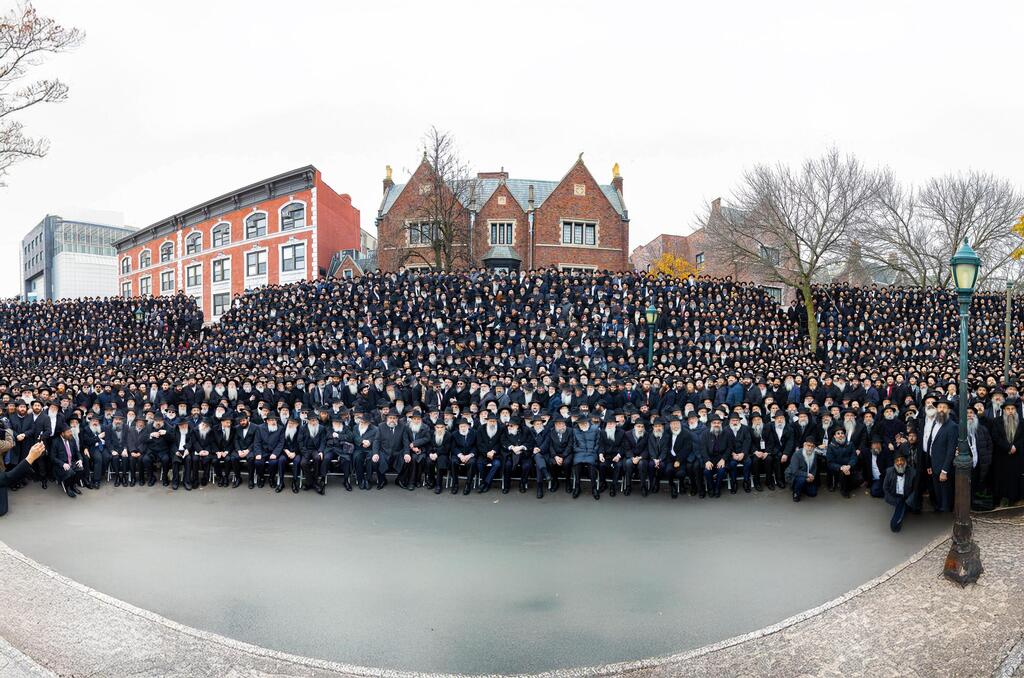
Chabad emissaries from around the world at their annual conference in New York
(Photo: Yossi Jerufi)
This is yet another perspective that helps illustrate just how thoroughly a once somewhat abstract vision has become a genuine global powerhouse. It is a vision set in motion decades ago by the Lubavitcher Rebbe, under which every Jew, anywhere in the world, would have somewhere to turn for both spiritual and material needs.
This week, Chabad's annual conference of emissaries is taking place in New York. The precise, updated number of emissaries and the countries newly added to the list will be announced only at the prestigious closing banquet. But we already know that some 6,500 couples have devoted their lives, around the clock, to being there for others.
There is a familiar saying that there are two things you don't want to see being made: laws and sausages. It's better to see only the finished product. Well, it turns out that the life of a Chabad emissary also has an entire world behind the scenes, where things are a little more complicated.
About a month ago, I visited my longtime friend Rabbi Shmuel Raskin, a Chabad emissary and director of the local Keren-Or Center in Budapest, together with my family. I asked him how he manages to summon the same spirit of wholehearted hospitality, deliver engaging talks and greet every person with a smile, week after week, for 25 years.
Rabbi Raskin smiled and modestly explained that this was his job. Even if someone called him 15 minutes before Shabbat began and angrily shouted at him because he had been unable to secure a proper place at the meal, his responsibility was still to smile and go out to greet the 300 guests waiting at the synagogue.
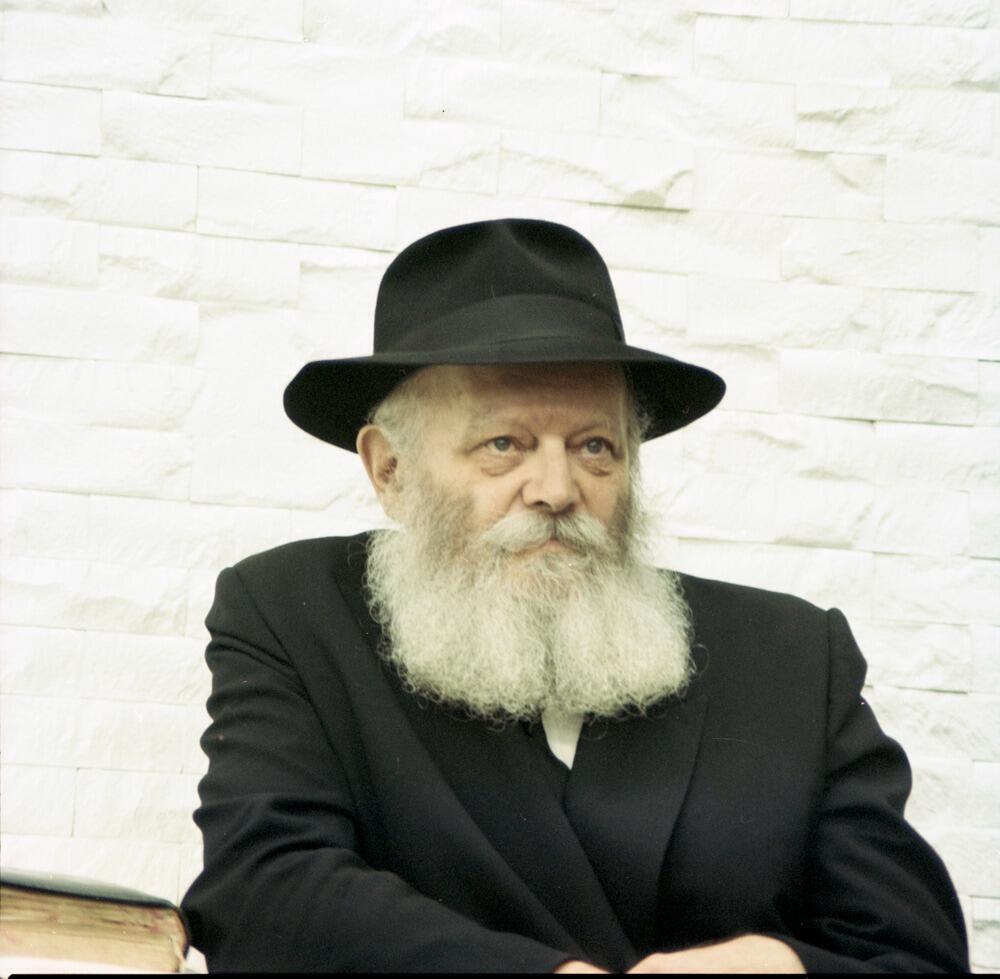
The Lubavitcher Rebbe, Rabbi Menachem Mendel Schneerson
(Photo: Yisrael-Zev Goldschmidt)
I'm reading the manuscript of a new book by Rebbetzin Yocheved Raskin, the Chabad emissary in Uganda. Titled "The Chief Rebbetzin of the Pearl of Africa," it will be in bookstores very soon, and I'm convinced it will become a bestseller.
I'm struck by the candor with which she describes the loneliness that accompanies such a lifelong mission. She writes about days filled with tears and cheeks reddened from crying as she came to terms with the realization that she had chosen an entirely different life, in a Third World country, for herself and her young children.
But without giving away any spoilers, I'm even more amazed by the inner strength she found to transform that difficult beginning into a thriving Chabad House. A decade later, hundreds of backpackers regularly visit, study, eat and celebrate there.
"And though your beginning was small, your latter days will be very great," the Bible already promised.
Just before leaving for the conference, I received a message from a rabbi in a private group of Chabad emissaries. He was asking whether anyone could help him with a short-term loan. The cash flow for his Chabad House's activities, funded entirely by donations and contributions from generous individuals, had become "a little strained." He was finding it difficult to fly to the conference knowing that his bank account could soon be in serious trouble.
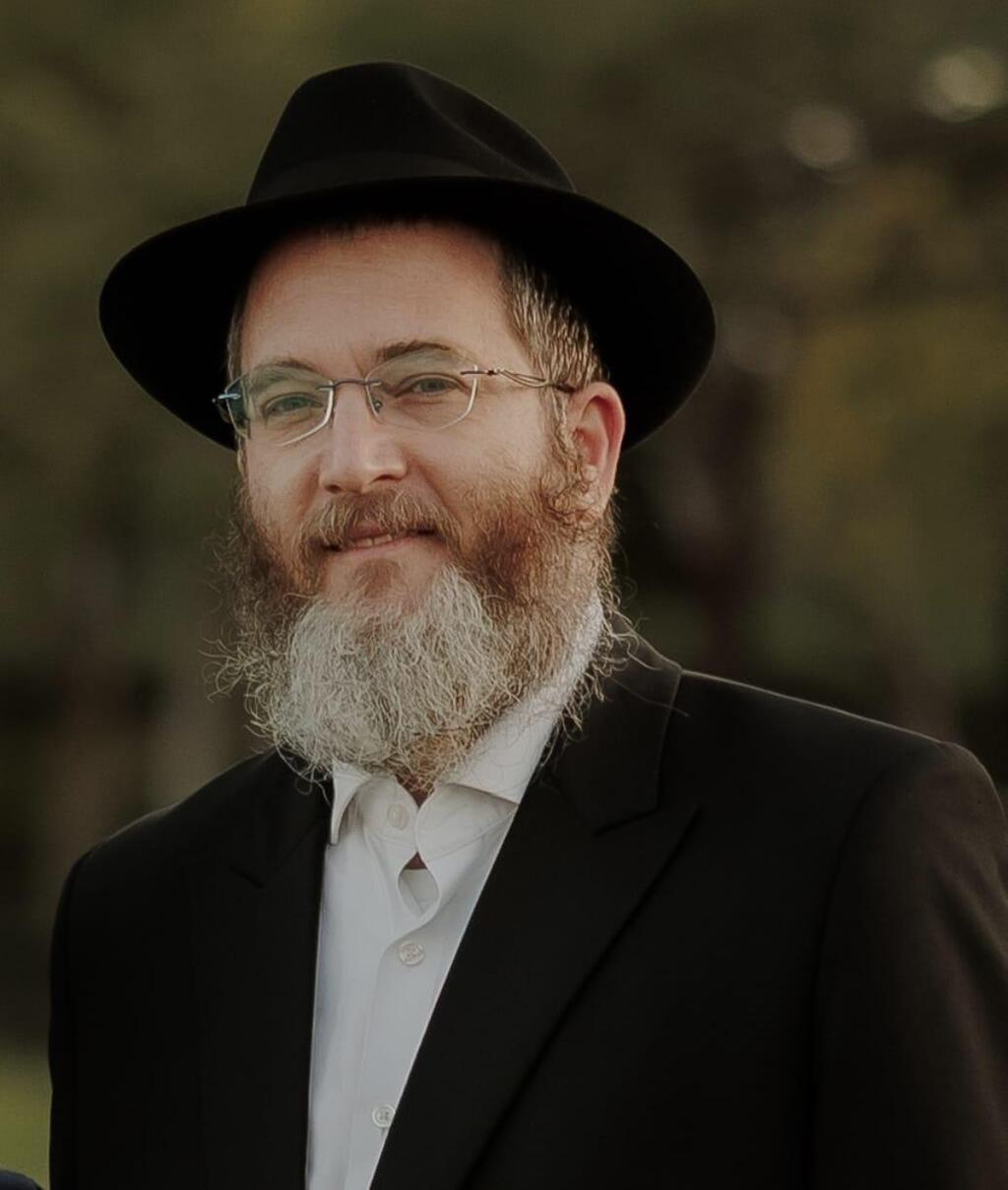
Rabbi Moni Ender
(Photo: Akiva Sheinberger)
Ultimately, the Rebbe's empire is built on more than multimillion-dollar buildings that no emissary could have afforded out of his own pocket. It is built on more than kindergartens originally established solely for an emissary's own child, which have since grown into educational complexes rivaling those in Israel in size.
It is built on more than round-the-clock availability to anyone who needs help, a level of accessibility that even relentless spam telemarketers could learn from. And it is built on more than the extraordinary sense of strength conveyed by the group photo, which will be taken in a few days and will be even larger than last year's.
It is built on moments like these behind the scenes: the Chabad emissary learning to cope with loneliness, the rabbi who smiles at a huge crowd despite the heavy burden he carries inside and the emissary who refuses to give up even when money is running short.
So yes, it's definitely better not to see how sausages are made in a factory. And as for laws, it's not even clear whether any will be passed here anytime soon, or who will pass them.
But the secrets behind the empire of Chabad emissaries, seasoned with genuine self-sacrifice and an unwavering smile, are well worth seeing, appreciating and always remembering.
And certainly worth getting a taste of.
Rabbi Moni Ender is Chabad's emissary for media affairs. The annual International Conference of Chabad-Lubavitch Emissaries is taking place in Brooklyn, New York. On Friday, thousands of emissaries will gather for prayers at the gravesite of the Lubavitcher Rebbe, Rabbi Menachem Mendel Schneerson, in Queens.