

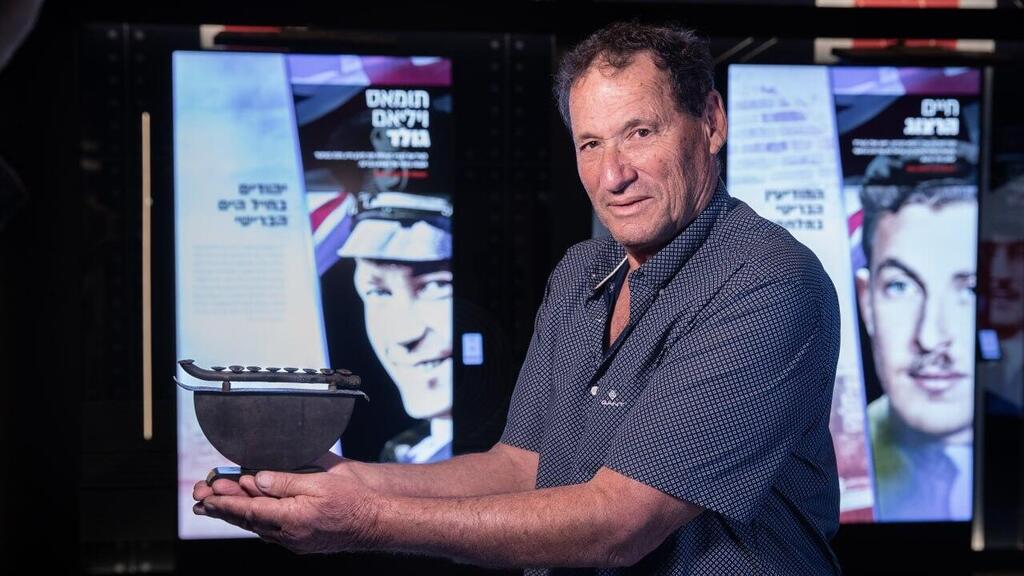
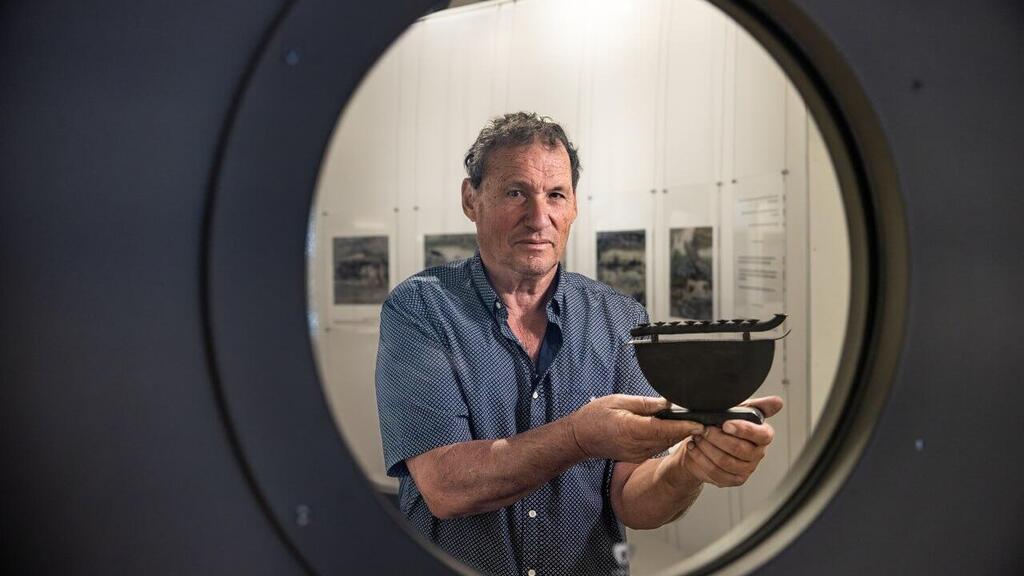
A relic of the Nazi war machine has been transformed by Jewish hands into a symbol of light and hope. A black oil menorah, crafted from the battery of a Nazi submarine, arrived this week at the Chaim Herzog Museum of the Jewish Soldier in World War II at Latrun, carrying with it a remarkable story.
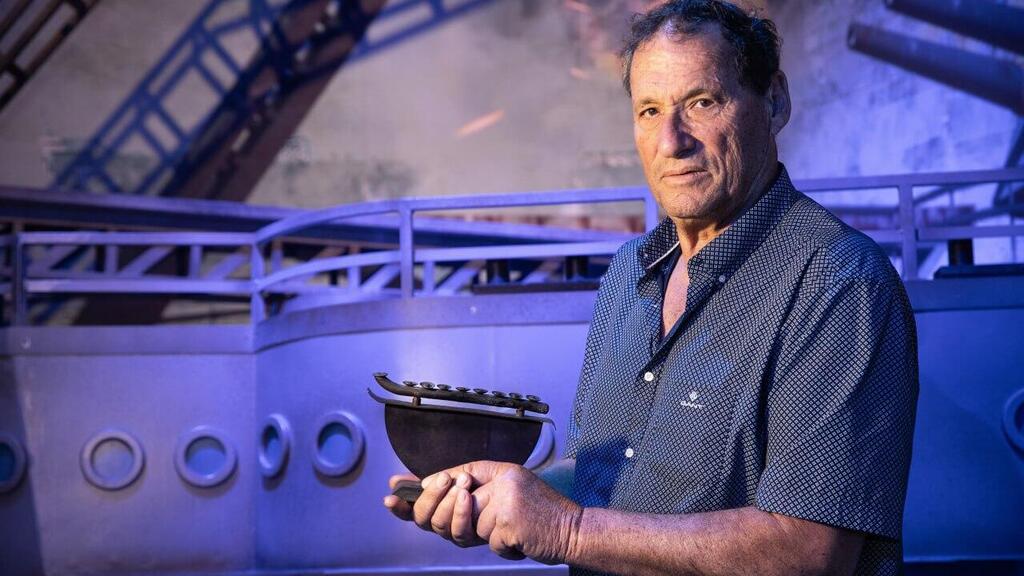
Eighty-three years ago, the menorah was built by Uri Lipman, a Jewish-Israeli soldier in the British Royal Navy, from materials salvaged from a German submarine he and his crew sank in the Aegean Sea. Lipman was born in Germany in 1922 to Jewish parents who recognized early on the dangers of remaining in their homeland. In 1933, at age 11, he immigrated to Israel with his parents and brother, settling in Haifa.
When World War II broke out, the family patriarch encouraged both sons to join the Allied fight against the Nazis. Uri served as an engine officer on a torpedo boat in Greece; his brother Ze’ev, a Bezalel Academy graduate, worked as a map draftsman in Italy. Uri’s vessel had a crew of 15, he was the only Jew among them.
Lipman took part in the Allied invasion of Italy and naval battles on the open sea. After sinking the German submarine, he retrieved its bakelite battery. Rather than leave it as just another wartime relic, he transformed it into a symbol of resilience: a menorah.
(Photo: Alex Kolomoisky)
(Photo: Alex Kolomoisky)
After the war, Uri returned to Israel and continued his service, this time in the Israel Defense Forces. He fought in Israel’s War of Independence as an ordnance officer and later rose to the rank of major in the navy. The menorah remained with him throughout his life.
“My father wasn’t religious, but he was a Jew who chose to come to the Land of Israel, not to America like many others,” said his son Yehuda, who donated the menorah to the museum. “He built it during battle and kept it in our home. Here, in the museum, it means much more.”
“This isn’t just a menorah,” said Asaf Efrati, deputy director of information and education at the museum. “It’s a powerful symbol of Jewish soldiers remaining true to their identity, keeping their spirit alive, and finding hope even in the harshest conditions.”
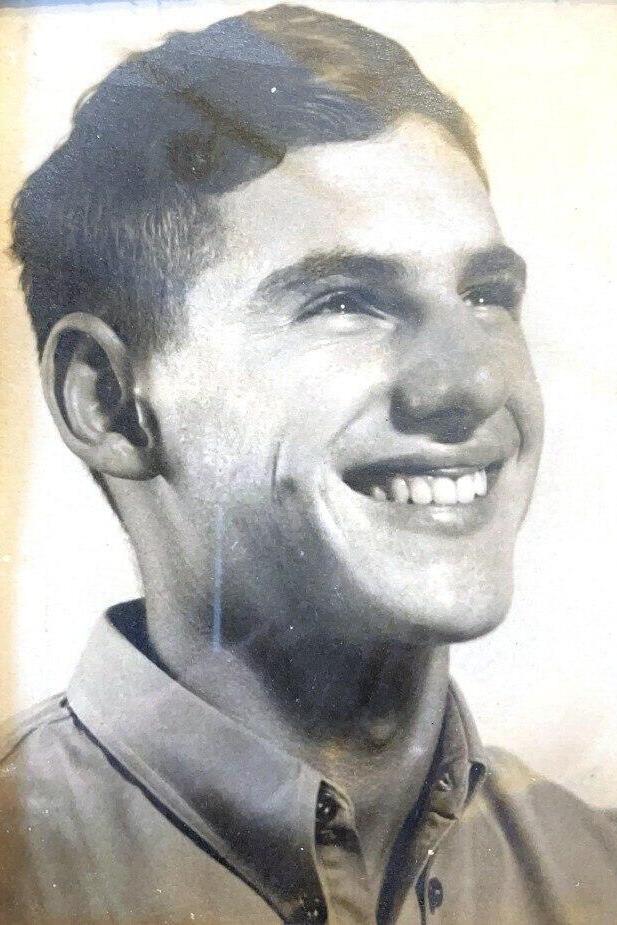
Uri Lipman
(Photo: Chaim Herzog Museum of the Jewish Soldier in World War II)
The Jewish Soldier Museum at Latrun proudly tells the story of the 1.5 million Jews who fought the Nazis on various fronts—an often overlooked chapter in Israeli collective memory.