

On the Jewish calendar, the fast of the 10th of Tevet marks a tragedy that is easy to misunderstand. No building burned, no wall collapsed, no exile began. It was simply the day the Babylonian army laid siege to Jerusalem. Inside the city, life continued. Leaders reassured the public. Daily routines went on. Many believed that the status quo, imperfect but stable, was the best that could realistically be hoped for.
Jewish memory teaches that this assumption was catastrophic. The 10th of Tevet reminds us that the most dangerous moment is not when our world collapses, but when we still believe that we have time.
Gallery

The moment that shattered our belief in the status quo: Hamas terrorists break through the Gaza border fence
That lesson is no longer theoretical. October 7 did not happen because Israel was weak, immoral, or irreparably divided. It happened because, for years, across much of the political spectrum, Israel operated under a shared (mis)conception: that a flawed status quo was preferable to disruption, that dangerous actors could be “managed,” that deterrence could be contained, and that time was on our side.
This was not merely a failure of intelligence. It was a failure of imagination, responsibility and moral courage. When leaders convince themselves that a dangerous reality is the best possible scenario, warning signs are reinterpreted as noise, risks are normalized and urgency disappears. The residents of Jerusalem under siege thought the same.
October 7 is therefore not only an Israeli tragedy. It is a warning to all societies about the lethal cost of mistaking stability for safety.
Today, the Western world is not visibly collapsing. Its cities stand, its institutions function and its economies continue to operate. And yet, across multiple fronts, pressure is building behind invisible walls, while elites reassure themselves that incremental management is enough. History suggests otherwise.
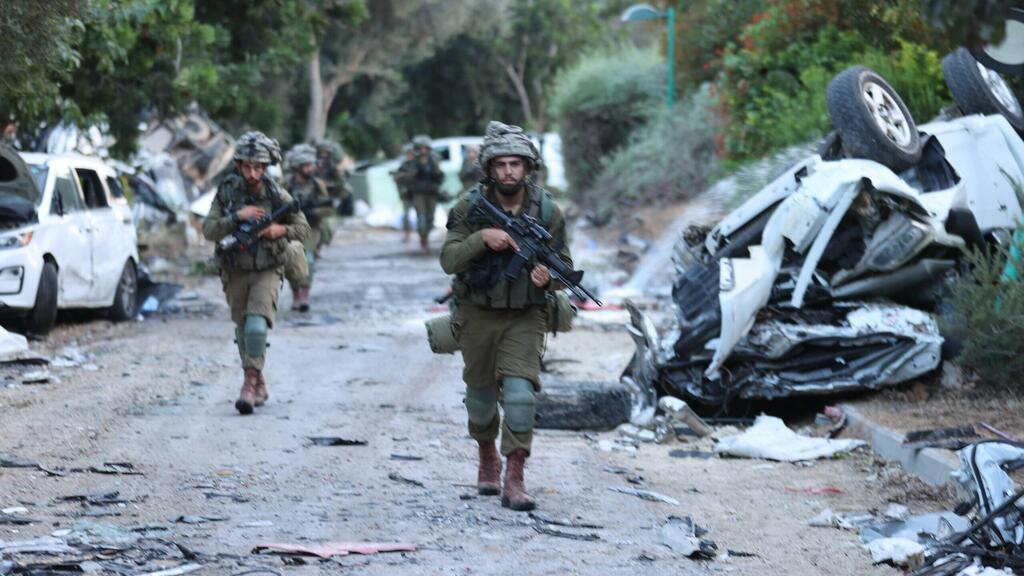
IDF soldiers patrol in Kibbutz Be'eri after October 7
(Photo: Gadi Kabalo)
Hard power has returned to history. Senior Western defense leaders now openly speak about long-term conflict readiness and even conscription. While authoritarian powers never abandoned the language of force, much of the democratic world convinced itself that prosperity had replaced the need for sacrifice. Yet security begins not in barracks or budgets, but in culture. A society that lacks shared purpose cannot defend itself for long, no matter how advanced its tools.
Demography, too, poses a challenge, but not primarily because of numbers. The real question is confidence. A civilization unsure of its values cannot integrate newcomers; it can only fragment. Only a society confident in its moral foundations can absorb diversity without losing itself, because integration requires something worth integrating into. Without that clarity, parallel societies emerge and cohesion erodes.
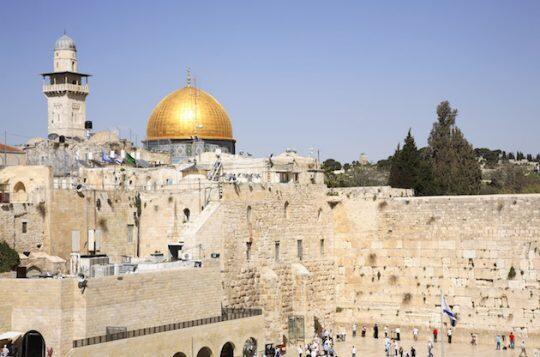
The Western Wall and Temple Mount in Jerusalem
(Photo: AP)
In Jewish thought, teshuva, or self-change, should not lead to despair or self-flagellation. It means recognizing reality early enough to change direction. On the 10th of Tevet, Jerusalem still had time to save itself, but it lacked the humility to act. October 7 taught us, in the harshest way, that clinging to a dangerous status quo is not realism; it is negligence.
Teshuva, for Israel and for the West, would mean replacing comforting narratives with honesty, preparing citizens for disruption rather than soothing them with illusions, rebuilding civic life around obligation as well as rights, and teaching values strong enough to sustain freedom. It requires leaders willing to say, clearly and without euphemism, that the current path is not sustainable and requires citizens willing to hear it.
Yet our story does not end in despair. Jewish history insists on something else as well: that recognition can still lead to renewal. A siege marks not only the beginning of destruction but also the last moment when change is still possible. The 10th of Tevet is not a fast to mourn ruins; it is a fast to sharpen vision. It commemorates the collapse of complacency and demands action before catastrophe becomes inevitable.
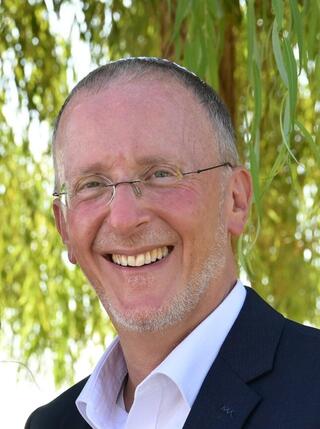 Rabbi Leo DeePhoto: Netanel Tevel
History teaches relentlessly that the siege begins long before the walls fall. But it also teaches that when societies recover their moral clarity, courage and sense of responsibility they can rebuild stronger than before. The most hopeful truth of all is this: the moment we recognize the danger is also the moment we regain the power to choose a different future.
- Rabbi Leo Dee is an educator living in Efrat. His second book, 'The Seven Facets of Healing’, is dedicated in memory of his wife Lucy who, together with his daughters Maia and Rina, was murdered by terrorists in April 2023