


Sacha Roytman sees New York Mayor Zohran Mamdani not as an isolated political phenomenon, but as a model for a new generation of leaders he believes could reshape American politics and deepen the threat facing US Jews.
“Thousands of little Mamdanis are emerging across the United States,” said Roytman, CEO of the Combat Antisemitism Movement, or CAM. He argues that younger political figures, including second-generation immigrants raised in the United States, are learning to combine hostility toward Israel with polished progressive messaging capable of appealing to a much broader audience. “We’re seeing more leaders follow his example, expressing hostility toward Israel and Jews in fluent, persuasive English,” he said. “Mamdani is exactly the kind of figure Iran, Qatar, Russia and our other adversaries would like to see succeed. He is becoming a model for dozens of young politicians. In my view, that is a ticking time bomb.”
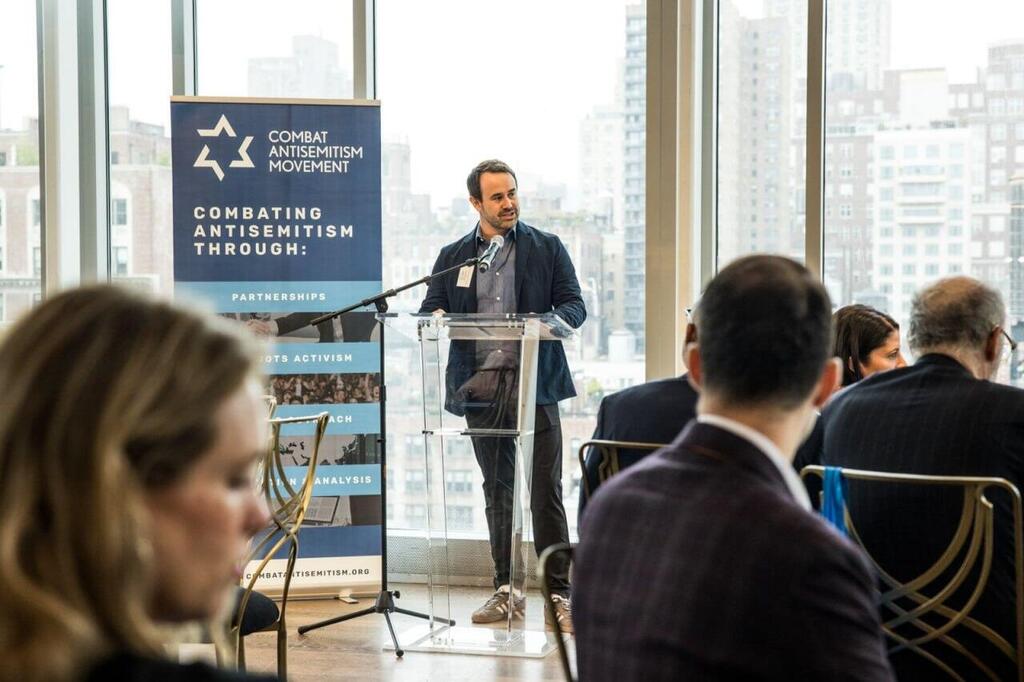
Roytman describes Mamdani as “the face of modern antisemitism” and compares his political appeal to that of former president Barack Obama among progressives. “He presents himself as offering something positive: challenging the wealthy, promising change, offering a new kind of politics. He comes across well on camera, and everything he does is carefully packaged,” Roytman said. “That is precisely what makes him dangerous in my view.”
His concern extends beyond Mamdani himself. Roytman argues that the more important battle is over the generation now forming its political identity in schools, universities and on social media. “Mamdani’s generation is already set in its views,” he said. “The generation we can still reach is the one coming after it, and the only way to do that is through education.”
That warning forms part of a much broader and darker assessment. Asked to describe the state of antisemitism today in a single sentence, Roytman does not hesitate: “It is the worst it has been since the Holocaust.”
For years, he says, he deliberately avoided comparisons with the 1930s. He now believes the scale and geographic reach of antisemitism justify far stronger language. Roytman, 39, married and a father of four, has led CAM for seven years. The organization operates in more than 100 countries and works with governments, local authorities, police departments and technology companies on combating antisemitism.
He describes Oct. 7 as “the Yom Kippur of the Jewish people,” arguing that the Hamas-led attack exposed not only an Israeli military and intelligence failure but a wider breakdown among Jewish institutions that had misunderstood the scale of the threat. “It gave our enemies an opportunity to show themselves openly,” he said. “Israel and Jewish communities were taken completely by surprise. It became clear that the institutions dealing with these issues, including Israeli bodies and major Jewish organizations, had failed to understand what was happening.”
Roytman says many large Jewish organizations entered the post-Oct. 7 period believing they had strong alliances and the infrastructure needed to confront antisemitism, only to discover that both were weaker than they had assumed. “Three years after Oct. 7, the Jewish world looks very different from how it did in 2023,” he said. “There is already a generational shift. People have lost confidence in some of the large Jewish organizations and are looking elsewhere for answers. I tell those organizations directly: You failed to protect Jews. People came to us saying, ‘We don’t feel protected.’”
‘New York Jewry let its guard down’
Roytman directs some of his strongest criticism at New York’s Jewish community, one of the largest and most established in the world. Decades of prosperity and political influence, he argues, created a sense of security that ultimately became complacency.
“New York’s Jewish community became too comfortable and stopped paying enough attention to what was changing around it,” he said. “Jews became extremely successful in New York, and with that success came a sense of security. Parts of the community embraced a more open, modern Jewish identity, but some also lost touch with their history and with the need to remain vigilant.”
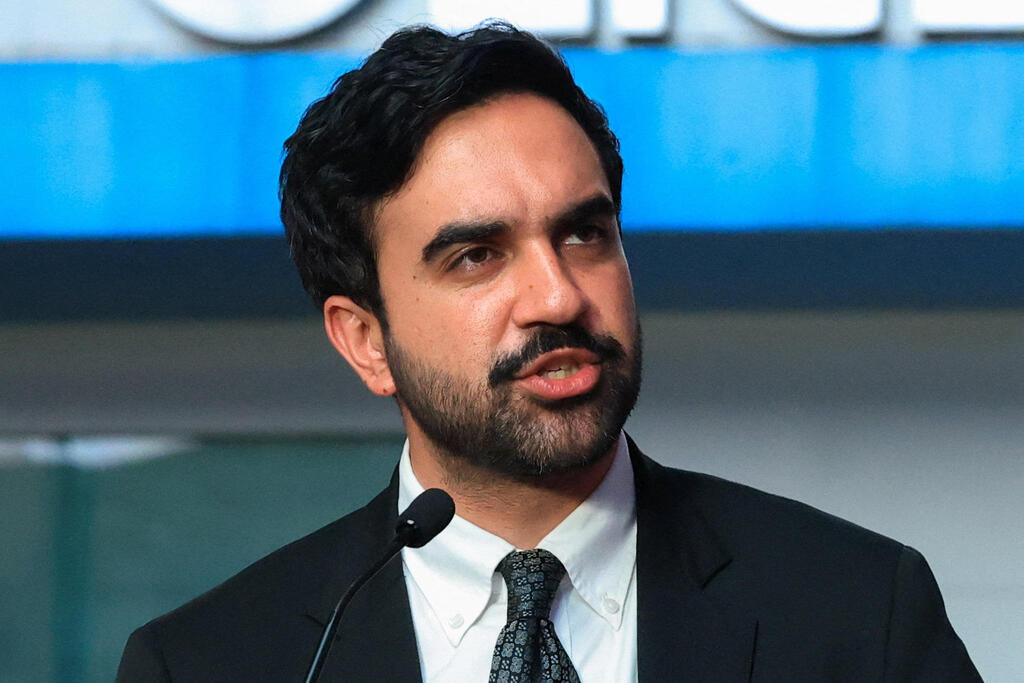
New York Mayor Zohran Mamdani
(Photo: Brendan McDermid/Reuters)
In Roytman’s telling, Mamdani’s rise should have been a warning. “The community let its guard down, then woke up to find a mayor whom many Jews regard as hostile toward them, while parts of the media environment they had long felt at home in were also becoming more hostile,” he said.
Roytman contrasts the United States with Europe, where he believes the Holocaust remains more present in public consciousness. “Europeans are not as detached from this history as Americans are,” he said. “Europe is where the Holocaust happened. The camps are still there, and the memory of what happened is physically present. It is much harder to simply move on from that history.”
On American campuses, Roytman says university administrations have become more cautious, largely because of pressure from the Trump administration and fears over federal funding and immigration enforcement. But he says he has seen little comparable change in academic culture or in the flow of foreign money into higher education, particularly funding originating in Qatar.
Australia and Canada among the biggest concerns
Outside the United States, Roytman identifies Australia and Canada as among the countries causing him the greatest concern.
In Australia, he says authorities have spent too much time discussing antisemitism and too little time producing meaningful change. “The Jewish community no longer trusts the government to protect it,” he said. “Australia simply does not yet have the tools it needs to deal with the kind of radicalization we are seeing.”
Roytman argues that democratic governments can struggle when confronted by movements that reject democratic norms. “If a democracy does not have the tools to defend itself against anti-democratic forces, it will struggle to respond effectively,” he said, citing both radical Islam and the far right.
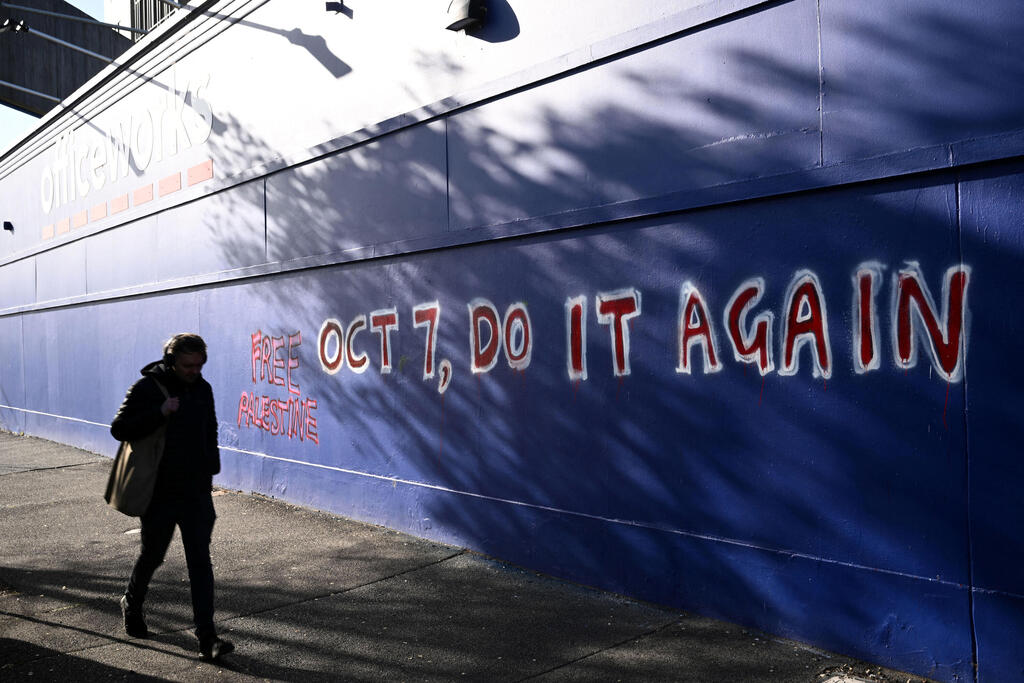
Graffiti in Melbourne reading: 'October 7, do it again'
(Photo: AAP/via REUTERS)
CAM, he says, works with Australian mayors and police departments on practical measures including definitions of antisemitism, training officers to identify contemporary hate crimes and removing antisemitic graffiti quickly. “If hateful graffiti is left in place, it encourages more of the same,” he said. “Removing it quickly matters. So does bringing communities together and building relationships between religious groups. An international organization cannot do this in every city. You need local leaders who are willing to take responsibility.”
Roytman also points to Iranian-linked activity previously uncovered in Australia and argues that political polarization has made the response to antisemitism more difficult. His broader criticism is that neither Jewish organizations nor the Australian government fully recognized how quickly conditions were changing.
‘Social media companies can do more’
CAM has increasingly focused on online influencers rather than automated accounts. “A lot of organizations concentrated on bots, but I don’t think bots are where the real influence is,” Roytman said. “We focus on people with audiences. We have already managed to reduce the reach of thousands of posts. We are not going to eliminate antisemitism, but we can make it less influential.”
He cites the example of an American social media personality who used the name “Redneck for Palestine” and had accumulated roughly 160,000 Instagram followers. Roytman says CAM documented videos it regarded as promoting Hamas and directing extreme hostility at Zionists, then brought them to Meta’s attention. The account was removed, he said, and a replacement account was later blocked as well.
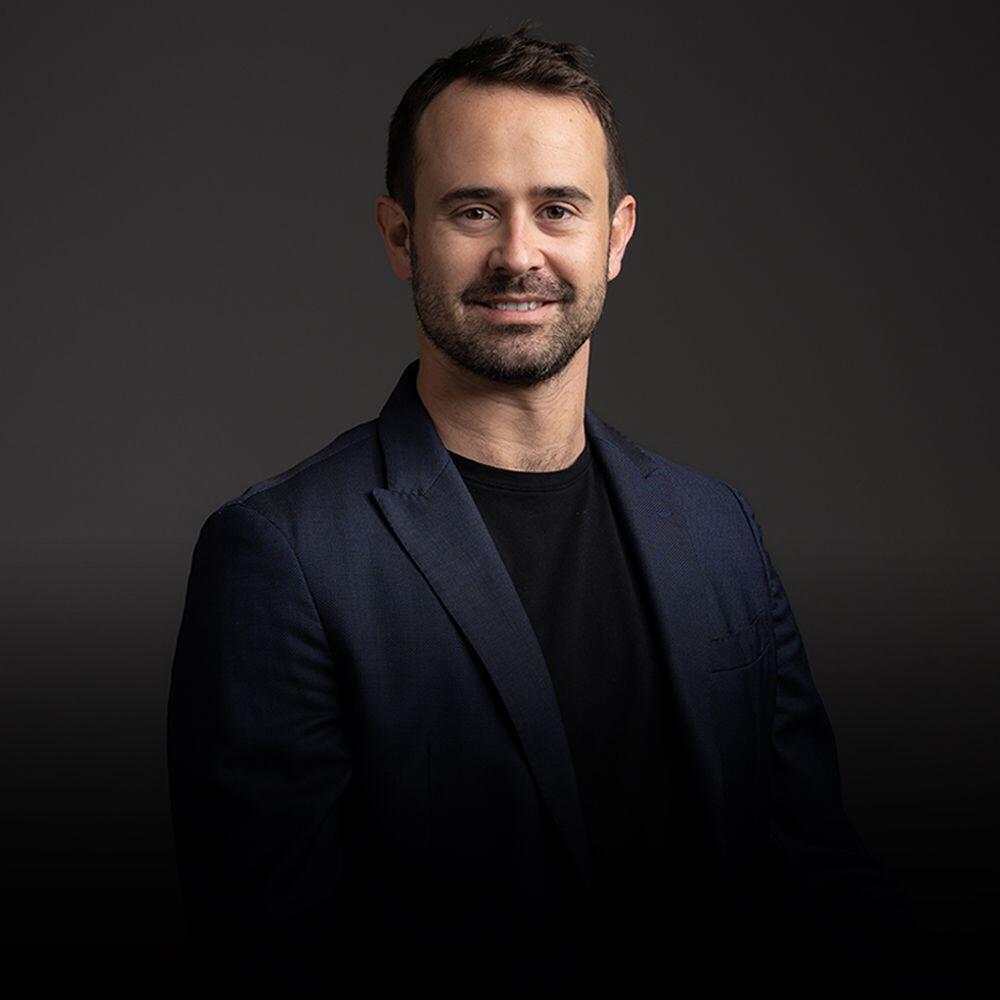
Sacha Roytman
(Photo: Gabriel Baharlia)
“We see this as an asymmetric fight,” Roytman said. “We are smaller, so we have to use the tools available to us intelligently.” He argues that social media companies have already demonstrated that they can restrict certain kinds of content effectively when they choose to do so. “If you upload copyrighted music, platforms can identify it almost immediately,” he said. “When companies decide something requires an aggressive technical solution, they are capable of finding one. They can do more here as well.”
Roytman also regards attacks on Israeli tourists abroad as a form of antisemitism rather than merely anger over Israeli government policy. “Israeli Jews are being singled out in a way that people from other countries involved in conflicts are not,” he said. “That double standard matters. In my view, much of this is deliberate. It is intended to intimidate Israelis and make them feel unwelcome wherever they go.”
‘You need to know when it is time to leave’
Roytman rejects the assumption that the current wave of antisemitism will simply fade. “I think expecting it to die down on its own is a serious historical mistake,” he said. “I am not talking about winning some final victory over antisemitism. That is unrealistic. But we cannot allow ourselves to lose the ability to protect Jewish life.”
He is equally dismissive of arguments that accusations of antisemitism are routinely used to silence criticism of Israel. “If a Jew is attacked because he is Jewish, that is antisemitism. If someone paints anti-Jewish graffiti, that is antisemitism,” he said. “And if a Jew living in New York is targeted because of his connection to Israel, that is still antisemitism.”
For Jews who increasingly feel unsafe in Western countries, Roytman’s message is stark. “They have reason to be concerned,” he said. “Jewish history teaches us that there are times when people need to recognize that circumstances have changed and know when it is time to leave.”
Israel, he acknowledges, is not an easy destination for immigrants. Roytman moved there alone from Belgium at 18 and says the high cost of living and difficulties of starting over remain serious obstacles. “The assistance new immigrants receive can help, but it does not guarantee that they will succeed here,” he said. “A lot of people struggle when they arrive. But many eventually reach a point where they feel that this is home.”
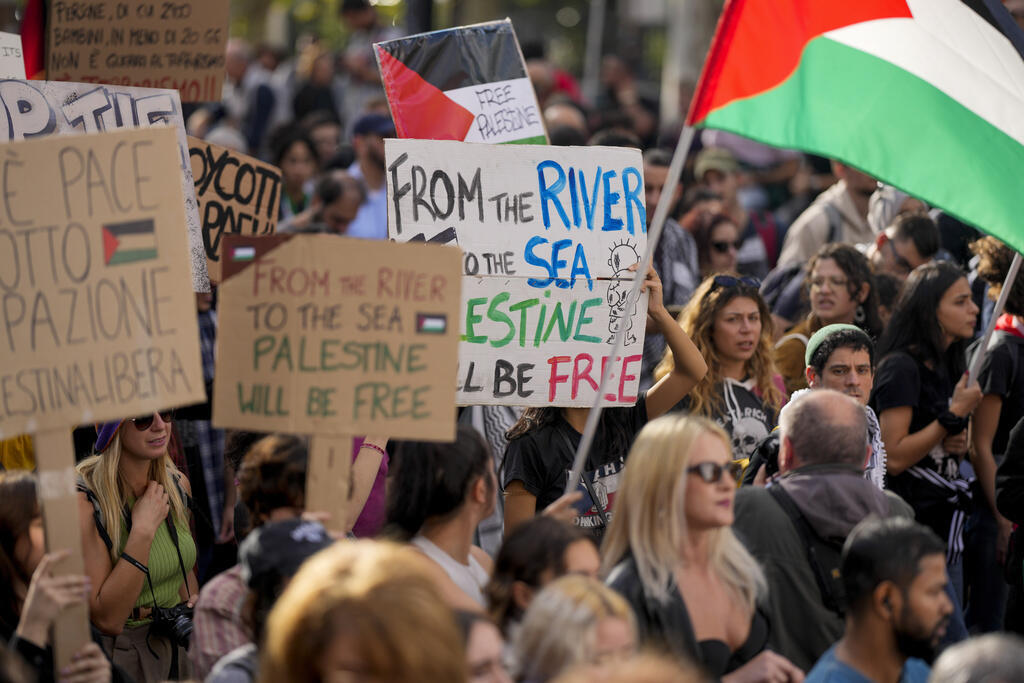
Pro-Palestinian protest in London
(Photo: Andrew Medichini/AP)
He also points to countries such as Panama and Argentina as places where, in his view, Jewish communities may currently feel more comfortable than in some traditional Western centers. “They may not be the countries people instinctively think of when they talk about the West, but the Western world has serious problems right now,” he said. “Jewish history has always involved movement. For Jews, Israel is the one place that is not temporary.”
Roytman believes Israel and major Jewish organizations have made matters worse by aligning themselves too closely with one political camp or another. “More than 75% of American Jews vote Democratic, and I think Jewish institutions made a mistake when they became too closely identified with one side,” he said. “If you only build relationships with one political camp, you lose the ability to work effectively when the other side is in power.”
He applies the same criticism to Israeli outreach in Europe, including engagement with far-right opposition parties. “Israel has sometimes chosen sides too openly, and that can be a serious mistake,” Roytman said. “The people you align yourself with will not always be in government. If you want to protect Jewish interests over the long term, you need working relationships across the political spectrum.”