

You know that feeling when Sukkot is simply too hot, and you think that if only the holiday were postponed by a month, sitting in the sukkah would be much more pleasant? Well, there is a precedent. According to Jewish sources, about 3,000 years ago Jeroboam, king of the kingdom of Israel, decided to postpone Sukkot by one month as part of an effort to consolidate his rule.
Parents and preschool teachers may have liked the idea, but the prophets and sages did not. Since then, Sukkot has been celebrated as usual, beginning on the 15th day of the Hebrew month of Tishrei.
For Rabbi Amnon Bazak, a Bible scholar and lecturer, Jeroboam’s attempt to move Sukkot was not merely a gimmick. He sees the entire episode as a warning sign: division and internal conflict can end in war, death and the destruction of the Jewish state.
The young advisers who pushed the kingdom into crisis
For anyone who missed the previous chapters of the Bible, it is worth pausing for a brief recap of the period following the death of King Solomon.
“Because of Solomon’s sins toward the end of his reign, the prophet Ahijah the Shilonite said the kingdom would split,” said Bazak, who has written several books on the Bible in general and the Book of Kings in particular. “That is what actually happened after Solomon’s death. Representatives of the tribes came to the new king, Rehoboam, Solomon’s son, and asked him to ease the tax burden.”
How heavy was that burden?
“There was a double tax — both in produce, such as wheat, barley, cattle and sheep, and in manpower. People were required to work on Solomon’s enormous building projects, which began with construction of the Temple and continued with projects throughout the kingdom and also in Lebanon.
“As described in Chapter 12 of I Kings, representatives of the tribes, led by Jeroboam son of Nebat, told Rehoboam: ‘Now therefore lighten the hard service of your father and his heavy yoke which he put upon us, and we will serve you.’ Rehoboam’s older advisers recommended that he listen to the people.”
And what did the king’s young advisers suggest?
“They recommended a show of strength. So Rehoboam replied to the people’s representatives: ‘My father made your yoke heavy, and I will add to your yoke; my father chastised you with whips, but I will chastise you with scorpions.’

(Photo: Tomertu / Shutterstock)
“As a result, the kingdom was torn apart. Rehoboam remained king of the Kingdom of Judah, which included the tribes of Judah and Benjamin, while the 10 tribes established the Kingdom of Israel, which was three times larger, with Jeroboam at its head.”
Jeroboam’s first move as king was to declare a religious reform.
“The Temple in Jerusalem was located within the territory of the Kingdom of Judah, and Jeroboam feared a situation in which his people would travel to the Temple during the year, and especially on the three pilgrimage festivals — Passover, Shavuot and Sukkot,” Bazak explained.
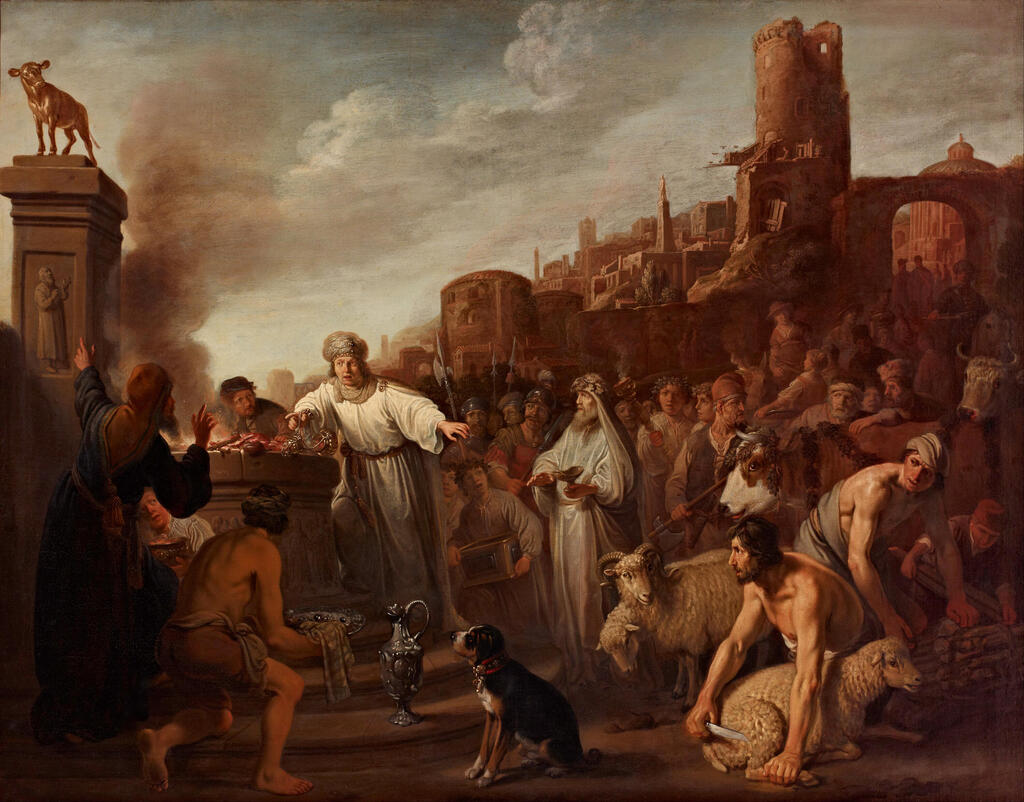
“So he established two sanctuaries, one in Bethel in the south of his kingdom and the other in Dan in the north. He also placed golden calves in those sanctuaries.”
Bazak stressed that, as with the golden calf made by the Israelites in the desert after leaving Egypt, the purpose was not necessarily to worship the calf itself as an idol, but rather as a form of worship of the God of Israel.
“At this stage, the Israelites were not worshipping another god, but viewed the calves as something representing God, or the place of God’s presence. But about 100 years later, when the House of Omri came to power, King Ahab established outright idol worship — the worship of Baal and Asherah.
“Later, toward the end of the First Temple period, idolatry spread to the Kingdom of Judah as well, and the people, led by King Manasseh, began worshipping Baal. But the Bible and the sages also saw Jeroboam as responsible for that deterioration, which is why they called him one who ‘sinned and caused others to sin.’”
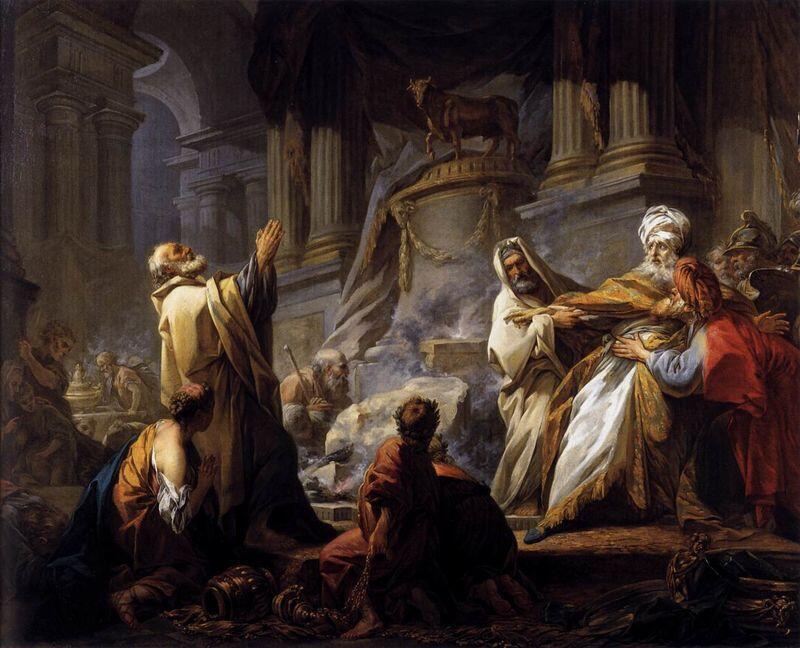
Jeroboam (right) in a painting by the French painter Jean-Honoré Fragonard
He added: “Precisely in periods of religious awakening among the people, you can also see a desire and a need not to settle for abstract worship of God centered on prayer, Torah study and observance of the commandments, but to seek experiences, including mystical ones, and faith in the power of various figures.
“Even today there are people who believe that if they perform certain acts — such as reciting a blessing over wine said to have special powers, or separating challah in a certain way — it will affect the course of events.
“It comes from the same root: people’s need for tangible experiences and mystical actions, because sometimes it is difficult to rely solely on abstract worship of God. When the search for something tangible becomes excessive, it can lead away from worship of God in negative directions, and that is the root of idolatry.”
What did Jeroboam’s religious reform mean?
“It was based on changes in all three central dimensions of holiness: the sanctity of place, the sanctity of the person and the sanctity of time.
“In terms of the sanctity of place, instead of worshipping God at the Temple in Jerusalem, he created alternative sites, in Bethel and Dan.
“In terms of the sanctity of the person, he appointed priests from all the tribes of Israel, and not only from the tribe of Levi. That of course echoes the story of Korah. Korah asked Moses why only the Levites were priests: ‘For all the congregation are holy, every one of them, and the Lord is among them; why then do you raise yourselves above the assembly of the Lord?’ There was also something appealing in saying that everyone could assume the role of priest.
“The third aspect of the reform was the sanctity of time. As Sukkot approached, he feared that the Israelites would travel to Jerusalem for the holiday and that Rehoboam would use the occasion to win the people back.
“So, according to the biblical account, Jeroboam announced that instead of celebrating Sukkot on the 15th of Tishrei, they would celebrate it in the eighth month” — the biblical term for Marheshvan in the calendar count beginning with Nisan — “and the people who came to the sanctuary built by Jeroboam saw him offering a sacrifice even though he was not a priest.”
Playing with the calendar
This is where it is worth pausing to explain the principle behind the Hebrew calendar. Because of the difference between the lunar year and the solar year, an additional month of Adar is added every two or three years so that Passover remains in the spring.

The four specie for Sukkot
(Photo: Tomertu / Shutterstock)
At the time, almost the entire population of Israel was engaged in agriculture. At the end of summer, men would go out to the fields and vineyards, pick fruit and gather the crops. Because agricultural areas were sometimes far from home, they would build huts in which they slept at night, allowing them to supervise the work closely and prevent theft.
“Sometimes some of the fruit ripened late. Sukkot would arrive before all the fruit had been gathered, but the people were required to go up to Jerusalem,” Bazak explained. “Jeroboam told the people that in that year they should add an extra month of Elul, which would allow the harvest to be completed. That created a situation in which there was a different calendar.”
Why was the harvest festival so central at the time?
“At its core, Sukkot is an agricultural festival marking the end of the gathering of summer fruit. God commanded the Israelites who were sitting in huts in the fields to remember: ‘So that your generations may know that I made the children of Israel dwell in booths when I brought them out of the land of Egypt’” — Leviticus 23:43.
“In other words, the Torah is saying something very natural and logical: precisely at the height of the year, at a time of joy, when you are sitting in a sukkah and gathering your crop, remember that you enjoy God’s protection and care, as expressed in a special way by dwelling in booths during the Exodus from Egypt, and that He is the one who gives you the strength to prosper.”
Alongside the joy, there was also concern that the next agricultural year might not be good, giving people another reason to pray.
“In the haftarah for Sukkot, we read from Chapter 14 of the Book of Zechariah, in a prophecy dealing with the end of days, when Sukkot will become a universal holiday and all nations will come to pray in Jerusalem,” Bazak noted.
“The prophet says that those who do not come, ‘upon them there shall be no rain.’ So Sukkot is not only a holiday of thanksgiving for the past, but also a prayer for the future.
“That is why, in addition to Hallel, a prayer of thanksgiving for the past, we also add the Hoshanot, which include requests for the coming agricultural year, and after the holiday, on Simchat Torah, we recite the Prayer for Rain ahead of the approaching winter.
“As noted, Jeroboam explains to the people that Sukkot should be celebrated later, and there was a practical aspect to this because the farther north you go, the later the harvest season. So there was a lack of synchronization between the harvest festival in the Judah region and the harvest season in the north.”
Division led to idolatry and destruction
Tractate Sanhedrin in the Babylonian Talmud contains a midrash describing how Jeroboam was given an opportunity to repent.
“Rabbi Abba said: After the Holy One, blessed be He, seized Jeroboam by his garment, He said to him: Repent, and you and I and the son of Jesse will walk together in the Garden of Eden.”
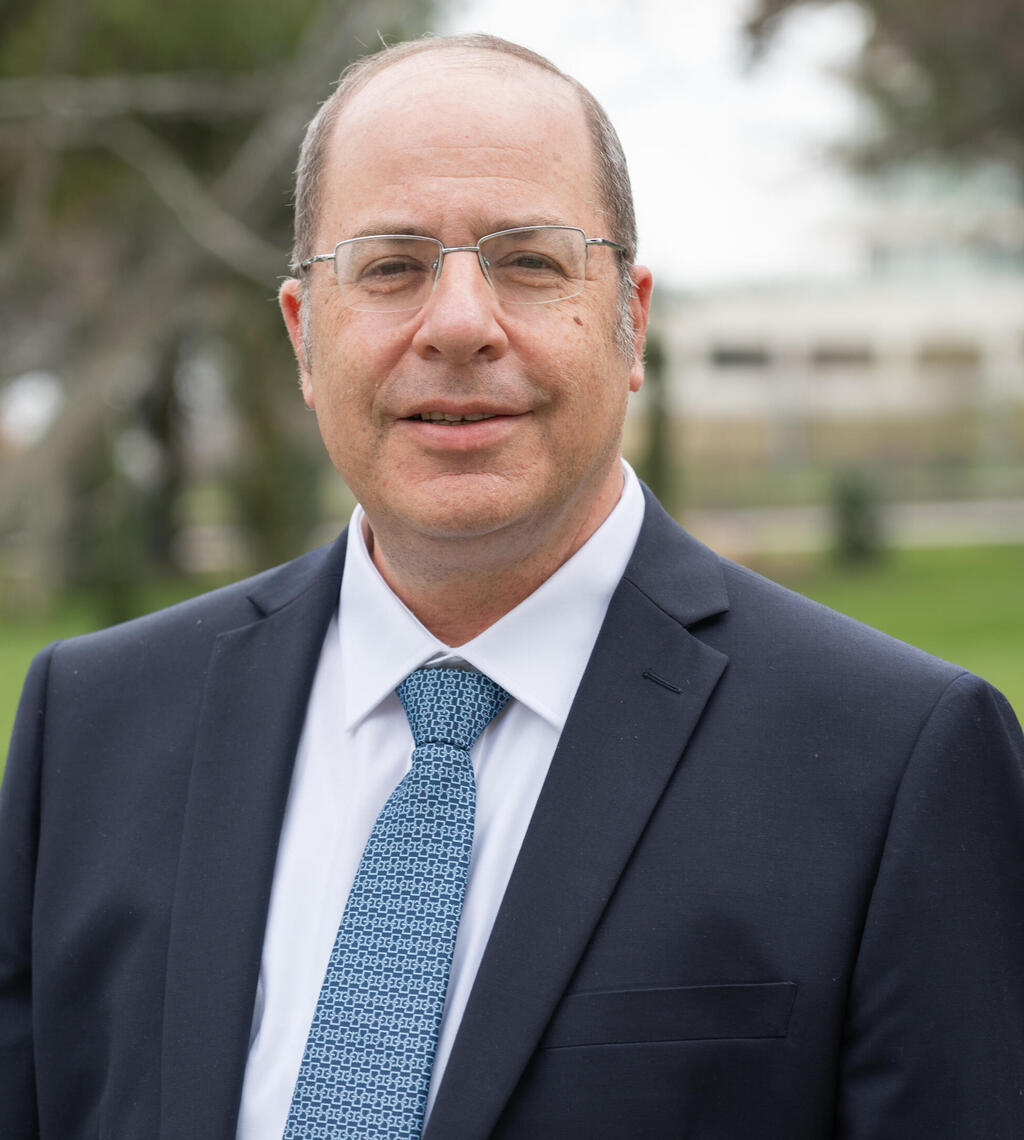
Rabbi Amnon Bazak
(Photo: David Debiuler)
The midrash continues by describing how Jeroboam asks God, “Who will be at the head?” — in other words, who will lead. The answer was that David, son of Jesse, would lead.
Jeroboam then replied, “If so, I do not want it.”
Bazak sees this midrash, and Jeroboam’s broader attempt to move Sukkot and establish an alternative sanctuary, as carrying an important lesson for the present day.
“Jeroboam was unable to accept the control of the House of David over the Temple,” he said. “That division, which began from a personal basis, created an ideology that was destructive to the people of Israel. That is what happens when leaders act according to their personal ambitions rather than the good of the people.”
He believes that the Book of Kings could ultimately be called “a concise history of destruction.”
“If you look at the trajectory of the Book of Kings, it is a very sad book,” he concluded. “It begins at the height of Temple construction and economic prosperity, with ‘every man under his vine and under his fig tree,’ and ends with destruction and exile from the land.
“If you want to understand how you go from a great peak to the destruction of the Jewish state, the answer is the division into two kingdoms. That division among the people ultimately led to idolatry and from there to destruction. One of the lessons we should learn for our own time is just how destructive division can be.”