

Half a century after dedicating its cover story to the question “Can Arabs make it in the Big Apple,” New York Magazine — the influential publication now owned by James Murdoch, Rupert Murdoch’s “wayward son" who is considered far more liberal than his father — is answering its own question. A sweeping cover story by the magazine, known for its ability to identify and reflect the city’s moods and trends (unlike the tabloid New York Post, for example) crowns the new New York “Habibi City” and is devoted entirely to the Arab culture, and Palestinian culture in particular, that has recently taken over the city.
The trend stems, of course, in no small part from the Hamas massacre on October 7, the war in Gaza and the rise to power of Zohran Mamdani, the first Muslim mayor in New York’s history, the magazine points out. From popular culture to food, stand-up shows and reading circles, to nightclub party lines and jazz club performances featuring keffiyehs, the Arab hipster has proudly embraced the derogatory nickname “Mamdanistan” and turned it into the proud slogan of a flourishing New York subculture.
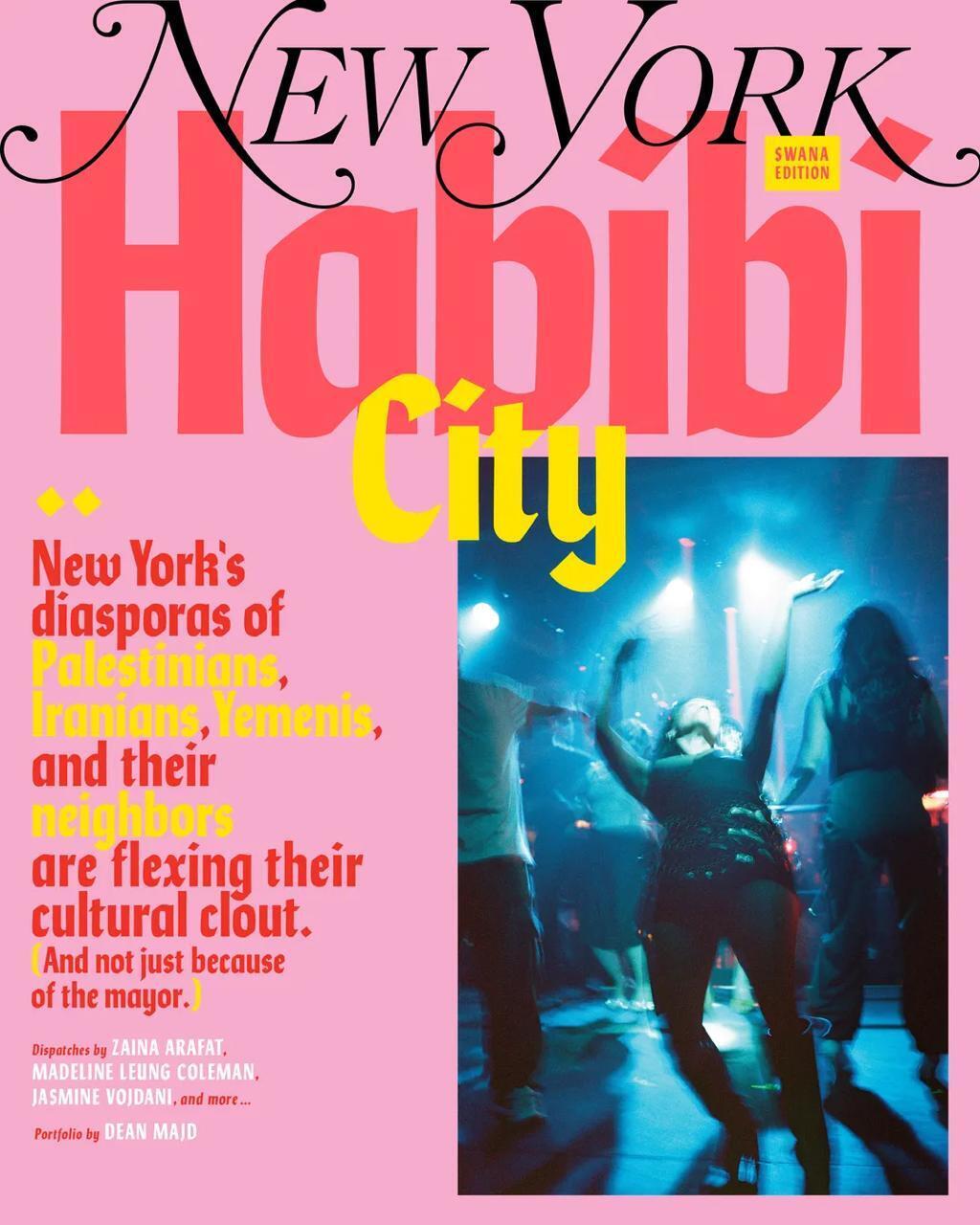
The phenomenon covered by the magazine focuses on the SWANA generation, an English acronym for Southwest Asia and North Africa, which includes people from a range of countries and territories - from Palestine and Iran to Sudan. According to the article, written by journalist Zaina Arafat, this cultural energy has turned New York into a “Middle Eastern enclave” offering children’s workshops at a bookstore dedicated to Middle Eastern culture and Gaza fundraisers at a women-run Syrian supper club.
Mamdani’s election as mayor is presented as decisive evidence of this community’s golden age. Mamdani, who was born in Uganda and is of Indian descent, is married to Rama Duwaji, a first-generation American of Syrian descent. Although he is not technically from the geographic region, the mayor is deeply immersed in its culture, speaks Arabic almost without an accent and makes a point of documenting himself taking part in Muslim ceremonies, such as Ramadan fast-breaking meals, including such meals with Muslim inmates at Rikers Island. In another case, the mayor jumped over a bonfire in the backyard of an Iranian-owned bar in Williamsburg as part of Persian New Year celebrations.
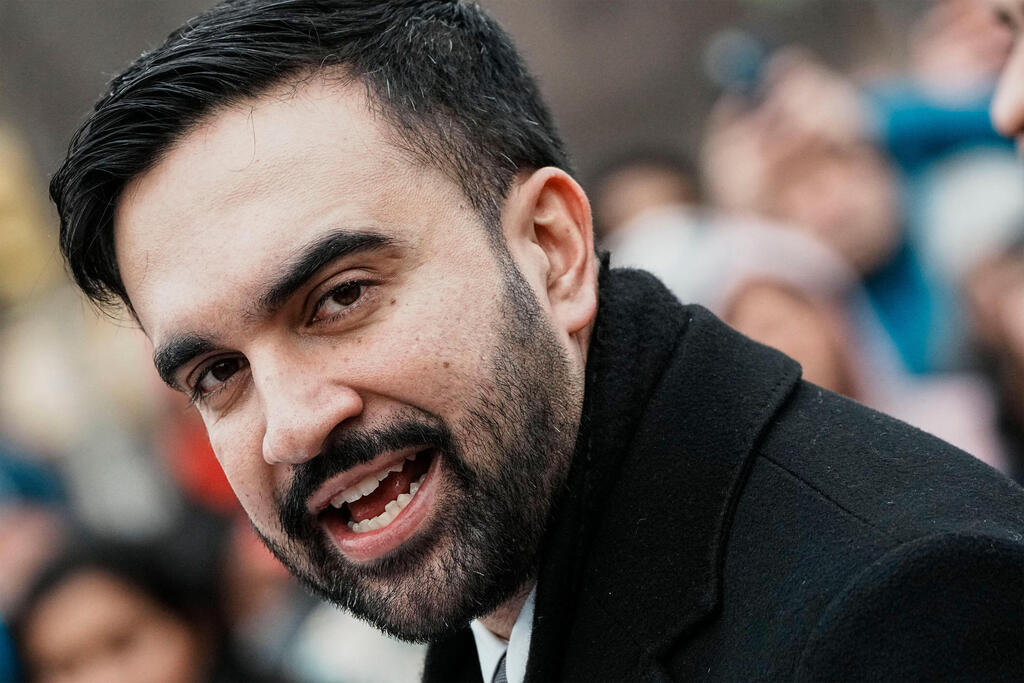
Mayor Zohran Mamdani
(Photo: Eduardo Munoz Alvarez/AP)
His wife also promotes the narrative, traveling to the region, wearing clothes by Middle Eastern designers - including a dress by a Palestinian-Lebanese designer at the inauguration ceremony, and publicly posting Spotify playlists featuring songs such as “Hungry But Sexy for Palestine.”
Forbidden to sit in the same room with an Israeli
This Arab flourishing also rests on clear demographic data, according to the report. New York now has the third-largest population in the U.S. of residents with roots in Southwest Asia and North Africa. The number of state residents who identify as having Arab roots has tripled since 1980 and stands at more than 300,000 people, not including additional communities from Iran and Afghanistan. This rapid growth aligns with reports that the number of Muslim residents in New York may now exceed the city’s Jewish population. Local statisticians have described it as a demographic shift with significant implications for the city’s future.
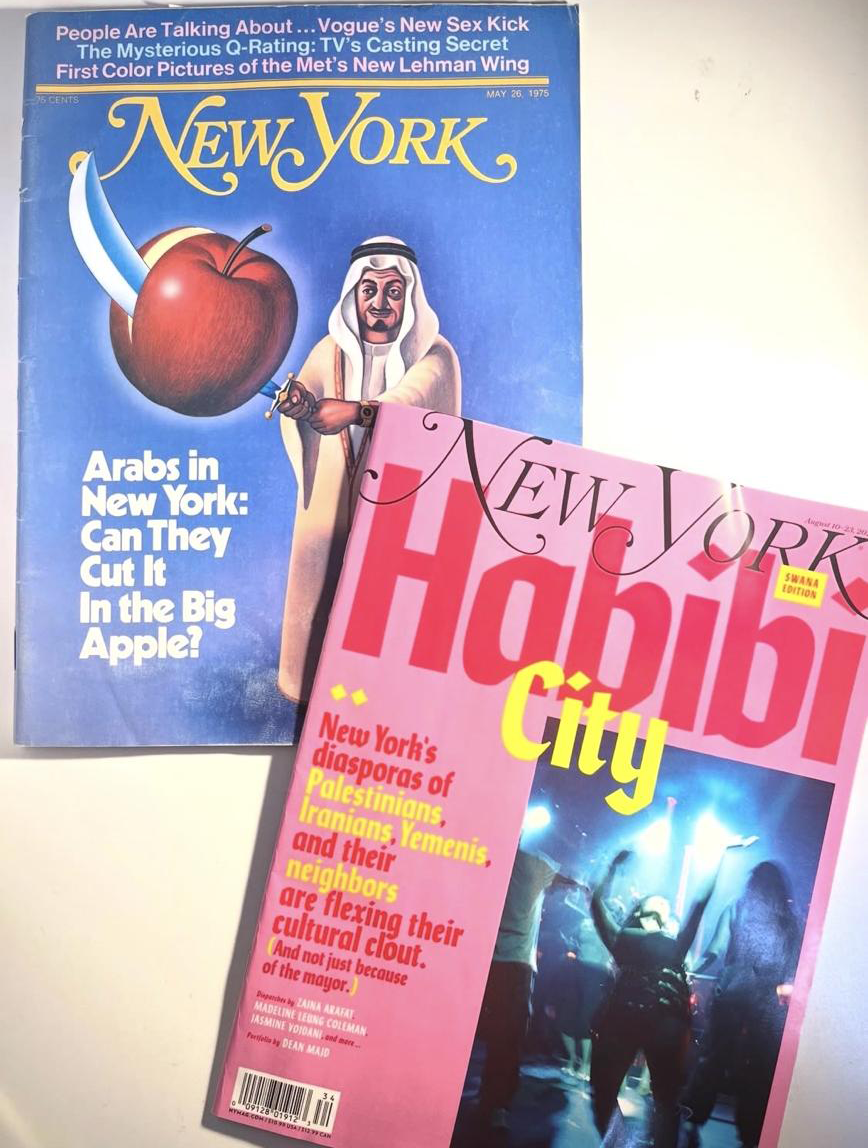
The magazine, then and now
But the transformation New York is undergoing has been years in the making. Actor Arian Moayed, known for “Succession,” “Spider-Man” and “Inventing Anna,” describes in the article how he arrived in the city in 2002 with a moving truck and a beard, at the height of the fight against the “Ground Zero mosque,” in days when the idea that the Middle Eastern community would have narrative power seemed impossible. The turning point began to take shape around 2017, following the “Muslim bans” issued by President Donald Trump during his first term. Those orders barred residents of several Arab and Muslim countries from entering the U.S., and the move led Yemenis and Iranians to stand together at Kennedy Airport and unite around a shared struggle.
Another leap came with the popularity of shows such as “Ramy,” by Egyptian American comedian Ramy Youssef. Young people such as 33-year-old Kimia Zakerin, who now runs a Persian language club, printed shirts with the words “New York” in Persian letters and sold them all within two days. Designer Arsh Raziuddin also generated buzz when she designed soccer jerseys associated with the city, which quickly sold out. Party lines such as Habibi Funk Laylit, Disco Tehran, Haza and Yalla! gained popularity and began attracting New York ravers far removed from those communities.
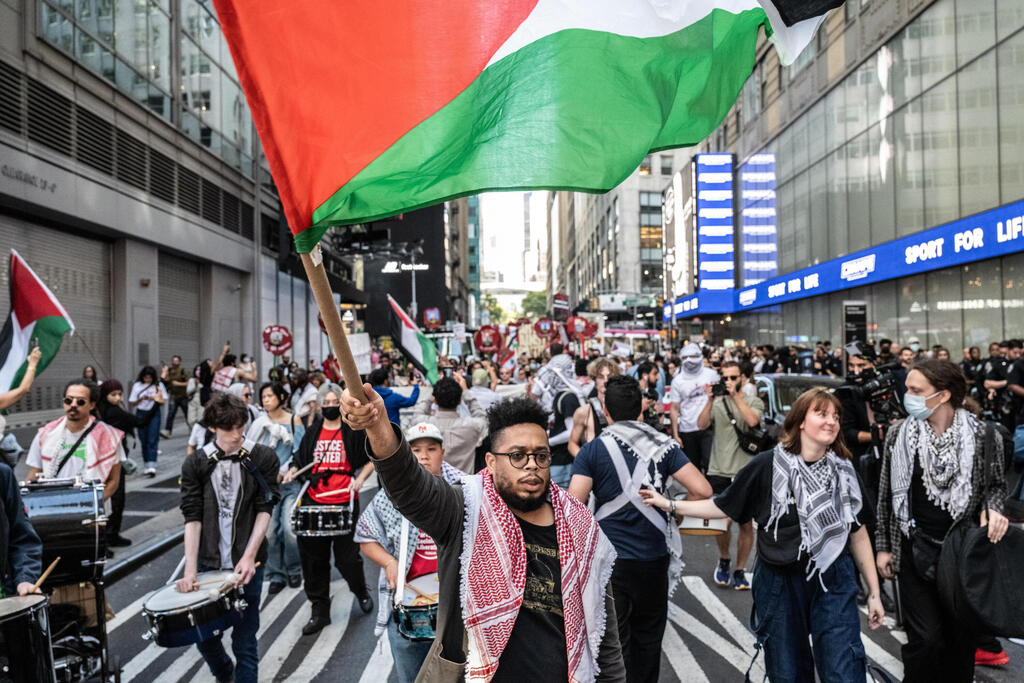
Pro-Palestinian protests in Times Square, New York
(Photo: Stephanie Keith/Getty Images)
The thirst for cultural connection led to the establishment of initiatives described in the article, such as Cafe Barzakh in Crown Heights, owned by a Mauritanian refugee named El Atik Abba. Abba cannot return to his homeland because of a Muslim religious ruling issued against him. After working as a dishwasher and as a clerk in Yemeni-owned grocery stores, he opened the cafe, designed like a salon from the Ottoman Empire era, where Iranians can be found drinking wine at one end of the bar and women in hijabs drinking tea at the other during Ramadan. After October 7, the venue became a hub for fundraisers for families in Gaza and the West Bank.
When the cafe hosted a joint performance by Palestinian singer Nour Darwish and Israeli musician Noam Halper under the title “Dialogue,” angry customers objected to the very use of the word. The owner insisted on keeping the term, but was forced to clarify that it was an “anti-Zionist event.” He told the magazine that among the younger generation of American-born Arabs there is a perception that one must not sit in the same room with an Israeli, and the decision to host Israelis costs him a considerable amount of money.
Israeli chef apologizes for the “cultural appropriation” of Palestinian food
The magazine also describes a restaurant whose menu features a map on which Israel has been erased and replaced with the title “Discover Palestine,” and writes that while Israeli chefs “allowed themselves to be expensive,” Arab cuisine was pushed to the margins and stuck with the image of food that was “fast, cheap and in the outer boroughs.” An Israeli chef in the city, Loren Abramovitch, apologizes in the article for the cultural appropriation of Palestinian food and says, “Deep in my brain, I think I have all the authority in the world to make falafel, but at the same time I understand that it’s going to be a mess.”
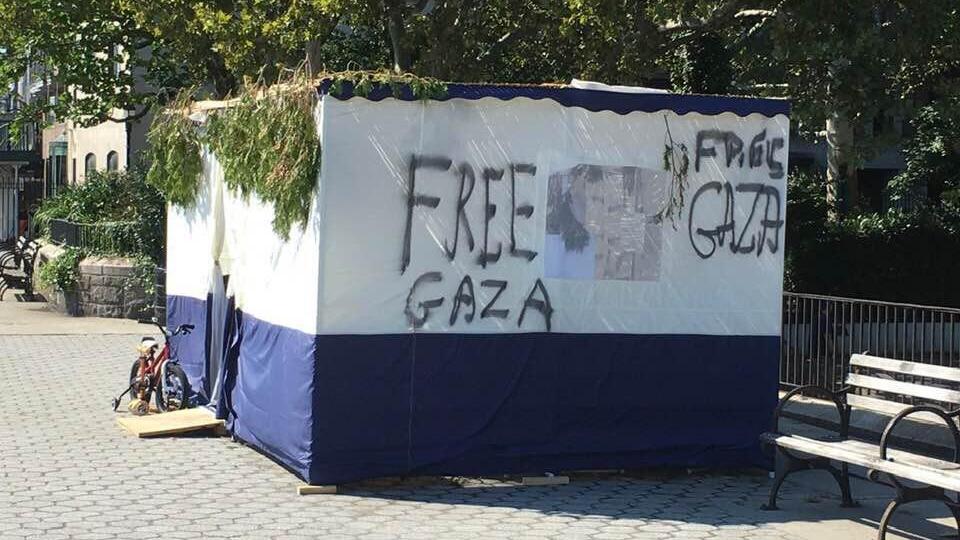
Sukkah vandalized on street in New York
The writers report that the atmosphere has become so hostile that young Jewish women in New York, horrified by Israel’s alleged war crimes, are forced to check restaurants’ social media accounts before sitting down to eat, just to examine the owner’s political views.
New independent magazines by the Arab-Muslim community, such as Acacia and Equator, are being founded as a direct response to the war in Gaza and declaring themselves a home for “the Muslim left.” One of the prominent writers is Ismail Ibrahim, a former fact-checker at the prestigious New Yorker magazine, who resigned in anger in protest after his attempts to change wording in articles so they would reflect “the horror of what is happening in Palestine” failed.
New York Magazine notes that belonging to the community requires adopting several shared beliefs, including the uncompromising assertion that what happened in Gaza after October 7 was “genocide.” The article also states that members of the community “are forced to contend with xenophobia, Islamophobia and Zionism.” Regarding the integration of Israelis into the new fabric of life, the magazine rules that although Israel is geographically part of the region, the question of whether Israelis can claim a connection to it is “complicated” and influenced by a person’s ethnic background.
SWANAfication and conspiracies: Eight times as many crimes against Jews
Those formulations also sparked sharp criticism. In the Jewish magazine Tablet, critics declared that “for ‘Habibi City’ to be born, New York City must die.” Israeli American journalist Liel Leibovitz attacked the growing use of the term SWANA, defining it as one that “now apparently represents anyone who is vaguely Middle Eastern and loathes capitalism, America and the Jews.” Leibovitz accuses New York Magazine of “not only reporting on the SWANAfication of New York, but adopting its rhythms, its feverish and conspiratorial thinking, its senseless and absurd formulations and its absolute biases.”
The New York Sun joined the criticism, saying in an editorial that “the metropolis imagined this week in the pages of New York Magazine is one in which there is no place for Jews or Israelis.” According to the editorial, “its governing spirit is not pluralism, but the purification of those New Yorkers who are already facing surging antisemitism.” The paper ended with a warning that “in trying to give a name to a new fashion, the magazine is handing a microphone to the oldest hatred.”
Critics of the New York Magazine article note that, since the beginning of the year, New York police have recorded 178 hate crimes against Jews, compared with just 21 against Muslims. That figure makes anti-Jewish hate crimes more than eight times as common as those targeting Muslims.