


This week marks the 5th anniversary of the great Rabbi Lord Jonathan Sacks leaving us and his Torah and teachings are still guiding us in today’s complicated times.
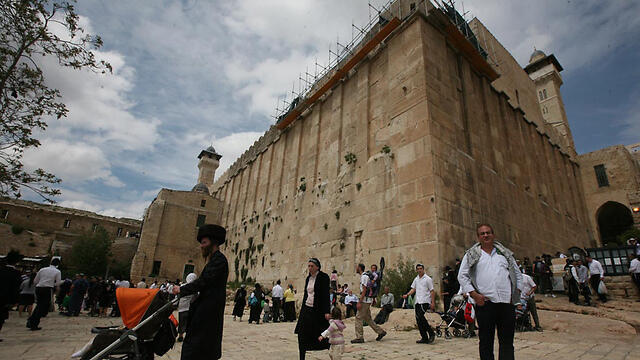
Rabbi Sacks points out that this portion basically contains two stories, one of Abraham buying tie cave of the patriarchs in Hebron, a place Jews still go to to pray today, and the other, Abraham finding a wife for his son Isaac.
So why an entire portion dedicated to these seemingly trivial stories? The Torah is not a history book. Every story in the Torah teaches us something and these stories are no different.
So what are we to learn from these two stories? The answer is… a lot!
When one examines Abraham’s life, they’ll see that God made two promises to Abraham and each one was promised no less than five times!
The first promise is that Abraham would receive the land of Israel as an eternal gift for his descendants.
The five times:
- “Then the Lord appeared to Abram and said, “To your descendants I will give this land.” There he built an altar there to the Lord, who had appeared to him.”
- “After Lot had separated from him, the Lord said to Avram, “Raise your eyes and look around from where you are to the north, south, east, and west. All the land you see I will give to you and your descendants forever. . . Get up and walk through the length and breadth of the land, for to you shall I give it.”
- “And He told him, “I am the Lord who brought you out from Ur Kasdim to give you this land to possess it.”
- “On that day the Lord made a covenant with Avram: “To your descendants I will give this land, from the River of Egypt to the great river Euphrates, the land of the Kenites, the Kenizzites, the Kadmonites, the Hittites, the Perizzites, the Refaim, the Amorites, the Canaanites, the Girgashites, and the Jebusites.”
- “I will establish My covenant between Me and you and your descendants after you throughout the generations: an eternal covenant. I will be God to you and your descendants after you, and I will give you and your descendants after you the land where you now live as strangers, the whole land of Canaan, an everlasting possession, and I will be their God.”
That was promise number one: The land of Israel will belong to the Jewish people.
Then there was another promise, also said five times. That promise is the continuity of the Jewish people. The promise made to Abraham is that his descendants will be plentiful like the stars in the sky and the sand on the shore.
The five times:
- “I will make you a great nation, and I will bless you and make your name great. You will become a blessing.”
- “I will make your offspring like the dust of the earth: if anyone could count the dust of the earth, only then could your offspring could be counted.”
- “He took him outside and said, “Look at the heavens and count the stars – if indeed you can count them.” He said to him, “that is how your descendants will be.”
- “And God said to him, “As for Me – this is My covenant with you: you shall be father to a multitude of nations. No longer shall you be called Avram. Your name will be Avraham, for I have made you father to a multitude of nations.”
- “I will bless you greatly and make your descendants as many as the stars of the heavens, as the sand on the seashore.”
So God promises him the land of Israel and that Abraham will have many descendants.
And yet, Abraham, at this late stage in his life saw neither of those promises come to fruition.
He does not own any of the land of Israel and his son, Isaac, who is meant to continue his legacy, is not married yet.
And now we know why the Torah puts such an emphasis on these two stories. By acquiring the cave of the patriarchs, Abraham now owns “Part of the rock.” He now owns a plot of the land of Israel. And by finding his son Isaac a wife, he ensures the continuity of the Jewish people.
This portion, in essence is the manifestation of God’s covenant with Abraham and ultimately with the Jewish people.
However, the lesson goes deeper.
A closer look at the stories themselves reveals the nature of these promises and how we are seeing them continue to unfold today.
These two promises were not fulfilled without struggle.
Abraham bargains for burial land in Hebron
Abraham arrives in Hebron as a stranger and conducts a lengthy bargaining process with the Hittites to buy a field with a cave in which to bury Sarah.
As soon as he requested that land, the people responded with generosity. They tell Abraham that they are aware of his connection with God, they called him a piece of God, and they declare that they’ll give him any plot of land that he desires.
But that generosity ends up being a facade and Abraham has to have an intense bargaining session to acquire the land.
“The Hittites say one thing and mean another. As a group they say, “Sir, listen to us. You are a prince of God in our midst. Bury your dead in the choicest of our tombs.”
Tanakh
(Photo: Shutterstock)
Ephron, the owner of the field Abraham wishes to buy, says: “Listen to me, I give you the field, and I give you the cave that is in it. I give it to you in the presence of my people. Bury your dead.”
As the narrative makes clear, this elaborate generosity is a façade for some extremely hard bargaining.
Abraham knows he is “an alien and a stranger among you,” meaning, among other things, that he has no right to own land. That is the force of their reply which, stripped of its overlay of courtesy, means: “Use one of our burial sites. You may not acquire your own.”
Abraham is not deterred. He insists that he wants to buy his own. Ephron’s reply – “It is yours. I give it to you” – is in fact the prelude to a demand for an inflated price: four hundred silver shekels.
At last, however, Abraham owns the land. The final transfer of ownership is recorded in precise legal prose to signal that, at last, Abraham owns part of the land. It is a small part: one field and a cave. A burial place, bought at great expense.
That is the entirety of the Divine promise of the land that Abraham will see in his lifetime.”
In other words, like Moses much later in the Torah, Abraham understands how significant the land of Israel is and Abraham fights hard to own a piece.
A short story
Without naming names; one of Israel’s biggest tech investors and a role model of mine always tells me a story when I see him.
He tells me that he remembers that many years ago, he bumped into my dad and my dad told him that now that Israel is so accessible to us, that “He can own a part of the rock.”
This investor told me that that one sentence my dad told him all those years back deeply impacted him and played a role in him eventually making aliyah.
Today, this investor employs, invests, and assists hundreds, maybe thousands of people in Israel. He now owns a part of the rock and he’s also enabled many other people to do the same.
A recent update: He began advising the government on strategic issues.
One sentence my dad told him as a kid and now he’s shaping the future of Israel. Amazing.
Another promise from God
The next promise is of course God’s promise that the Jewish people will always exist. That the nation will outlive all the other empires.
But till now, Abraham had not seen that promise come to fruition.
Until now.
“The next chapter, one of the longest in the Mosaic books, tells of Abraham’s concern that Isaac should have a wife.
He is – we must assume – at least 37 years old (his age at Sarah’s death) and still unmarried.
Abraham has a child but no grandchild —no posterity. As with the purchase of the cave, so here: acquiring a daughter-in-law will take much money and hard negotiation.
Acquiring a wife for Isaac
The servant, on arriving in the vicinity of Abraham’s family, immediately finds the girl, Rebecca, before he has even finished praying for God’s help to find her.
Securing her release from her family is another matter. He brings out gold, silver, and clothing for the girl. He gives her brother and mother costly gifts. The family have a celebratory meal.
But when the servant wants to leave, brother and mother say, “Let the girl stay with us for another year or ten [months].”
Laban, Rebecca’s brother, plays a role not unlike that of Ephron: the show of generosity conceals a tough, even exploitative, determination to make a profitable deal. Eventually patience pays off. Rebecca leaves. Isaac marries her. The covenant will continue.
These are, then, no minor episodes. They tell a difficult story. Yes, Abraham will have a land. He will have countless children. But these things will not happen soon, or suddenly, or easily. Nor will they occur without human effort.
To the contrary, only the most focused willpower will bring them about. The Divine promise is not what it first seemed: a statement that God will act. It is in fact a request, an invitation, from God to Abraham and his children that they should act.
God will help them. The outcome will be what God said it would. But not without total commitment from Abraham’s family against what will sometimes seem to be insuperable obstacles.
A land: Israel. And children: Jewish continuity.
The astonishing fact is that today, four thousand years later, they remain the dominant concerns of Jews throughout the world – the safety and security of Israel as the Jewish home, and the future of the Jewish people.
Abraham’s hopes and fears are ours
Abraham’s hopes and fears are ours. (Is there any other people, I wonder, whose concerns today are what they were four millennia ago? The identity through time is awe-inspiring.)
Now as then, the Divine promise does not mean that we can leave the future to God. That idea has no place in the imaginative world of the first book of the Torah.
To the contrary: the covenant is God’s challenge to us, not ours to God. The meaning of the events of Chayei Sarah is that Abraham realized that God was depending on him.
Faith does not mean passivity. It means the courage to act and never to be deterred. The future will happen, but it is we – inspired, empowered, given strength by the promise - who must bring it about.”
Another story
This reminds me of the famous story that I quote often and apply to Jews coming home to Israel.
A fellow was stuck on his rooftop in a flood. He was praying to God for help.
Soon a man in a rowboat came by and the fellow shouted to the man on the roof, “Jump in, I can save you.”
The stranded fellow shouted back, “No, it’s OK, I’m praying to God and he is going to save me.”
So the rowboat went on.
Then a motorboat came by. “The fellow in the motorboat shouted, “Jump in, I can save you.”
To this the stranded man said, “No thanks, I’m praying to God and he is going to save me. I have faith.”
So the motorboat went on.
Then a helicopter came by and the pilot shouted down, “Grab this rope and I will lift you to safety.”
To this the stranded man again replied, “No thanks, I’m praying to God and he is going to save me. I have faith.”
So the helicopter reluctantly flew away.
Soon the water rose above the rooftop and the man drowned. He went to Heaven. He finally got his chance to discuss this whole situation with God, at which point he exclaimed, “I had faith in you but you didn’t save me, you let me drown. I don’t understand why!”
To this God replied, “I sent you a rowboat and a motorboat and a helicopter, what more did you expect?”
Time to come home
Today, as the Jewish people fight the global spike in antisemitism, many understand that it’s time to come home. But many don’t.
One day when those Jews who didn’t come home leave this world, they will come before God and ask “We all prayed to come home to Israel. We prayed for the ingathering of the exiles. Why didn’t you bring us home?"

Family from North America arrives on aliyah in the midst of the war against Hamas in Gaza
(Photo: Courtesy of Nefesh B'Nefesh)
God will look at those people confused and say, “I didn’t bring you home?? I made Israel an incredible country leading the world in innovation. I made it a paradise to live in! A place you can come home to and build an incredible life.
That wasn’t enough? I sent you ElAl. I even sent you Nefesh B'Nefesh. You STILL didn’t get the message? I sent you antisemitism so you’d understand that it’s time to go home! I even sent you Mamdani! You didn’t get on the plane.”
This portion teaches us that acquiring a piece of the rock, owning a piece of land in the land of Israel is something that requires effort, challenges, and without that, one cannot acquire a piece of Israel.
The difficulty in making aliyah is a feature, not a bug. Meaning, it’s by design. God wants us to acquire this land and for that, we have to work at it!
Like faith itself, sometimes it’s easier to believe and sometimes it’s harder. But again, a feature, not a bug.
Hashem wants us to achieve faith even when there are hard questions. If every time I did something good, I was rewarded immediately with good, and every time I did something bad, something bad would happen to me, then that would not be faith, it would be knowledge.
Hashem definitely makes it hard to believe sometime but he does so, so we can work harder and achieve true faith in Him.
The same is true for Israel. Hashem wants us to do the hard work and come home to Israel.
The same is true for the second story, ensuring the continuity of the Jewish people. Of course, we have that promise from Hashem, but just like in this week’s portion, we have to work at it.
Effort means maintaining our traditions, continuing our heritage, and educating the next generation what it means and how lucky they are to be a part of this incredible nation.
 Hillel FuldPhoto: Maayan Hoffman
All that said, I think there is another lesson here. I think the story of Abraham acquiring a piece of land in Israel is right next to the story of him finding a wife for his son because the two things are deeply connected.
The lesson is that in order to ensure our survival, in order to make sure we continue to thrive as a nation, both as individuals and as a collective, we need to make sure that Israel is our home.
Living in Israel and the survival of the Jewish people are two things that are deeply connected and one might even say that one, the survival of the nation, depends on the other, acquiring the land of Israel.
Shabbat shalom.