


Dr. Israel Netanel Rubin rejects Kabbalah so sharply that his criticism begins with the word itself.
Rubin, a scholar of Jewish thought, says the term was adopted to suggest continuity with earlier Jewish tradition, while in his view it represents a later invention that distorted Judaism.
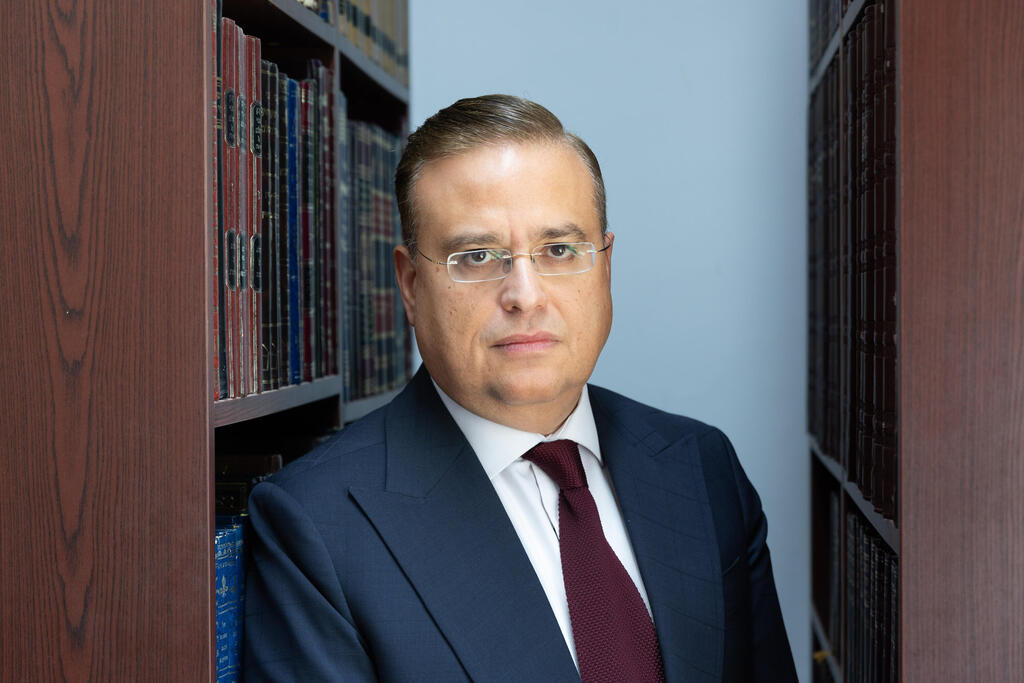
“The name ‘Kabbalah’ was apologetic from the start,” Rubin says. “People attached it to themselves to claim their ideas were received from previous generations, but in practice it was their own invention.”
In his new Hebrew book, Kabbalah: The Disaster of Jewish Faith, Rubin describes well-known Kabbalistic texts as filled with “delusions” and “nonsense.” He argues that Kabbalistic ideas undermine Jewish monotheism, encourage hostility to science and helped shape opposition in parts of the ultra-Orthodox world to core curriculum studies.
Rubin places himself in a long line of rabbis who opposed Kabbalah, citing Maimonides, Rabbi Elia del Medigo, Rabbi Leone Modena and Rabbi Yiḥyah Qafiḥ, who sharply criticized mystical teachings in different periods.
He argues that Kabbalah gained influence as a reaction against the rationalism associated with Maimonides, and says its spread into the Jewish mainstream was strengthened by Nachmanides.
“Kabbalah began with people who were ignorant and did not know how to study Gemara,” Rubin says. “But when someone like Nachmanides, with all his authority and students, adopted it, that gave it its major push.”

(Photo: AFP)
Rubin’s criticism extends to major ultra-Orthodox rabbis who opposed secular studies. He calls such figures “fools,” saying their rejection of math, science and general education helped create a society unable to sustain a modern state.
“How did we get to a situation where core studies are considered heresy?” Rubin says. “How did mathematics become heresy?”
Rubin links that trend directly to Israel, warning that ultra-Orthodox opposition to core curriculum studies threatens the country’s future. He says earlier Jewish figures, including Maimonides, Ibn Ezra and Gersonides, embraced science, medicine, mathematics and astronomy.
“The ultra-Orthodox world is ultimately a threat to Israel’s future,” Rubin says. “When the ultra-Orthodox grow demographically, there will be no state here.”
Rubin also says Kabbalistic teachings helped encourage racist attitudes toward non-Jews, particularly texts that describe non-Jewish souls as spiritually impure. He contrasts that with Maimonides’ view that non-Jews have moral responsibility and can earn a share in the world to come by observing the Seven Noahide Laws.
Rubin points to the Tanya, written by Rabbi Shneur Zalman of Liadi, the founder of Chabad Hasidism, as an example of a book that, inspired by Kabbalah, adopted a racist view of non-Jews. The author of the Tanya was influenced in particular by Etz Chaim, by Rabbi Chaim Vital, a disciple of the Ari, and quotes from it.
“In Kabbalah, a non-Jew has an impure soul from birth, regardless of what he did,” Rubin says. “That madness is blocking our lives here.”
Rubin reserves some of his harshest language for the Zohar, the central work of Kabbalah. He calls it “the greatest and most successful forgery in the Jewish world” and, because of its erotic imagery, refers to it as an “erotic novel.”
Despite that criticism, Rubin acknowledges that the Zohar has literary power.

(Photo: Erik Marmor / Getty Images)
“There is something there artistically that people had not seen before,” he says. “But to take it as a serious part of religion? No.”
He also attacks Kabbalistic teachings on sexuality, saying they caused generations of yeshiva students intense guilt, especially over masturbation and nocturnal emissions. He argues that Kabbalah inflated those acts far beyond their earlier place in Jewish law.
Rubin says the core problem is that Kabbalah changed the purpose of Jewish practice. In his view, Maimonides understood commandments as meant to improve human beings, while Kabbalah describes them as repairing divine worlds.
“According to the Kabbalists, all the commandments are meant to repair God,” Rubin says. “Maimonides’ view is the opposite: the commandments are for human beings.”
For Rubin, the debate is not only theological. He says Kabbalah has helped shape political, educational and social problems in Israel, from opposition to core studies to suspicion of science and attitudes toward non-Jews.
“Belief in the splitting of the Red Sea does not contradict studying mathematics or living a sane life as a citizen in the 21st century,” Rubin says. “Belief in Kabbalah does.”