


Vayishlach is an action-packed Torah portion that really has it all, but I want to dig a little deeper and ask a very basic question.
Out of all of the atriarchs, we are called Bnei Yisrael; the sons of Israel. Israel was Jacob’s name. Meaning, the entire Jewish nation comes from Jacob.
Why? Why Jacob?
As the late Rabbi Jonathan Sacks asks, “Why is Jacob the father of our people, the hero of our faith?
We are “the congregation of Jacob”, “the children of Israel.”
Yet it was Abraham who began the Jewish journey, Isaac who was willing to be sacrificed, Joseph who saved his family in the years of famine, Moses who led the people out of Egypt and gave it its laws.
It was Joshua who took the people into the Promised land, David who became its greatest king, Solomon who built the Temple, and the prophets through the ages who became the voice of God.”
I believe the answer is simple and yet also incredibly profound. Let’s examine the leaders of the Jewish people.
Abraham discovered monotheism. He was told to leave his home and go to an undisclosed location and he did so; no questions asked. He was promised a child and at the age of 99, finally had Isaac. He was then told to sacrifice that son, which he was willing to do without any hesitation.
Simply put, Abraham is more like an angel than a human being any of us can relate to.
Isaac was already an adult when his father Abraham was told to sacrifice him. He too went without hesitation. I don’t know about you, but I can’t relate to that.
Joseph too was almost above nature having gone through endless persecution and somehow ended up leading the world leading empire of ancient Egypt.
Moses? Who can relate to Moses?? All the hardships he faced from a stubborn nation that made his life unbearable and after all that; he still was denied entry into the land of Israel, which was his life’s mission? Totally unrelatable.
If you look at the life of Joshua, David or really any other leader we had in the Bible, they are all on levels that may lead one to feel inadequate.
“I could never achieve the greatness of Abraham or the courage of Isaac or the resilience of Joseph or the humility of Moses. Why even bother?”
But Jacob, Jacob is the leader for whom we are named not because he was the most righteous. Perhaps it’s quite the contrary. Jacob was totally relatable. Everything he went through in his life was, simply put, human.
The account of Jacob in the Torah seems to fall short of these other lives, at least if we read the text literally. He has tense relationships with his brother Esau, his wives Rachel and Leah, his father-in-law Laban, and with his three eldest children, Reuben, Simon and Levi.
There are times when he seems full of fear, others when he acts – or at least seems to act – with less than total honesty.
In reply to Pharaoh, he says of himself, “The days of my life have been few and hard.”
This is less than we might expect from a hero of faith.
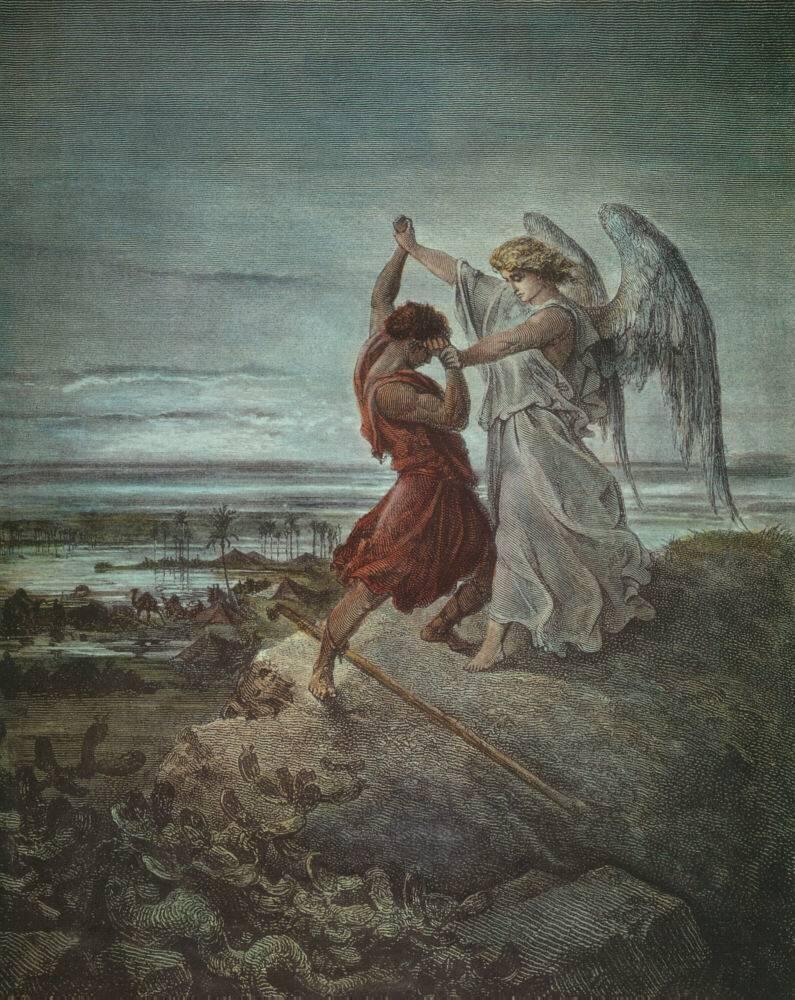
Jacob Wrestling with the Angel by Gustave Doré
Perhaps that’s exactly why we are named for Jacob, because the Torah is telling us that it’s ok to be human. God doesn’t expect us to be angels. He expects us to be the best version of ourselves.
Let’s examine some of the things Jacob endured and specifically, his emotional state.
Jacob was literally born into struggle. He and his brother Esau were already fighting in the womb, something that was the basis for antisemitism throughout the generations. As we know, Esau will always hate Jacob. Aka, there will always be antisemitism in the world.
What characterized Jacob’s childhood was rivalry, deception, and fear.
One might even go as far as to say that Jacob had “Daddy issues." The Torah explicitly says that his Dad, Isaac, loved Esau. Jacob then flees out of fear, which leads him to fall in love with Rachel. For the first time in the Torah, you see an act of romance when Jacob kisses Rachel. Clearly he was infatuated.
He then pursued that love but was tricked by Rachel’s father and he had to work for many years to finally marry the love of his life, Rachel.
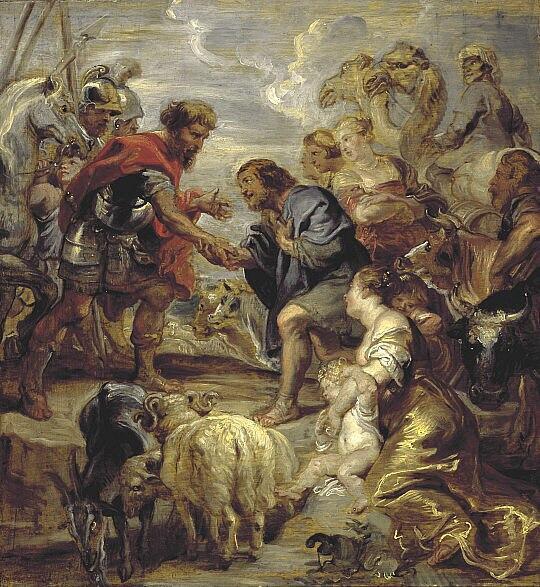
This week’s portion speaks about Jacob having fear and anxiety when planning to reunite with his brother. The Torah literally says “He was scared and distressed," which all the commentaries are concerned with. Why the redundancy? Scared and distressed.
(Photo: Ungvar / Shutterstock)
This might be the first mention of anxiety in the Torah.
The commentaries go to extreme lengths to defend Jacob’s actions throughout his life, some of which were questionable to say the least.
Now, some might read this and feel uncomfortable with what might seem like criticism of Jacob but it’s actually the opposite so hang tight. Some of things we see Jacob do in his life are heavily analyzed by commentary. For example, Jacob deceiving his father and stealing the blessing from Esau? The commentaries go to extreme lengths to justify his behavior and explain why it wasn’t dishonest.
The simple reading of the Torah seems to imply that it was dishonest, and that Jacob lied.
Other things we see Jacob do are not as heavily discussed but are equally confusing. For example, Rachel was not getting pregnant and she asks Jacob to pray for him. His answer to her is strange at best and highly insensitive at worst. He basically says to her “What am I? God? I have kids with Leah. What do you want from me? This isn’t a me problem.”
The list of strange behaviors we see in Jacob’s life is quite long. Take the story of the well, for example.
Jacob comes to this well and the custom of the place is for all the people to gather there and together remove a large stone from the well. Comes Jacob and, contrary to the accepted norms, pushes that stone off all by himself. Strange.
Like I said, he kisses Rachel, but it’s not just that. The Torah says that Rachel was physically beautiful and the next verse is that Jacob loved her, which seems to imply that it was more of a physical attraction than anything else. Again, strange.
Really if one were to examine the life of Jacob, the last word they’d use to describe it is honest. And yet, we are told that Jacob stands for truth.
But that is precisely the point and the reason we are named after Jacob.
He wasn’t perfect. Far from it. But Jacob taught us that we are all human and we all make mistakes and have weaknesses. But what Jacob really taught us is that, as humans, we are able to look at our weaknesses and not just overcome them, but actually use them in a positive way and eventually turn them into the very thing we can stand for.
Jacob isn’t the patriarch we are named after because he was perfect. He wasn’t the most righteous. Jacob was the most imperfect of all the patriarchs. He was the most human.
 Hillel FuldMaayan Hoffman
According to the simple understanding of the Torah, Jacob felt jealousy. He was dishonest at times. He was insensitive at some points. He fell in love with Rachel and was infatuated with her. He felt fear. He had anxiety. And on and on.
Jacob was normal. He was human. He was a man who transformed himself through hard work and that is precisely why we, as a nation, are named “The sons of Jacob." Because we too, this Torah portion teaches us, are human, are imperfect, but have the potential to change and become the best versions of ourselves.
Shabbat shalom.