


In 1924, Rabbi Abraham Isaac Kook arrived at the White House and met with then-U.S. President Calvin Coolidge. Rabbi Kook, who was the chief rabbi of Mandatory Palestine, expressed his gratitude to the American people for their friendship and offered his blessing to the U.S. president.
Coolidge responded by saying he felt greatly honored by the chief rabbi’s visit and promised that the U.S. government would assist as much as possible in the establishment of a Jewish national home in Palestine.
Gallery
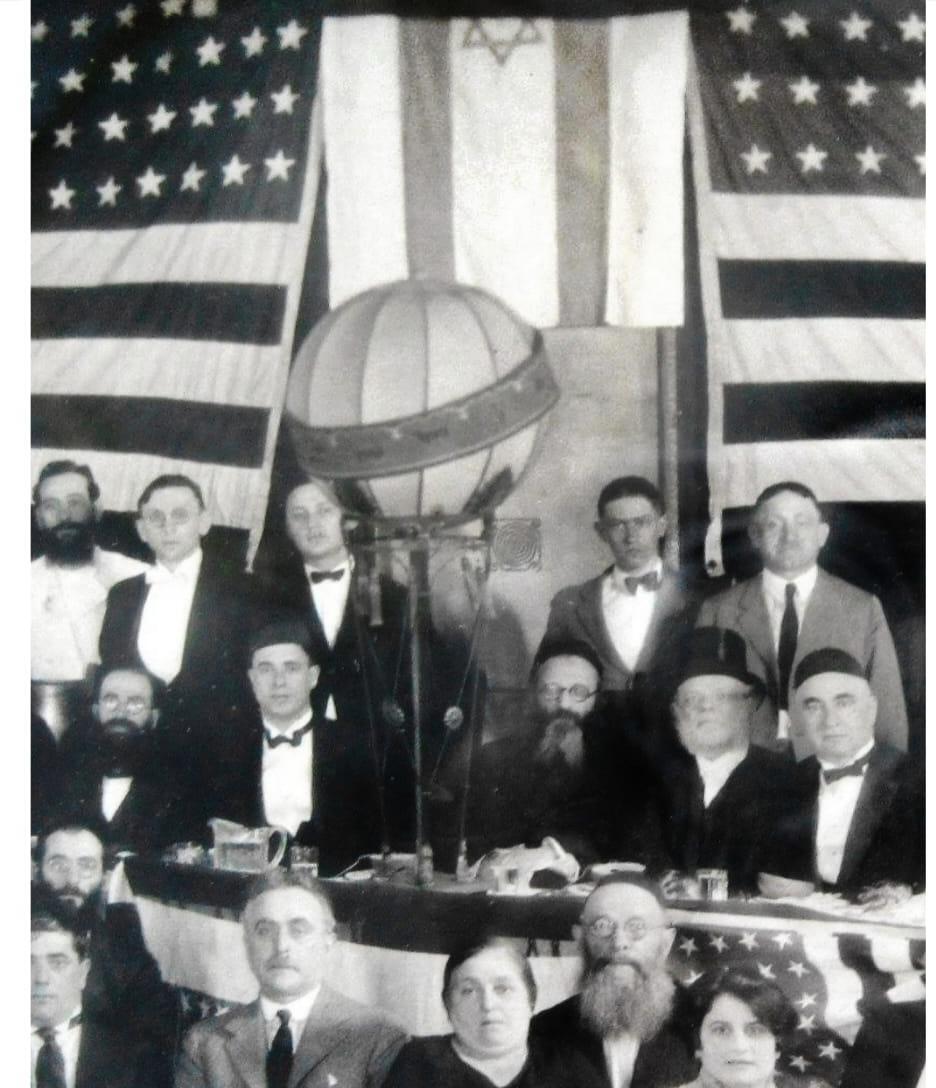
Rabbi Kook sits at center, with the Israeli flag alongside US flags in the background
(Photo: Moshe Nachmani)
During the visit, Rabbi Kook was photographed for the first time in the United States alongside the Israeli flag, at an event in which he spoke at Independence Hall in Philadelphia.
The rare photograph is one of many documents and images from U.S. presidential archives that reveal a little-known historical chapter: diplomatic activity led by Israel’s chief rabbis that helped shape the relationship between the Jewish people and the American administration over decades.
A new exhibition now on display at the President’s Residence in Jerusalem is dedicated to the chief rabbis’ diplomatic ties with the White House in Washington. The exhibition traces those contacts in the years before the establishment of the State of Israel, around efforts to secure recognition of the Jewish people’s connection to the Land of Israel, and later in support of immigration and the strengthening of the Jewish state.
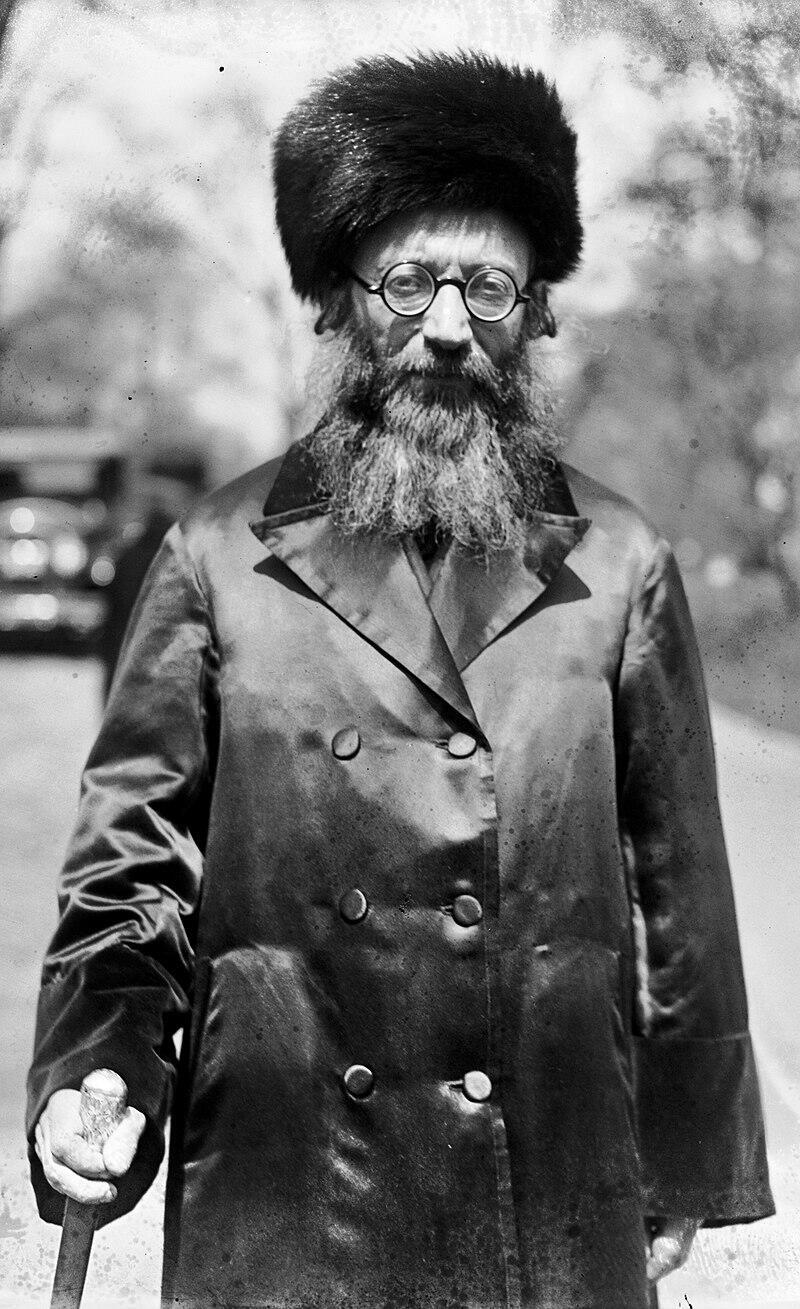
Rabbi Abraham Isaac Kook
(Photo: US Library of Congress)
Among the items on display is a letter dated April 23, 1941, sent by Rabbi Isaac Halevi Herzog, then chief rabbi of Israel and the grandfather of current President Isaac Herzog. The letter offers a glimpse into his efforts to work with then-U.S. President Franklin Delano Roosevelt to promote assistance for European Jewry during the Holocaust.
In the letter, which led to a meeting between the two, Rabbi Herzog wrote: “I came over here on a religious mission at the end of January and am due to return, P.G., on May 14th. Before my departure for the Holy Land, I should very much like to impart the Blessing of Zion to the supreme head of this great and noble land,” adding that he wished to do so on behalf of the Jewish community in the land of the fathers and prophets and the Jewish people as a whole.
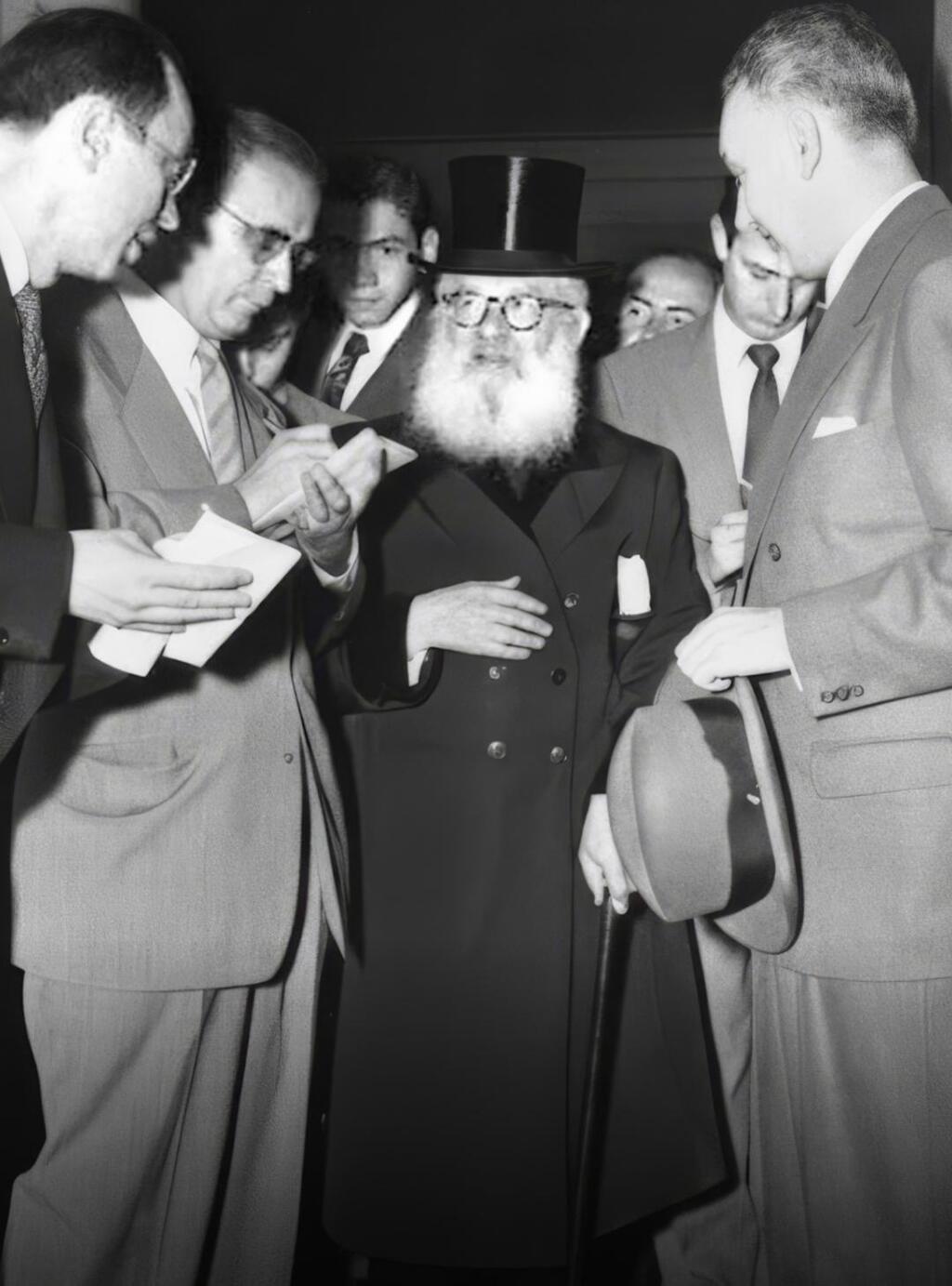
Rabbi Herzog leaves the Oval Office in Washington after meeting with President Truman
(Photo: Israel archive)
A telegram was later received saying the rabbi was invited to visit the president at the White House.
On February 2, 1944, Rabbi Herzog sent the U.S. president a telegram in which he wrote, among other things: “From Jerusalem, the city of God, and from within it, all the people of Israel together with lovers of humanity bless you and the American nation on the establishment of the rescue committee [the War Refugee Board] for the struggling survivors, the shattered remnants of European Jewry.”
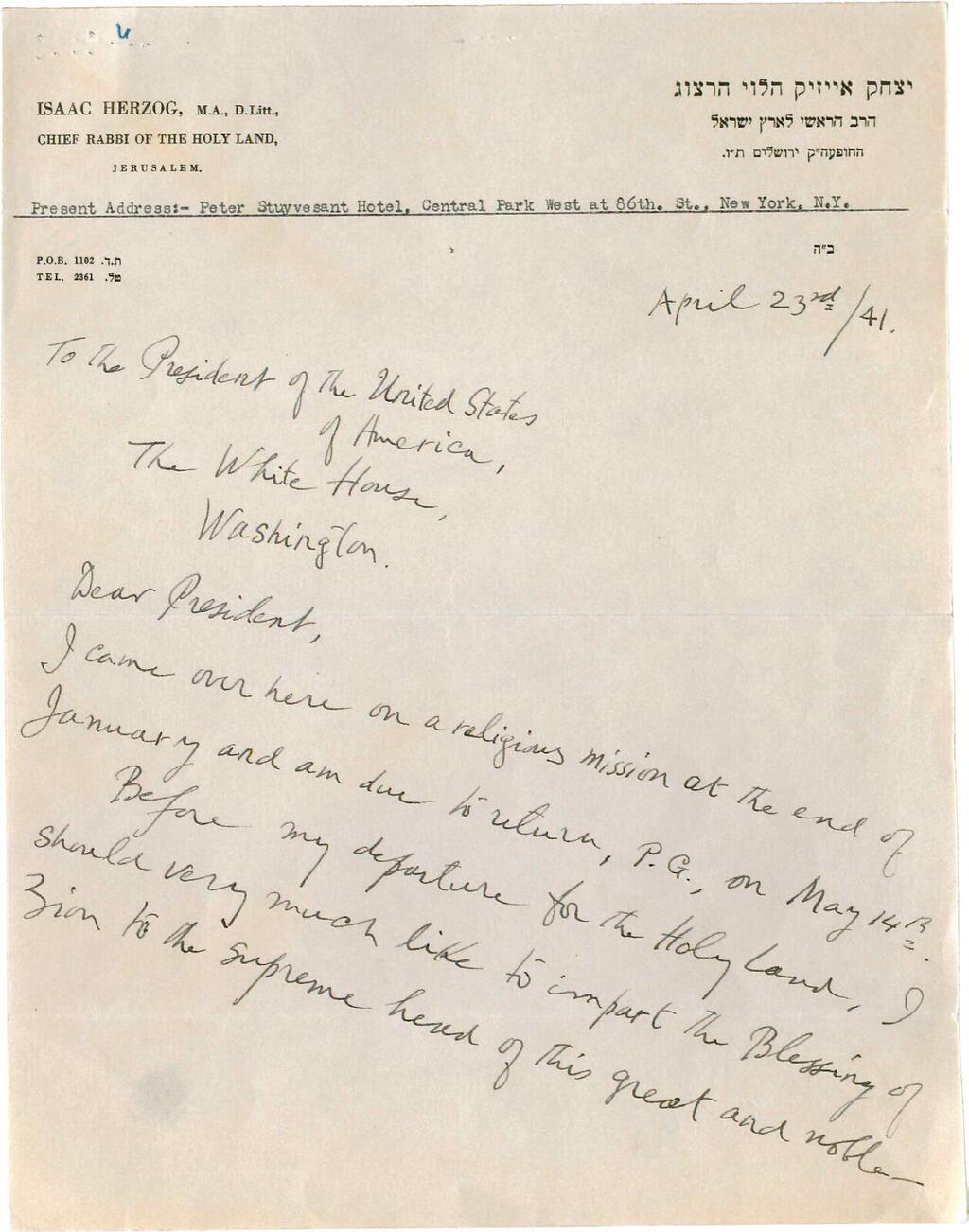
The letter Rabbi Herzog sent in 1941 to U.S. President Franklin Delano Roosevelt regarding Jews in the Holocaust
Another prominent document is a brief 1947 letter sent to U.S. President Harry Truman from Rabbi Herzog’s office. The letter noted that “a telegram to the president expressing appreciation for his work on behalf of the Jews was transmitted to the State Department,” shedding new light on the dramatic days surrounding the United Nations Partition Plan on November 29 and the path toward international recognition of the State of Israel.
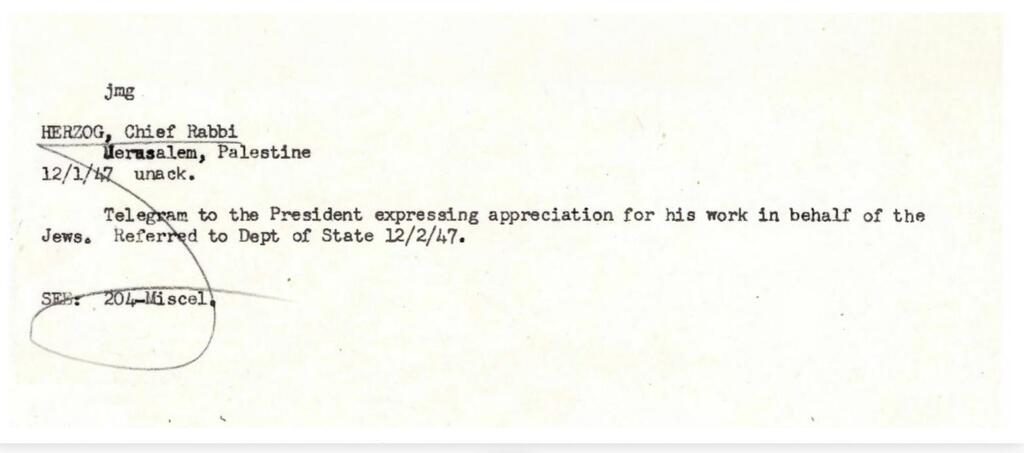
Telegram from Rabbi Herzog’s office to US President Harry Truman in 1947
The Hebrew newspaper Haboker reported on Rabbi Herzog’s meeting with Truman in May 1949: “The rabbi said President Truman impressed him as a man of religious feeling. He also noted that he was somewhat surprised that when he mentioned Psalm 126 before the president, the president immediately opened an English Bible and recited the entire chapter by heart. A lively conversation then opened between President Truman and Rabbi Herzog about Chapter 2 of the Book of Isaiah, which deals with the future of humanity, peace and brotherhood among people.”
The exhibition marks 250 years of American independence and 105 years since the establishment of the Chief Rabbinate of Israel, which was once one of the first governing bodies of the Jews in the Land of Israel.
Most of the materials were collected from U.S. presidential libraries in Washington as part of comprehensive research conducted by the Jerusalem Center for Applied Policy, or JCAP. When the collection was completed, researchers uncovered an almost unknown historical sequence of sustained activity by the Chief Rabbinate of Israel to strengthen ties with U.S. presidents between 1924 and 1992.
In March 1992, President George H.W. Bush met with Chief Rabbi Avraham Shapira in the Oval Office. It is the final visit featured in the exhibition.
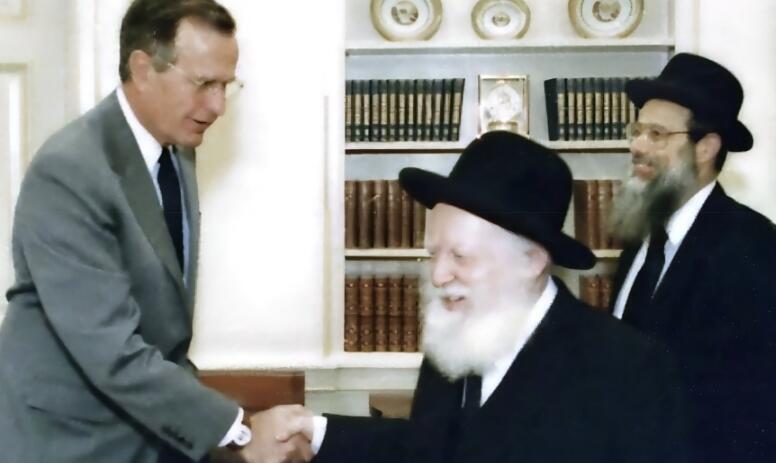
Rabbi Shapira shakes hands with President George H.W. Bush
(Photo: White House George H.W. Bush Presidential Library)
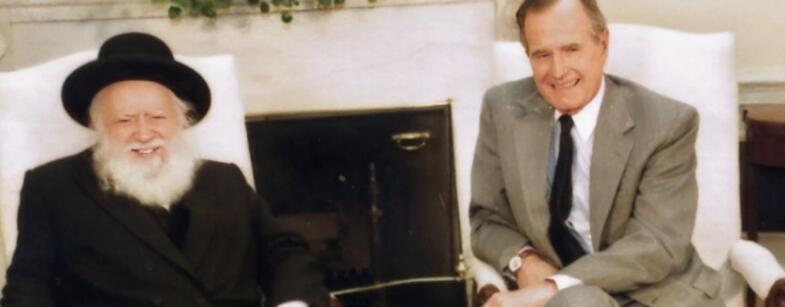
Chief Rabbi Avraham Shapira alongside US President George Herbert Walker Bush
(Photo: White House George H.W. Bush Presidential Library)
The rabbi expressed gratitude to the American people for helping rescue Soviet Jews and rebuild Jewish life there. He thanked the United States for its efforts to bring down the Iron Curtain, which opened the way for Soviet Jews to immigrate to Israel.
Bush asked the rabbi whether he was optimistic. Shapira replied: “Rabbis must always be optimistic.” Bush responded that, in his view, “a person cannot be president without faith.”
According to Chaim Silberstein, chairman of JCAP, “The materials reveal that the partnership between Israel and the United States is not a new phenomenon. The U.S. was, and remains, a partner in decisive moments in the history of Zionism. The contribution of Israel’s chief rabbis, who understood their role at key points, especially in shaping relations with U.S. presidents, is clearly evident between the words and the photographs.”
The exhibition opened Sunday at Beit HaNassi in Jerusalem, attended by President Isaac Herzog, Chief Rabbi Kalman Meir Bar and senior Israeli and U.S. officials. It will travel to additional venues in Jerusalem and Washington and later highlight historic visits by leading rabbis to the White House.
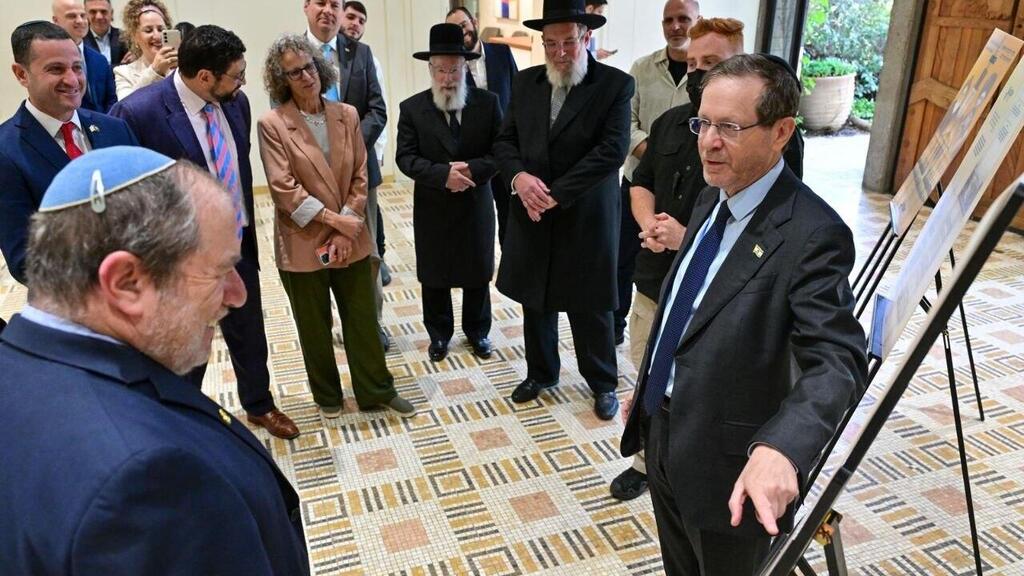
President Isaac Herzog
(Photo: Kobi Gideon, GPO)
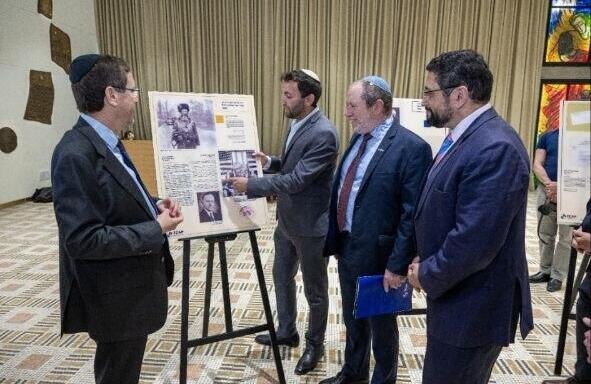
(Photo: Meir Alipour, JCAP)
Chief Rabbi Kalman Meir Bar said the exhibition reflects “a far deeper meaning—the beginning of international recognition of the prophetic vision,” adding that the return of the Jewish people to their land and global support for Israel signal “a sign of redemption.”
President Isaac Herzog said Israel and the United States “draw from the same sources: the wellsprings of the Bible,” describing the relationship as rooted in shared values and “not merely politics—it is something much greater.”
U.S. Deputy Chief of Mission David Brownstein called the relationship “more than an alliance, but an unprecedented friendship,” expressing hope to build on it in the coming century.
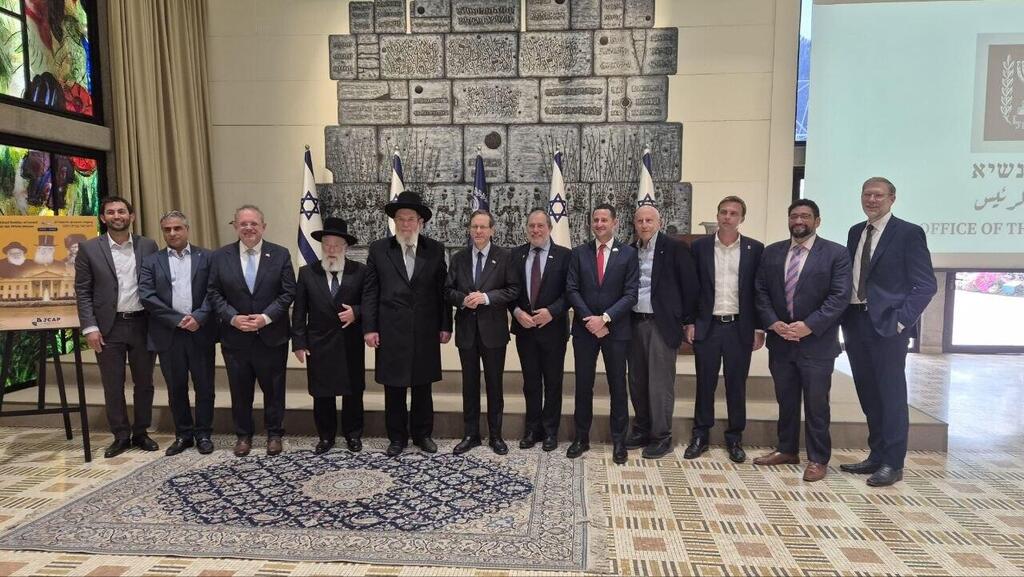
(Photo: Meir Alipour, JCAP)
Deputy Mayor Adir Schwartz said there is “no contradiction” between Jewish identity, Zionism and diplomacy, while MK Ohad Tal highlighted “faith-based diplomacy” that “transcends interests and creates unprecedented alliances.”
World Zionist Organization Chairman Yaakov Hagoel said the exhibition underscores that “we are one people, with a shared history,” while project director Yair Dan noted the “great respect” shown by U.S. presidential libraries toward Israel’s Chief Rabbinate."
First published: 10:11, 04.27.26