

As Israel marks Hanukkah amid the aftermath of the Oct. 7 Hamas attack, Holocaust survivors and Israelis who were held hostage in Gaza are forging deeply personal bonds, drawing parallels between past and present traumas and emphasizing resilience, faith and survival.
Ninety-three-year-old Naftali Furst, a Holocaust survivor from Haifa, recently met again with Eli Sharabi, a former Hamas hostage from Kibbutz Be’eri, nearly a year after the two furst walked side by side during the March of the Living at the Auschwitz-Birkenau death camp in Poland.
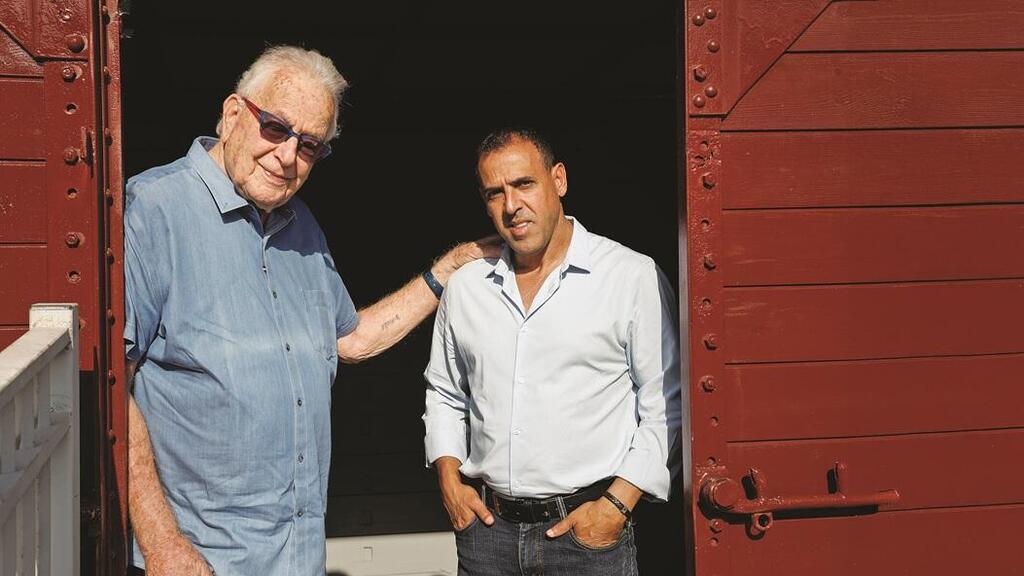
“When I saw you marching next to me in Auschwitz, I felt identification,” Furst told Sharabi during their reunion at the Railcar Memorial in Netanya — a site commemorating the cattle cars used to transport Jews to Nazi extermination camps. “I hugged you and whispered words of encouragement to show you that despite everything, there is hope and it is possible to rebuild.”
Sharabi, who was abducted during the Oct. 7 Hamas attack and released in February after 491 days in captivity, said the encounter left a lasting impression. His wife, Lianne, and daughters, Noya and Yahel, were killed during the attack. His brother Yossi was also kidnapped and later murdered in captivity.
“I feel that you represent the Holocaust, and I represent the second catastrophe that happened to us,” Sharabi said. “Even 50 meters underground, our history was with us.”
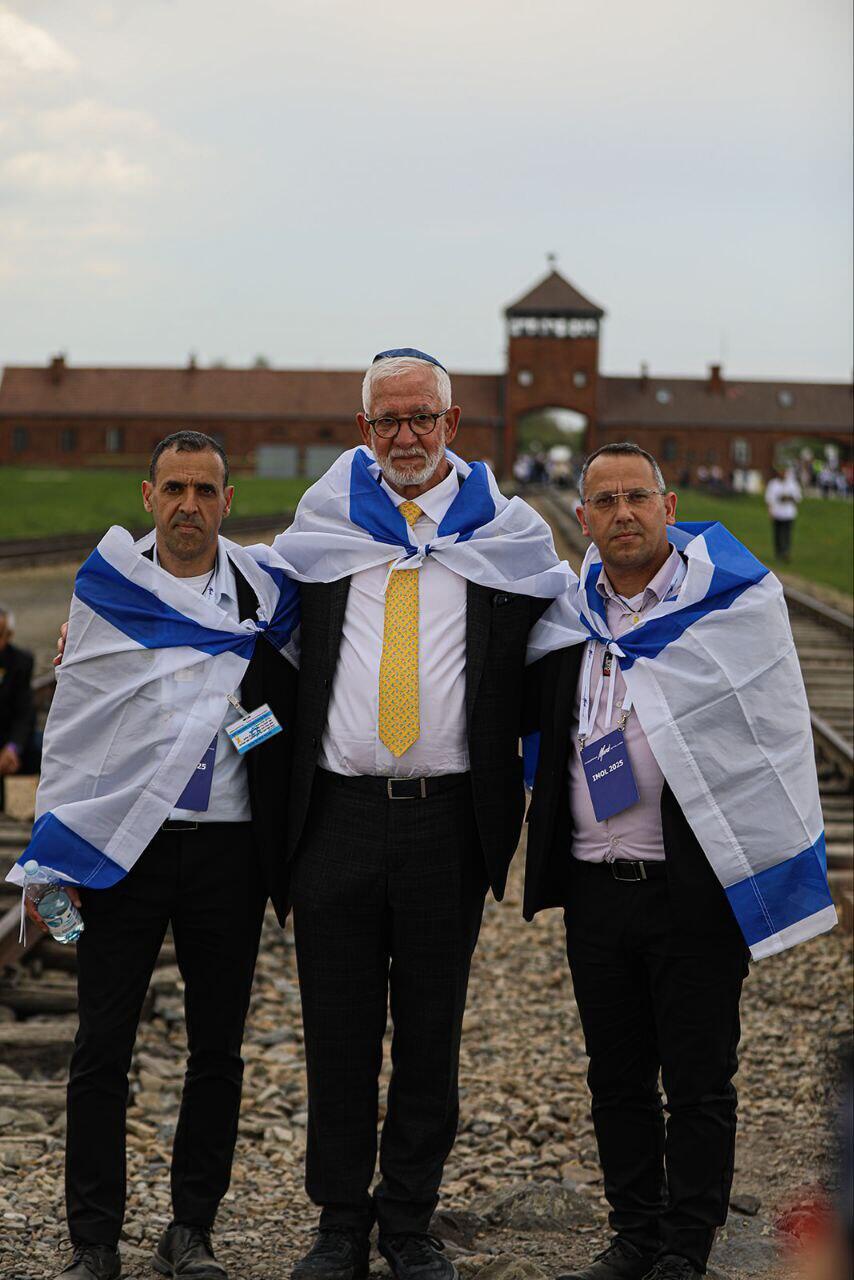
Eli and Sharon Sharabi at the March of the Living in Poland
(Photo: Ziv Koren)
Furst, who survived Auschwitz-Birkenau, a death march and eventual liberation at Buchenwald, said watching Sharabi’s release live on television brought him back decades. “I bit my lips the same way I did when I was freed,” he said.
The meetings are part of a broader initiative connected to the March of the Living organization, which has incorporated survivors of the Oct. 7 attack and former hostages into its delegations. The Nomedin Foundation has helped bring victims of the Hamas attack to Poland in recent years to walk alongside Holocaust survivors.
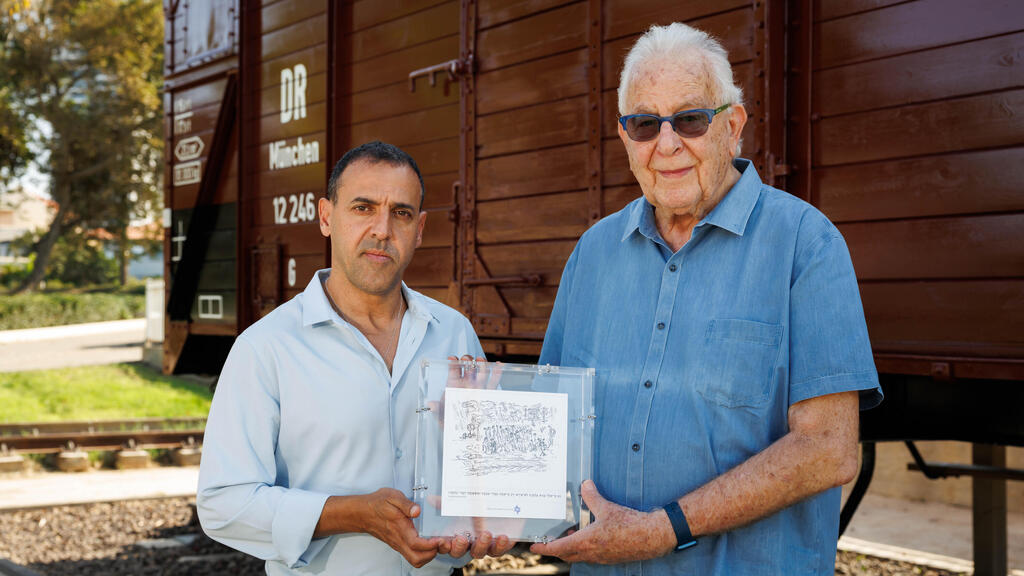
Eli Sharabi and Naftali Furst at the Railcar Memorial in Netanya
(Photo: Ziv Koren)
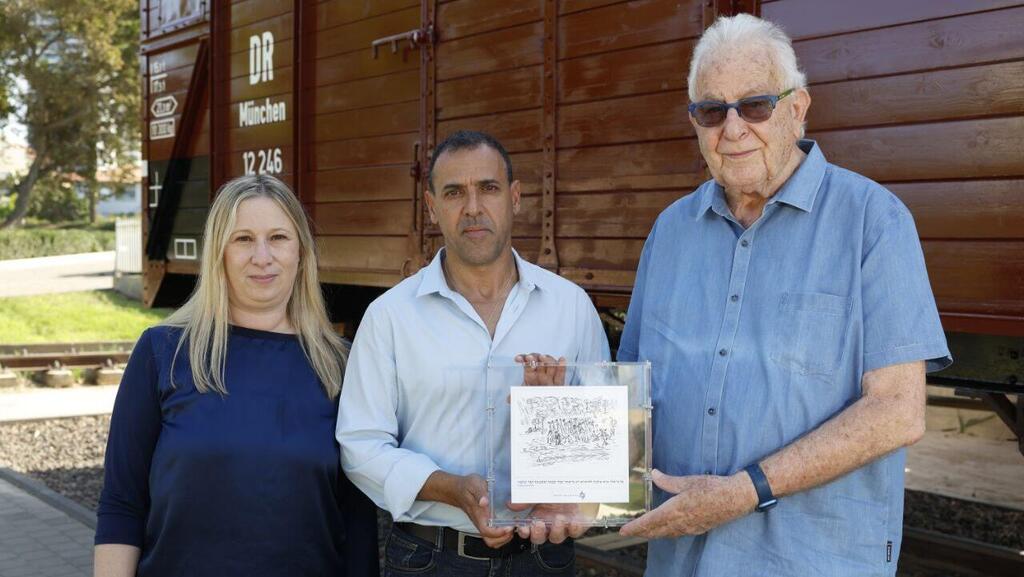
Naftali Furst, Eli Sharabi and Revital Yakin Krakovsky, CEO of the March of the Living
(Photo: Ziv Koren)
Haim Taib, president of the foundation, said the message was clear: “Never Again is now.” Revital Yakin Krakovsky, CEO of the March of the Living in Israel, said the bond between Holocaust survivors and former hostages is immediate. “They understand each other without words,” she said.
Sharabi described moments in captivity that he considers miracles, including surviving months of starvation. “One Friday night, after Kiddush, one of the terrorists showed a moment of mercy and threw us an extra pita,” he recalled. “We felt it saved our lives.”
Furst shared his own stories of survival — narrowly avoiding a transport overseen by Adolf Eichmann’s deputy, Alois Brunner, and enduring freezing conditions in an open train car. “I live thanks to many small miracles,” he said.
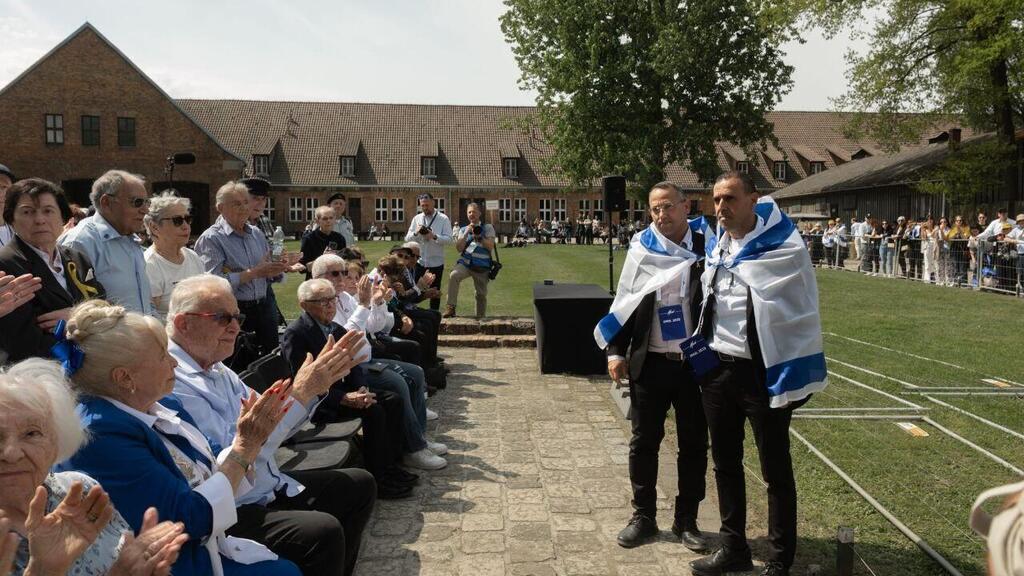
Eli and Sharon Sharabi at the March of the Living in Poland
(Photo: Ziv Koren)
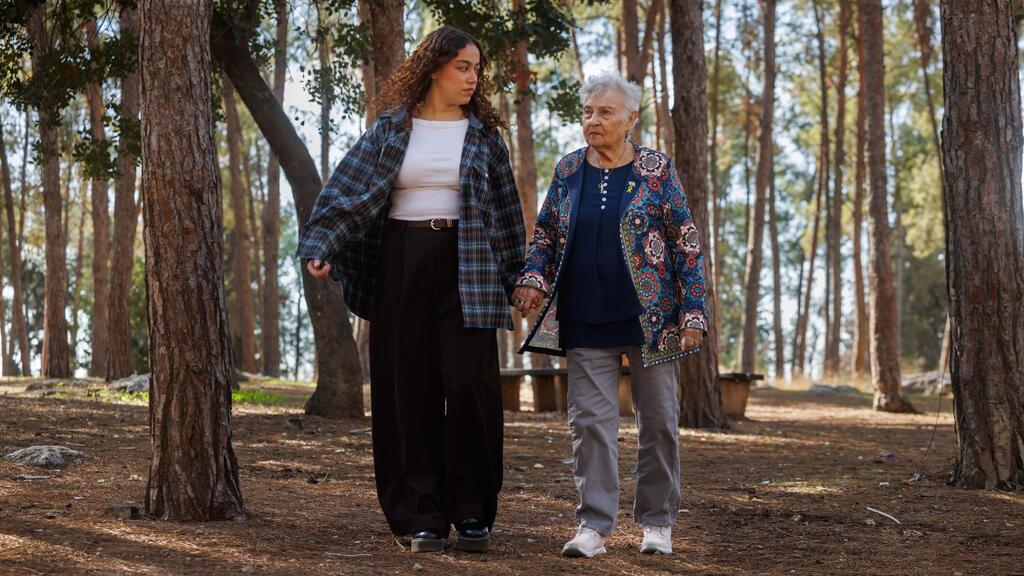
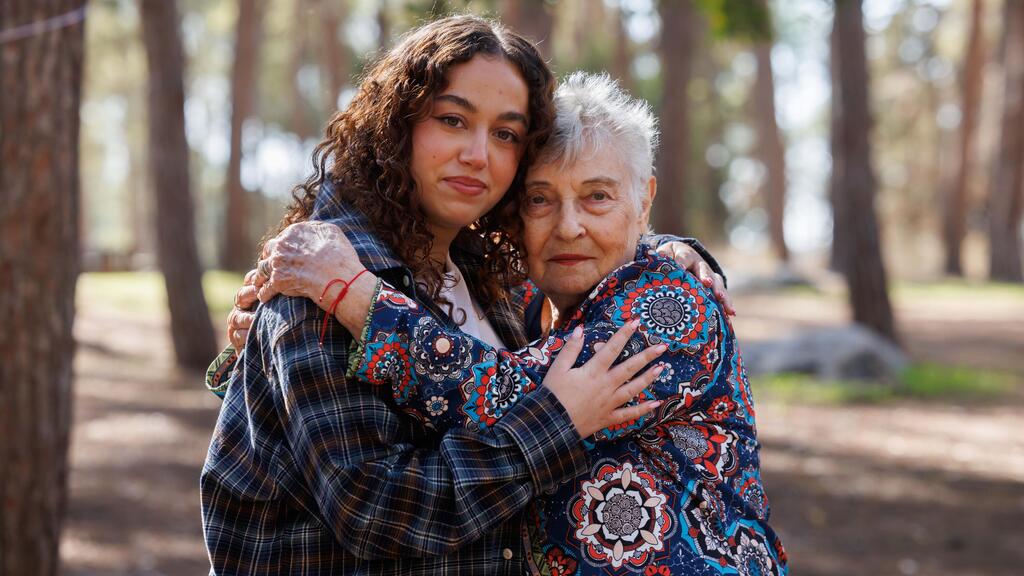
Similar encounters have taken place across Israel. In Ben Shemen Forest, 90-year-old Holocaust survivor Sara Weinstein met again with Ori Magidish, 20, the first hostage rescued alive from Gaza in a military operation 23 days after she was abducted.
Watching footage from Oct. 7, Weinstein said she felt transported back 80 years. “I saw people fleeing burning homes and became again the little girl running from a burning house in Europe,” she said.
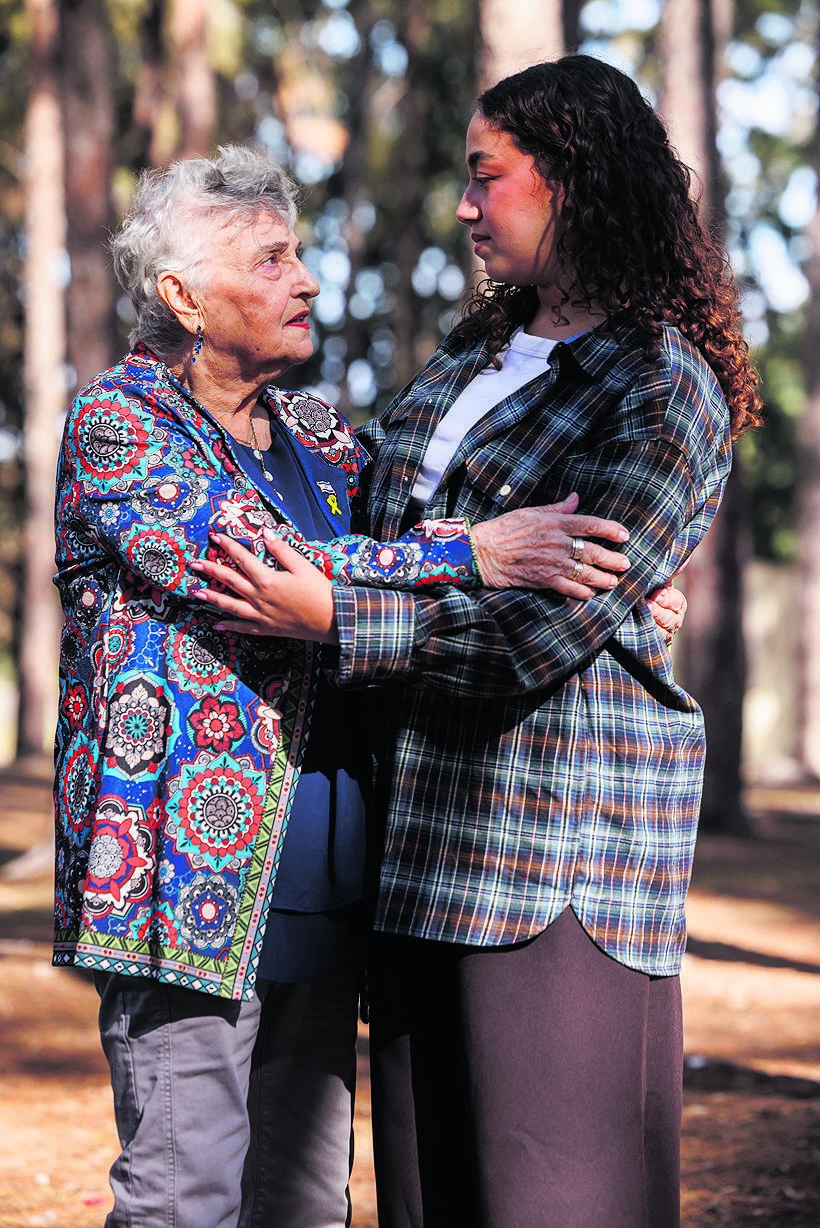
Ori Magidish next to Sara Weinstein in the Ben Shemen Forest
(Photo: Ziv Koren)
(Photo: Ziv Koren)
(Photo: Ziv Koren)
Magidish said seeing Weinstein at Auschwitz felt like seeing her younger self. “She survived hell as a child and stood there smiling, telling us everything would be OK,” she said.
Weinstein, who survived years in hiding after escaping the Warsaw Ghetto, later lost both parents during the war. Today she lives in Yavne and is a grandmother and great-grandmother.
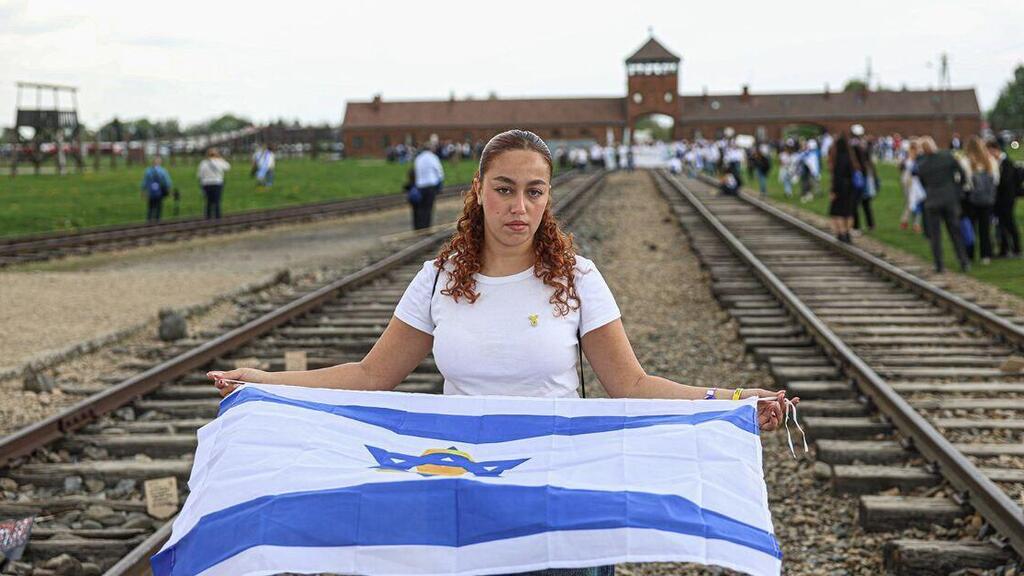
Captivity survivor Ori Magidish at the March of the Living in Poland
(Photo: Ziv Koren)
Other meetings have focused on continuity and Jewish survival. At ANU – Museum of the Jewish People in Tel Aviv, 21-year-old Agam Berger, freed from Hamas captivity after 482 days, met 88-year-old Irene Shashar, a survivor of the Warsaw Ghetto, near the ancient Sassoon Codex — one of the oldest complete Hebrew Bibles in existence.
The manuscript arrived in Israel just two days before the Oct. 7 attack and was kept in a vault for months after the war began.
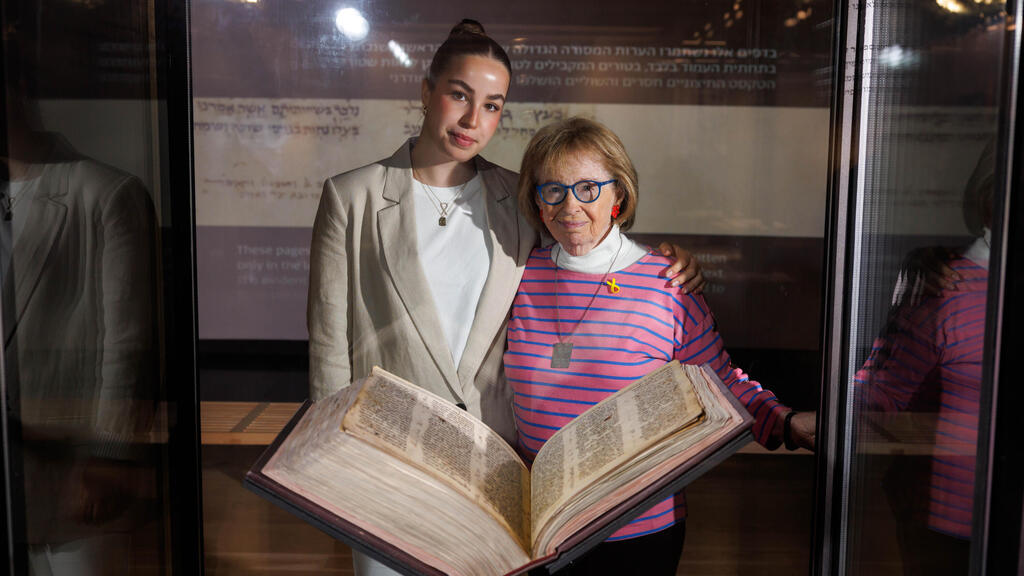
Agam Berger and Irene Shashar at ANU Museum of the Jewish People
(Photo: Ziv Koren)
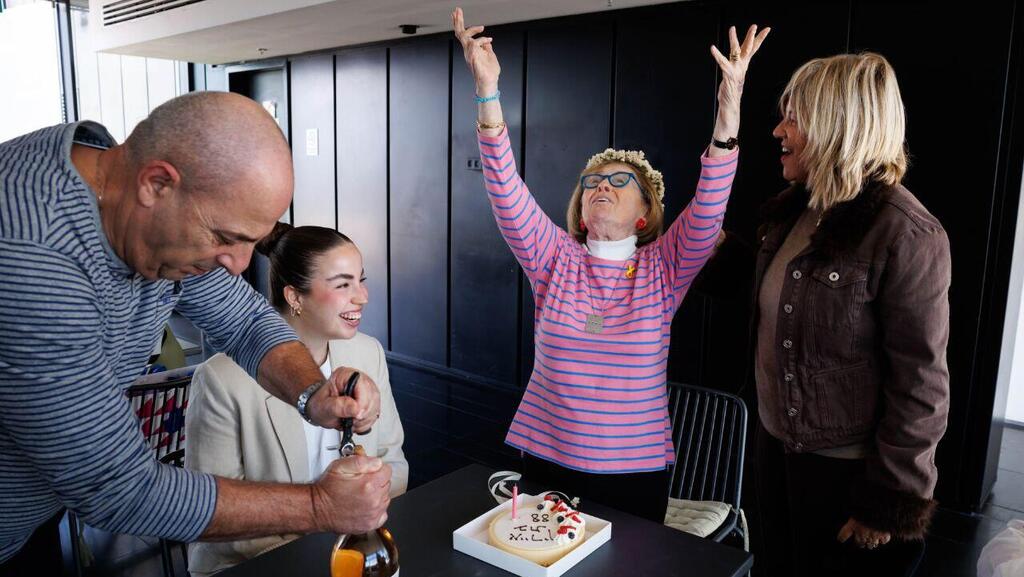
Irene Shashar celebrates her birthday
(Photo: Ziv Koren)
“From Hanukkah to the Holocaust to Oct. 7, they tried to destroy the Jewish spirit,” Berger said. “But the light always returns.”
Both women spoke of faith and symbols that sustained them. Berger recalled praying for a sign in captivity and later finding a small plastic butterfly — a moment she saw as divine reassurance. Shashar said that as a hidden child, she dreamed of becoming a butterfly, free if only for a day.
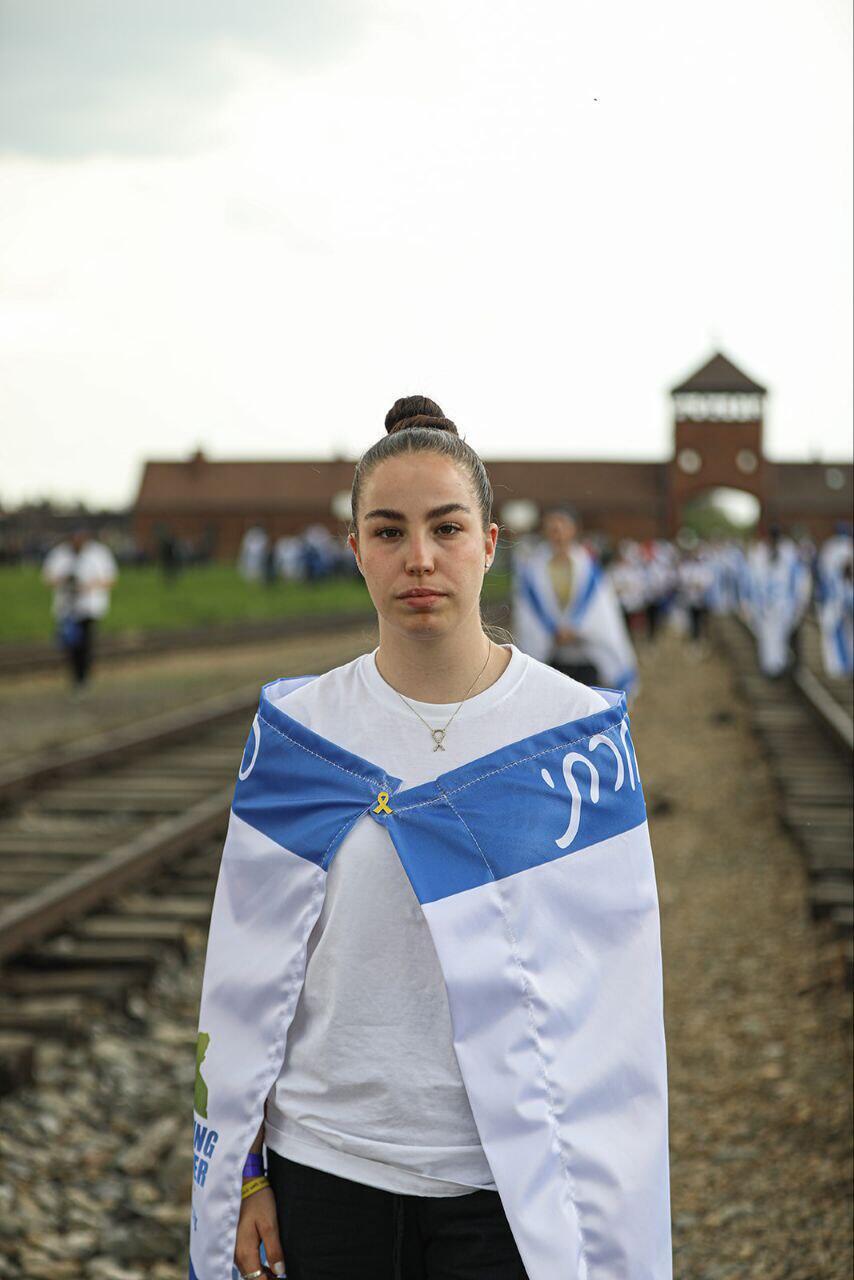
Agam Berger at the March of the Living in Poland
(Photo: Ziv Koren)
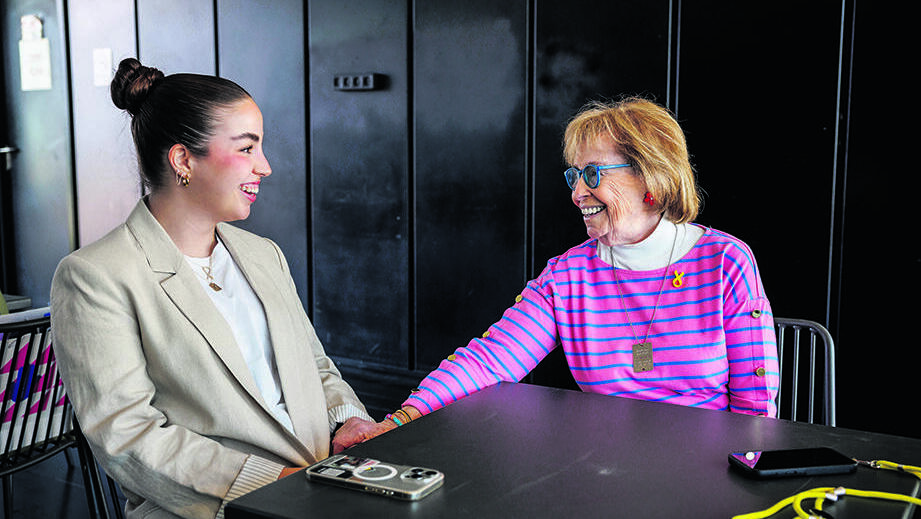
Agam Berger and Irene Shashar at ANU Museum of the Jewish People
(Photo: Ziv Koren)
“The Jewish people have endured countless disasters,” Shashar said. “But we always find a way back from darkness to light.”
As Hanukkah begins, participants say the meetings offer a message of continuity — that survival, memory and hope remain central to Jewish identity, even in the wake of renewed trauma.
First published: 14:06, 12.19.25