

At the heart of Parshat Nitzavim lies a challenging verse regarding our covenantal responsibility: "The hidden things belong to the Lord our God, but the revealed things belong to us and to our children forever, to do all the words of this Torah" (Deuteronomy 29:28). Traditionally, this verse establishes a clear division of accountability. Rashi and others explain that society is not punished for the secret sins of individuals; God handles the hidden matters, while the public is only obligated to eradicate visible evil. A nation cannot be held responsible for transgressions it has no way of discovering.
This approach makes perfect theological and sociological sense, as a model society shouldn't require reading minds or invading private homes. However, the surrounding verses raise a profound question. If hidden matters are strictly between the individual and God, how do private sins culminate in the destruction of the entire nation? The Torah warns of a person whose heart secretly turns to idolatry, and then describes an ensuing national disaster where future generations and foreigners witness the ruined land, realizing it was destroyed because the people abandoned the covenant. This progression suggests the boundary between hidden and revealed is not so sharp.
Gallery

Society is not punished for the secret sins of individuals; God handles the hidden matters, while the public is only obligated to eradicate visible evil
(Photo: Jonathan Ginsburg)
Last week’s portion, Ki-Tavo, also lists curses for sins typically committed in secret, such as covert idolatry or bribery. It also includes curses for those who mislead a blind man or pervert the judgment of the stranger, orphan and widow. As Rabbi Abraham Ibn Ezra and Rabbi Samson Raphael Hirsch explain, these transgressions are committed behind the scenes. However, they are not perfectly unknown crimes; they are transgressions that exploit the vulnerable, who lack the power to expose the injustice. Therefore, in the Torah, a "secret" is multifaceted. It refers to phenomena that are deliberately concealed and hard to prove, yet their presence is undeniably felt and known by society.
We see this in the laws of the hidden sins of the suspected adulteress (Sotah) or the inciter to idolatry (Mesit). There are witnesses to the suspicious circumstances or whispers of the offense, obligating people to act. The Midrash illustrates this with a satirical story about King Josiah's generation. When the king's inspectors searched homes for idols, they found nothing because the people ingeniously painted half an idol on the back of each door panel, hidden when the doors were open. Clearly this out-of-sight idolatry was out of sight but not out of the collective mind. It was a societal convention where everyone knew the game, and officialdom simply pretended not to see.
This understanding allows us to read our core verse in a radical new light. "The hidden things belong to the Lord" is not an excuse to ignore what happens in the shadows. Rather, it means we can only leave the truly hidden things to God if we take absolute responsibility for everything that is "revealed", including the "open secrets" operating just beneath the surface. We are actually tasked with fighting a culture of concealment. When corrupt patterns repeat, when everyone knows how things are truly run, and the system turns a blind eye, we cannot hide behind the excuse that hidden things belong to God.
The Talmud frequently addresses these open secrets. For instance, Rabban Yochanan ben Zakkai publicly exposed the deceitful methods of merchants, recognizing that the public was already suffering from these widely known tricks. Similarly, Rabbi Yehuda echoes that later generations found legal loopholes to bring produce into their homes through backyards, intentionally evading their obligation to pay tithes. Today, this mirrors situations where people exploit systemic loopholes - whether through workarounds for teachers' wages where no one clocks in, or seeking out lenient private diagnoses to unfairly claim special education assistance. While individuals may be entitled for help, the cumulative societal impact - such as a staggering 16% of students qualifying for special education - reveals a systemic issue that society is obligated to confront.
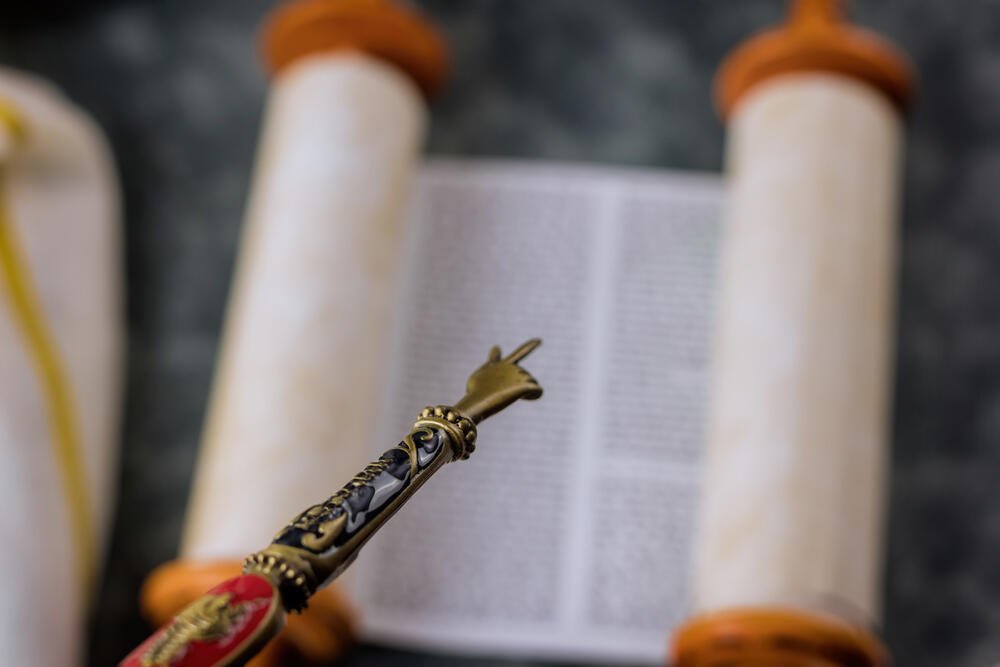
The Torah’s goal is not to turn every citizen into a police informant, but to prevent a culture where the gap between official rules and actual behavior becomes entrenched
(Photo: Ungvar / Shutterstock)
The Torah’s goal is not to turn every citizen into a police informant, but to prevent a culture where the gap between official rules and actual behavior becomes entrenched. This is the deep purpose of the Covenant and specifically the civic covenant between all the actors mentioned at the beginning of the Parasha: “You are all standing this day before the LORD your God: the heads of your tribes, your elders and your officers, all the men of Israel, your little ones, your women and the sojourner who is in your camp, both the one who chops your wood and the one who draws your water“ (Deut. 29:9). A legal system judges responds after the fact, asking only if a crime can be proven. In contrast, a covenant aims to build a society of mutual trust, where people do not want to live a life of evasion or live among secret scoundrels. Moses' demand that all the people stand together before the Lord is a call for social solidarity and shared accountability.
Treating the system like a cynical game of enforcement and evasion erodes social cohesion. The verse emphasizes "to us and to our children forever" because our everyday actions build the infrastructure for future generations. As we approach Rosh Hashanah, our introspection must include these normalized transgressions and societal workarounds. In Parshat Vayeilech, God warns that when society turns a blind eye, He will respond with "Hester Panim" - hiding His face. Ultimately, our covenant is tested by our refusal to keep our eyes wide shut, ensuring the nation we build today is worthy of tomorrow.