


“The companies refused to go out into the field, and the ice never arrived,” Kaminetsky said. “Only after many days did the temperature rise to minus 20 Celsius, and only then did things start moving.”
The Siberian menorah made of ice
(Video: The Jewish community in Tomsk)


For Israelis, a temperature just above freezing can feel extreme. But in Tomsk, one of Russia’s coldest cities, the past week brought conditions that are difficult to imagine: temperatures plunged to minus 37 Celsius.
Despite those harsh conditions, the local Jewish community sought to uphold the Hanukkah tradition of erecting a large and ornate menorah made of carved blocks of ice in a central city square. For Kaminetsky, building the ice menorah is an inseparable part of Hanukkah in Tomsk.
“A Jewish light that burns even in freezing conditions expresses the miracle of Hanukkah more than anything else,” he said.
This year, however, the task proved especially challenging.
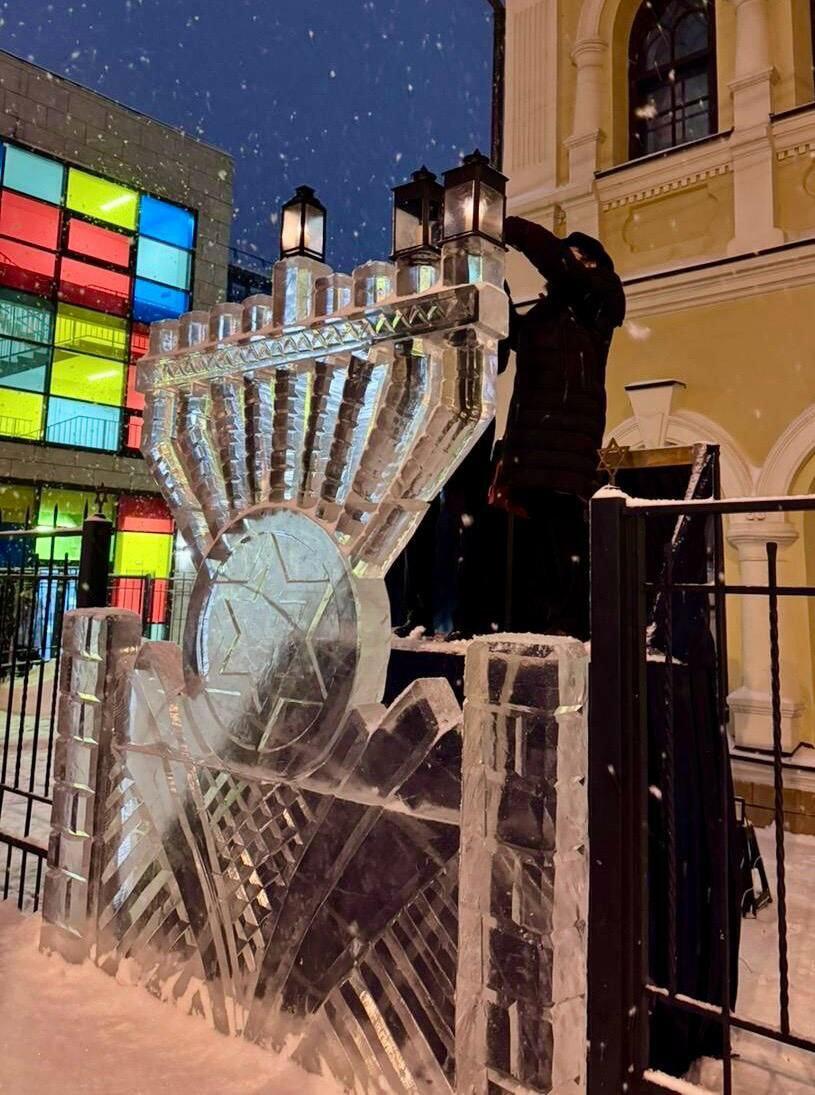
“It started on Monday,” Kaminetsky recalled. “We had agreements with a company to bring the ice with a crane and help build the structure. But when it came time to carry it out, they simply refused. They said it was dangerous, the equipment wouldn’t function, and it was impossible to work in such cold. They weren’t the only ones. The entire city shut down.”
Toward the end of the week, there was a slight easing. The temperature rose to minus 27 Celsius, but still no one agreed to transport the ice. Only on Thursday, when the thermometer showed “just” minus 20, did crews finally agree to go out.
“It sounds funny, but minus 20 is considered almost like spring here,” Kaminetsky said with a smile. “Once it was possible, everyone pitched in, and within hours we completed the construction.”
The menorah itself is striking: a tall structure carved from blocks of ice, topped with glowing candles. It stands in a prominent location in the city and draws attention not only from Jews.
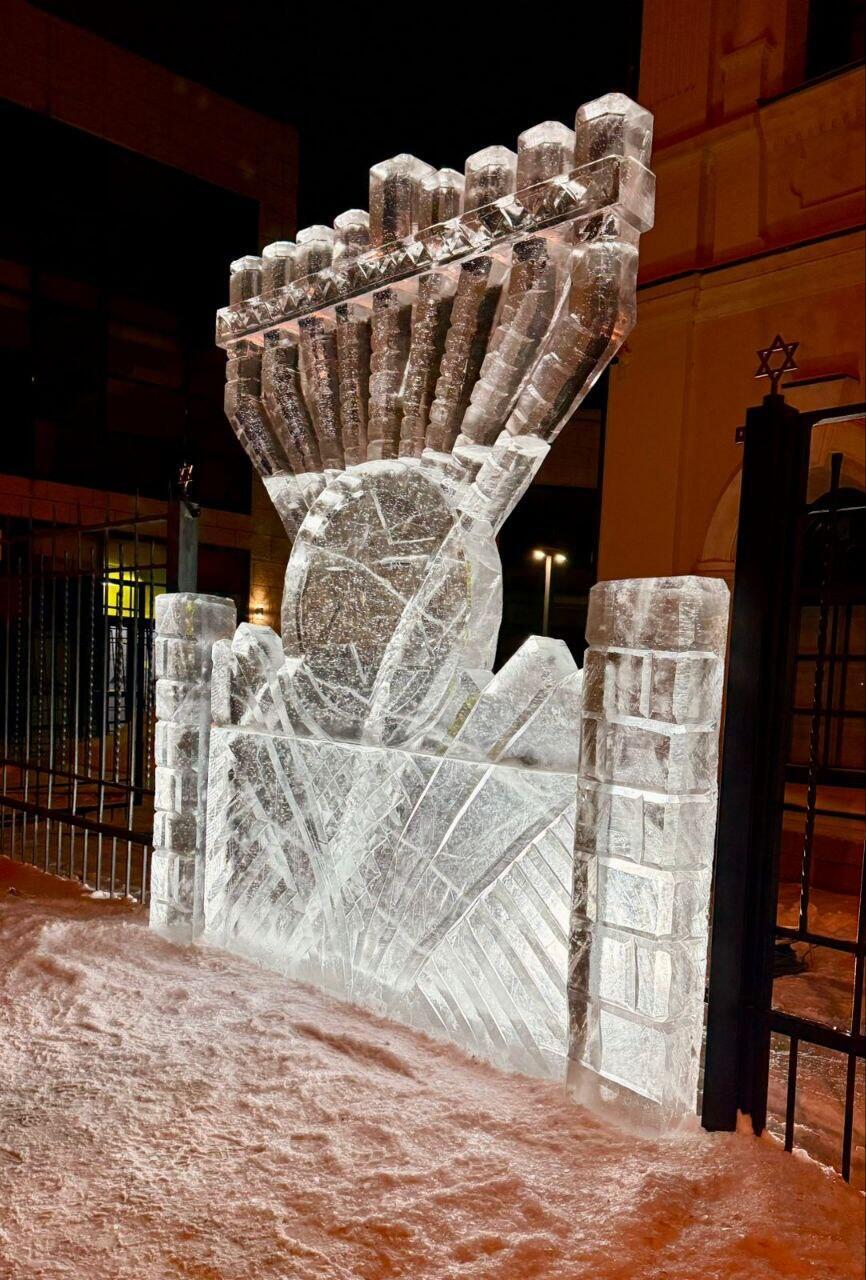
(Photo: The Jewish community in Tomsk)
“It shines for everyone,” Kaminetsky said. “There’s an element of sanctifying God’s name here, showing that even at the coldest edge of the world, the Jewish people are alive and giving light. And of course, publicizing the miracle reaches the masses.”
This year, because of the extraordinary cold, the tradition took on a particularly tangible connection to the holiday’s message.
“Hanukkah is about light versus darkness, about the triumph of spirit over matter,” Kaminetsky said. “When you try to light a flame at temperatures that even machines can’t withstand, you really feel that message.”
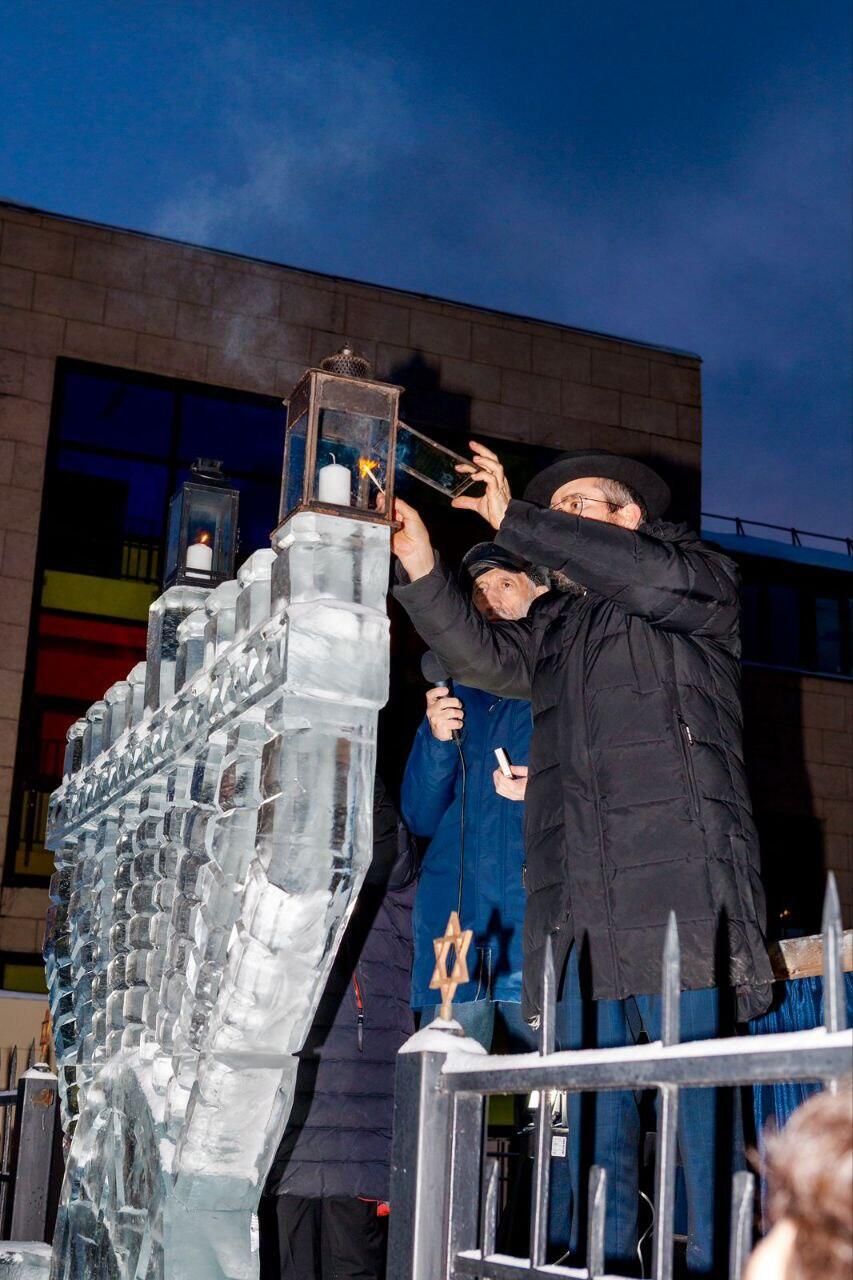
(Photo: The Jewish community in Tomsk)
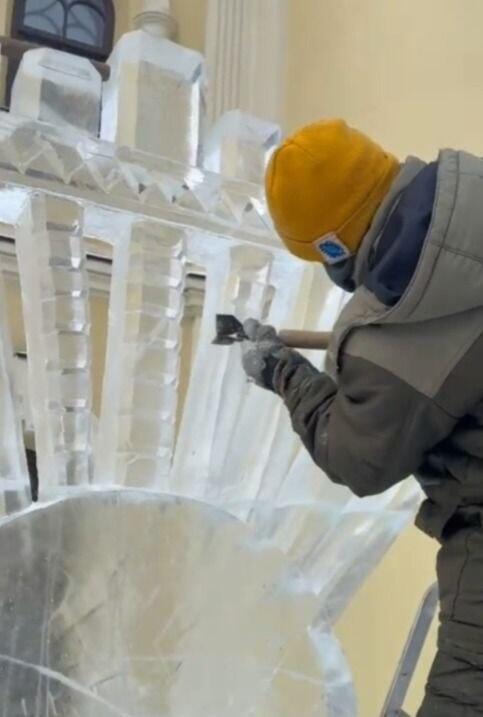
(Photo: The Jewish community in Tomsk)
Asked how the local community copes with such conditions, he answered simply: “You get used to it. We live here and operate here under very challenging conditions. The cold doesn’t extinguish the spirit. If anything, it ignites it even more.”
As in previous years, festive candle-lighting ceremonies are planned beside the ice menorah, along with children’s activities, the distribution of sufganiyot and Jewish cultural events.
“We were sent here by the Lubavitcher Rebbe to melt the ice and warm hearts,” Kaminetsky said. “This year, we feel that mission more strongly than ever.”