

Ultra-Orthodox schools are on track to become Israel's largest educational stream by 2030, overtaking secular Hebrew-language public schools in first-grade enrollment for the first time, according to new research based on Education Ministry data.
The study, conducted by public policy expert Eli Morgenstern, projects a significant shift in Israel's education system as enrollment in secular state schools declines while the ultra-Orthodox, or Haredi, sector continues to grow.
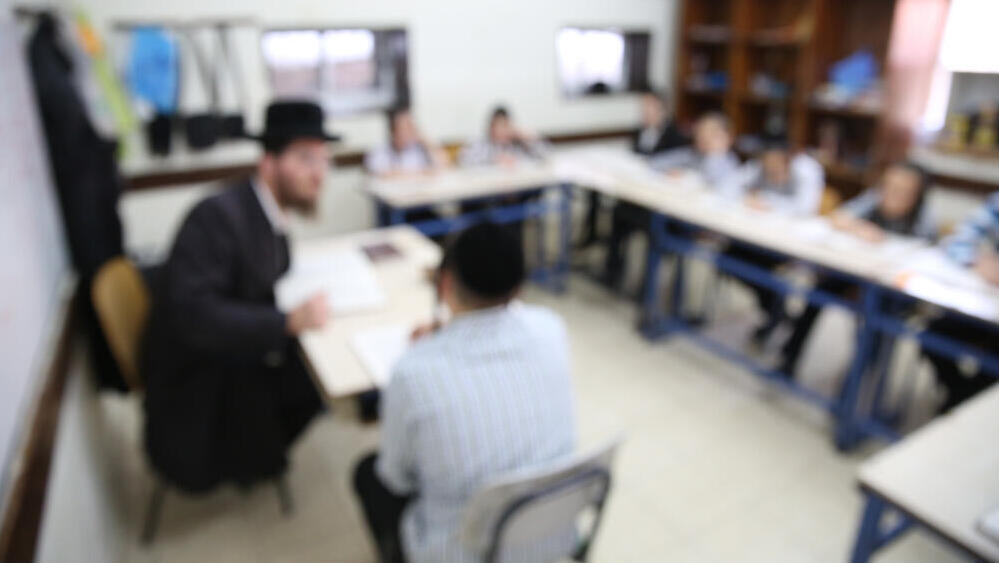
By 2030, most Israeli first graders will attend Haredi schools, study finds
(Photo: David Cohen / Shutterstock)
Between 2023 and 2026, the number of first graders in secular Hebrew-language state schools fell by approximately 12%, while enrollment in Haredi schools increased by 11%. The state-religious and Arab education systems maintained relatively stable shares.
In 2025, Arab state schools accounted for approximately 23% of first-grade students, while Jewish state-religious schools represented about 16%. Under Morgenstern's projections, Haredi and Arab education combined would account for more than half of Israel's first graders by 2030, a development that could have far-reaching implications for the country's education system and workforce.
The trend is already visible in preschools, where the combined share of Haredi and Arab children rose from 43.8% in 2019 to 48.9% in 2026. If current patterns continue, that figure is expected to reach 50.4% by 2028.
Morgenstern, a former senior Finance Ministry official who specialized in education funding, based his projections on actual enrollment figures rather than demographic estimates alone.
"We examined the number of first-grade students over recent years in each educational stream, as well as each stream's share of all students in Israel," he said. "Based on the trends we identified, we projected enrollment in the coming years, assuming those trends continue."
The findings suggest that changes in Israel's school-age population are unfolding faster than previously anticipated. In 2017, the Central Bureau of Statistics projected that Haredim would account for one-third of Israel's population and half of its Jewish children only around 2065.
More recent forecasts have also struggled to capture enrollment changes. A 2023 projection for 2025 overestimated enrollment in secular Hebrew-language preschools by nearly 13%, equivalent to approximately 23,600 children, while Haredi enrollment exceeded expectations.
"The changes in the education system are happening much faster than we thought," Morgenstern said. He attributed much of the shift to declining birth rates among the general Jewish population, while other population groups continue to maintain relatively high fertility rates.
Morgenstern has firsthand experience of the Haredi education system. He studied at Jerusalem's Mir Yeshiva until age 28 before entering an academic preparatory program, earning degrees in economics and public policy and eventually joining the Finance Ministry's Budget Department.
"As a graduate of Haredi education, I know and appreciate the values and way of life that this education system provides," he said. "And as someone who personally went through the process of integrating into Israeli society and the economy, I know how difficult that path is."
He warned that graduates of traditional Haredi schools often face significant barriers to obtaining matriculation certificates, pursuing higher education and entering professions requiring advanced qualifications.
Morgenstern called for expanding state-run Haredi education, giving the government greater responsibility for school admissions, curricula and teacher employment while preserving religious and cultural traditions.
His proposals include converting existing Haredi institutions into state schools and reducing public funding for institutions operating outside the state education framework. He cited the 1953 State Education Law, introduced under founding Prime Minister David Ben-Gurion, as a precedent for bringing previously separate educational movements under greater state oversight.
The projected enrollment shift has renewed questions about how Israel's education system will adapt to demographic changes, particularly regarding core academic subjects, employment opportunities and participation in military or national service.
Morgenstern said the coming years would be critical in determining whether educational policies keep pace with the changing composition of Israel's youngest generation.