

The past year has been especially difficult for Jewish communities in Ukraine. According to official data, more Jewish soldiers were killed in combat than in previous years, an increasing number of Jewish institutions were damaged by rocket fire and the number of Jews drafted into the Ukrainian military also rose, heightening concern for their safety.
Compounding the crisis, Ukraine lost U.S. support over the past year as Russia made significant advances on the battlefield, repelling Ukraine’s much-touted counteroffensive. Russian strikes on urban centers became broader and deadlier. Another blow to Jewish life came with a sharp decline in donations from world Jewry, as much of the support was redirected to Israel, itself nearly two years into its own war. The drop in aid forced many welfare and spiritual projects in Ukraine to shut down.

Still, last weekend, Jewish communities across the country completed preparations to celebrate the High Holidays for the fourth year under war. The highlight of the effort was the distribution of large holiday packages to 51,500 Jewish women in 169 cities and towns, organized by the Federation of Jewish Communities of Ukraine together with Chabad emissaries. The massive logistical operation stretched from embattled eastern regions like Donetsk, Luhansk, Kharkiv, Kherson and Zaporizhzhia to communities in the far west, such as Khust, Uzhhorod and Mukachevo near the Polish and Slovak borders.
One notable community receiving aid is Uman, a city well-known in Israel for the tens of thousands of pilgrims who flock there each Rosh Hashanah to pray at the tomb of Rabbi Nachman of Breslov. Beyond the holiday pilgrimage, however, Uman is home to two thriving year-round Jewish communities.
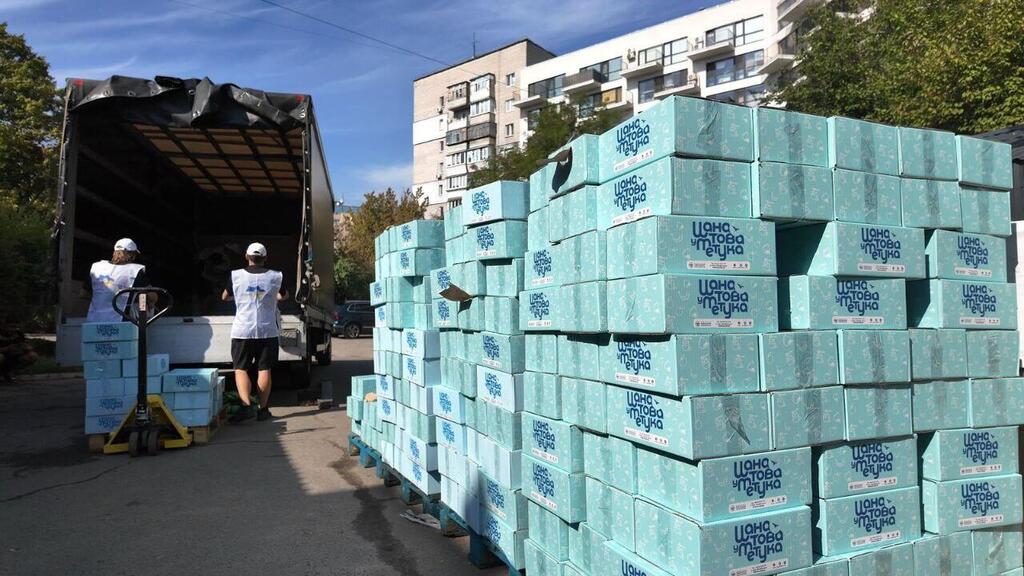
Holiday packages
Rabbi Yaakov Jan, the city’s chief rabbi, told Ynet that one community, about 180 families, descends from local Jews who have lived there since the communist era, with roots stretching back centuries. Another community of about 110 families in the New Uman neighborhood is made up of Breslov Hasidim who settled permanently, some marrying local Jewish women or Ukrainian converts.
While the war has reduced their numbers, the community recently inaugurated a new prayer tent for the High Holidays, with plans to build a permanent synagogue afterward. These communities function separately from the pilgrims and also receive regular aid packages and ritual sets for the holiday season.
The holiday kits distributed nationwide this year included a booklet on High Holiday laws and customs, a jar of honey, Shabbat and holiday candles, a Hebrew-Ukrainian calendar, yarmulkes, grape juice, sweets, a cosmetics set and a glossy booklet about the Federation’s work, with contact details for personal assistance. The centerpiece item was a children’s book — Time to Start a Brand New Year by Rochel Groner Vorst — newly translated into Ukrainian, designed to pass Jewish tradition to the next generation through family reading.
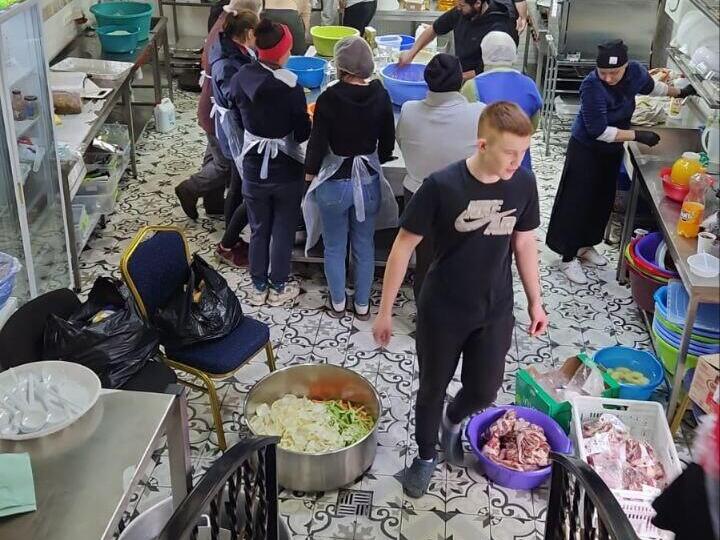
Preparations for Rosh Hashanah in the Jewish community
The initiative also included expanding the number of prayer services, with Chabad emissaries traveling to both large cities and small towns where no rabbi or synagogue functions year-round.
Rabbi Meir Stambler, head of the Federation of Jewish Communities of Ukraine, said: “The prayer ‘Our Father, our King, remove plague, sword, famine, captivity and destruction’ that we recite during the High Holidays carries a chillingly real meaning this year. After an especially difficult year, tens of thousands of Jewish families in Ukraine will celebrate the New Year, but alongside the joy, they will plead with God to end our suffering and hasten redemption.”
He added, “The intensifying darkness only shows us we are even closer to redemption. When the night grows darkest, it is a sign that dawn is near.”