


New York City Comptroller Mark Levine, who oversees the city's largest investments, promised during his election campaign to restore Israeli government bonds to the municipal pension funds' investment portfolio. He continued defending the proposal after taking office. Now, just 10 months after being sworn in, Levine, a Jewish Democrat and longtime supporter of Israel, has decided against purchasing the bonds.
In an interview with The New York Times, he said his investment team had concluded that the purchase "is not appropriate at this time."
"I always said this would be based on financial considerations only, not politics," Levine added.
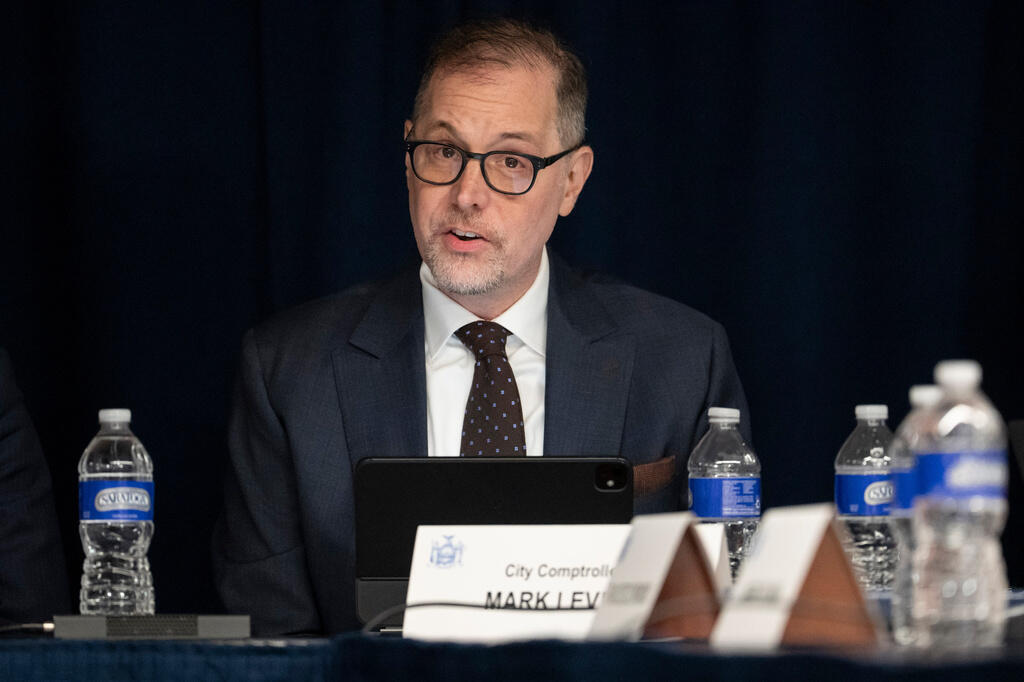
He said the review was continuing, but that because of "technical challenges" and "financial considerations", "this is not an investment we can make right now."
Levine did not specify what those technical difficulties were.
He acknowledged that the decision was difficult for him personally. He speaks Hebrew, has visited Israel many times and has friends and family there. Despite his close ties to the country, he has criticized the Netanyahu government and said he was heartbroken by Israel's political situation.
A small investment in a massive pension system
At the center of the controversy is a relatively small amount of money within an enormous investment portfolio.
New York City's five employee pension funds collectively manage approximately $326 billion on behalf of more than 750,000 workers and retirees, including teachers, police officers and firefighters. Each fund has its own board of trustees. However, Levine has direct discretion over approximately $1.3 billion, and it was from these funds that Israeli bonds were previously purchased.
According to Levine, the pension funds still hold investments worth more than $285 million in Israeli companies.
He emphasized that the current decision concerns the purchase of new Israeli government bonds, not the sale of all Israeli assets in the portfolio.
What exactly had New York been buying?
A government bond is essentially a loan. An investor lends money to the Israeli government, which agrees to pay interest and repay the principal at a specified date.
Bonds marketed in the United States through the Israel Bonds organization are one way Israel raises money abroad. According to their offering documents, the proceeds are intended for the country's general needs rather than any specific project.
The interest rates published for this month include two-year dollar-denominated bonds offering an annual rate of 5.10% and three-year bonds offering 5.53%.
New York City held Israeli government bonds for nearly five decades. When Brad Lander took office as city comptroller in 2022, the portfolio included nearly $40 million worth of Israeli bonds. After those bonds matured in 2023, Lander chose not to purchase new ones.
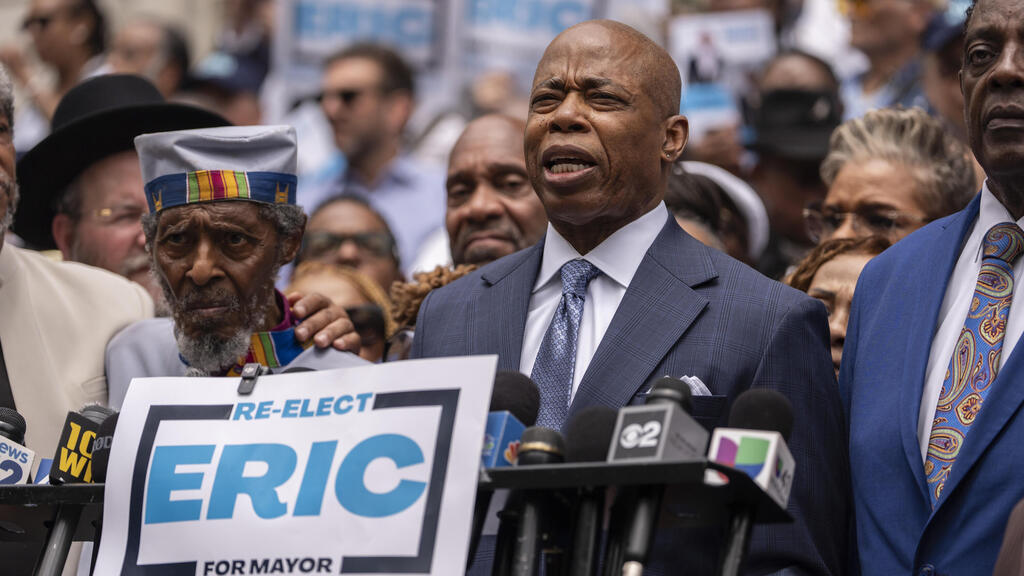
Former NYC mayor Eric Adams
(Photo: Yuki Iwamura\AP)
Lander, also a progressive Jewish politician and a frequent critic of Israeli government policies, said his decision followed an investment policy against purchasing foreign sovereign debt. Then-Mayor Eric Adams accused him of making a decision that served the movement to boycott Israel. Lander rejected that characterization and said he opposed the boycott movement.
From campaign promise to financial reversal
During last year's election campaign, Levine took the opposite position. He described Israeli bonds as a sound investment with a proven track record and argued that they belonged in a diversified pension portfolio. In January, after taking office, he reiterated his intention to resume purchases. As recently as April, he was still defending the proposal.
In his interview with The New York Times, however, Levine acknowledged that he had not possessed the full financial picture when he made the campaign promise. He said he had expected Israel's credit rating to improve in the meantime or the interest rates offered on the bonds to rise. He also wanted to push back against demands for a boycott of investments in Israel.
Since the outbreak of the wars, credit rating agencies have downgraded Israel. Fitch currently assigns Israel an A rating with a negative outlook, warning about rising public debt and the impact of security risks on the economy and government budget. S&P and Moody's subsequently revised their outlooks from negative to stable, but their ratings remain below their prewar levels. Israel still holds an investment-grade credit rating, however.
For Levine's pension investment team, the central question is whether the interest offered on Israeli bonds adequately compensates for their risks compared with other available investments. His office decided to favor shorter-term bonds, with regional instability also factoring into the assessment.
The decision also carries political implications that Levine cannot ignore. New York City's current mayor, Zohran Mamdani, publicly opposed resuming purchases, arguing that the city does not buy government bonds issued by other foreign countries.

New York City Mayor Zohran Mamdani says the city does not buy government bonds issued by other foreign countries
(Photo: Michael M. Santiago/Getty Images)
In April, activists supporting a boycott of Israel demonstrated outside Levine's office, demanding that he abandon the proposal. Levine has repeatedly insisted that his decision is not ideological.
What will the financial impact be for Israel?
The approximately $40 million previously held by New York City represents slightly more than one-hundredth of 1% of its pension funds' total assets. It is also a relatively small amount compared with Israel's overall government borrowing.
Israel Bonds, the organization responsible for marketing the securities, reported selling more than $2 billion worth of bonds worldwide in 2025 alone. New York City's decision therefore does not close the American capital market to Israel. Its symbolic significance, however, is considerably greater.
One of the largest municipal pension systems in the United States, which purchased Israeli government debt for decades, has decided to stay on the sidelines, even under a pro-Israel comptroller who had explicitly pledged to resume the investments.
There is no uniform position on the issue within New York. The New York State pension fund is separate from the city's pension funds. At the end of March 2026, it held approximately $333 million in Israeli government bonds, including about $297 million in Israel Bonds securities. That is more than seven times the approximately $40 million previously held by the city's pension funds.
New York State Comptroller Thomas DiNapoli said in September that he had no intention of changing that investment policy.
Levine, meanwhile, has left the review process open but has not provided a timetable for when Israeli government bonds might return to New York City's municipal pension portfolios.