

A week before October 7, Maj. Dr. R. began her post as the chief medical officer of the IDF Commando Brigade. Since then, she has served on every front of the war. She hardly survived a drone explosion, identified a fallen comrade from her command post in Gaza, coordinated the evacuation in one of the war’s toughest incidents involving the Egoz unit, and received a video from a wounded soldier whose life she helped save. Now, she speaks about the emotional toll: “We know how to care for everyone else. Caring for ourselves is the hardest."
Maj. Dr. R. keeps the memories of the war locked deep in the drawers of her mind - the cries of the wounded, the soldiers she saved against all odds, the ones who died in her care. She remembers her commander, who succumbed to his wounds on the way to her, and the moment a drone exploded where she had just been standing moments earlier.
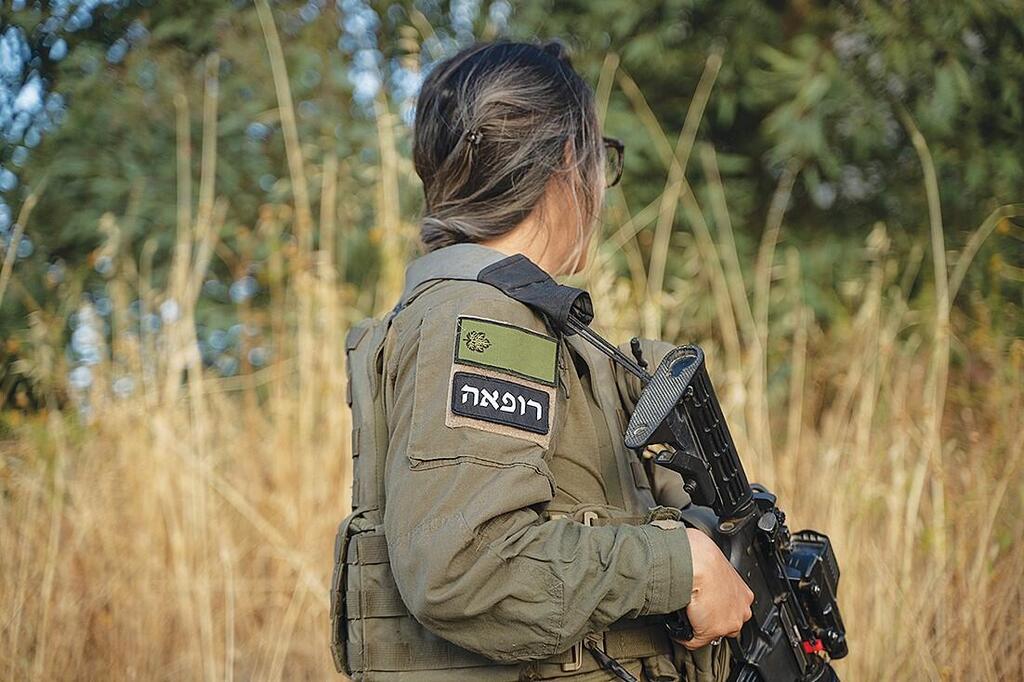
In one of the most demanding roles in the IDF, Dr. R., the first woman to serve as medical officer of the Commando Brigade, who was recently awarded the IDF Chief of Staff’s Citation of Excellence, has worked across every battlefront: Gaza, Lebanon, the West Bank, and Syria. Each front brought its own challenges and traumas. Those providing care on the frontlines absorb the pain around them.
“It’s incredibly difficult to treat caregivers,” says R., 35. “There’s no time to process what you’re going through when you constantly have to be ready for the next emergency. To keep functioning, I push the memories into a high drawer in my mind that I can’t reach. I just don’t open it. When people ask me about what I’ve been through, it’s very hard to open that drawer and remember what I saw."
How do you continue functioning while difficult events keep piling up?
“You hold on to routine and do whatever you can to remember the purpose, the 'why'. The sorrow never really leaves, but it helps you return to functioning."
Finding order in chaos
The Commando Brigade comprises four elite units- Egoz, Maglan, Duvdevan, and the Operational Support Unit (YAHSAM). Since the start of the Gaza war, the brigade combatants have carried out countless missions on every front.
Dozens of them were killed; about half of them on October 7. The latest casualties include Maglan unit reservist Sgt. Maj. (res.) Chen Gross, and Yahalom unit soldiers, Staff Sgt., Sgt. 1st Class Tom Rotstein, Staff Sgt. Yoav Raver and Staff Sgt. Uri Yehonatan Cohen, who died in June in a booby-trapped building in Khan Younis.
R., who grew up in the northern city of Beit She’an, dreamed of becoming a doctor since childhood. “At 16, I volunteered with Magen David Adom, and that’s when I knew this is what I’d do in life,” she recalls.
At 18, she began studying emergency medicine at Ben-Gurion University through the military’s academic program, later completing medical school at the Hebrew University as part of the IDF’s elite “Tzameret” track for outstanding students.
“I returned to the army, assuming core roles in the combat units I had dreamed of joining since I was young, and I even ran a clinic. When the Commando Brigade role opened, I told my replacement, ‘I’m jealous of you, I wish I could start from there.’”
She joined the commando brigade on September 26, 2023, becoming the first woman to serve as chief medical officer of the infantry brigade.
A week later, on October 7, she was already in the thick of battle on the Gaza border. “I hadn’t even had time to figure out who was who,” she recalls. “My first contact with many reservists was when I was calling to tell them: ‘We’re being called up. There’s a war.’
I went to Beit Lid to open emergency supply depots, grabbed what we needed, and headed to Kfar Aza, where I spent the first few days of the war.
“What I remember most from those days is the uncertainty and innocence. We had no idea what we were about to face. It was unexpected and beyond anything imaginable. The evil was incomprehensible.
“We tried to bring order to the chaos in the south. We treated everyone we could and evacuated them in any possible way - by private cars, United Hatzalah ambulances, helicopters we coordinated off the usual channels. The priority was just getting injured to the hospital."
Despite the team’s heroic efforts, what stays with her from those early days are the bodies. “So many of them. When you’re treating the wounded, you don’t feel helpless. But the number of bodies and what we saw by the roadside near the entrance to Kfar Aza is beyond anything one can process. I still see it, but I try not to think about it regularly."
Over the past 20 months, R. has served in the brigade commander’s operations center in every combat zone – Gaza, Lebanon, the West Bank, and Syria. “Whether in my medical role, which I always hoped wouldn’t be needed, or in a command role, we led the medical response, handling every incident and evacuation."
What does a typical day look like in a multi-front war?
“Mostly, you wake up to uncertainty. That sums up the last year and a half. One day you wake up in Beit Lid, the next you’re in one of the most intense battle zones.
The main challenge in this war was bringing order to chaos. We never knew what the next day, or even the next hour, would bring. But this was Israel’s most critical moment, and we all did whatever was needed to fulfill our roles on the battlefield as best we could."
Alongside the fighters, R. led another battle of her own - the fight to save the wounded. “Every day I prayed I wouldn’t be called to treat people I knew well,” she says. “My job was to manage the scene and serve as the operational link for the entire evacuation chain, deciding who needed urgent airlift, how many helicopters were needed, and in what order."
Maglan and Egoz units faced extremely complex incidents. “We had to make tough decisions under uncertainty, evaluating the first medical condition of the wounded. Field medics checked them and reported their condition to us so we could coordinate with combat command: Where to land the helicopters and which evacuation method to use.
“These were endless events requiring sensitivity and also decisiveness and speed, as they involved life-or-death decisions.
This war taught us to operate like a well-oiled machine, making critical decisions under pressure. After every incident, I’d gather our medical teams, provide support, process what happened, debrief, and learn. That’s part of our duty too. We know how to care for others but taking care of ourselves is the hardest part."
Looking back, do you believe you fulfilled your mission?
“No doubt about it,” says Maj. Dr. R. “Our job in the medical corps is to save every wounded soldier who can be saved and enable the fighting to continue. I believe we did that in the best way possible, using every available resource on the battlefield, like administering fresh blood.
We saved many who, in the past, wouldn’t have even made it to the hospital. There were cases with extremely complex injuries where I didn’t think there was any medical prognosis, and yet those wounded survived.
I remember one soldier who sustained a severe head injury during a very intense brigade operation. I truly believed we couldn’t save him. Later, I got a video of him running and exercising. That’s what gives us strength. “The frontline medics, those unit doctors in the field, at the point of injury, perform miracles. There’s no other word for it.”
The guiding principle of the brigade’s medical operations in the current war has been simple, Dr. R. explains, never give up on a wounded soldier, no matter how critical their condition.
“You live alongside these people; you treat those who are your brothers-in-arms. Nothing prepares you to treat someone you know. One moment you’re laughing with him, and the next, a missile hits him. Facing death while treating someone close to you is deeply shaking."
That’s what happened on March 8, 2024, when Maj. (res.) Amishar Ben David, a commander in the Commando Brigade, fell in combat in the southern Gaza Strip. “Amishar had been with us since October 7,” R. recalls.
“He went out on a mission and fought with the enemy. The next thing I hear is, ‘Doctor, doctor, we have a wounded.’ I start moving toward them and ask the medic to prepare a stretcher. We were in an area controlled by another unit, and I wondered: where’s their doctor, and why am I the one treating this case? My first thought was that our doctor had been hit.
“Minutes passed like an eternity. I waited for an update that never came. Finally, the doctor got on the radio and said, ‘The flower has become oleander’ - that’s the code for ‘the wounded has died.’
I was still waiting at the entry point, not fully understanding what had happened. When they brought him in, I still had hope. But very quickly, I realized he was beyond saving. By seeing the expression on the doctor’s face, I could tell that the wounded was someone I knew well.
“Two hours later, the casualty officer called and asked me to identify the body so they could inform the family. She asked, ‘Are you sure it’s him?’ I said, yes. She asked, ‘How can you be sure?’ I told her, ‘We live in the same place. I know him.’”
Despite the tragedy, there was no time to process what had happened, says R. “This is something that I will always bear with me. But at that moment, there’s no pause, because the next incident is already on its way."
The first to maneuver in Lebanon
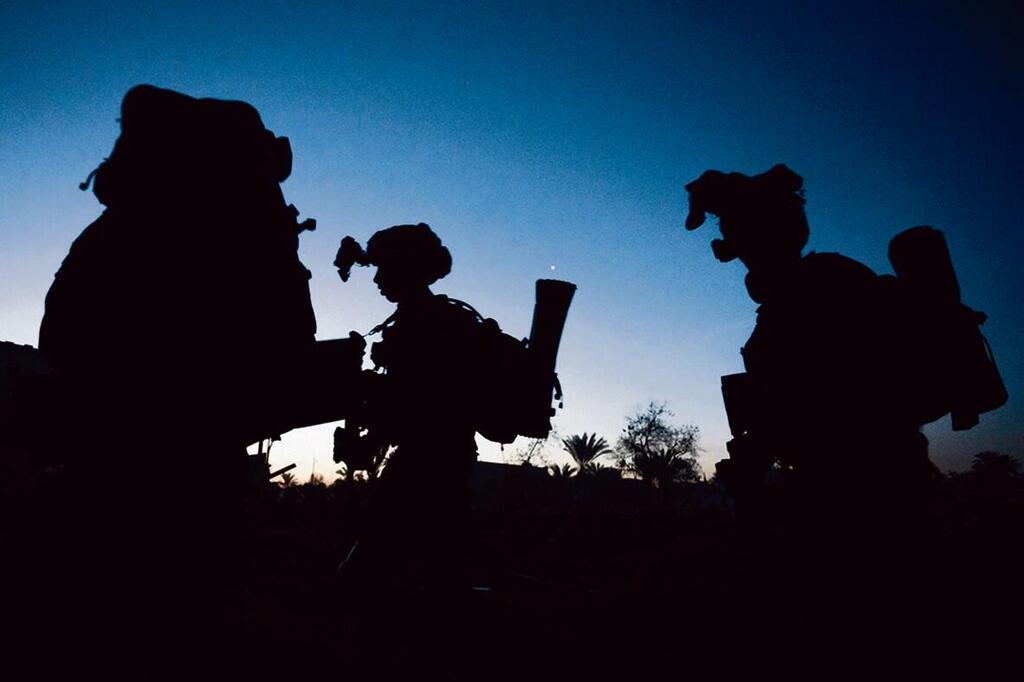
Another devastating episode took place in Lebanon in October 2024. During a close-quarters firefight with Hezbollah militants, Egoz commandos stormed a building to prevent the enemy from capturing a fallen comrade’s body. In heavy fog and darkness, dozens of terrorists were killed. The cost was steep: six soldiers lost their lives and 42 were wounded.
After the battle, questions were raised about the evacuation and treatment of the wounded. Despite the extreme field conditions, the brigade's medical personnel insisted that the brigade’s medical care met the necessary standards.
(Photo: IDF Spokesperson's Unit)
“Commando Brigade was the first to maneuver in Lebanon during this war, in complex, unfamiliar terrain where we faced a prolonged, high-casualty battle and had tremendous difficulty evacuating under fire", says R. "The operation kept evolving. The evacuation effort was massive and challenging.
Still, in my view, and according to those who investigated the incident, the medical mission was well handled. Those who could be saved were evacuated to the hospital.
We conducted thorough reviews, both operational and medical, learned from the event, and made adjustments. We changed evacuation protocols and military doctrine based on those lessons."
Because the Commando Brigade operates in so many arenas, it often finds itself in the most challenging environments, lacking the logistical support other units might enjoy. “Throughout, we kept identifying vulnerabilities, fine-tuning our response, and preparing for the most dangerous scenarios."
One of the most difficult challenges in the current war, says Dr. R., has been the exhaustion of Israel’s combat forces. “This is a major, army-wide issue, especially among reservists, who left their homes on October 7 and haven’t stopped fighting since. Supporting the medical staff was a constant challenge, and I can only praise them. They understood what was at stake if they weren’t there on the battlefield."
Sometimes, she says, routine can be the most dangerous. “Making transitions is hard; realizing that what worked in one place might not work in another. Flexibility and quick adaptation are part of the Commando Brigade mindset, but it’s not easy to shift that way of thinking. If we’ve been using a certain evacuation method, and suddenly it doesn’t work in a new location, we have to change and relearn. You can’t fall into habits.
“Even if you think you’re in a place with no immediate operational threat, it’s not always true. An incident can erupt out of nowhere, and you need to go from zero to a hundred instantly. You have to stay alert and sharp, bearing in mind that on the battlefield, one moment you’re laughing and eating a field meal, and the next, you’re responding to an unimaginable situation.”
How do you stay sharp after nearly two years of constant combat, when everyone is exhausted and one incident follows another?
“You remember why you’re fighting, why we went to this war in the first place, regardless of political views. That gives you meaning and strength. We are the fathers, mothers, and caregivers of the soldiers on the battlefield. We’re there for them, making sure they get the best care possible."
Do you stay in touch with the soldiers you saved?
“My role is to get them to the hospital alive. From there, other teams take over. Seeing the long-term effects of severe injuries can be very emotionally shaking. I need that distance to keep functioning in the field and making hard decisions. That’s what works for me at this point."
"A drone hit on the way to the restroom"
Above all, there’s the ever-present threat, says Maj. Dr. R. A real, immediate, and violent danger, lurking on every front and around every corner. “For this entire year and eight months, we’ve almost forgotten we’re in constant danger,” she says. “If a drone hits where we are, we’re also at risk. We’re out there in the field with the forces, in the same places, so all the dangers of the battlefield apply to us too."
She mentions one such drone incident almost casually, but it was all too real. “It was midday. I was on the first floor and wanted to go upstairs to use the bathroom. I asked one of the reservists nearby to make sure I had some privacy. I called him over, and as we got to the stairs, I realized I’d forgotten a waste bag. I told him, ‘I’ll be right back.’ That, thankfully, is what saved us.
“We had just climbed the first two steps when a drone hit right there. We heard the blast, saw the flash, and looked at each other, we knew there were people upstairs. In a second, we had a stretcher out and everything ready to treat casualties, but miraculously, no one was hurt.
A minute later, everyone returned to routine, because there's no other option. You’re in the middle of combat. There’s no stopping, no resting. And me? I just went back to pee, because if there’s another incident, at least I want to be ready.”
Where does resilience come from, being one meter from an explosion and immediately returning to your duties?
“Resilience doesn’t build in a day,” she says. “And it certainly doesn’t start on the eve of battle. It starts long before, in training, where we prepare troops for extreme scenarios.
Before every maneuver, there are briefings, mental preparations, and some of the best professionals working with the units. After incidents, we debrief both soldiers and commanders. We also provide one-on-one support for anyone struggling. Every unit has advisors who know how to provide care when it’s needed."

(Photo: IDF Spokesperson Unit)
Except for the need for waste bags in the field, an issue often mentioned by female soldiers, Dr. R.’s story bears no particular gender markers. She never made a fuss about it, and her fellow soldiers adapted quickly to the idea of a woman being present with them.
“It’s deeply established in the military now that combat roles have nothing to do with gender,” she says. “When I got here, it was clear I was just like everyone else. The brigade commander who appointed me knew he’d need me in combat, and that’s how it would be. There were some debates at first, but once I started, there was no doubt. I was part of the team, with no exceptions.
“I do think the presence of a woman on the battlefield brings balance in terms of emotional intelligence, compassion, which are traits not typically associated with combat. There are female doctors everywhere now, including in elite units. We’ve proven ourselves, and any woman who dreams of these roles can certainly achieve them."
In recent weeks, Dr. R. concluded her role as the Commando Brigade’s chief medical officer. On Israel’s last Independence Day, she received the IDF Chief of Staff’s award for excellence for her wartime service.
The award committee praised her for entering her position with inspiring speed and precision, treating casualties during the fighting on the Gaza border, and saving many lives. They noted her poise and courage under fire while managing mass casualty incidents on the battlefield, handling complex, high-pressure scenarios with excellence.
A few days later, she boarded a flight for a long-overdue post-service trip abroad, before moving on to her next goal: a prestigious surgical residency at Sheba Medical Center. “I’ll finish the residency with excellence,” she says, “and I believe I’ll stay in the military system. Surgery is a vital specialty in the army, especially on the battlefield."