


On the morning of October 22, 1926, Harry Houdini was resting on a couch in his dressing room at the Princess Theatre in Montreal. The world's most famous magician was exhausted and suffering from a fractured ankle sustained during one of his performances.
As he read through his mail, a student named Samuel Smilovitz was sketching his portrait, after Houdini had been impressed by an earlier drawing. Two other students entered the room. One of them, Jocelyn Gordon Whitehead, wanted to test a rumor: Could Houdini really withstand a powerful punch to the stomach without feeling pain?
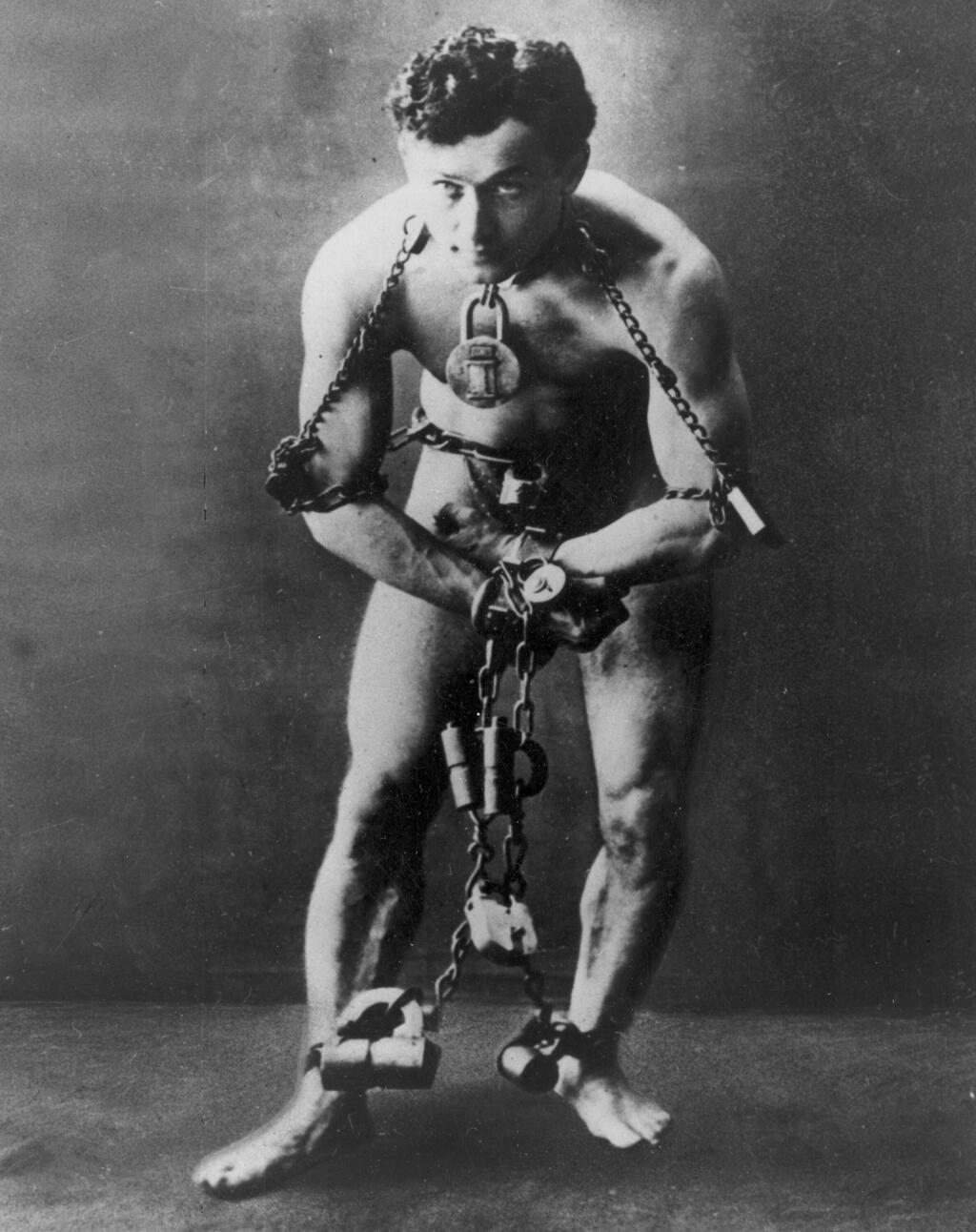
Houdini, who took pride in his abdominal strength, answered yes. Before he had time to prepare and tighten his muscles, Whitehead delivered several rapid punches. The magician doubled over in pain and asked him to stop. According to one account, when Smilovitz finished the portrait, Houdini remarked that the drawing made him look tired and admitted that he was indeed feeling unwell. Nine days later, Houdini was dead.
For a century, the accepted story has been that the punches caused his appendix to rupture, leading to a fatal abdominal infection. Whitehead became widely known as the man who killed one of history's greatest magicians. He was never criminally charged, partly because it was difficult to establish that the punches had caused Houdini's death, but the accusation followed him for the rest of his life.
Now, a retired surgeon from Los Angeles is challenging that account. Dr. Larrian Gillespie, 77, argues that the wrong man was blamed and that the world may have been commemorating Houdini's death on the wrong date for the past hundred years. According to Gillespie, Houdini died from an intestinal obstruction caused by a serving of chop suey, a Chinese-American dish of meat and vegetables, that he ate in the hospital. She also believes doctors and people close to Houdini altered documents to conceal what happened during his final days.

Dr. Larrian Gillespie
(Photo: Cipher House Books)
In her book Houdini: The Man Who Died Twice, published in July, Gillespie presents a medical and historical investigation drawing on death certificates, witness accounts, letters, medical textbooks from the 1920s and contemporary newspaper reports. Her claims are far-reaching, and not all Houdini historians accept them. But the controversy has renewed interest in one of the most enduring mysteries surrounding the legendary escape artist. To understand why his death still fascinates people a century later, it is worth revisiting the extraordinary life behind the handcuffs and chains.
From a poor Jewish immigrant to an international superstar
Harry Houdini was born Erik Weisz on March 24, 1874, in Budapest, Hungary, to a Jewish family. His father, Mayer Samuel Weisz, was a rabbi, and his mother, Cecilia Steiner, was a homemaker. When Erik was four, the family immigrated to the United States and settled in Appleton, Wisconsin, where his father secured a position as a rabbi.
The American dream proved elusive. Rabbi Weisz struggled to establish himself, partly because of his limited English, and eventually lost his position. The family moved to Milwaukee and later New York, living in poverty for years. Erik began working as a child to help support the family. According to his biographies, he even ran away from home at the age of 12 in search of work. By nine, he was already performing as a trapeze artist under the name "Ehrich, Prince of the Air." He showed a talent for acrobatics and enjoyed demonstrating physical feats that seemed beyond the abilities of ordinary people.
He later became fascinated by the French magician Jean Eugène Robert-Houdin. He adapted the magician's surname, adding an "i" in the mistaken belief that it meant "like Houdin" in French. The name Harry developed from his childhood nickname, Ehrie. Years later, his admiration for Robert-Houdin soured, and he accused his former idol of stealing other magicians' ideas.
Houdini initially performed with his friend Jacob Hyman and later with his brother Theodore. In 1894, he met Wilhelmina Beatrice Rahner, known as Bess, while working in entertainment. They married roughly three weeks later. Bess was Catholic and did not convert to Judaism, although the couple also had a wedding ceremony officiated by a rabbi. She became his regular stage partner, and together they traveled between circuses and modest theaters. Money was often tight, and Houdini even considered abandoning magic for more conventional work.
Eventually, he discovered the act that would make him famous. Rather than relying on conventional card tricks and disappearing objects, Houdini specialized in escaping from seemingly impossible situations. He invited police officers and prison officials to lock him in jail cells and bind him in chains. He escaped from handcuffs, locked boxes thrown into water and straitjackets while suspended upside down above crowded streets.
In his celebrated Chinese Water Torture Cell act, he was lowered headfirst into a tank of water with his ankles restrained above him, leaving audiences convinced they were watching a man about to drown. In another spectacular illusion, he made an entire elephant disappear on a New York stage. Houdini was also a master of publicity. He made danger central to his performances, cultivated an image as a man who could never be imprisoned and carefully maintained the impression that every escape might cost him his life. His name became synonymous with escaping the impossible, and he emerged as one of the world's biggest entertainment stars. Yet the seemingly fearless performer paid a physical price for his success, suffering numerous injuries throughout his career.
His Harlem home and complicated Jewish identity
In 1904, Houdini bought a four-story brownstone in Harlem, Manhattan, where he lived until his death. The building, with its decorated facade and steps leading to the entrance, still stands today. Inside, Houdini collected rare books, magic memorabilia and materials relating to supernatural phenomena.
At the time, Harlem was home to a large Jewish community, with synagogues, schools, Yiddish newspapers and Jewish-owned businesses. Around World War I, approximately 175,000 Jews lived in the neighborhood, although its character gradually changed during the 1920s. For the son of an impoverished rabbi, owning the house represented an extraordinary achievement. One account of his life describes the day he signed the purchase agreement as among his happiest.
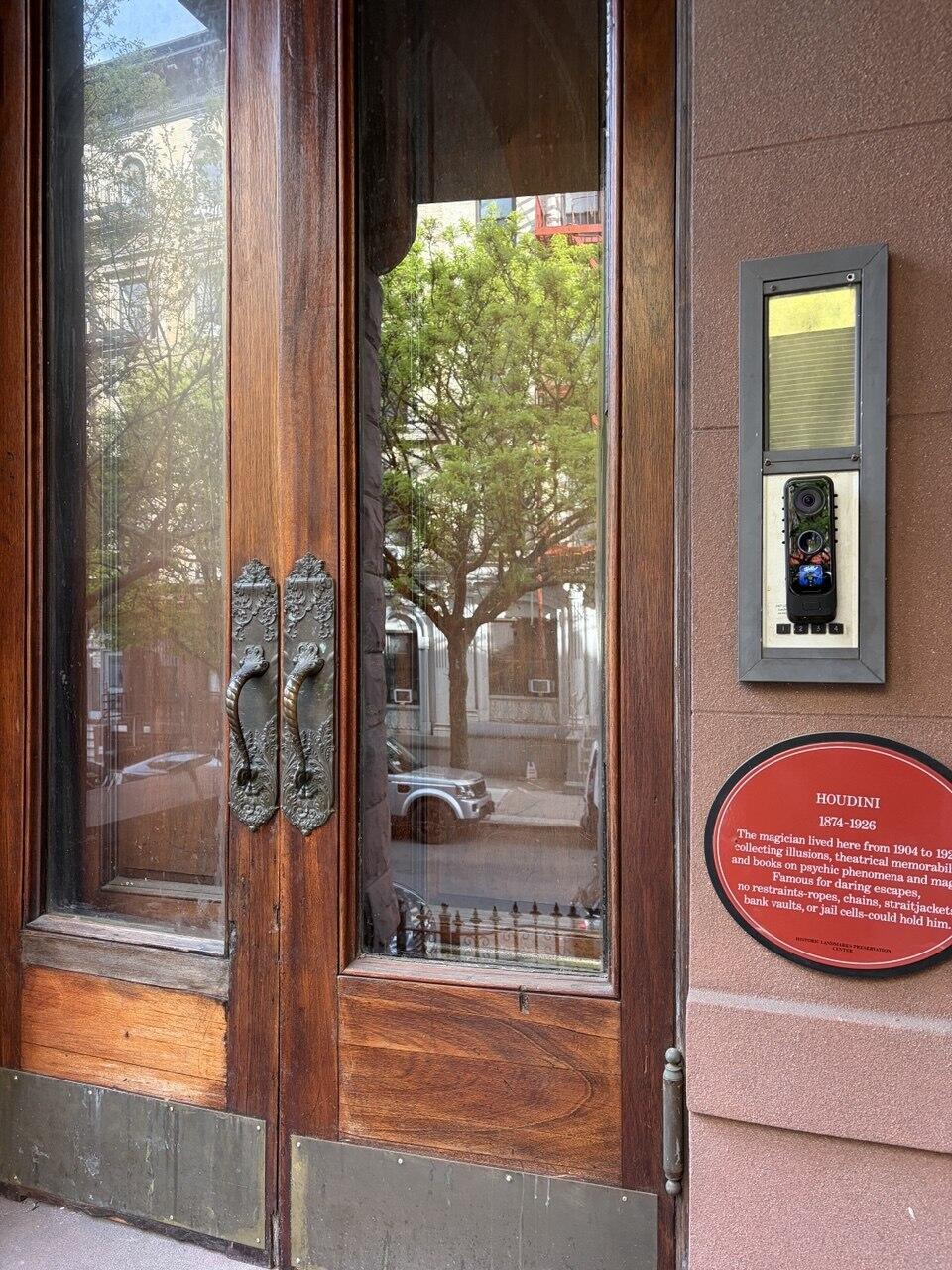
Houdini's Harlem home
(Photo: Daniel Edelson)
Houdini's relationship with Judaism was complicated. He was not religiously observant, celebrated Christian holidays with his wife and even claimed to have been born in Wisconsin rather than Budapest. Yet he did not reject his Jewish origins. A visit to Russia in 1903, following the Kishinev pogrom, exposed him to antisemitism. In 1918, he founded a charitable organization of entertainers who were sons of rabbis, supporting both the war effort and Jewish institutions. Among those associated with the organization were singer and actor Al Jolson and composer Irving Berlin. According to a contemporary report, participants collectively contributed a week's earnings totaling $8,000.
But the most important person in Houdini's life was neither his rabbi father nor his wife. It was his mother. Houdini's attachment to Cecilia bordered on obsession. After his father's death, he considered himself responsible for her welfare, supported her financially and showered her with gifts and expensive clothing. He wanted to give her the comfortable life she had been unable to afford while raising her children.
When she died in 1913, while he was performing in Europe, Houdini was devastated. He mourned her for years and longed to communicate with her even after death. That longing would bring him into direct conflict with one of the most popular movements of his era.
The magician who declared war on mediums
During the early 20th century, spiritualism was booming across Europe and the United States. Mediums claimed they could communicate with the dead, and séances became increasingly popular, particularly after World War I left countless families grieving for loved ones. Houdini, who understood the mechanics of illusion better than almost anyone, believed many mediums were fraudsters exploiting people's grief for financial gain.
One of his most surprising friendships was with British author Arthur Conan Doyle, the creator of Sherlock Holmes. Although his fictional detective was famous for his powers of rational deduction, Conan Doyle himself was a committed believer in communication with the dead. In 1922, Conan Doyle's wife, Jean, offered to conduct a séance and deliver a message from Houdini's mother. She wrote down what she claimed was a communication dictated by Cecilia's spirit.
There was a problem. The message began with a Christian cross and was written in fluent English. Houdini's mother had been Jewish, married to a rabbi and barely spoke English. He found it difficult to believe that, in death, she would suddenly adopt Christian symbolism and begin writing in a language she had scarcely used while alive.
The séance contributed to the breakdown of the friendship between Houdini and Conan Doyle. Houdini subsequently devoted much of his time to exposing fraudulent mediums and even testified before the U.S. Congress in support of legislation against charging money for fortune-telling. His campaign also inspired conspiracy theories about his death. Some suggested that angry mediums had plotted to kill him, possibly sending Whitehead to deliver the punches. No convincing evidence has ever emerged to support those claims. Other theories involved deliberate poisoning, including an especially bizarre story about a group of circus dwarfs supposedly sent to poison his morning tea.
Houdini's private life also attracted attention. Biographers have found evidence of a brief affair in 1918 with Charmian London, the widow of Jack London, author of White Fang and The Call of the Wild. Her diaries contain intimate descriptions of their relationship, and she referred to Houdini as "my magic lover." According to biographer Kenneth Silverman, it was probably his only significant extramarital affair. The relationship was short-lived, and Houdini returned to his marriage with Bess. The couple had no children.
His final performance and the accepted account of his death
In October 1926, Houdini, then 52, embarked on a performance tour despite his injuries. His wife had suffered food poisoning, while he had fractured a bone in his ankle during a dangerous stunt. Instead of resting, he continued performing. Following the punches in Montreal, his abdominal pain worsened. But Houdini, accustomed to ignoring physical discomfort, did not immediately seek medical attention.
He traveled to Detroit and took the stage on October 24 despite a fever of approximately 40°C (104°F) and severe pain. Doctors warned him about his condition, but he refused to cancel the performance. At one point, he collapsed backstage, only to return to the stage. It was his final performance.
The following day, he underwent surgery at Grace Hospital. According to medical accounts from the time, doctors found that his appendix had ruptured and that a bacterial infection had spread throughout his abdomen. Today, appendicitis can generally be treated successfully. But in 1926, before antibiotics became widely available, widespread peritonitis caused by a ruptured appendix was a life-threatening condition.
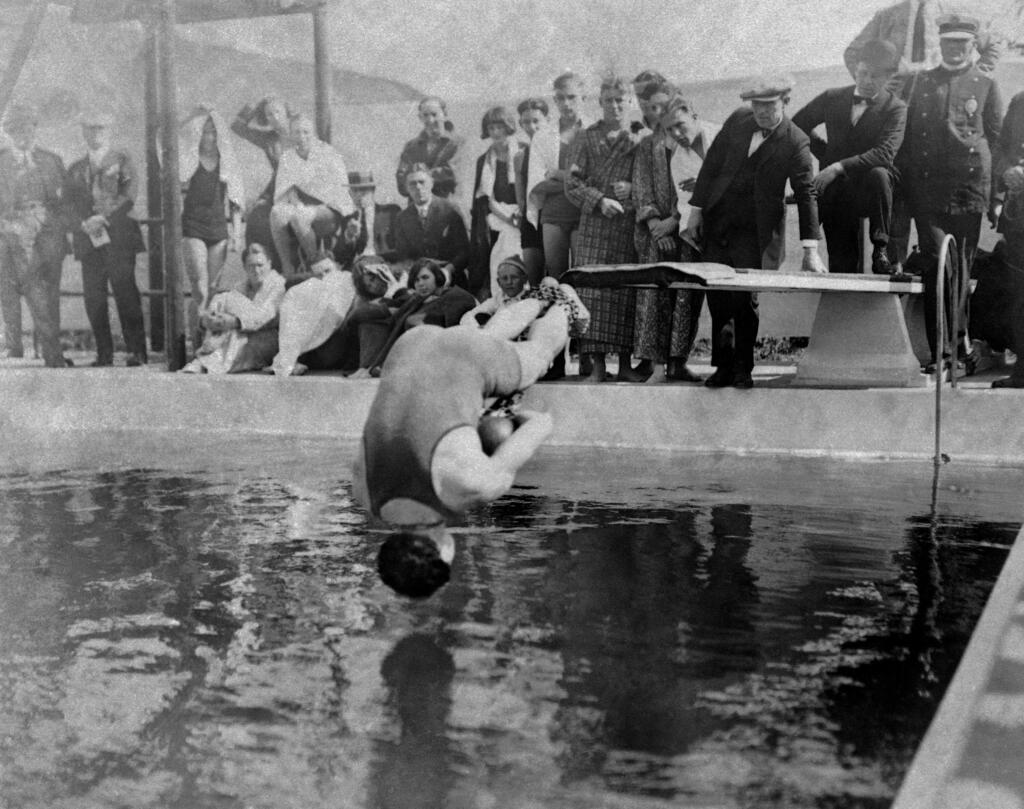
oudini escaping from chains underwater, 1923
(Photo: AP Photo)
The infection could lead to sepsis and septic shock, a potentially fatal reaction in which the body's response to infection disrupts circulation and damages vital organs. Doctors attempted to save Houdini, including administering an experimental serum. He also underwent a second operation. According to the accepted historical account, Harry Houdini died on October 31, 1926, at 1:26 p.m.
But the connection between the punches and his appendicitis was never conclusively established. Blunt abdominal trauma can, in rare cases, be associated with appendicitis, but determining whether an injury caused the illness or simply preceded it is difficult. Biographer Adam Begley, whose book on Houdini was published by Yale University Press in 2020, believes the illness probably developed independently. The punches may simply have drawn Houdini's attention to abdominal pain that was already developing. Alternatively, they may have distracted him from recognizing the underlying illness.
The hospital meal at the center of a new theory
Gillespie goes considerably further. She argues that the key to Houdini's death was not his appendix but a serving of chop suey he ate at the hospital on October 28. According to her reconstruction, undigested food fibers formed a mass that blocked his intestines.
An intestinal obstruction prevents food and other contents from moving normally through the digestive tract. It can cause fluids and gas to accumulate, compromise blood supply to the intestines and, in severe cases, lead to tissue death, perforation and a life-threatening infection. Masses of undigested food and fiber can cause such blockages, although this is not a common complication of an ordinary meal.
Gillespie believes Houdini required emergency surgery on October 29, during which doctors opened his intestine and removed its contents. His condition then deteriorated. His temperature reportedly rose to approximately 40.5°C (104.9°F), and he developed septic shock and lost consciousness. She claims he underwent another operation on October 30 and died that same day at 1:26 p.m., exactly 24 hours before the officially recorded date of his death.
But contemporary newspaper reports contradict crucial parts of that timeline. As early as October 25, The New York Times reported that Houdini had undergone surgery to remove his appendix. The newspaper also published a statement from four of his doctors describing a ruptured appendix and an abdominal infection. On October 29, newspapers reported a second operation to treat intestinal paralysis that had developed following the infection. Gillespie argues that the reports and official documents do not accurately reflect what happened.
Her investigation began almost by chance while she was helping develop a website for a university course about Houdini at the University of Nevada. A graduate of the University of California, Los Angeles, Gillespie had worked for 15 years in Beverly Hills. She had never previously researched Houdini and, by her own account, had no particular interest in magic. What caught her attention was his death certificate.
Examining the document from a medical perspective, she noticed erasures, incorrect names and the signature of a physician who, she says, was not present when Houdini died. She later identified what she describes as three different death certificates, including one submitted to an insurance company. She claims one document was considered invalid because it showed signs of alteration and that she found contradictions among the various records. According to Gillespie, more than a dozen people close to Houdini, including relatives and employees, were involved in a series of actions intended to conceal the true circumstances of his death.
Medical negligence, insurance money and Halloween
Why would anyone want to conceal how or when Houdini died? Gillespie suggests three possible motives.
The first is the fear of exposing medical negligence. If Houdini developed an intestinal obstruction after eating food provided by the hospital, and doctors failed to diagnose it promptly, those responsible could have faced serious questions about his treatment. For Gillespie, the absence of any reference to the second operation in the death records she examined is one indication that something may have been concealed.
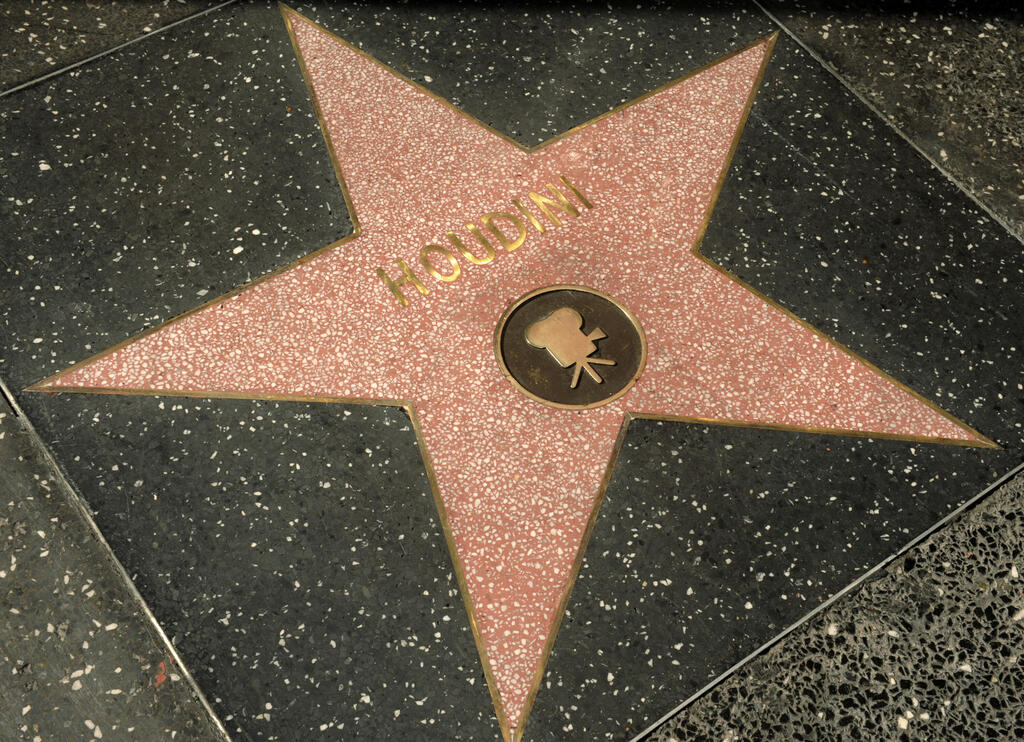
Houdini's Hollywood Walk of Fame star
(Photo: AP Photo / Chris Pizzello)
The second possible motive is financial. Houdini's life insurance policy provided an increased payout in the event of accidental death. Gillespie believes the way his death was described enabled Bess to receive double compensation.
Her third proposed motive is the most unusual: Halloween. Gillespie believes those involved wanted Houdini's death to be recorded as October 31, the holiday associated with spirits, ghosts and the supernatural, thereby strengthening the mythology surrounding the magician who had spent years challenging claims of communication with the dead.
It would be difficult to imagine a more symbolically appropriate date for the death of a man who had devoted so much of his later career to exposing fraudulent mediums. But an appealing narrative is not necessarily an accurate one.
Evidence, speculation and a divided community of historians
For all the intrigue surrounding Gillespie's theory, there is an important distinction between what the documents establish and how she interprets them. Her book is not a peer-reviewed medical study. It is an independent historical investigation published by a company she owns. No autopsy was performed on Houdini, meaning there is no direct pathological evidence that could conclusively establish what happened inside his body.
Errors and alterations in death certificates also do not, by themselves, prove an attempt to conceal medical negligence, commit insurance fraud or change the official date of death. Houdini researchers are divided over Gillespie's conclusions.
Patrick Culliton, who assisted her research, believes there is substantial evidence supporting her findings, particularly her argument that Whitehead should no longer be blamed for Houdini's death. John Cox, who runs the historical website Wild About Harry and also helped the author, was impressed by the new material but remains skeptical. In his review, Cox described the book as a compelling detective story containing intriguing theories, while emphasizing that it does not provide conclusive proof for any of them. As far as he is concerned, the mystery remains unsolved.
George Hardeen, Houdini's great-nephew, also told The New York Times that he found the theory convincing. However, he acknowledged that persuading historians, magicians and devoted fans to abandon a story they have believed for generations would be difficult.
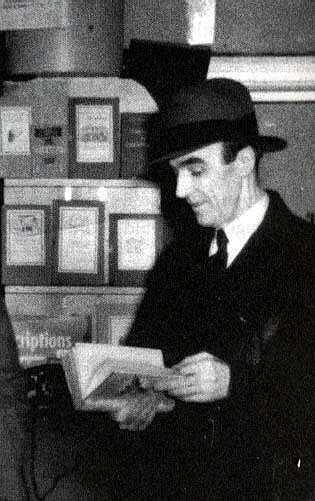
Jocelyn Gordon Whitehead
(Photo: Scranton's Houdini Museum)
One person who paid a considerable personal price for that story was Jocelyn Gordon Whitehead. Although he was never prosecuted, the accusation that he had killed Houdini followed him throughout his life. According to Gillespie's investigation, Whitehead became increasingly reclusive, avoiding other people because of the shame associated with the incident. He died of malnutrition in 1954 at the age of 57 and was buried in Montreal without a headstone.
Gillespie decided to address what she considers a historical injustice. She located one of Whitehead's relatives, commissioned a granite headstone and traveled to Montreal for a ceremony marking its installation. Alongside his personal details, the stone bears the words "Falsely Accused No More." A relative of Whitehead and George Hardeen, a member of Houdini's family, attended the ceremony.
A century after the famous punches, the man long blamed for the magician's death finally had someone publicly defending his name.
Houdini's final escape became a Halloween tradition
Houdini's body was transported from Detroit to New York in a specially designed bronze coffin. Shortly before his death, he had used the same coffin to demonstrate how a person could remain in an enclosed space without succumbing to fear. Approximately 2,000 people attended his funeral on November 4, 1926, including two rabbis.
At his request, Houdini was buried in a Jewish cemetery in Queens beside his mother. He had left detailed instructions concerning the rabbi who should conduct the funeral and requested that a bundle of letters his mother had written to him over the years be placed beneath his head in the coffin, allowing him to rest on them forever.
Bess, his partner throughout 32 years of marriage, was not buried beside him. Although her name appears on his monument, she was laid to rest in a Catholic cemetery in New York state because the Jewish cemetery would not permit her burial there.
Before Houdini died, the couple had agreed on one final experiment. If communication with the dead were genuinely possible, Houdini would send Bess a secret message known only to the two of them. They devised a code based on the word "Rosabelle," the title of a song connected to their courtship, and a sequence of words encoding the message "Believe."
For years after his death, Bess attempted to contact him through mediums. In 1929, the medium Arthur Ford claimed to have successfully delivered the secret message. But it later emerged that the code had already been published, and Bess withdrew her belief that Houdini had actually communicated with her.
On October 31, 1936, the tenth anniversary of his officially recorded death, a widely publicized séance was held on the roof of a Hollywood hotel before hundreds of spectators and members of the press. Everyone waited for a sign from the man who had spent his life escaping from places no one else could escape. Houdini did not appear.
Bess extinguished the light that had been kept burning in his memory and announced that she would no longer wait for him. She later explained that ten years was long enough to wait for any man. His admirers, however, never stopped trying. Annual séances became a tradition, and events have been planned for October 31, 2026, marking the centennial of his officially recorded death, including gatherings at his former Harlem home on 113th Street.
If Gillespie is right, those gathering on Halloween to contact Houdini will be observing the anniversary of a man who actually died the day before. And in Montreal, a new headstone now tells a different story about the man once held responsible for his death. After a hundred years, it may be Whitehead, the little-known student who punched Houdini, who finally manages to escape the magician's shadow.