

We encountered Golan Engel as he galloped out of the forest on Mount Gilboa, accompanied by Georgie and Salbash, two red heeler dogs guarding his grazing cattle herd. We had just finished climbing the winding Route 6666 from the valley, after driving the same route taken by attacker Ahmad Abu al-Rub, who had left dead and wounded in his wake. We asked Engel where the separation barrier was. He pointed and said, “Some barrier. I sold a breeding calf to a farm in the territories, and it came back to me through a breach in the fence.”
Earlier that morning, two residents on HaShomron Street in Beit Shean showed us the site of the initial ramming attack. We arrived four days after the attack, and the scenes where the killer struck still bore clear signs of the trauma: medics’ gloves, bloodstained pads, torn police tape. First, he rammed and killed 68-year-old Shimshon Mordechai on HaShomron Street. He then continued to Makhlouf Street, where he struck a 16-year-old boy, who was wounded but survived. From there, he drove along Route 71 toward Afula, rear-ending the car of 18-year-old Aviv Maor at the Tel Yosef junction. Aviv managed to exit her vehicle. When she saw Abu al-Rub running toward her with a knife, she fled beyond the roadside guardrail, but he caught up with her and stabbed her to death. At that point, he returned to the blue Isuzu pickup truck he had stolen from his employer and continued to Afula, where he rammed a 34-year-old man before being shot and neutralized by a passerby.
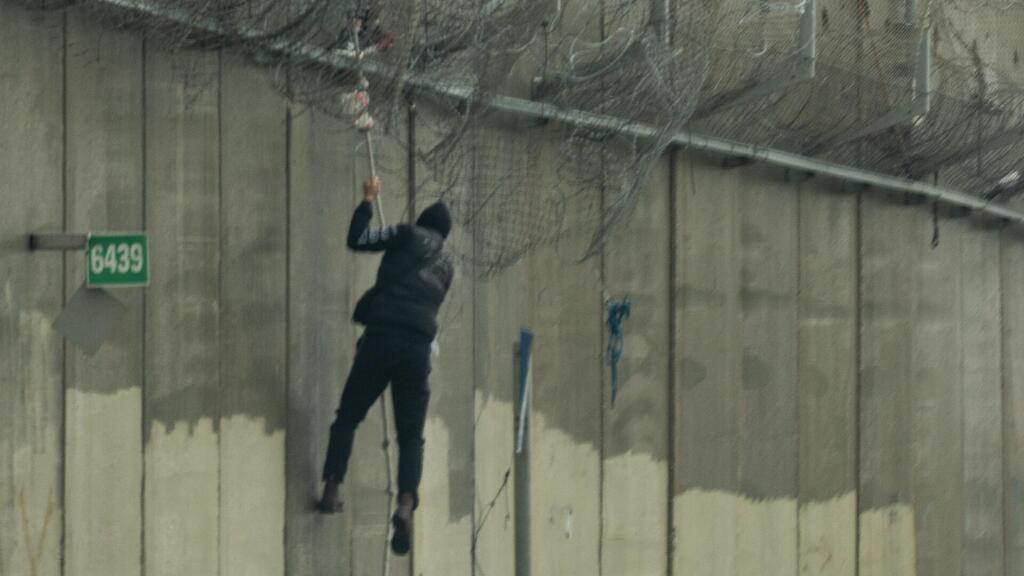
Abu al-Rub, a 34-year-old Palestinian without a permit, had been working on the construction of a home at Kibbutz Mesillot near Beit Shean. In that sense, he was a neighbor of the valley, living not far away in Qabatiya in the Jenin area. It is unclear why he chose to travel as far as the Jerusalem area to enter Israel. Perhaps he crossed through a breach in the fence, or climbed over the high concrete wall that forms part of the separation barrier east of Abu Dis, north toward Ramallah. The Gilboa ridge fence is much closer to his home, and according to local residents, many Palestinians cross there. Most come to work, often under near-slave conditions, to support their families. A minority, like Abu al-Rub, enter to carry out attacks.
But as noted, it is not only people who pass through the breached fence. Engel said he was hurrying back to his farm. “A guy who set up a cattle farm somewhere in northern Samaria is waiting for me,” he said. “When I sold him the calf a month ago, I joked, ‘Take good care of it, or it’ll want to come back home.’ A month later, I visit my herd grazing here, and who do I see? The calf I sold him. Now, it’s a calf, not a person. How did it know where there was a breach? I don’t know. All I understand is that this fence is like Swiss cheese. By the way, some of my cows, maybe that calf too, are Simmental cattle. That’s a Swiss breed, like the fence.”
‘A complete mess’
What is striking is that almost from the first days of the separation barrier, Palestinians have been crossing it—through man-made breaches, gaps caused by wear and tear, poor maintenance and weather damage, or by climbing over it. This is a massive project by any measure: about 720 kilometers (450 miles) long, more than twice the length of the Green Line, at a cost of roughly 9 billion shekels. It is an enormous sum and a scandalous waste of public money for a barrier that, along large stretches, poses no real obstacle at all.
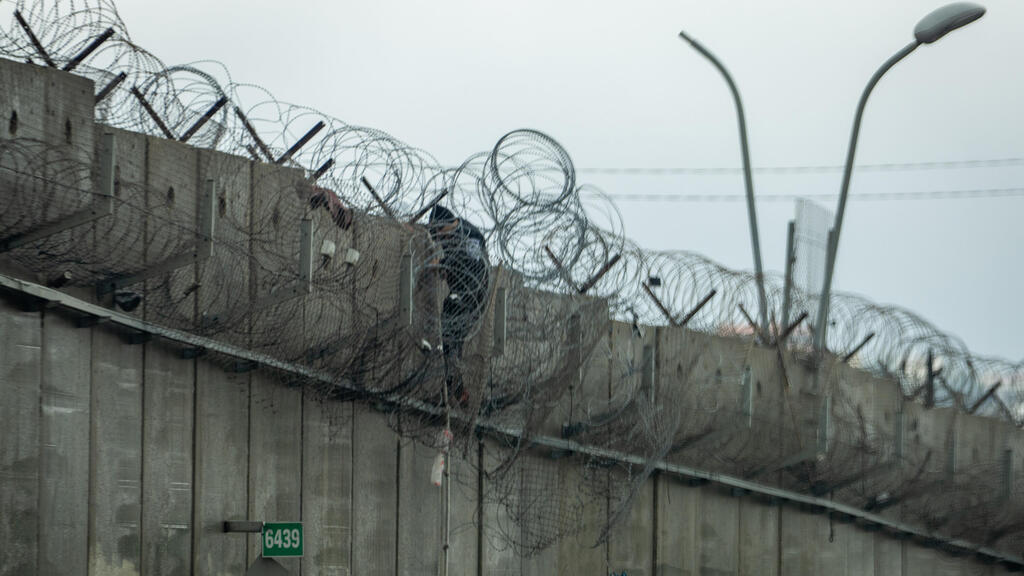
(Photo: Shalev Shalom)
The vast documentation, beginning more than 20 years ago—shortly after the barrier was built—of workers without permits and even workers with permits choosing to cross through breaches rather than wait in long lines at official crossings, is the clearest evidence of a longstanding failure for which no authority accepts responsibility.
That lack of accountability is not surprising. For virtually every failure or disaster in Israel over the past 16 years—aside from the year and a half of the so-called change government—there has been no acceptance of responsibility by the prime minister. That does not mean there are no responsible parties.
Last week, State Comptroller Matanyahu Englman published a report reviewing the condition of the barrier around Jerusalem. The audit found that many kilometers of the roughly 145-kilometer (90-mile) barrier are completely breached, with gaps ranging from several hundred meters to several kilometers. The result is that the barrier does not fulfill its purpose, allowing Palestinians to enter Israel along long stretches without inspection or control. Englman concludes the report with a long list of those responsible for failing to fix the deficiencies—without naming names—including the prime minister, defense minister, national security minister, the IDF chief of staff, the police commissioner, the head of the IDF Central Command, the Jerusalem district police commander and the commander of the Border Police (Magav).
Perhaps that is the point: to spread responsibility among as many bodies as possible. “In this situation, there really isn’t a single responsible authority,” said a senior security official who was involved in establishing the barrier. “And when there’s no single authority and a disaster happens, everyone is responsible, which in practice means no one is. The army is supposed to prevent people from reaching the fence, and the police are supposed to stop those who cross it. The body that determines what measures are installed on the fence is an IDF unit called Keshet Tzva’im, and responsibility for maintenance and repairs lies with the Defense Ministry. Around Jerusalem, overall responsibility rests with the Border Police, which has a special headquarters, operations rooms and dedicated forces, but the manpower is very limited and insufficient for the task. It’s a complete mess. People are paying with their lives for this failure.”
‘The army turned a blind eye’
Palestinians in the West Bank are well aware of the breaches in the barrier. So is the army, as are Israeli residents living near it. The farce of the barrier’s security and maintenance is evident along the section that runs through the Gilboa Regional Council.
“In our area near Taanach,” said farmer Erez Cohen from the moshav of Mele’a, “the fence was breached for years. The army turned a blind eye, even though we complained endlessly. Thousands of Palestinians were entering through those breaches. Buses and vans would come to pick them up right at the gaps.”
Where were the army and the police?
“They were asleep standing up. What wasn’t stolen here? Tractors, vehicles, agricultural produce from fields and warehouses, horses—anything that could be stolen was stolen.”
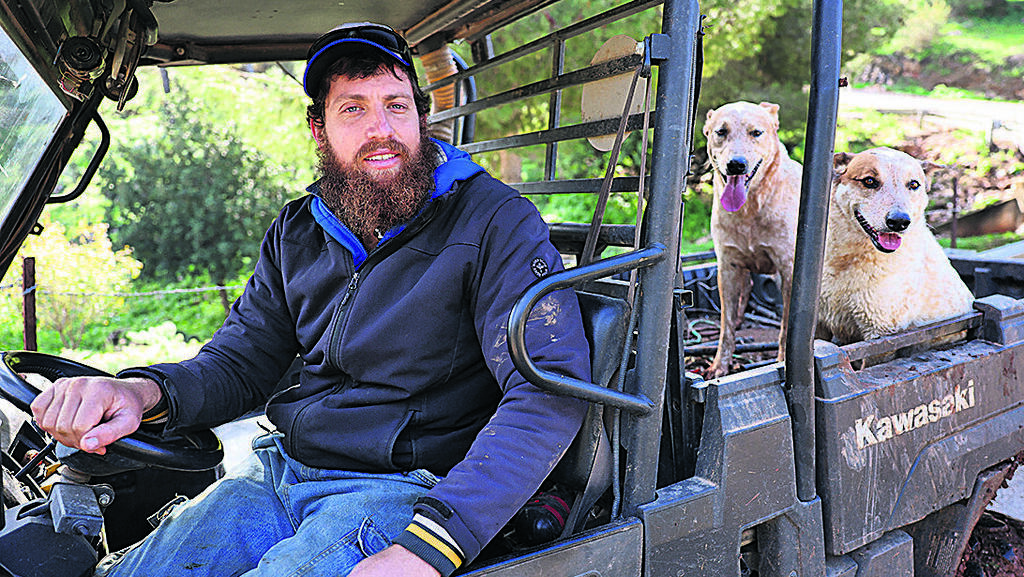
Golan Engel
(Photo: Shaul Golan)
Oved Nur, who at the time was head of the Gilboa Regional Council, said he contacted everyone possible about the breaches. “Endless meetings, letters, phone calls, emails—to the chief of staff, defense ministers, ministry directors-general, their chiefs of staff, Knesset members. Truly endless, and everything is documented. After I got no response, I decided in March 2022 to convene a council plenum meeting next to one of the largest breaches near Taanach. We even brought barbed wire and, as a symbolic act, placed it in the breached section of the fence to show that residents were plugging the holes instead of the state.”
How did it end?
“The IDF, the Defense Ministry—whoever is responsible—eventually closed the breaches. That was before October 7. But listen to the absurdity: I volunteer with the northern Border Police, and I can tell you that every day there are illegal crossings along the Gilboa section of the fence. What happened is that the crossing points simply moved a few kilometers east.”
The army, Border Police and police all know this?
“Of course. You can see it. The transport vans wait in the forest for the Palestinians who cross.”
Farmer Cohen from Taanach said those who do not cross at Gilboa drive to Jerusalem and enter there. “That’s exactly what the attacker did on Friday. It’s an hour and a half to two hours from the north. They mostly work for Arab Israeli employers in all sectors. They’re put to sleep at construction sites, in sheds on agricultural land, worked from morning to night, paid in cash, without National Insurance, without any documentation. And still, for the Palestinian worker, it’s a lifeline—not only for him, but for several circles of his family.”
Raids every day
An Arab Israeli businessman from the Galilee says the entry of Palestinian workers without permits has become an economic sector generating millions of shekels. “It’s an industry where everyone takes a cut,” he says. “Most undocumented workers who enter Israel don’t come through holes in the fence. They pass through regular checkpoints. They aren’t stopped because Israeli transport drivers pick them up 200 to 300 meters before the checkpoint and drop them off 200 to 300 meters after it. For that transfer, a ride of maybe a minute or two, each worker pays 1,000 shekels, and then stays to work in Israel for a week or more.”

Drone footage of Palestinians before crossing the fence in the Menashe Regional Council area
They put them in the trunk?
“Not at all. They sit in a regular vehicle. The workers say these drivers are all Jews and that the soldiers at the checkpoints know them. They greet each other, ‘Hello, hello,’ and they pass through normally. An Arab Israeli can’t cross a checkpoint without being asked for ID, along with anyone traveling with him.”
And after the checkpoint, who takes them to their employers? Arab Israelis?
“Not only. You’d be surprised how many Jews transport undocumented workers. Think how much a worker has to pay before he even starts working: a taxi from his village to the checkpoint or the fence, payment to the driver who gets him through the checkpoint and money for a taxi that takes him to his employer inside Israel. That can easily reach 2,000 shekels before he’s earned a single shekel. It’s like a plane ticket. Many don’t want to or can’t pay those sums, so they come through breaches in the fence or jump over it. They take the risk of being shot. There are cases that have ended in death.”
The most recent case that ended with a Palestinian being shot dead while trying to jump the separation wall around Jerusalem occurred last week. The website Palestine News – Moment by Moment reported that Yousef Omar Akel from the town of Biddya west of Salfit was shot by soldiers in the a-Ram area northeast of Jerusalem. “He had no stone in his hand and no intention of confrontation in his heart,” the report said, “only a simple desire to secure a livelihood.” According to the report, he was wounded by the gunfire and later died at a hospital in Ramallah. It added that this was not the first such case, but “another name on a long list of workers who left life while searching for a better one, only to return carried on the shoulders of poverty and bullets to a homeland where the doors of work are closed.”
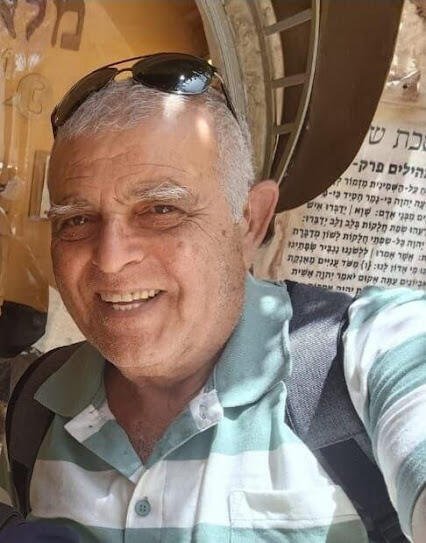
Shimshon Mordechai
(Photo: Courtesy of the family)
Employers also take a major risk. Almost every day, police report raids and arrests of undocumented workers at construction sites and restaurants. Employers face heavy fines, their businesses are shut by administrative order for 60 days and indictments are filed. This does not involve only Arab Israeli contractors, restaurants and businesses. On Wednesday, police arrested three undocumented workers at a well-known falafel stand in Tel Aviv. The owner is Jewish.
Zero taxes and expenses
The Arab Israeli businessman explains the strong incentive to employ undocumented workers simply: “There’s no one to work. Every contractor, restaurant owner and business owner knows this problem. Look at construction. They brought in thousands of Indians and Sri Lankans, gave them a few days of training and certified them as tilers and formwork workers. Do you know what happens? A massive failure. Ten Indian tilers complete 30 square meters a day. One worker from the territories completes 35 square meters a day. And you pay nothing for him. Zero taxes and expenses. You let him sleep on the site or in a storage shed. It saves you a lot of time, and time for contractors is money. A lot of money.”
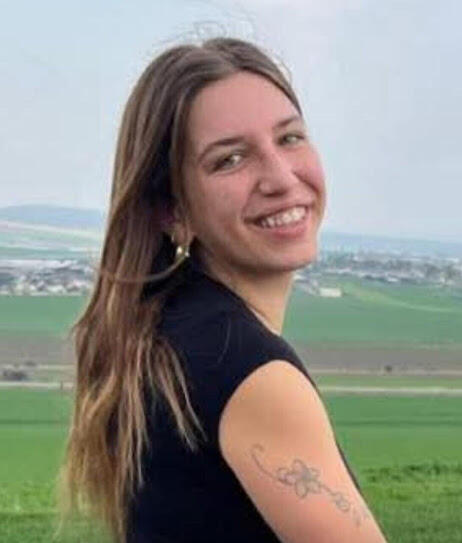
Aviv Maor
(Photo: Courtesy of the family)
So, in a reality of desperate economic conditions on the Palestinian side, combined with a need for manpower and strong financial temptation for employers in Israel, along with a barrier riddled with breaches and understaffed security, what can really be expected?
That is how Ilan Sadeh, head of the Menashe Regional Council for 33 years and the longest-serving council head in the country, summed it up for us. He showed us a photo taken by the council’s security department: dozens of Palestinians gathered beyond the high concrete wall, just meters from one of the kibbutzim in the area, organizing to climb and jump over it to the Israeli side.
“We have several dozen kilometers of the separation barrier,” he says. “In practice it’s not a fence. It’s a concrete wall eight to nine meters high, with an additional metal fence on top. And still, I can tell you exactly where people cross here, for the simple reason that we see them climbing the wall with rope ladders. They throw a thick rug over the sharp metal and jump to our side. It happens not far from Me Ammi, near Umm al-Fahm, and also a lot near Kibbutz Magal. Almost every point adjacent to a Palestinian village has crossings over the wall.”
Who besides you and the council’s security staff knows about this?
“Are you kidding? Who doesn’t? What haven’t I done? I sent countless letters. I conducted endless tours with officers from Central Command, Knesset members, the Foreign Affairs and Defense Committee, ministers without end, district court judges from Hadera, so they would see the level of risk to the communities here, because we said the penalties were too lenient. Every senior figure in the security establishment has received letters and phone calls from me. More than 20 years of appeals to the army, the Defense Ministry, the Public Security Ministry, the Home Front Command, and nothing. Even the prime minister’s military secretary, Maj. Gen. Roman Gofman, attended a meeting with all the heads of the seam-line authorities, where we presented the problem. He promised to raise it with decision-makers.”
Anything new?
“No. Crossings over the wall continue. And there’s also the budget issue we were promised. During the war, the government promised us, through the Interior Ministry, a budget to strengthen and improve security components in seam-line communities. After a year with no money, we were forced to petition the High Court. You see how easily this government transfers money to the ultra-Orthodox. Billions move through improper channels, contrary to legal opinions, and we, who live next to this breached barrier that dozens of Palestinians jump over every day, have to beg for a few million for our security. I hope we at least receive the money that’s due to us soon.”
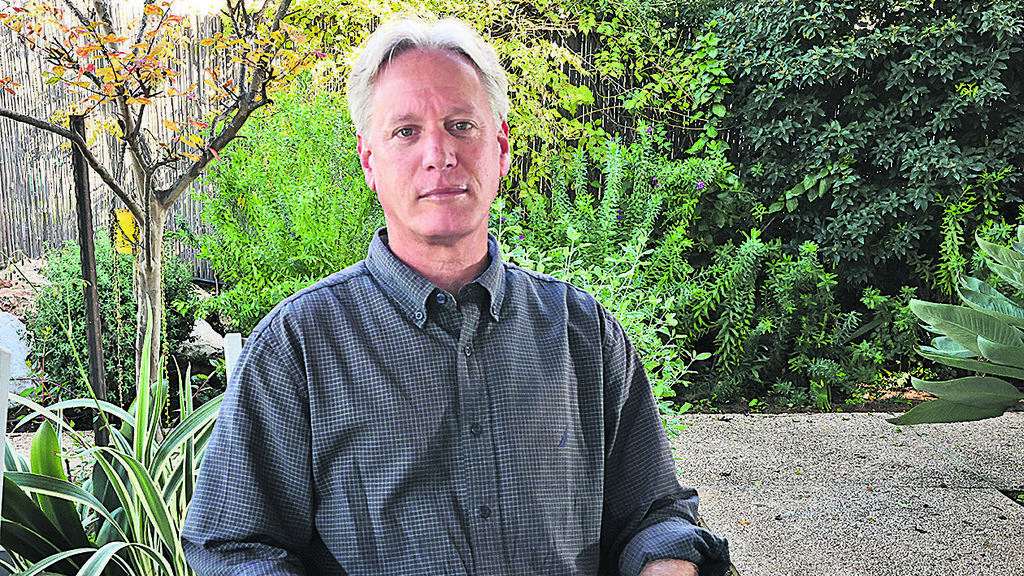
Oved Nur
(Photo: Shaul Golan)
We drove along the wall and then looked at the map in Sadeh’s office. Opposite the council’s communities, beyond the fence, are Palestinian villages and towns, some closer, some farther away. One of the security scenarios being considered after the October 7 failure is a mass rush by Palestinians toward the separation barrier and then into nearby communities. Sadeh says that the scenario does not frighten him. “Unlike Gaza, here the IDF is deployed on the other side of the fence,” he says.
But the army’s presence does not prevent Palestinians from reaching the wall, climbing the concrete and jumping to the Israeli side.
“I still live with the memory of the attack here in November 2002 at Kibbutz Metzer,” he says. “A terrorist who infiltrated the kibbutz at night murdered Tirtza Damari, Revital Ohayon and her two small children, Noam and Matan, and Yitzhak Dori, the kibbutz secretary. So I’m not afraid of 3,000 Palestinians storming the fence. I’m afraid of the lone terrorist who crosses it. It’s enough for one such attacker to enter a community for a terrible disaster to happen.”
Before we parted, we asked how someone with his experience and seniority still cannot resolve the barrier issue in his area. “There has to be a single address for this fence, one responsible authority,” he said.
Aryeh King, deputy mayor of Jerusalem, who regularly posts videos of Palestinians jumping the wall around Jerusalem, says the barrier is collapsing before our eyes. “You don’t need a bulldozer to bring it down. You can simply climb it. It’s become a joke among Palestinians, who keep uploading TikTok videos of people jumping over it. And it’s all in broad daylight, faces uncovered, not sneaking around at night. There are too many cooks in this kitchen. The Border Police don’t have enough manpower. Keshet Tzva’im, the administration that decides how the fence is guarded, what measures are installed, which forces are deployed and the overall planning, has been doing the same thing for more than 20 years, despite this being a massive failure. They decided there would be no construction near the fence on the other side, and today there are hundreds of homes built right up against the wall. They failed badly.”
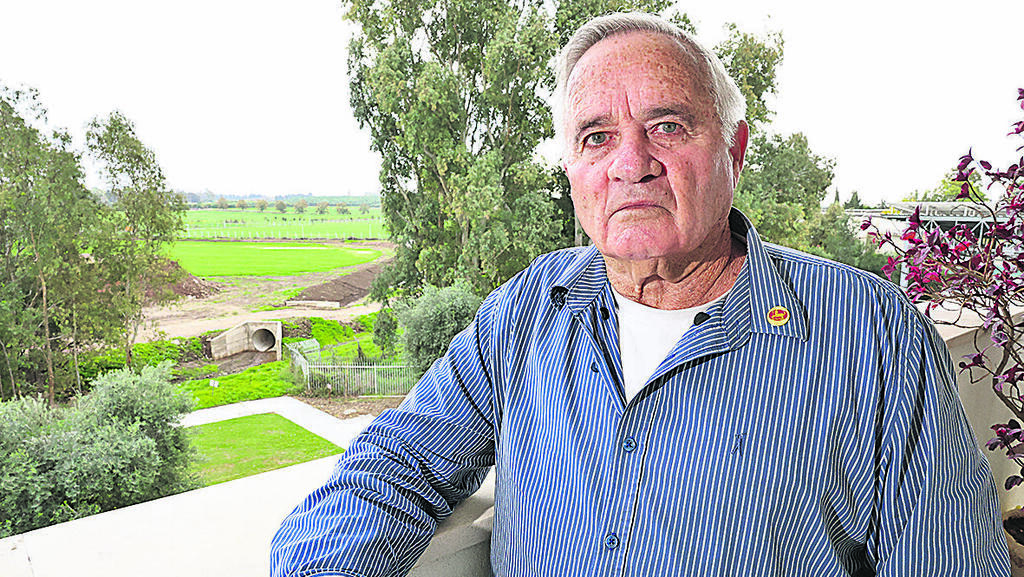
Ilan Sadeh
(Photo: Shaul Golan)
In response to the criticism, the IDF spokesperson said: “Responsibility for maintenance of the security fence does not fall under the Keshet Tzva’im administration. It is responsible for coordinating and managing civilian and security matters, and for planning and defining operational needs and requirements for construction and demolition of structures in the area, as well as paving roads and routes.”
“For me, the answer is clear,” says retired police commander Amitai Levy, who served as the Israel Police project manager for planning the barrier around Jerusalem. “Responsibility for the entire seam-line area should be transferred to the Border Police.”
Levy says the Border Police’s Jerusalem perimeter headquarters developed a comprehensive doctrine down to operational, technological and intelligence details, bases and watchtowers. “It’s not perfect,” he says. “The Border Police are understaffed in Jerusalem and nationwide. In the current situation, they can’t fully seal the perimeter. With larger budgets and more manpower, the situation in Jerusalem would be far better. I have no doubt their activity would also create deterrence. All that’s needed is a government decision giving the Border Police responsibility and full authority over the fence and the barrier, from the Gilboa in the north to the southern Hebron Hills. If Jerusalem is handled by the Border Police, why shouldn’t the entire seam line be? That’s exactly why this force was created, to guard the border.”