

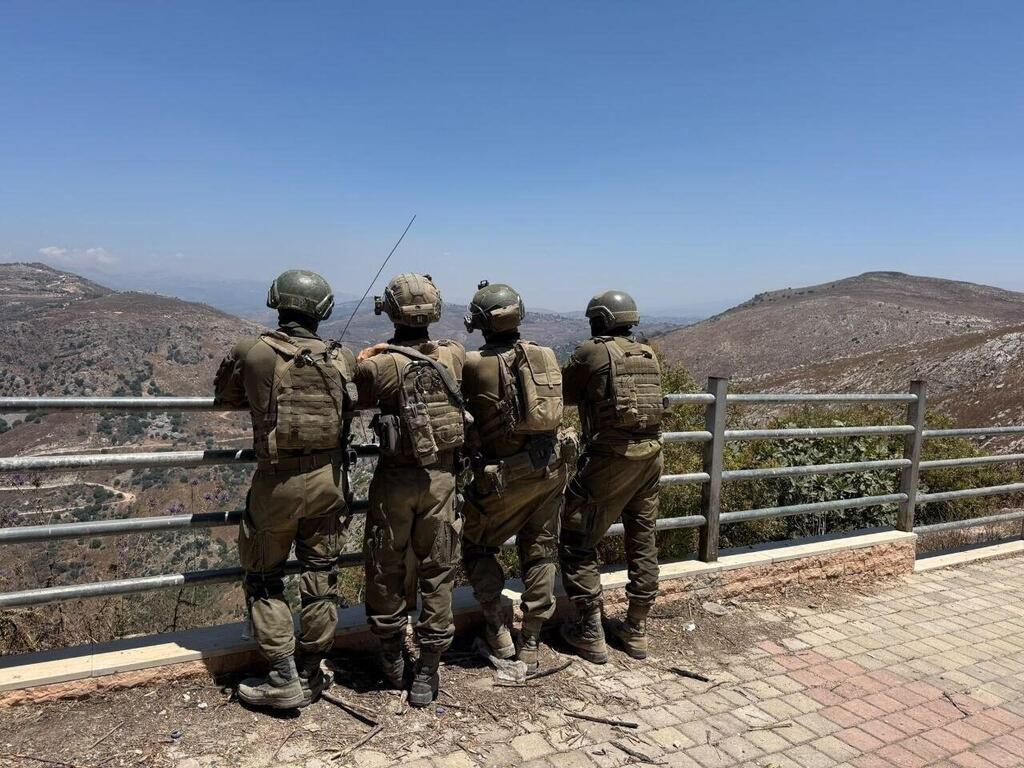
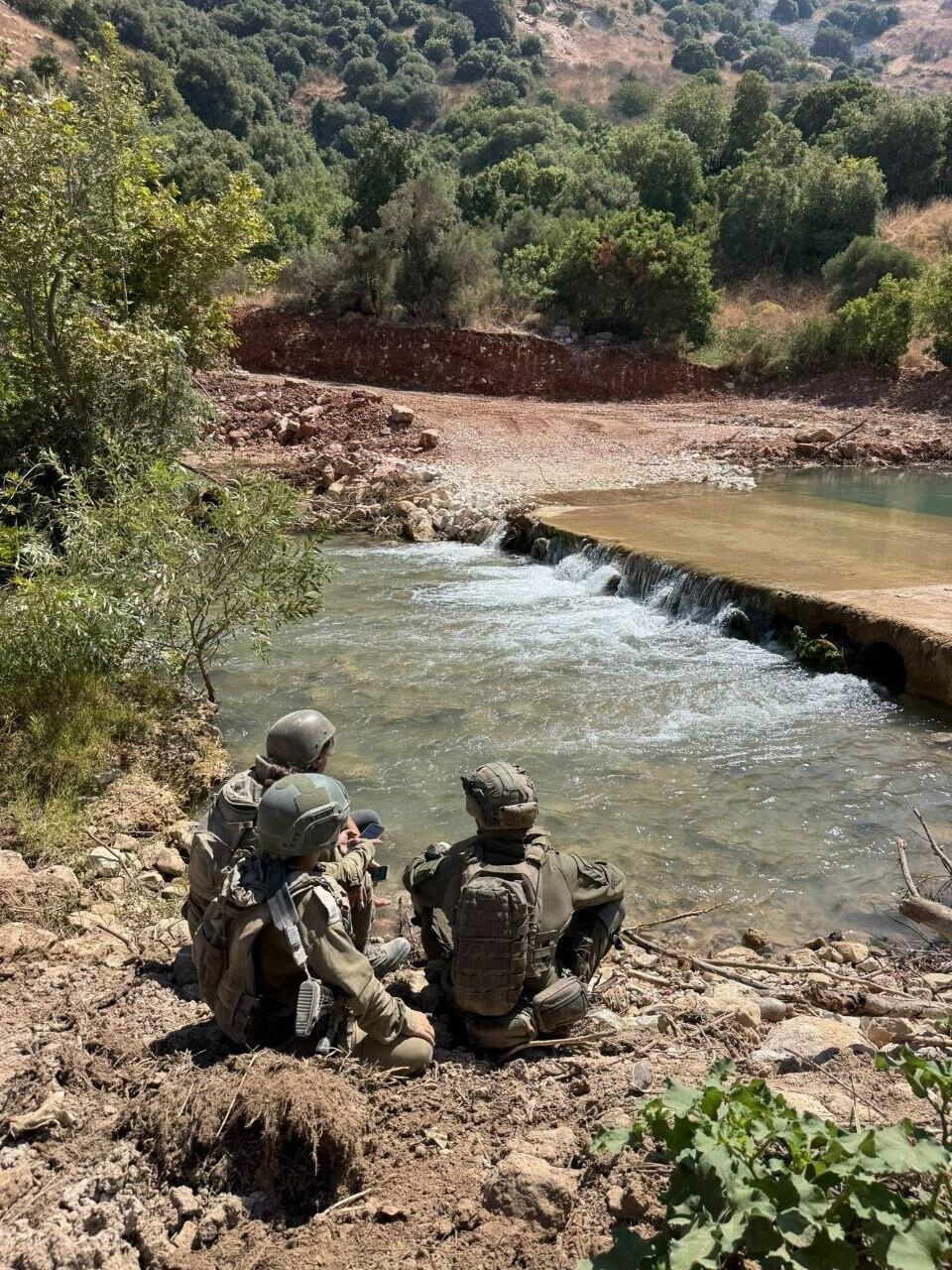
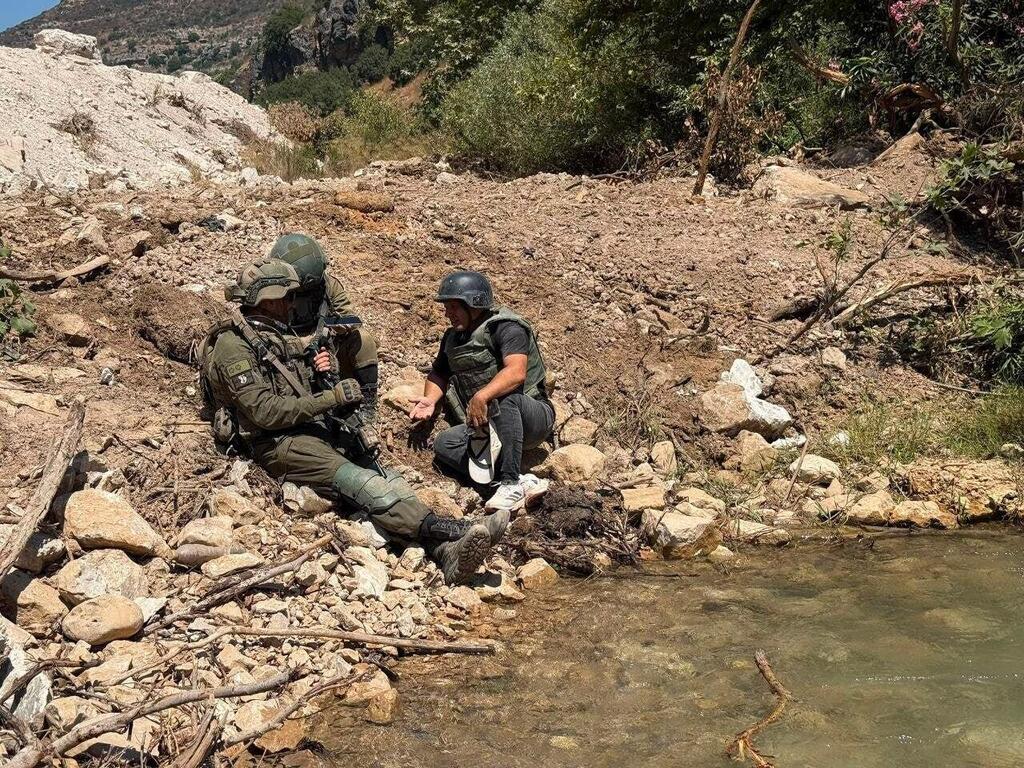
The soldiers’ eyes, stinging and whitened by dust, turn toward the cool blue waters of the Litani River in southern Lebanon. The river flows with relative calm, offering little indication of the fierce war continuing along its banks, a war that has not stopped even under the ceasefire.
The terrain is exceptionally difficult. Huge rocks, sharp boulders and dense green vegetation cover the mountain slopes and riverbanks. Here, about 11 kilometers from the Israeli border, soldiers of the IDF’s 603rd Combat Engineering Battalion, part of the 7th Armored Brigade and operating under the 36th Division, work without pause. While Israel’s home front may experience a sense of quiet, these troops, many of whom have not been home for months, see the ceasefire as only another phase in the dangerous work of opening routes and shaping the battlefield.
(Photo: Elisa Ben Kimon)
Southern Lebanon is now undergoing a major diplomatic and operational test. Under a new pilot program, Lebanese army forces have entered three villages in the area, and the IDF has already withdrawn from one of them. Israeli political and defense officials are waiting to see whether the Lebanese army can enforce order and prevent Hezbollah terrorists from returning. On the Litani ridges, however, the soldiers have few expectations. They understand that the real test will not be decided on paper, but by whether the IDF can maintain a defensive line if the pilot collapses.
Crossing the Litani is considered one of the most complex, sensitive and dangerous operations of the campaign. Several months before the IDF ultimately crossed, troops from the 98th Division attempted to pass through the area but were hit by a deadly explosive ambush. The forces were compelled to leave equipment behind and withdraw, and Hezbollah quickly circulated what it presented as victory footage online. When the 36th Division and the 603rd Battalion arrived at the same location exactly two months later, they came with the lessons of that failed attempt and a carefully developed tactical plan.
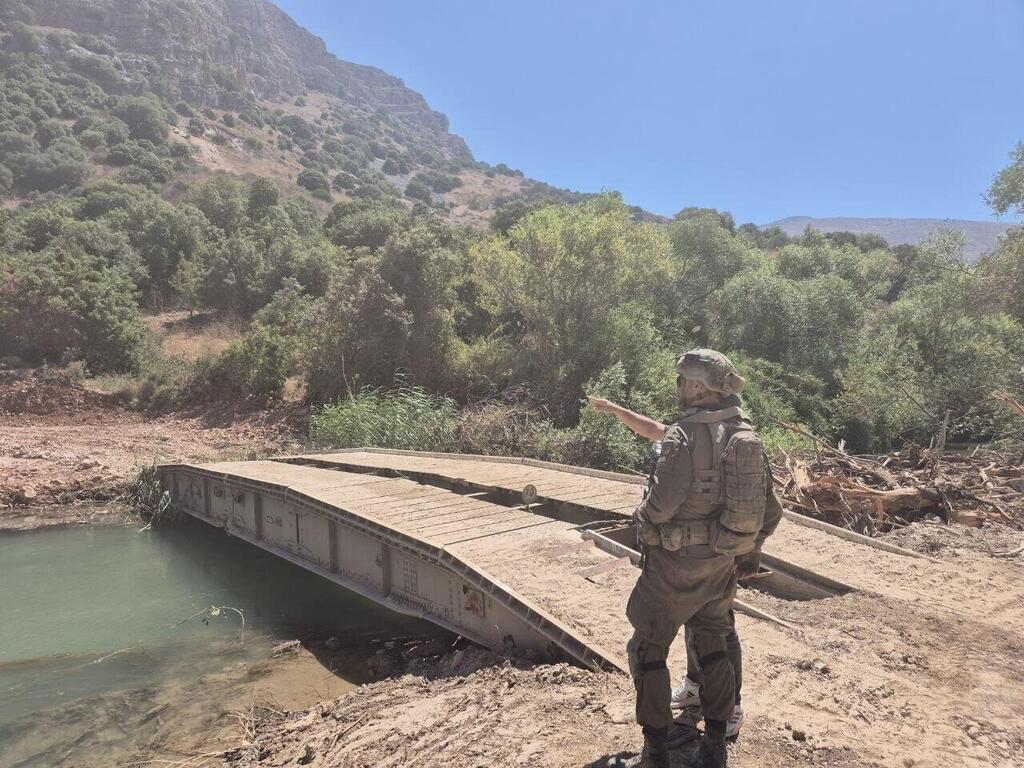
“Hezbollah analyzed the topography precisely and understood that all movement had to be channeled toward the bridge west of the Litani bend,” said Lt. Col. R., 37, commander of the 603rd Battalion. “The entire area was fully controlled from the hills above, with observation posts, explosives, drones and high-trajectory fire. Going in there was a classic ambush.”
(Photo: Elisa Ben Kimon)
The battalion nevertheless began breaking through the route in continuous day and night shifts, under fire and repeated attacks by explosive drones. During one of the first attempts, an explosive device detonated against a bulldozer. The following day, the commander identified another dangerous charge along the route. A third explosive incident killed one of the soldiers.
The most dramatic stage came when the troops needed to launch an engineering bridge that would allow tanks and armored vehicles to cross the river. First, they had to measure the distance between the two banks to ensure that the bridge would fit. “We had to measure the width between the banks,” R. said. “Under live fire, another commander and I climbed onto the bucket of an excavator, and the operator simply carried us through the air over the water, from one side to the other, so we could inspect the opposite bank.”
The commanders found a suitable location and secured a foothold. Within five or six hours of tense nighttime work, the bridge was in place. “From the moment we laid the bridge and the vehicles crossed to the other side, the enemy withdrew,” R. said. “After that, we mainly encountered drones and difficult terrain.”
Using heavy engineering machinery, the battalion has since opened more than 30 kilometers of continuous routes. Some run along the length of the area, connecting companies and defensive compounds, while others run laterally and create a direct barrier facing enemy positions.
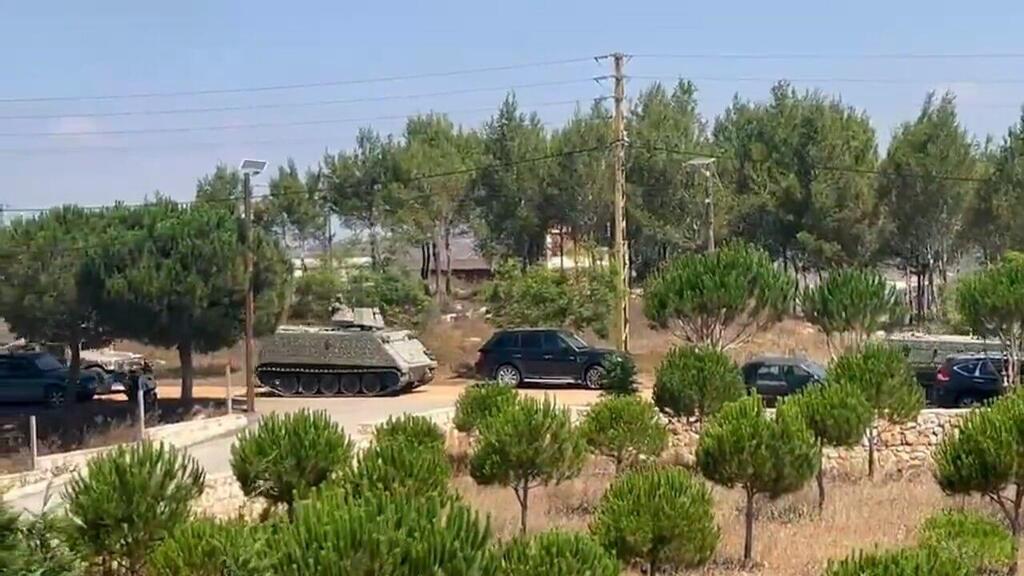
Lebanese army forces enter the village of Zawtar al-Gharbiyeh in southern Lebanon as part of the agreement with Israel
For the 603rd Battalion, the campaign in southern Lebanon is only the latest chapter in an almost uninterrupted period of fighting. The unit spent one year and two months maneuvering in Gaza, including in Khan Younis, Shijaiyah, Zeitoun and Rafah. According to the battalion commander, its troops killed 26 terrorists in close-range encounters beyond the border.
R. said the soldiers emerged from Gaza with immense confidence in their capabilities, but southern Lebanon presented a completely different challenge. “In Lebanon, the threat began before we even entered, during robotic operations along the border,” he said. “It was a very complex reality. On one side, the soldiers were working along the fence opposite Hezbollah terrorists. On the other, 40 meters away, I could see a woman walking with a baby carriage inside a kibbutz.”
“The terrorists were not just near the border. They were effectively inside residents’ yards,” he added. “The understanding was that they had to be pushed back with full force to create a genuine security zone.” Despite the strain of continuous warfare, R. described the battalion as resilient. “I learned that there are no tired soldiers, only tired commanders,” he said. “A third of the battalion’s soldiers are new faces. This is a generation that enlisted directly into the war and fully understands the historic meaning of the missions at Beaufort and the Litani. Some of their fathers and grandfathers fought here.”
Maj. Y. commands the battalion’s heavy engineering equipment company, Capt. T. leads its robotics company, another Maj. T. commands the Barkan company and Lt. L. serves as deputy commander of Company C. All are young officers in their 20s. L. said the term “ceasefire” was misleading.
“Every day before dawn, we sharpen procedures and open routes with fire to ensure there are no terrorists trapped in the area or explosives planted overnight,” he said. “Then the heavy machinery begins working, expanding defensive compounds, deploying anti-drone nets and installing cameras deep inside the area.”
(Photo: Elisa Ben Kimon)
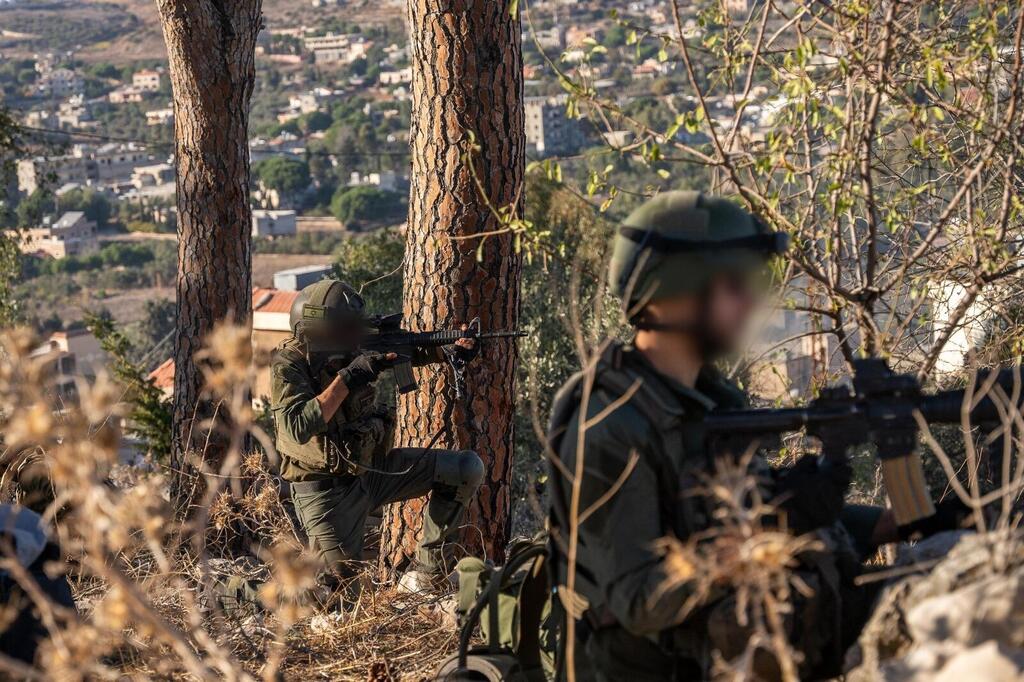
Alongside securing the routes, the troops conduct daily demolition raids inside encircled villages. “We receive a specific polygon, an area marked on the map, reach it and rig it with explosives, with the goal of reaching a situation in which no houses capable of threatening us remain,” Capt. T. said.
Operational tension remains high because intelligence indicates that Hezbollah terrorists are still hiding inside some of the villages. The raids have exposed the depth of the organization’s preparations and what officers described as a clear Iranian footprint. “Every few hundred meters, we found combat positions carved deep into the rock, firing shafts, excavation infrastructure, engineering equipment and barrels filled with stones and sand to reinforce the positions,” Maj. Y. said.
“We also found dozens of positions containing Iranian weapons, including Kalashnikov rifles, anti-tank missiles, launchers and routes adapted for motorcycles,” he added. “In homes in villages such as Taybeh, we found pictures of Khamenei and Nasrallah in children’s rooms, and even a memorial candle burning in Khamenei’s honor.”
One officer displayed footage on his phone showing an IDF drone punching a hole through the roof of a building designated as a terror site. A second drone then lowered explosives into the structure, which was destroyed seconds later.
(Photo: IDF)
For Y., operating heavy machinery in Lebanon’s rocky landscape is an art in itself. “Unlike Gaza, where we mainly dealt with sand and buildings, the complexity in Lebanon lies in cutting through rock with hydraulic hammers and digging beneath boulders,” he said. “We have career personnel who have worked in the profession for 15 or 20 years. They are extraordinary professionals.”
He described excavator buckets scraping and cutting into the hard stone of a mountainside while an open ravine lay on the other side. R. rejected the notion sometimes heard on Israel’s home front that the troops were defenseless against Hezbollah’s explosive drones.
“The explosive-drone threat is challenging and problematic, and sometimes it feels as though you are helpless against it,” he said. “But we are absolutely not sitting ducks. We develop solutions. We are not the hunted. We are the ones hunting Hezbollah and its infrastructure without stopping.”
The battalion’s soldiers say the Litani marked a turning point in the fight against Hezbollah. “It was a line they did not expect us to cross, and we crossed it,” R. said. “We also paid a price here. The crossing and the capture of the area were extremely complex. But when you stand here, you can see with your own eyes what the defensive line needs to look like.”