


The U.S. State Department announced Monday that a regional pilot-zone project under the framework agreement between Israel and Lebanon had begun, with the IDF withdrawing from designated areas to allow the Lebanese army to enter and complete Hezbollah’s disarmament there.
“Today, pilot zone operations began in the villages of Froun, Srifa, and Zawtar Al-Gharbiya in accordance with the Trilateral Framework and under the auspices of the Military Coordination Group for Lebanon,” the State Department said.
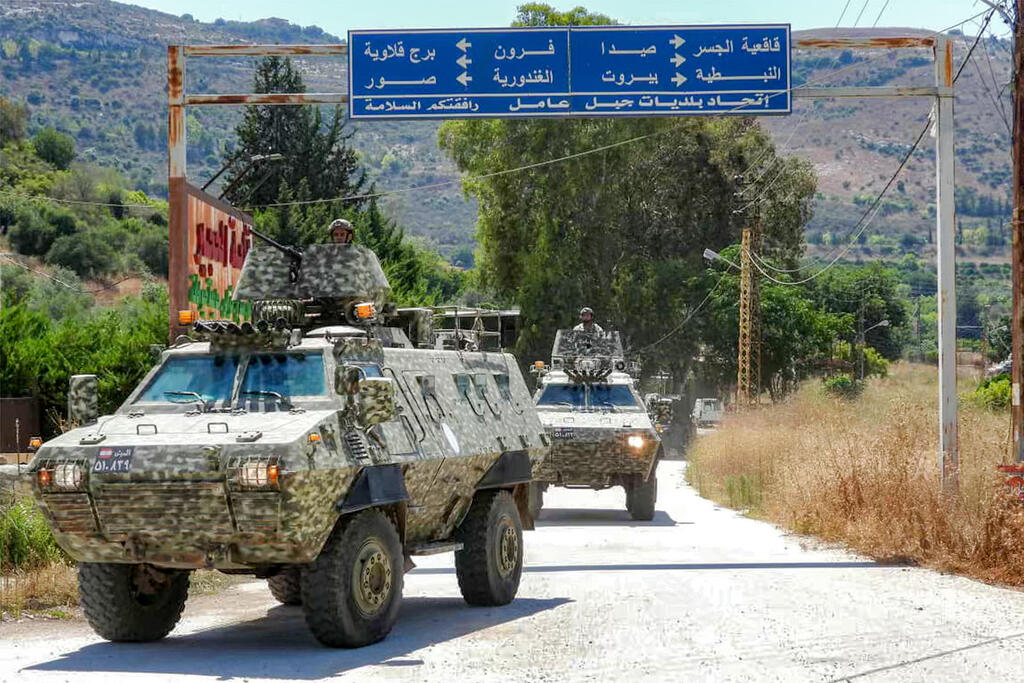
The department described the move as a “milestone” in implementing the understandings reached between Israel and Lebanon and said it was a direct outcome of talks held last week in Rome between representatives of the two countries.
“The United States will continue working closely with both parties to implement the Framework to a successful conclusion,” the statement said.
The activation of the pilot zones is intended to serve as the first stage in implementing the new security arrangement in southern Lebanon, aimed at strengthening regional stability and establishing coordination mechanisms between the sides under U.S. mediation.
Three days earlier, the Lebanese army deployed in the first pilot-zone area north of the security strip established by the IDF.
The pilot area entered by Lebanese soldiers is near the villages of Froun and Randouriya, two Shiite villages in the Bint Jbeil region of southern Lebanon.
The villages near the pilot zone are located in a strategic area north of the yellow line and close to Wadi Saluki and the Litani River. Because of their location, they were a significant combat zone during the 2006 Lebanon War and during the continuing ground campaign in the current war.
The IDF had already prepared to hand over the two pilot zones to the Lebanese army. Israel was waiting for the Lebanese army to announce that it was ready to enter those areas and for U.S. Central Command to approve proceeding with the pilot.
The agreement is being closely accompanied by the United States, which is serving as a coordinator and arbiter in the process.
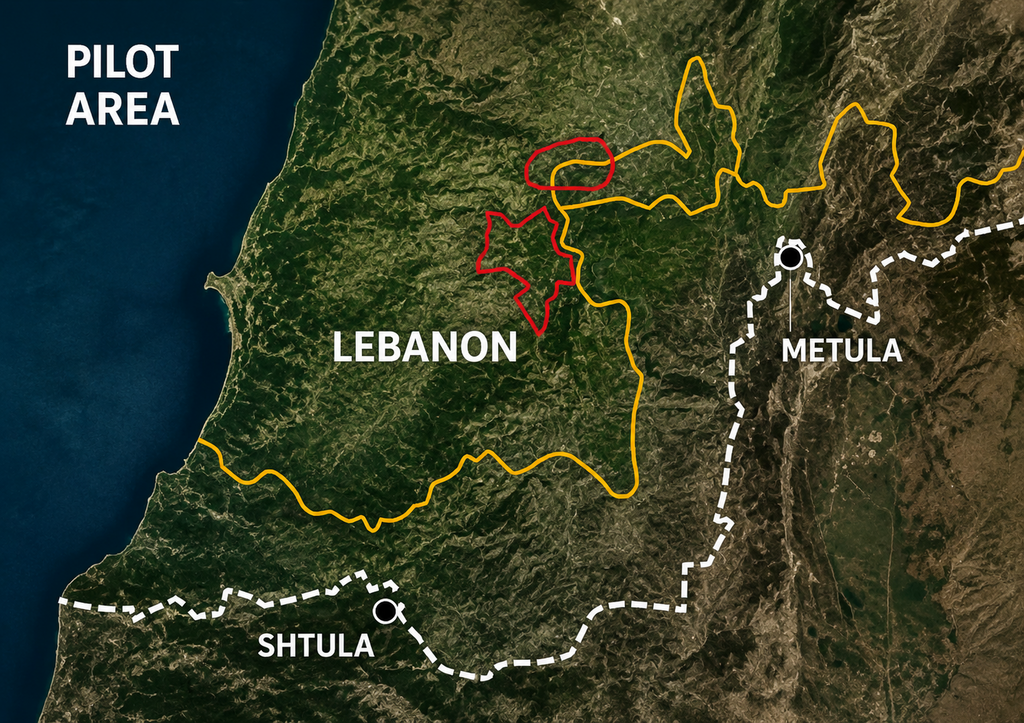
Pilot zone in South Lebanon
The framework agreement, which includes an unpublished military annex dealing with its implementation, states that “the Lebanese army will gradually assume full and effective security responsibility in pilot zones, which will serve as a mechanism for the IDF’s redeployment and for the gradual and verified deployment of Lebanese army forces.”
The first two pilot zones have already been agreed upon by the IDF and the Lebanese army, while additional pilot zones will be determined by mutual agreement.
During the round of U.S.-mediated talks held between Israel and Lebanon in Rome last week, a proposal was made to deploy Italian soldiers in the area to supervise its demilitarization and the removal of weapons and Hezbollah terrorists.
It was also proposed that the U.N. Interim Force in Lebanon, known as UNIFIL, supervise the process, but both Israel and the United States strongly opposed that proposal.
Israeli representatives made clear during the talks that the IDF needed to inspect whether the pilot had been implemented in the areas where the Lebanese army would deploy after an Israeli withdrawal.
Lebanon, however, wanted its army to be responsible both for the territory and for the inspections.
In light of Israel’s opposition, the possibility was initially raised that UNIFIL would enter the areas vacated by the IDF. That proposal was rejected outright, after which the “Italian proposal” was raised.
Israeli security officials said the proposal was being examined by the parties.