

A handsome blond boy gazes from the sticker on Staff Sergeant T.'s phone case. His name is Yam Fried. They were childhood friends, grew up in neighboring communities in the Sharon region. Together, they went to the Galil Elyon preparatory academy. Together they began the course in Shayetet 13—the Israeli Navy's elite unit. A few weeks ago, T. received the coveted unit insignia - bat wings - and became a full-fledged fighter in the unit. Yam left the course after eight months and transferred to the Golani Brigade reconnaissance unit.
On May 8 this year, Staff Sergeant Yam Fried fell in battle in Rafah. The armored vehicle he was in took a direct hit from an anti-tank missile. He was laid to rest on the eve of his 21st birthday.
Gallery
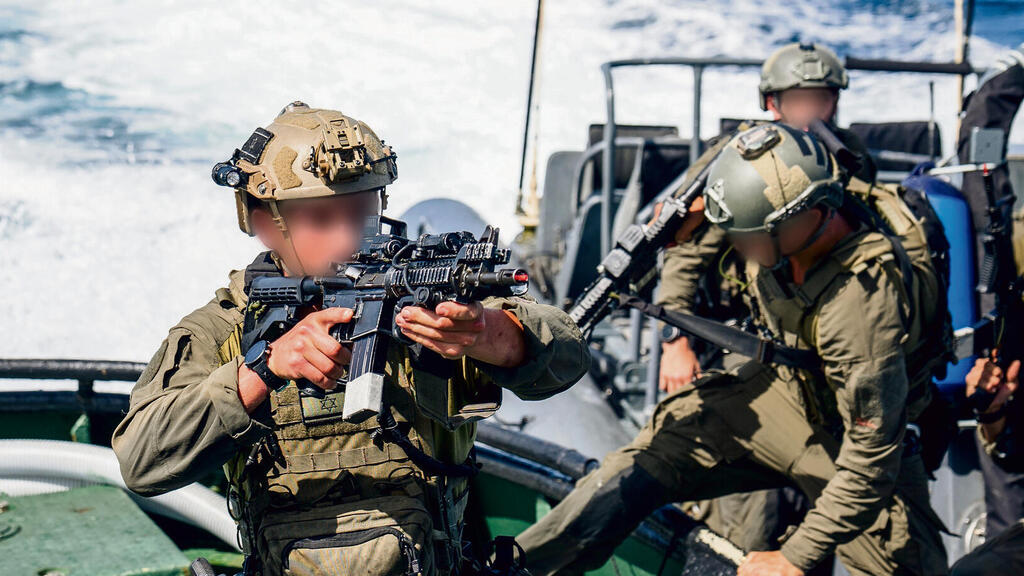
Though the unit belongs to the Navy, much of the activity is on land: Shayetet 13 fighters
(Photo: IDF)
In another reality, Yam might have been sitting here with us, by the coffee cart on Atlit beach, outside the Shayetet 13 base, with four of his friends from the academy and the course. But life has its own plans. So does death.
"When they told us about his death, it was a shock," says Staff Sergeant M. from Gedera. "At first, you don't believe it. Just a second ago, he was here with you, in the hardest moments. "He was in the Ma'ayan Baruch branch while I was in Kfar HaNasi, but we still did activities together, and later were on the same team in the course."
"You see a friend who was with you at the academy, started commando training with you, and already fought for months in Gaza while we were still in training," says Staff Sergeant R., who lives in the Jerusalem area. "We haven't participated in a single operational activity yet—and he already gave his all."
Staff Sergeant K. from Hod HaSharon is the only one of the four who was with Yam at the Ma'ayan Baruch branch of the academy. "Yamos, that's what we called him, was incredibly cheerful, full of energy, an athlete, and above all—a good friend. Camaraderie is one of the most important values in the Shayetet, and he had it. Completely."
Also with him at Ma'ayan Baruch was Nitzan Liebstein, who was murdered on October 7 in the youth quarter of Kfar Aza. His father, Ofir Liebstein, head of the Sha'ar HaNegev Regional Council, fell that morning in battle with terrorists near his home in the kibbutz. Nitzan's grandmother, Bilha Epstein, and his cousin Neta Epstein were also murdered. "Yam and Nitzan were an incredibly significant part of the academy," K. shares. "I took a lot from both of them."
And not just from them. One of the role models for the new fighters is Lieutenant Colonel Eli Ginsberg, who grew up in the Shayetet and served in his last position as commander of the Counter-Terrorism school. On the morning of Simchat Torah, already on retirement leave from the army, he rushed to Kibbutz Be'eri at the head of a team of reserve fighters. On October 8, after many hours of fighting, he fell in an encounter with terrorists. "The commanders in the course, who knew Eli personally, told us what kind of fighter, commander, and person he was. About his dedication to the mission, his toughness, all the times he saved lives," K. says.
Salt of the earth, salt of the sea
We didn't come here to talk about death, but it's unavoidable. Loss is an inseparable part of this generation's reality. And here sit before me four of its representatives, all 21 years old, salt of the earth mixed with salt of the sea.
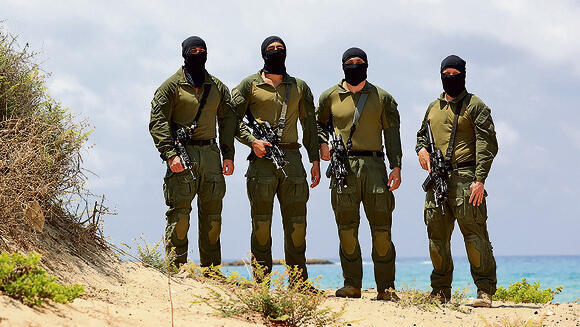
'Doing what needs to be done, where it needs to be done': The new Shayetet 13 fighters
(Photo: Elad Gershgoren)
And even now, when they've achieved the pinnacle of their aspirations, two weeks after standing excitedly in their white ceremony uniforms in the amphitheater of the Atlit base, with the Navy commander pinning the commando insignia to their chests with the unit's motto—"Like a bat emerging in darkness, like a blade cutting in silence, like a grenade shattering in thunder"—they remember the friends who fell. And they remember Eli Ginsberg, though they never met him, and Lieutenant Colonel Yossi Kurkin, son of a family of farmers and fighters, who fell leading his soldiers in the Shayetet Disaster in Lebanon, seven years before they were born.
And they know how to tell about the Shayetet's heroic battles at Kibbutz Be'eri and the Sufa outpost and other places. "When you hear your commanders in the course, who fought on October 7 and then inside Gaza, everything takes on a different meaning," says Staff Sergeant T. "You understand they're not just speaking in theory; everything you go through in the course is designed to prepare you for exactly these things. And if you don't train properly, you won't be good at it."
A small pinch in the heart
Ninety guys successfully passed the Shayetet selection, sometime before the war. Some passed through the Navy diving preparation program and others after passing the special forces selection day. The best of the best. Only 30 completed the course. Many of them are graduates of preparatory academies and service year programs, who deferred their enlistment by a year. Four of them are Galil Elyon academy graduates.
"It was clear to me I'd do something before the army, partly because it's fun, but mainly to arrive more mature," Staff Sergeant T. explains the decision to go to the academy.
Staff Sergeant M.: "In Gedera, it's common to do a year before the army. All my friends did. I heard Galil Elyon was a good academy, and it's also located in one of the most beautiful areas in the country. I said, let's try. I went to the selection and fell in love with it."
The year at the academy, they say, contributed greatly to their military service. "You learn how to function in group life, and that's very relevant to the team in the course," K. shares. "You also travel all over the country and meet diverse populations—ultra-Orthodox, settlers, Arabs. I never had the chance to sit for hours with an ultra-Orthodox guy and hear about his life and his choices, whether I agree with them or not."
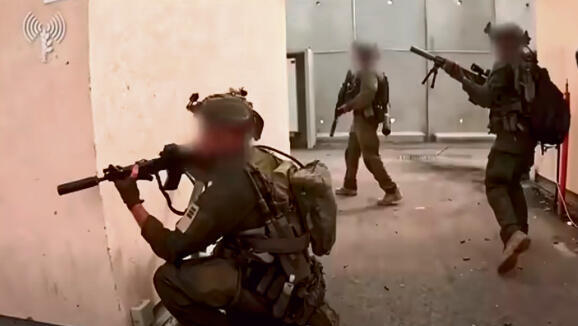
Shayetet 13's heroic battle at the Sufa outpost on October 7, footage from fighters' helmet cameras
(Photo: IDF)
The Galil Elyon preparatory academy was established in 1998 and has hundreds of male and female participants, including dozens from abroad. One of them was a young man named Omer, who came from New York in 2019 to do a preparatory year, and subsequently decided to immigrate and enlist in the IDF. On October 7, Captain Omer Neutra fell on the Gaza border while trying to repel the surprise attack with his tank crew. His body is still in Gaza.
The academy has branches in kibbutzim Kfar HaNasi, Amir and Afikim, as well as in Metula (due to the war, Ma'ayan Baruch participants moved to other branches). Another branch, "Derech Regev," was established about a year ago at Kibbutz Sde Nehemia by the parents of Staff Sergeant Regev Amar, who fell on October 7. Amar, a commanders' course graduate and paratrooper fighter, also began his service in Shayetet 13.
The annual program in the various branches is similar, but R. says that's not the main thing. "What's more significant is the friends. The people you take with you on the journey." Alongside trips, classes, meetings, and preparation for the IDF, academy participants volunteer at schools for children with special needs, organizations for Holocaust survivors and more.
Staff Sergeant M. was sent to a combat medics course before starting the course and therefore, enlisted in August 2023. His three friends only enlisted in November, about a month after the war began. "On October 7, I felt like I was going crazy at home," R. recounts. "We tried to keep ourselves busy with things related to the war, to help wherever possible."
Staff Sergeant T.: "By the second day, we were already at the Zikim junction."
If you hadn't gone to the academy and the Shayetet, you probably would have been fighting in the Gaza border region and then in Gaza. Any regrets?
"There's a small pinch in the heart, that I could have been part of it," R. admits. "But I don't regret it—neither the academy nor the Shayetet. If they told me to go back, I wouldn't change anything."
Though it belongs to the Navy, much of Shayetet 13's activity is on land. "Since its establishment, the Shayetet have combined sea and land, and in each period the scales tipped to one side," says Colonel (res.) Mike Eldar, author of the book "Shayetet 13—The Story of the Naval Commandos."
Naturally, he says, "in this war the scales tipped toward land activity from the first minute. I met with Colonel Eyal Cohen (Shayetet 13 commander until May '25, now Kfir Brigade commander) and told him: 'Know that what the Shayetet under your command has done since October 7 surpasses what they did in all their years of existence.' And I'm not belittling what happened in the past, God forbid. But for me, as an emotional type, the video of unit fighters taking over the Sufa outpost and shouting to the trapped soldiers: 'Shayetet 13, Shayetet 13, stay in the bunker, we're coming' is stuck in my head. It reminded me of their operations to rescue Ethiopian Jews and bring them from Sudan in the early 1980s, except that it was without combat. On October 7, Shayetet 13 saved lives everywhere they reached. That's why the unit exists, and we should thank Eyal and his people for that. Fortunately, this happened in other units too."
All this translates into the training program, and in Staff Sergeant T.'s words: "We learn to fight in all scenarios and reach anywhere needed."
The story is the team
The course lasts a year and eight months and consists of four stages. The first stage is four months of basic training at Golani's brigade training base. Upon completion, they arrive at Atlit and begin the preparatory phase, three and a half months long. "It's the most selective phase and also the hardest," says Staff Sergeant M. "We started it with almost 90 and finished with 40."
Staff Sergeant T.: "It's the first time you really meet the water and the cold."
M.: "It's entering the water every morning, in any weather, winter and summer." And when he says morning, he doesn't mean 9:00 a.m.. "And sometimes in the middle of the night," T. clarifies. "You're constantly wet. Many times we enter the freezing water in uniform and stay in them all day."
K.: "For me, the harder parts were actually the marches and training designed to develop mental resilience." Try to imagine walking or running dozens of kilometers in beach sand, with a stretcher on your shoulder or worse—a rubber boat.
Here's the place to shatter two myths. First, that physical fitness is the most important trait in the course. "Physical strength really helps, but it's just a means, not an end," says T. "Many guys with insane fitness are no longer with us because they didn't get along with the team as well."
R.: "The main thing you're measured by is values. Every night there's a conversation where you stand before the team and say which values you didn't meet and need to improve. If I wasn't a good friend, I need to make up for the value of camaraderie. If I didn't invest enough, I need to make up for the value of dedication to the mission."
In the end, only a few finish and there's tough competition. How does that work with friendship and mutual help?
M.: "At first, everyone tries to stand out, to be seen and heard. But in the more advanced stages, you understand the story is the team, not you."
R.: "You have nothing to look for here if you're not part of the team. Anyone who fits—will finish. It's not like there's a quota to reach."
T.: "Without the team, you won't succeed in passing the marches and the water and the cold and the darkness. You finish an exercise and then you're with your friends, sharing with them the difficulties and pains and also the good things."
The second myth is that everyone who reaches the Shayetet is an excellent swimmer. "I was really bad at swimming," T. admits, and his friend K. clarifies: "Not just him. None of the four of us was a strong swimmer.”
Those who complete the preparatory phase move to the basic phase, which focuses on Shayetet 13's specialized activities: diving, counter-terrorism warfare, parachuting course (including parachuting into the sea), operating special vessels and combat equipment, and more.
The next and final stage is the advanced phase. "We can't elaborate on it," says T. "We can only say that you do what needs to be done, where it needs to be done." In fact, only toward the end of the course are they exposed to the unit's classified activities, and they become full secret partners.
When they talk about the graduation ceremony, their eyes sparkle. "My future wife shouldn't hear this, but I'm sure it's the happiest and most exciting day I'll have in my life. More than the wedding," says T.
Be careful. You might get in trouble...
"Everything can be done twice," R. jokes in his defense. "Even getting married. But you can only complete the Shayetet course once in a lifetime