

"The Six." A code every Israeli understands. A number that encapsulated that entire tragedy. Alex, Carmel, Hersh, Almog, Ori and Eden — six young people who survived against all odds in inhuman captivity, only to be murdered brutally when their captors heard IDF troops approaching. At times it feels as though a hundred years have passed, and at times as if it happened only yesterday.
Gallery
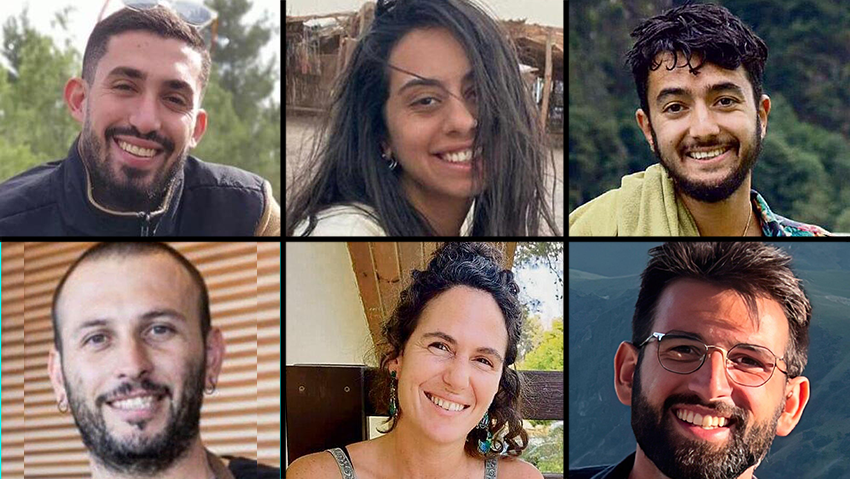
From the top right: Hersh Goldberg-Polin, Ede Yerushalmi, Oren Danino. Almog Sarussi, Carmel Gat, Alex Lubanov
(Photo: Family album, AP )
The ongoing trauma of war has completely distorted the sense of time. And so, in mid-August, the Hebrew calendar signals: a year has passed. A full year since the six were murdered in the tunnels. A full year, and still hostages waste away in those same tunnels — in constant danger, in far worse condition. They wait and pray for this cruel decree to be torn apart.
Since their murder, we have learned more about the horror of captivity. About the strength of the human spirit. About the stinking tunnels where one could hardly stand. About Eden, who whispered into the phone, “Find me, okay?” and was later found shot, weighing just 79 lbs. About Carmel, who practiced yoga in captivity to hold on to some shred of humanity. About Alex, whose pregnant wife fought desperately for his release, and whose son will never know him. About Almog, whose life was devoted to giving and helping others.
About Ori, who returned to the Nova festival to rescue strangers, and whose father now dedicates his life to redeeming captives, though his own son will never be saved. About Hersh, grievously wounded, who in the hell of captivity quoted Viktor Frankl: “He who has a why to live can bear almost any how.” Hersh, whose parents were thrust into reluctant leadership, the very leaders the nation had been waiting for — who, even on the last day of protest, were still plastering stickers across the city.
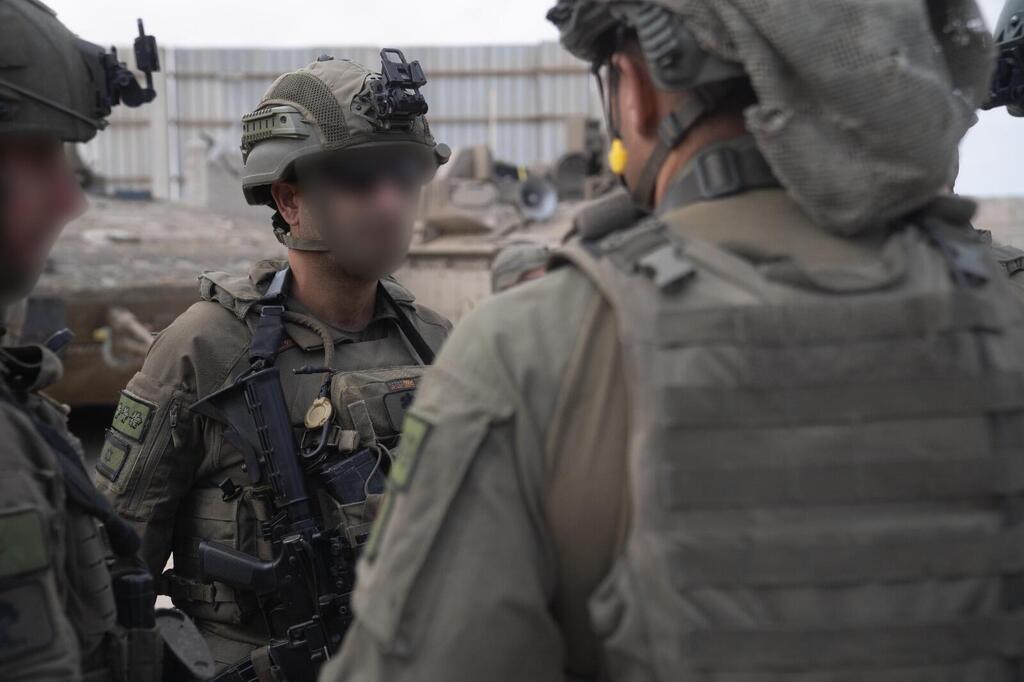
Golani Brigade troops in Gaza
(Photo: IDF Spokesperson's Unit)
The six came from across Israel’s small mosaic. Religious and secular. Sephardi and Ashkenazi. Immigrants and natives. From every corner of the political spectrum. They reminded us that our enemies make no distinctions among us. Each became, unwillingly, a beacon — an inspiration.
Despite their differences, the families who lost what was most precious to them have joined together for the sake of all Israel. They did not despair. On the contrary, they devote their energy to society. These remarkable people have proven themselves towering figures against the smallness of our leaders. Where leadership sowed division, they demanded unity. Where despair spread, they insisted on hope. Through a Sisyphean, exhausting struggle, they cry out: Never again. We will be the last.
And what of us? A year ago, the shock and fury were so intense the streets burned. The country ground to a halt. And now? It feels as if nothing has changed. I visited the mourning homes then. All of Israel was there. I returned to what I wrote in those days. I wrote of the urgent clarity. I wrote of Ecclesiastes, of the enigmatic and beautiful phrase: “The living should take it to heart.” One interpretation speaks of the compassion of mourners, whose love keeps the memory of the dead alive. Another speaks of reverence awakened by loss.
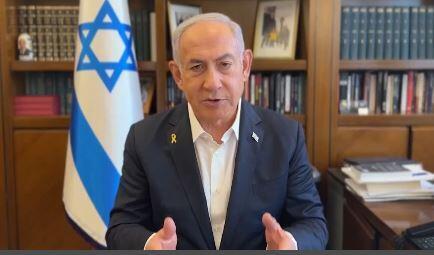
Prime Minister Benjamin Netanyahu, eager to conquer Gaza
(Photo: Screeshot)
I read my own words today. Where is that reverence? It has vanished into thin air. Those responsible for the failures and the mismanagement of the war have paid no price. The world remains silent before Hamas’ cold-blooded cruelty. Meanwhile, the hostages continue to pay every day — in body and spirit — for said abandonment.
Now, as the government resolves to conquer Gaza, we must ask honestly: what is the difference between Hersh and Matan? Between Almog and Bar? Between Alex and Alon? Between Carmel and Evyatar? Between Eden and Omri? Is it enough to turn the dead into martyrs? Is it easier to cling to symbols than to fight for flesh-and-blood lives?
The memorials held on Tuesday for three of the six do not speak only of the dead. They speak of the living. Of our duty to those who can still be saved. What kind of rebirth will we have if, God forbid, we lose another six? Another 20? We will not be able to look into the eyes of our starving, wasting brothers and their families if we fail to do everything in our power to bring them back — and to bring them back now.
- Chen Artzi Sror is a journalist, educator, and the director of the Mandel Program for Leadership in Jewish Culture. She is also a columnist in the weekend supplement of the Yedioth Ahronoth