

The January 2019 murder of Yehuda and Tamar Kaduri in Jerusalem was not solved in a straight line. Two investigative teams worked in parallel, different theories were pursued and discarded, and detectives even tried to trace the origin of a bag and a shoe seen in surveillance footage. Suspects were arrested, including members of the family, and later released. Only three years later, after an entirely different murder, did investigators make the connection that brought them back to the old crime scene.
They then realized the killer had effectively been under their noses all along: Wassim Assaid, who was arrested by the Shin Bet two days after the Kaduri murders, not in connection with the killings but over his affiliation with ISIS. Assaid remained in administrative detention for about three years. Just one week after his release, he committed another murder. Even after that breakthrough, investigators still needed what prosecutors would later describe as the “golden evidence.”
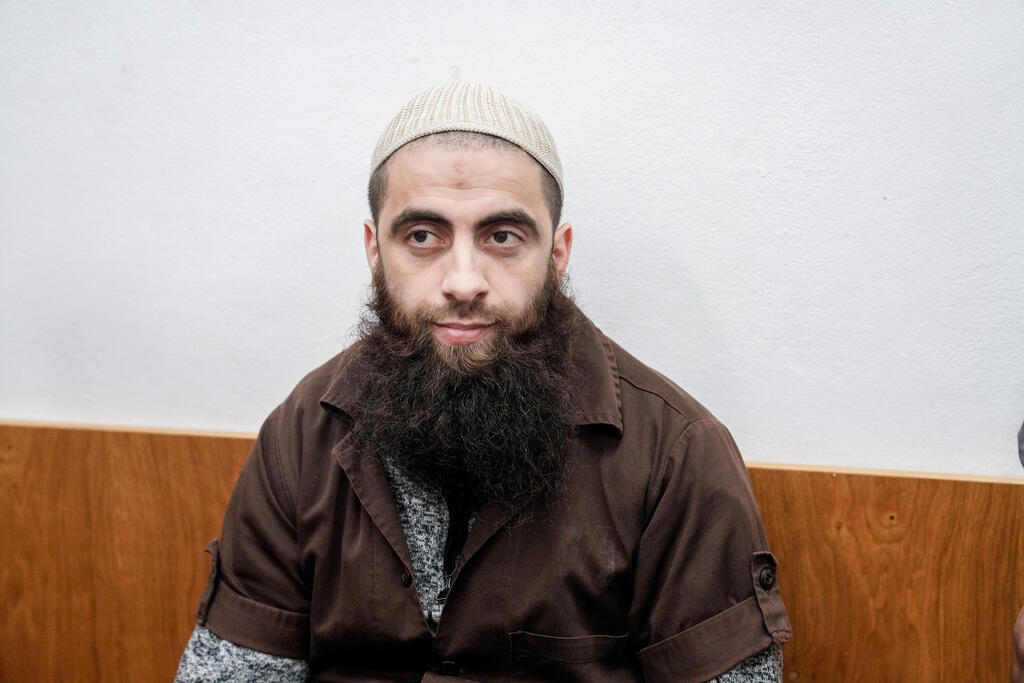
The home of Assaid’s mother had been searched repeatedly, but only later did she tell investigators about a storage room behind the building that he used. There, according to Jerusalem District Prosecutor Amir Cassantini and Deputy District Prosecutor Shira Kani Tal, investigators found a black-and-green bag and a pair of shoes, among other items. A tiny stain was visible on one of the shoes. Initial testing showed it was human blood, and the shoe was sent to the National Center of Forensic Medicine.
“We really remember the phone call from Nurit Bublil,” Cassantini said, referring to the head of the forensic institute’s laboratory division. Then came the news: the blood belonged to Yehuda Kaduri. “Put yourself three and a half years after the murder,” Cassantini said. “We suddenly had what you call golden evidence. We understood that this was an incredible closing of the circle.” For prosecutors, it was exactly what they had been searching for. They already had a highly detailed confession from Assaid, but they had insisted that the confession alone was not enough.
A murder that left investigators with almost nothing
To understand why a few drops of blood mattered so much, it is necessary to return to the Kaduris’ home on Mordechai Elkahi Street in Jerusalem and to a murder that for years left more questions than answers. According to findings by the Jerusalem District Court, Assaid entered Israel intending to murder Jews for nationalist and ideological reasons. He reached the Armon Hanatziv area after previously hiding a switchblade and stun gun in a bomb shelter.
He saw Yehuda Kaduri arrive by car wearing a kippah, unload shopping bags and enter his home. Assaid followed him. When Yehuda later returned to the car, Assaid approached the apartment, found the door unlocked and entered. Inside, he found Tamar Kaduri in the bedroom and murdered her. He then remained in the apartment and waited for Yehuda to return. When Yehuda came home, put away the groceries and sat down to eat, Assaid killed him as well.
The court found that Assaid remained inside the apartment for several more hours. He washed his hands and the knife in the kitchen sink and left in the morning after taking rings and cash. Before leaving, he removed the key from the inside of the door and locked the apartment behind him. At the time, however, investigators had no idea who the killer was.
“When the Jerusalem Central Unit realized the investigation wasn’t progressing, they opened two investigative teams, two separate task forces,” said Cassantini, who prosecuted the case alongside attorney Yuval Kedar. The goal, he said, was to prevent investigators from locking onto a single theory and overlooking another possibility. Detectives pursued even the smallest details. Figures appeared in surveillance footage, but none could be identified with certainty, while a person carrying a black-and-green bag prompted investigators to visit bag stores in an attempt to determine who had purchased such an item.
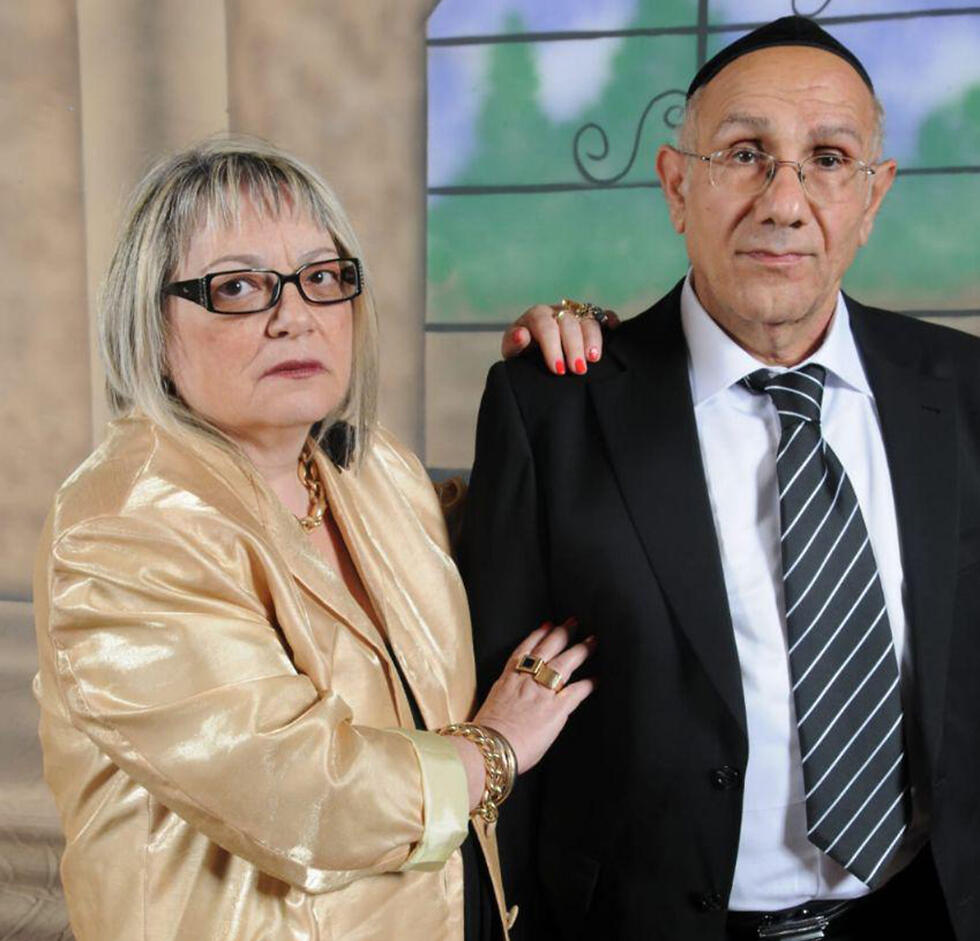
Tamar and Yehuda Kaduri
(Photo: Mordechai Asraf)
A shoeprint at the scene led investigators to examine two possible shoe models, including shoes made by Nabil. Police even contacted company officials in an attempt to determine where the shoes had been sold and to whom. Other avenues were also explored. People were questioned, including relatives, and those suspicions were ultimately ruled out.
Kani Tal, who joined the case later, said that in hindsight it is easy to see that some investigative paths did not lead to the killer, but that does not mean they should not have been pursued. “You have to understand that at that stage police really had no lead,” she said. “They knew what the scene looked like, they knew what happened, but they had to pull on every relevant thread possible.”
The fact that alternative theories were examined and eliminated later became part of the strength of the prosecution’s case, she said. Rather than facing a claim that investigators had fixated on a single suspect, prosecutors could show that other possibilities had been seriously investigated. “The price is obviously difficult and painful,” she said, but investigators still had an obligation to seek the truth.
For years, the case remained open. Kani Tal said investigators “never let go at any stage.” Cassantini said there is always a fear that the truth will never be uncovered, but looking back he cannot identify one obvious investigative step that, had it been taken earlier, would necessarily have led police to Assaid. Assaid had acted alone and had not shared his plans with others, according to the prosecution. Investigators simply had no direct lead pointing to him.
A second murder creates the breakthrough
The turning point came from an entirely different crime scene. In March 2022, three years after the Kaduri murders, Moldovan worker Ivan Tirnovski was murdered in Jerusalem, while Igor Unoi, who was staying in the same apartment, was seriously wounded. According to the verdict, Assaid entered the apartment carrying a knife and stun gun, stabbed both men in the neck and fled.
Cassantini said investigators initially considered the possibility that the incident had been a fight among the Moldovan workers. At the same time, Assaid was detained after arousing the suspicion of forces near the A-Ram area, and a knife and stun gun were found in his bag. Initially, investigators still did not connect the detained man with the murder scene. Only after detectives reconstructed his walking route from Armon Hanatziv toward the checkpoint did the pieces begin to come together.
Then came the forensic evidence. Blood belonging to Tirnovski and Unoi was found on the knife in Assaid’s possession, and the court found that it was the weapon used in the murder and attempted murder. Then someone looked back at the old case.
Cassantini said one investigator compared the figure documented in the new investigation with a person appearing in footage from the earlier case and suggested to Shin Bet investigators that there might be a match. Kani Tal described it as a “click,” the moment when two cases that had previously seemed unrelated suddenly connected. “That was the moment they suddenly realized we had something here,” she said.
Details only the killer should have known
As the investigation progressed, the picture widened further. Assaid began talking about events from 2019. Before murdering the Kaduris, the court found, he had attempted to murder a Jewish teenage girl who was walking to a bus stop in the morning. He caught up with her on a staircase, tried to slit her throat and fled when she screamed.
During interrogation, Assaid began giving detailed descriptions of the crime scenes. Regarding the Kaduris’ home, he described the apartment’s layout, the rooms, where the couple had been and what he had done inside. He spoke about two refrigerators in the home, the food Yehuda ate before he was murdered, a photograph of a naval officer, taking the key and eating an apple after the killings.
The court found that Assaid was able to describe the crimes “down to the smallest details,” including apartment layouts, furniture, the location of people, where the victims were stabbed and many concealed details that could not be explained merely by exposure to media reports. One detail particularly stayed with Cassantini. Assaid said he had seen a photograph in the apartment of a man wearing a light-colored uniform. Prosecutors reviewed hundreds of crime-scene photographs but initially could not find the picture he described.
Only later did the Kaduris’ daughter explain that her brother had served in the Israeli Navy. For Cassantini, it was precisely the kind of detail that a suspect could provide before investigators themselves were able to verify it. The reconstruction was also significant. Cassantini said Assaid was driven from a distant location and, rather than investigators directing him to the crime scene, Assaid guided them to the neighborhood, street, building and stairwell.
At one point he stopped, checked whether he had reached the correct building, went to an adjacent building and then returned, saying he had identified the right place. He later drew the apartment’s layout almost “like an architect,” Cassantini said. Still, prosecutors decided that even a confession containing numerous concealed details was not enough.
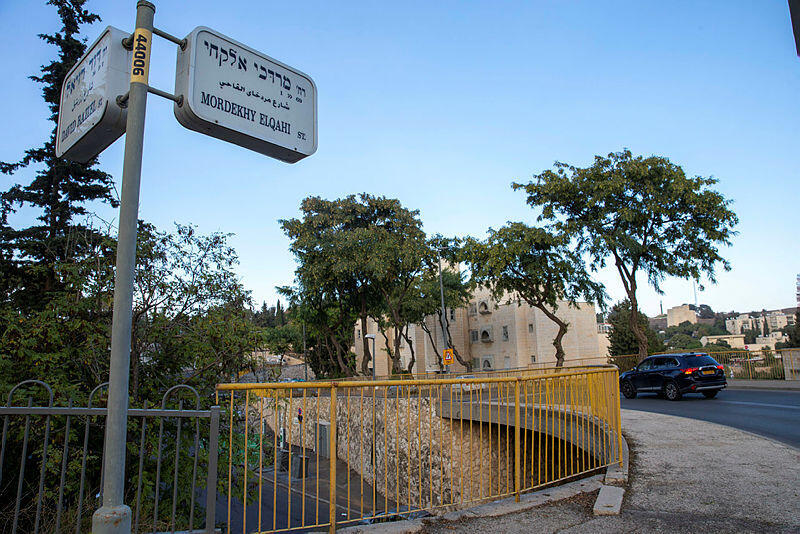
The murder scene in Jerusalem’s Armon Hanatziv neighborhood
(Photo: Amit Shaabi)
“It wasn’t enough for us,” Cassantini said. “We wanted forensic, scientific evidence that this man was actually there.” Kani Tal said prosecutors knew that statements made in an interrogation room could look very different once a case reached court. A defendant could retract a confession, claim that investigators had fed him details or argue that his statement had not been given voluntarily.
So they kept searching. The decision not to rely solely on the confession was made by attorney Erez Padan, then deputy Jerusalem district prosecutor and now Southern District prosecutor. The prosecution wanted to exhaust every possible avenue for finding independent forensic evidence that would physically place Assaid at the murder scene.
That search eventually led to the storage room behind his mother’s home and to the shoes. The verdict found that blood belonging to Yehuda Kaduri was discovered on the shoes and that, in the absence of a reasonable explanation for how the victim’s blood reached footwear connected to Assaid, the finding was evidence that he was the killer. The shoes also shared class characteristics with footprints found at the crime scene.
Kani Tal put it simply: once investigators had shoes from a storage room used by Assaid with Yehuda Kaduri’s blood on them, together with all the details Assaid had been able to describe, there was no credible way to explain everything as fabrication. That was the value of insisting on independent evidence that did not depend on anything Assaid had told investigators.
The courtroom test
The prosecution’s concern about relying only on the confession ultimately proved justified. At trial, Assaid denied committing the crimes and claimed investigators had improperly pressured him, fed him information about the crime scenes and planted evidence. The court rejected those arguments. It found his confessions clear, coherent, detailed and largely consistent with one another, adding that it was difficult not to be struck by the “sense of satisfaction and pride” with which he described his actions during interrogation.
The trial also produced one unusual scene rarely captured in the dry language of a verdict. At one point, Assaid’s defense attorney asked to withdraw from the case. The court refused to delay proceedings, and during some hearings Assaid questioned witnesses himself. One of those witnesses was the teenage girl he was convicted of attempting to murder.
Cassantini said a partition was placed between her and Assaid and that questions were passed under court supervision. Assaid managed to ask only two questions. “We remember the tension in the room,” Cassantini said, adding that one of the judges wiped away a tear. The questioning was stopped shortly afterward and the girl left the witness stand.
For Kani Tal, the proceedings also illustrated the price imposed on victims and their families a second time. During sentencing arguments, she had to describe the brutality of the crimes and their consequences while members of the Kaduri family sat in the courtroom listening once again to the details of their parents’ murders.
“You feel in a certain sense that you’re causing more suffering, more pain,” she said. “I have to walk out of the courtroom afterward and ask myself, did I do something good? Did I do the right thing?”
Three life sentences and 40 more years
Prosecutors asked the court to classify the Kaduri murders as exceptionally severe. Kani Tal said such a finding is not sought in every murder case and required preparation and approval. In her view, the number of victims, the number of potential victims, the motive and the brutality justified the request.
She pointed in particular to the Kaduri family. “They didn’t lose a father,” she said. “They lost a mother and a father. They lost a home.”
Assaid was ultimately convicted of murdering three people, two attempted murders, additional offenses and active membership in ISIS. The court classified the Kaduri murders as exceptionally severe, ruled that Assaid’s confessions were admissible and found that there was substantial additional evidence proving he had committed the crimes. He was sentenced to three life terms plus an additional 40 years in prison. The classification of the murders as exceptionally severe means he cannot seek an early reduction of the life sentences.
When the sentence was read, members of the Kaduri family sat behind the prosecutors. Cassantini recalled that the judges began by referring to Haim Nahman Bialik’s poem “On the Slaughter.” As the ruling was read, the family could be heard behind them. Kani Tal said she and Cassantini reacted almost instinctively, turning around and reaching a hand toward them.
Three years earlier, the case had been an unsolved double murder: a locked apartment, surveillance footage that could not clearly identify the man appearing in it, shoeprints and investigative leads that went nowhere. Then came another murder, a walking route reconstructed from cameras, a confession, a crime-scene reconstruction, concealed details and finally a few tiny spots of blood on shoes found in a storage room.
Cassantini said he remains in contact with the Kaduris’ daughter. For the family, he said, solving the case, completing the trial and reaching sentencing became “some kind of milestone” from which they might find “some small measure of comfort and continue with their lives and recover.”
After such a long road, that may also best explain the meaning of those drops of blood on the shoe. They were not the moment suspicion was born. They were the moment a case built over years finally gained evidence that did not depend on memory, confession or interpretation. A tiny stain that remained from the crime scene, found far away from it, ultimately connected Yehuda Kaduri to the man the court determined had murdered him and Tamar in their home.