

As tensions between the United States and Iran continue to rise, officials on both sides have issued increasingly stark warnings about the consequences of a direct clash. In Washington, military planners continue to assess how such a conflict might unfold, confident that U.S. capabilities would allow events to be managed even in a rapidly deteriorating environment.
One of the most consequential challenges to that confidence did not emerge from a real-world crisis. It surfaced more than 20 years ago, during a Pentagon exercise intended to test how the U.S. military would fight future wars. For a brief period early in that exercise, an adversary modeled on Iran exposed how quickly American assumptions could be upended, producing a simulated outcome that few planners had anticipated. The exercise was Millennium Challenge 2002.
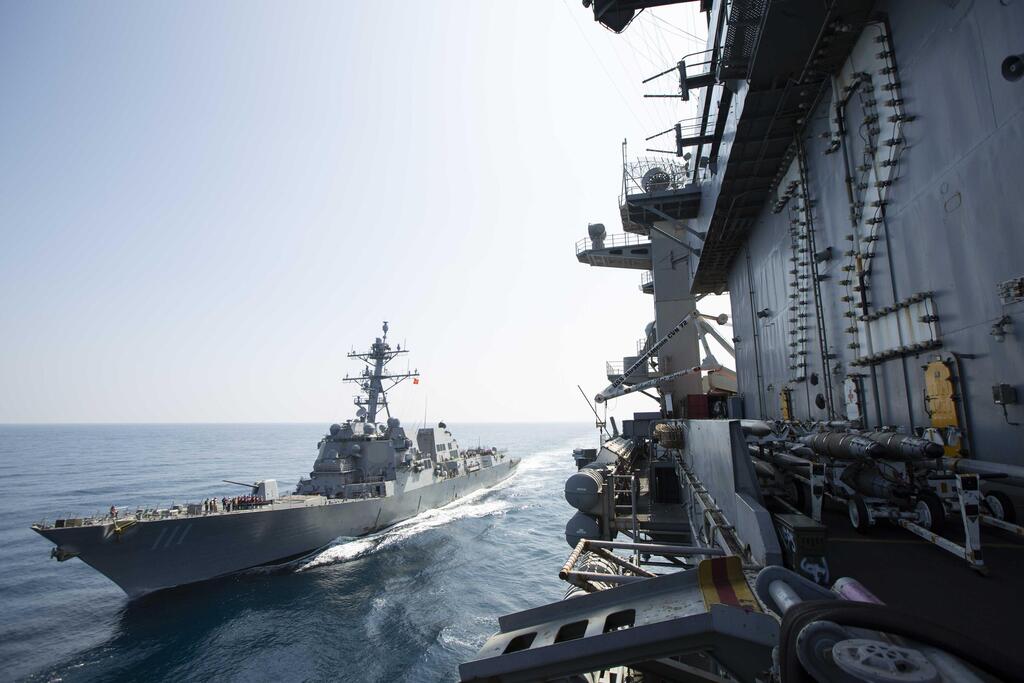
A war game built to prove the future
Millennium Challenge emerged from a particular moment in American strategic history. The Cold War had ended without the climactic confrontation many military thinkers had spent their careers preparing for, leaving the United States in an unprecedented position of global dominance. At the same time, rapid advances in computing, communications and precision weaponry fueled optimism that war itself could be transformed. By the late 1990s, a growing number of defense intellectuals argued that information superiority, shared instantaneously across services, would allow U.S. forces to act faster than any adversary could comprehend, let alone counter.
In 2000, Congress directed the Pentagon to put those ideas to the test. The mandate was explicit: explore how U.S. joint forces would fight after 2010, when emerging technologies were expected to reshape the battlefield. This was not meant to be a narrow rehearsal of a known contingency, but a sweeping concept-development exercise that would inform doctrine, training and procurement for years to come.
Joint Forces Command, then a relatively new institution, was tasked with execution. Over the next two years, planners constructed what they hoped would be the definitive proof of military transformation. The result was Millennium Challenge 2002, a hybrid exercise combining live troops, real ships and aircraft, and massive computer simulations operating across more than two dozen locations. The cost reached roughly $250 million, and more than 13,500 service members participated, making it the most ambitious and expensive war game in U.S. history.
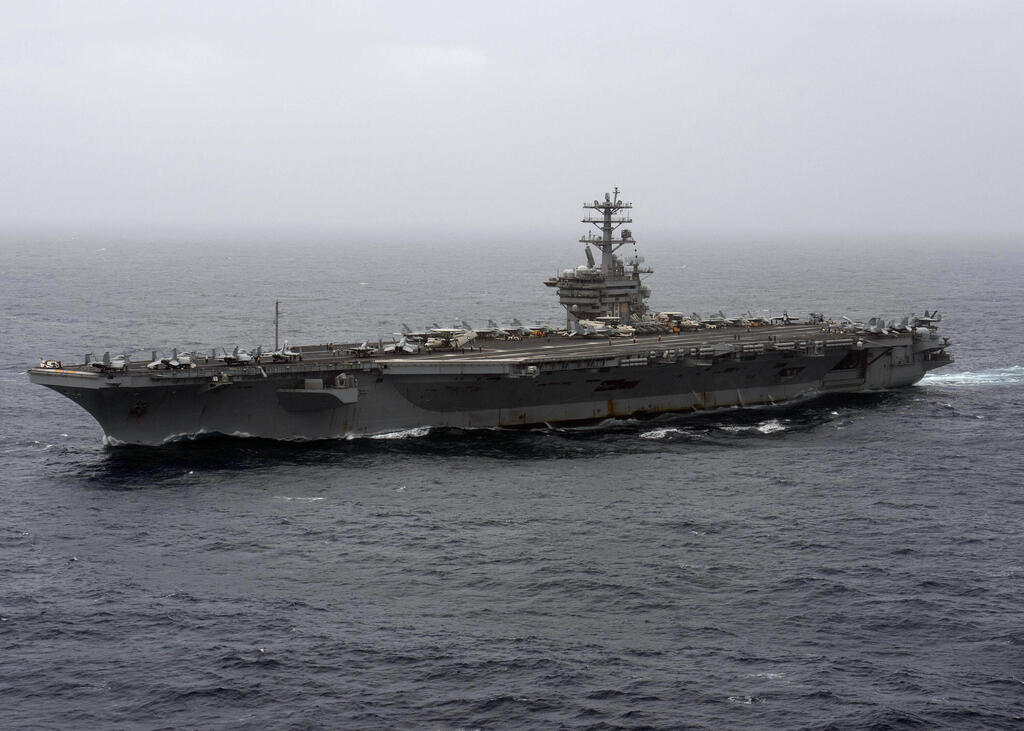
(Photo: AP)
The scenario was set in the year 2007, far enough in the future to justify advanced capabilities, but close enough to feel plausible. The adversary, known simply as “Red,” was a regional power controlling access to a strategically vital Gulf waterway. Red possessed weapons of mass effect, maintained ties to terrorist groups, disputed ownership of nearby islands and had recently suffered a devastating earthquake that fractured its internal stability. Though officials avoided naming a specific country, the parallels were unmistakable. The geography resembled the Persian Gulf, the emphasis on missile forces and naval harassment echoed Iranian doctrine, and the political narrative aligned closely with American perceptions of Tehran.
Opposing Red was a U.S.-led “Blue” coalition equipped with advanced command-and-control networks, persistent surveillance and weapons systems that, in some cases, would not actually exist for years. Blue’s objectives were expansive: secure shipping lanes, neutralize Red’s weapons programs, seize disputed territory and compel the adversary to abandon its regional ambitions.
The general chosen to think like the enemy
To command Red’s forces, Joint Forces Command selected retired Marine Corps Lt. Gen. Paul K. Van Riper, a Vietnam veteran and former Gulf War commander with a reputation for blunt skepticism toward Pentagon orthodoxy. Van Riper had spent much of his career challenging vague doctrines and inflated claims about technology. In Vietnam, he had watched computerized metrics suggest progress while the war on the ground told a different story. In later war games, he had seen U.S. forces credited with perfect intelligence and hypothetical capabilities that existed only in briefing slides.
Van Riper had objected to those exercises, arguing that they produced false confidence. He was promised that Millennium Challenge would be different. Publicly and privately, senior commanders described MC02 as a free-play experiment in which the opposing force would be allowed to think, adapt and win. Van Riper was chosen precisely because he was expected to stress the system rather than validate it.
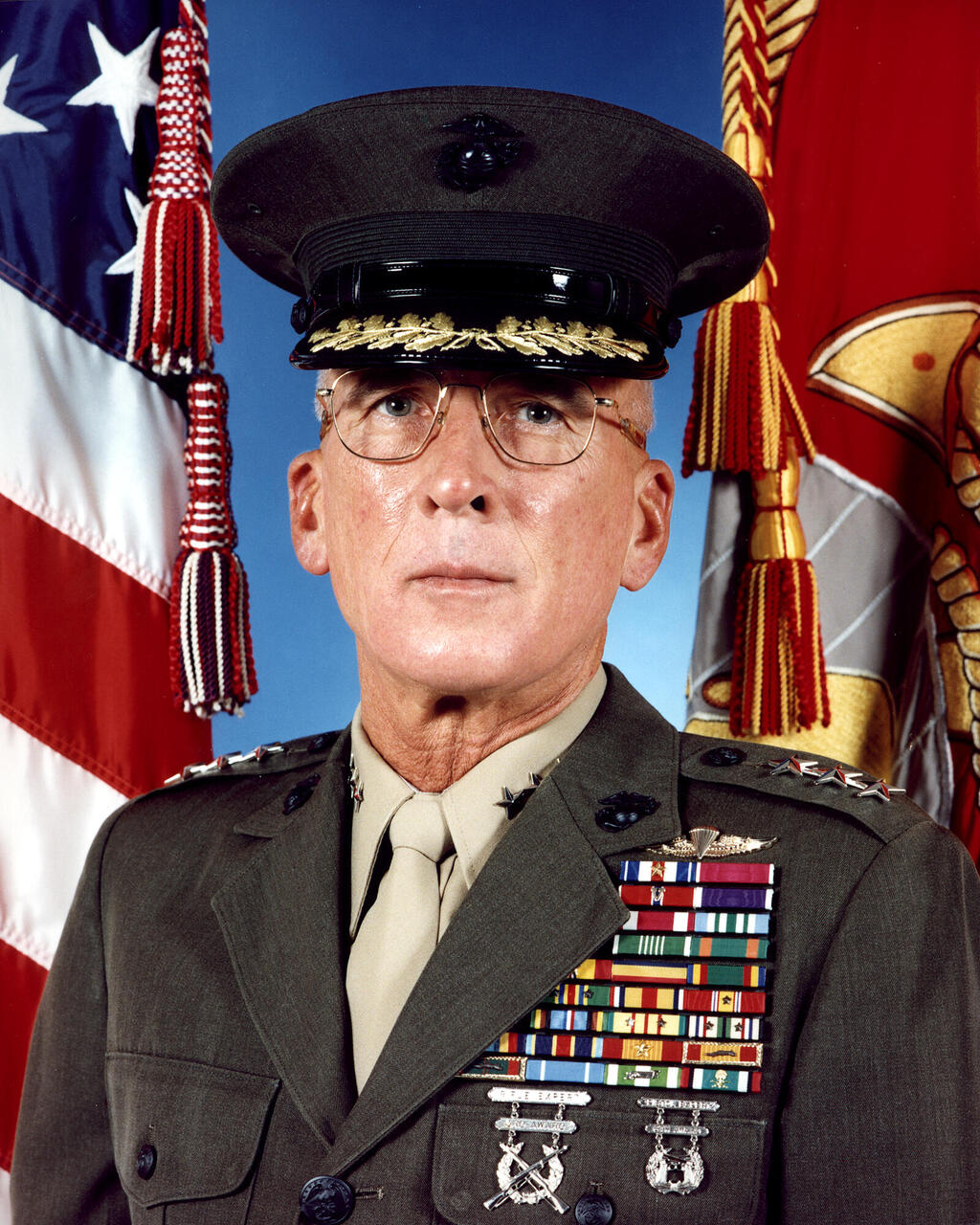
Lt. Gen. Paul K. Van Riper
(Photo: USMC)
The exercise began in July 2002 with a diplomatic phase intended to simulate the political maneuvering that often precedes armed conflict. In theory, negotiations would unfold dynamically, shaped by the actions and reactions of both sides. In practice, that premise unraveled almost immediately. Van Riper received a formal U.S. ultimatum listing eight demands, the final one effectively calling for Red’s surrender. To Van Riper, the message was unmistakable: Washington had already decided on war.
That perception was reinforced by the broader strategic context. The Bush administration had recently articulated a doctrine of preemption, asserting the right to strike adversaries before they could act. Van Riper concluded that if Red waited for Blue to move first, its limited conventional forces would be destroyed before they could influence the fight. Defense, he decided, was not a viable option.
The first day the war was lost
Van Riper’s approach was rooted in a simple assumption: Blue would expect Red to behave according to American doctrine. He resolved to do the opposite. Red’s communications were stripped of electronic signatures. Orders were delivered face to face or by motorcycle courier. Units used flags, lights and prearranged visual signals. Aircraft flew without radios. Movement was timed to exploit gaps in satellite coverage. Weapons and supplies were concealed within civilian traffic moving through the Gulf.
Red’s arsenal was modest. It possessed one medium-range missile and several hundred short-range systems. Van Riper studied the defensive capabilities of U.S. ships, particularly the Aegis combat system, and calculated how many simultaneous threats would be required to overwhelm it. He also took advantage of the exercise’s constraints. Blue naval forces were operating close to shore to avoid disrupting commercial shipping, while the presence of civilian vessels and aircraft limited the use of automated defenses and tightened rules of engagement.
When Blue issued a final demand for surrender within 24 hours, Van Riper interpreted it as a countdown.
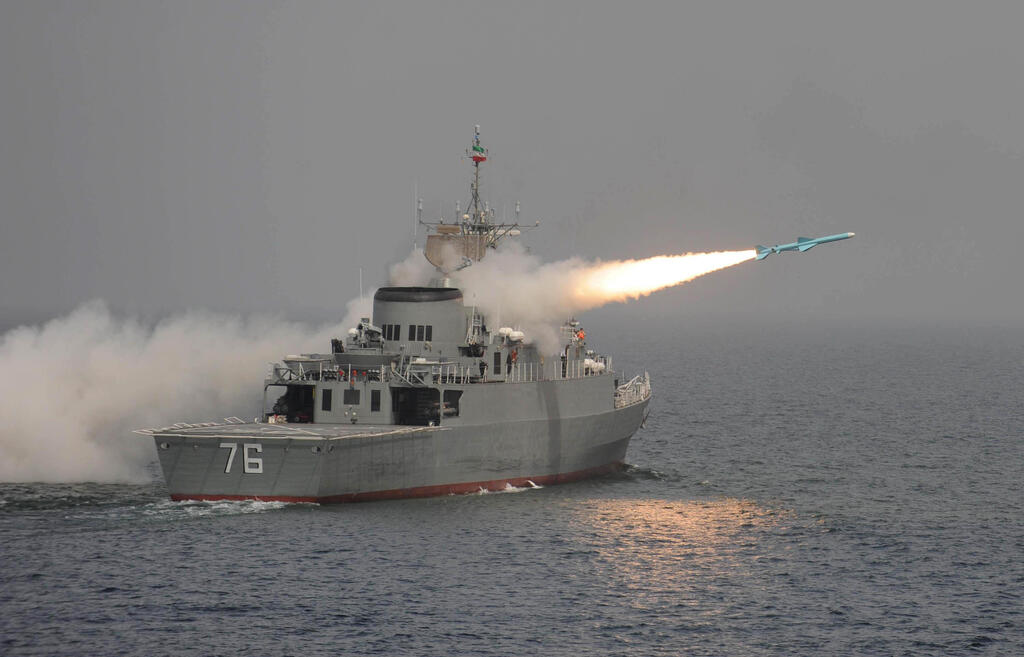
(Photo: AFP/IRANIAN ARMY OFFICE)
As U.S. carrier strike groups entered the Gulf, the environment appeared deceptively calm. Fishing boats plied the water. Cargo ships followed routine routes. Civilian aircraft flew predictable patterns. To Blue commanders, the scene suggested control and normalcy. On shore, however, Red’s signals went out almost simultaneously. Coded messages were broadcast over religious loudspeakers. Lights flashed. Flags were raised. Couriers completed their final runs.
Missiles launched from hidden shore batteries and commercial vessels. Low-flying aircraft broke from civilian air lanes. Swarms of small boats accelerated toward the fleet, some armed conventionally, others configured for suicide attacks. The volume and diversity of threats overwhelmed Blue’s defenses. Aegis systems fired interceptor after interceptor, but could not keep pace. Explosions rippled across the simulated battlespace as ships were declared “sunk” in rapid succession.
When the dust settled, 19 U.S. vessels were gone, including an aircraft carrier, multiple cruisers and most of the amphibious fleet. In real-world terms, it would have been the deadliest day in U.S. naval history, with tens of thousands of casualties. Inside the command centers, the reaction was disbelief. Blue Force commander Lt. Gen. B. B. Bell later acknowledged the magnitude of the loss, admitting that the centerpiece of American power projection had been rendered ineffective almost immediately.
Rewriting the war and living with the lessons
Joint Forces Command now faced a dilemma that went beyond pride or perception. Millennium Challenge was not merely a simulation; it was also a massive training event. Live airborne and amphibious units were already staged to conduct operations within a narrow window. Canceling the remainder of the exercise would have meant abandoning months of preparation and denying thousands of troops critical training. The decision was made to reset the war.
Blue’s sunken ships were “re-floated” within the simulation, restored to operational status so the exercise could continue. Senior commanders later argued that a war game should not end on the first day simply because one side achieved tactical surprise. The purpose, they said, was to generate learning over time rather than freeze the outcome at its most dramatic moment.
In practice, restarting the war fundamentally altered its character. When the simulation resumed, Red’s freedom of action narrowed sharply. Van Riper was informed that Red would no longer be permitted to initiate large-scale offensive actions. Air defense radars were ordered to activate so Blue could detect and destroy them. Red forces were forbidden from firing on transport aircraft, including the MV-22 Osprey and C-130s delivering U.S. troops. Chemical weapons were disallowed. Red units were required to position themselves in ways that made them easier to find and target.
Van Riper objected repeatedly, arguing that the exercise had ceased to test concepts and had become a scripted demonstration. His frustration deepened when members of his own staff began receiving instructions directly from the exercise control group that contradicted his guidance, undermining unity of command. Six days into Millennium Challenge 2002, he stepped down as Red commander and assumed a nominal advisory role for the remainder of the exercise.
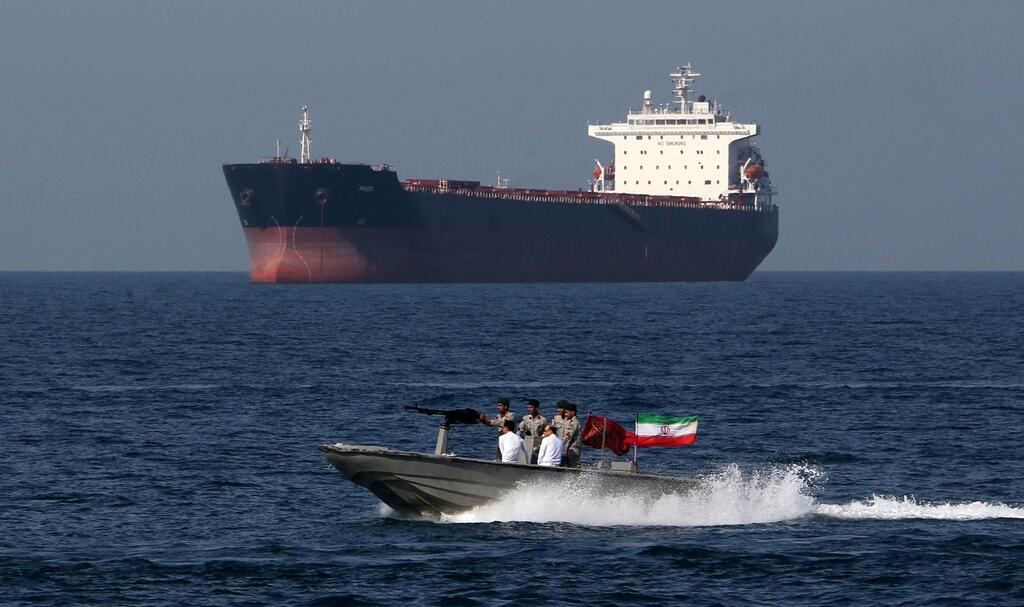
(Photo: AFP)
With Red constrained and its original commander sidelined, Blue forces were able to proceed largely as planned. Air and naval strikes degraded Red’s remaining capabilities, while airborne and amphibious units conducted landings on disputed islands and key terrain. Shipping lanes were secured, and simulated weapons of mass destruction sites were located and neutralized. When the exercise concluded, it did so with a declared U.S. victory that rested on conditions very different from those that had existed at the outset.
In the aftermath, Van Riper submitted a detailed critique outlining what he viewed as fundamental flaws in the exercise’s design and execution. He received no response. Concerned his name would be used to validate conclusions he rejected, he warned colleagues. His account soon leaked to the media, triggering headlines about scripted war games and simulated naval disasters. Pentagon officials denied that Millennium Challenge had been rigged, but years later, Joint Forces Command’s own after-action report acknowledged that Red’s free play had ultimately been constrained to ensure a Blue victory.
Millennium Challenge 2002 is often remembered as a controversy or a curiosity. Its deeper significance lies in what it revealed about assumptions, incentives and imagination. The exercise showed how quickly a conflict could spiral out of control at the very moment U.S. forces believed they held the initiative. For Iran, whose military doctrine emphasizes missile salvos, naval swarms, deception and ambiguity, the opening phase of Millennium Challenge remains disturbingly relevant.
The war the United States lost in 2002 was not one of firepower. It was one of expectations — and that lesson, more than two decades later, remains unresolved.