

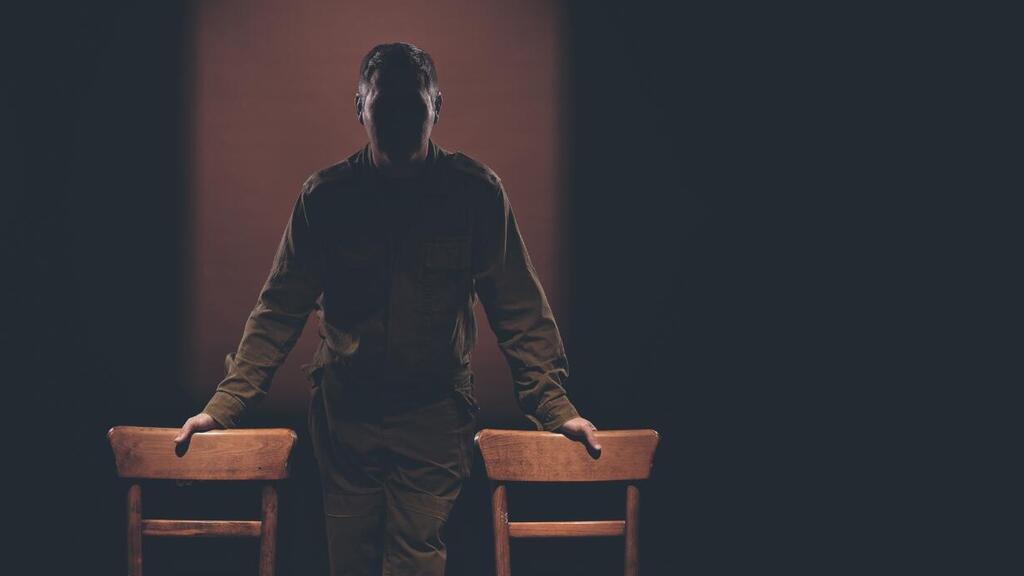
“Why aren’t all the hostages home by this stage?” Col. (res.) Moshe asked himself this week. He also answers the question, because there are few people in Israel who know the answer better than he does. “This is a complex event, but I think we can overcome the complexity and bring them back. There are places we need to investigate, all kinds of things. Sometimes Hamas does know, and you have to help it find the motivation. Today it doesn’t have it, tomorrow it does. Sometimes there were knowledge gaps, and we made sure Hamas got the information. This really is complex, and every day we are in a kind of situation assessment.”
November 8 was a jolting day for every Israeli, with the return from Gaza of the abducted body of Lt. Hadar Goldin, who was killed in the final hours of Operation Protective Edge in 2014. For Moshe, the former IDF officer responsible for captives and missing personnel and now an operations intelligence officer in the IDF Captives and Missing Command, it was a particularly emotional moment. For the past 11 years he has accompanied the Goldin family and the family of Staff Sgt. Oron Shaul as the army’s representative. Shaul’s body was recovered from Gaza in January, and this time it was the Goldins’ turn to hear good news from him: Hadar was coming home.
“In the recent period we had closer contact with the Goldin family,” he said. “As we understood that Hamas was moving toward releasing the body, we explained to them that this could be where it was heading, and we kept them updated throughout that Saturday. Including a kind of warning note, that Hamas might just be playing with them, because they also pulled the bodies of terrorists out of the same route. It was important to reflect the truth for them without any glory.”

What do the hours look like between optimistic reports and confirmation that it really is Goldin?
“As it converged toward something that would bring Hadar back, there was more tension and expectation. You feel all the tension of the years funnel into a few critical hours. As the family intelligence officer, the Captives and Missing Command’s representative, I was with them the whole time, including that Saturday. The moment there was a definite identification, I went to their home.”
What do you say at a moment like that?
“We didn’t say much. I think I hugged each family member, and then I left them alone. In the end, it is an intimate family moment. They don’t need any external factor with them, no matter how close.”
How do you handle the family’s racing heartbeat every time you call?
“I hope that over the years I trained them not to develop expectations, that it is a long journey and I will update when there is something to update, for better or worse. So I don’t think a call from me ever made them jump. Each family I accompanied received what it asked for. One wanted me to speak only with one relative, another wanted me to speak with the whole family. That could also change over the years depending on the period.”
And with the Goldins?
“There were no formal agreements with them, but I made sure not to bother them on the Sabbath. Over the years I called them maybe twice on a Sabbath. Once was when rumors spread about a rescue and I didn’t want them to build expectations. They also knew how to filter background noise over the years. The second time I called on a Sabbath was after Hamas tried psychological operations against them. I always wanted to prepare the ground so they would not learn it from Telegram or neighbors. In general, I let them lead. Where they wanted me, I was there. Where they didn’t want me, I wasn’t. I hope I brought them to a point of confidence and trust, that I represent something real and honest, not mixing things up and not distorting, and that they have someone to rely on.”
After Goldin’s return, it became known that over the past year and a half the IDF operated under ‘Dror Lavan,’ a mission aimed at locating his body in a large tunnel. What prevented bringing him back in a raid like the one that recovered Shaul?
“We didn’t manage to bring the precise intelligence down to the meter. You are constantly working to create operational opportunities until it succeeds. We went down into the tunnel where Hadar was found for the first time at the start of the Rafah maneuver, in May 2024. We managed to narrow down the search areas, but we did not get intelligence at the level of, ‘We dig here and we bring him.’ The place from which Hamas pulled him out appeared somewhere in our work plan. It is not that I said, ‘What is wrong with me, how didn’t I think of it.’ In my professional understanding, Hamas decided to return Hadar only after it understood that if it didn’t, we would. They just didn’t want to give us the pleasure. Hadar is home not because of Hamas’ goodness but because I led the IDF to work in the right tunnel. Why didn’t I reach the exact meter? We carried out dozens of intelligence operations to sharpen the picture. Using creativity, you go in every possible direction, including bringing in detainees from the field, including manipulations on the enemy, anything possible. We are still in the debriefing stage to understand what worked better and what less.”

Leah and Simcha Goldin: ‘There were no agreements’
(Photo: Shaul Golan)
You are also involved in collecting intelligence on the bodies still in Gaza. How can you assure families they will not wait nine more years, like the Goldins?
“Because today I am much better than I was 11 years ago. I know what intelligence I started with on Oron and Hadar and what distance I had to cover until they came back. With Oron and Hadar I started below zero. It’s not that I am beginning today to work on the return of the hostages still there. I have been working on them since October 7. Now we are in the final stage of how I get Hamas to hand them over and whether there are gaps in motivation or information. This is a complexity we will solve. There is no reason that at the end of the road we won’t bring them back. And the end of the road is not another 11 years.”
You chose a job that takes nerves of steel
“I always tell the young guys that captives and missing is 95 percent failures and 5 percent successes, and that is on a good day. It is living with ongoing failure and ongoing frustration, and you have no privilege to give up. In the end you will do 100 actions so you will have the one action that succeeds. It is a business for tough people.”
‘The only thing I feared was a split into camps’
Col. (res.) Moshe, 50, is married with four children and lives in central Israel. He enlisted in Military Intelligence in 1995 and since then moved between field units and the Research Division, “usually in operational intelligence roles.” His entry into the captives and missing world came at the end of the first decade of the 2000s, when he was an Intelligence Directorate representative on the special team set up to bring home abducted soldier Gilad Shalit.
“I sat nearly a year to dismantle his case, and then to debrief Intelligence,” he said. Shalit returned in 2011. In February 2015 Moshe was summoned to meet then-Chief of Staff Gadi Eisenkot and Col. (res.) Lior Lotan, the former coordinator for captives and missing in the Prime Minister’s Office. “They both asked me to focus on Oron and Hadar. ‘Check if something can be done.’ I worked on it two or three months, and came back with an answer that in my opinion, yes. ‘OK,’ they said, ‘if it can be done, the mission is yours.’”
What did you bring from the Shalit experience?
“For me the required achievement was to produce a reference point for where they were buried so that one day, in a Gaza emergency, meaning a war, we would know how to go in and bring them ourselves. Until October 7 there was no reference point for Oron. For Hadar there was the tunnel from which he was abducted, but that was not enough to enter and rescue him.”
As part of the new role, Lotan took him to meet the Shaul and Goldin families for the first time. “So they know this team exists, because it is external to the regular captives and missing unit in Intelligence,” Moshe said. “I introduced myself, said what my goals were. For them I was the face of the army on the mission. Over time I got responsibility for Avera Mengistu and Hisham al-Sayed as well. Every family has its character, its desire to know more or know less, its way of expressing frustration over the years. That is natural.”
How do you approach such a mission?
“When I entered the captives and missing field, I sat several good months in the IDF archive. I studied all the state’s captives and missing files from 1948 on, including those who returned, to understand how this works. In the end, no matter how you look at it, from the Har Dov abductees to Eldad Regev and Ehud Goldwasser and others, you never find the same type of family. You almost always find different approaches to how to conduct yourself with the system, the media, international organizations.”
In December 2021 something snapped. Moshe, then the IDF officer responsible for captives and missing, resigned and went angrily to the media. In an interview with Army Radio he said Israel had missed opportunities in recent years for a prisoner exchange with Hamas. He added that he did not remember “a negotiating dynamic in recent years that could ripen into a deal.” About Prime Minister Benjamin Netanyahu, who was in opposition at the time, he said that during Netanyahu’s long tenure, “he didn’t want a deal for his own reasons. You don’t have to say ‘no’ for things not to happen. There are creative ways to drag it out.”
Today, as a reserve officer in active service, he is careful about criticizing the political level, but he has not changed his view. “I do not retract what I said as a civilian back in 2021,” he said. “I was discharged from the IDF in August 2020 and continued another year as a reservist. By summer 2021 I told them, ‘enough.’”
When government figures opposed a deal, did you speak up?
“In the past two years I was in the operational lane, not part of the negotiations. There is a whole body that gathers intelligence for negotiations. I dealt only with the operational side. No one ever told me to stop.”
“I do not retract what I said as a civilian in 2021. I want to believe October 7 changed many things and woke many people up. Whether Netanyahu as prime minister changed, I leave others to answer.”
When you resigned about four years ago, you said the government did not want to bring back the four captives. Did you feel that again recently?
“Since then there was a major event in Israel. I want to believe October 7 changed many things and woke many people up. Whether Netanyahu as prime minister changed after October 7, I leave others to answer. But something fundamental changed, and we must not reach a place where people say, ‘It’s complex,’ ‘It’s hard,’ ‘It’s impossible.’ There is no such event. What is hard, we have to do.”
The four families then, Shaul, Goldin, Mengistu and al-Sayed, were left without you and without Lotan, who also left because of disputes. Did you fear they would feel abandoned?
“First of all, they knew it was coming. I did not surprise them. I hoped the resignation would move something. I did not get the impression it made an impact.”
Did you stay in touch after resigning?
“Yes. Not just holiday greetings. I was a kind of social activist on captives and missing. I founded an association with Idan Amedi and Maya Ohana Moreno. We held gatherings at the Black Arrow memorial and also performances and rallies. We went on a crusade to Cabinet ministers, a million and a half things.”
After you resigned you said only public protest would bring Hadar, Oron, Avera and Hisham back. Then you saw the Hostages Headquarters form and begin demonstrations. What did you think?
“The only thing I feared was a split into camps, several headquarters. It is natural that there wouldn’t be a common denominator. Each family comes with its baggage, its worldview, its angle. Multiply that by 251.”
‘Oron and Hadar were a thousand times more complex than October 7 hostages’
The war caught him at home. There were no sirens in his area, but he quickly understood this wasn’t another familiar incident. “I woke up to the sounds of interceptions and said, ‘What is this?’ It was nonstop, not reasonable,” he said. “I understood something was happening, and then testimonies started coming in, calls from people. The penny dropped that this was a big event when they told me, ‘There is an infiltration into a community,’ and I said, ‘It’s not one community, it’s communities. Plural.’”
How did you base that assessment?
“Because you know the dynamic and the enemy. Everyone has a point from October 7 they remember. Some will say the pickup trucks in Sderot. Others remember Kushmaro’s call with the daughter of Ohad Ben Ami. My point was when they said, ‘infiltration into a community,’ and I understood it was communities.”
You knew how hard it was to bring back four captives, and suddenly you heard another 152 were added to the unimaginable count of captives in Gaza, under a prime minister you called a serial dragger of opportunities. What went through your head?
“When I saw pictures of hostages in Gaza, I first thought this could take five years. At the beginning people said, ‘a few days, at most weeks, and it’s over.’ I thought, you don’t understand captives and missing. It was clear to me this would be a prolonged event, maybe very prolonged. I went into high gear and joined what became the Captives and Missing Command. Nitzan Alon was there and we started getting organized. On October 7 I could have driven right to the command or left to the Hostages Headquarters. I chose, because I thought I would be more meaningful there.”

'Everyone has a point from October 7 they remember. Some will say the pickup trucks'
In the first days of the war, Leah Goldin came to the headquarters and told families, “Don’t be Gol
dins.” Is that an indictment of you?
“She has the right to say what she wants. I was never their media adviser. I never told them what to do in public. I’m there to show them as broadly as possible the efforts to bring their child home. I’m there to represent them to the system.”
How did that day affect you?
“October 7 brought me back to the army to do what I hope I’m good at. The best thing would have been a deal on October 8 and to fight on October 10 as if there were no captives and missing. I would have been happy to be an intelligence officer helping destroy the enemy, but life made me an intelligence officer for captives. Since October 7 I’ve been there with the same values I believed in before, only now you can pour content into them. Why? Because it is war, and in war you can do many more things.”
You mentioned the possibility of a deal on October 8, 2023. How would the war have looked afterward?
“Without judging if such a deal was possible, clearly you could have fought better if by October 8 everyone had returned, and we were fighting in Gaza without constraints.”
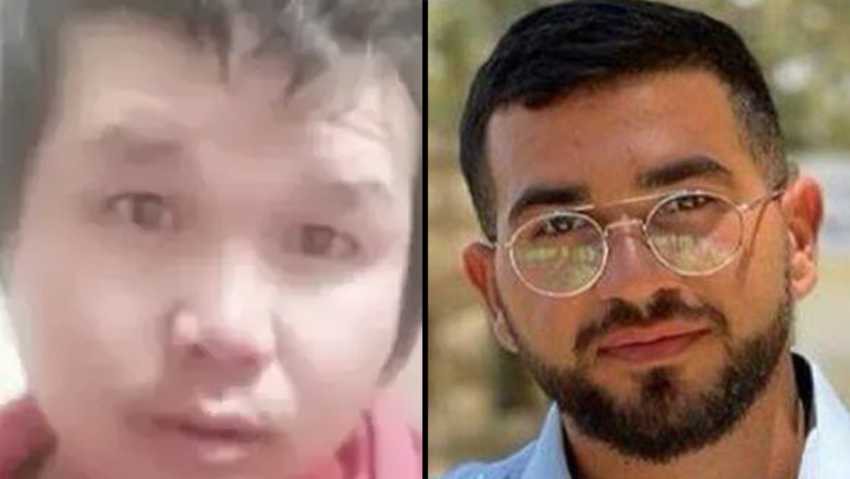
Sudthisak Rinthalak and Master Sgt. Ran Gvili
(Photo: Israel police)
After October 7, the Captives and Missing Command divided the hostages among intelligence officers. Moshe was assigned more hostages in addition to the four he already had. In a conversation earlier this week, when the body of Dror Or was still held in Gaza with Sgt. Ran Gvili and Sothitissak Rinthalak, he agreed to say that two of the last three hostages still in Gaza were “his,” and they are why he is speaking now. “Oron and Hadar were a thousand times more complex than October 7 hostages,” he said. “So there is no reason for the State of Israel, the IDF, anyone, that the last three, Ran, Sothitissak and Dror, won’t be home. There is no such event as them not returning, and there is no chance the unit doesn’t bring them back.”
Is this currently an intelligence problem or more technical?
“It’s not one or zero. In the middle are super complex missions. Those who abducted them, those who buried them, things that happened on the ground throughout the war. There are layers here, each complex on its own, and the combination makes it even more complex. Still, it is less complex than missions we already completed.”
Do you think you know where they are?
“I think I know how to get to them, through places that need to be checked off, each with its story and nuances. But none of them has a sudden question mark. Each has a lead, and there is enough left to do, intelligence-wise and operationally.”
The relay race after Shaul and the doctor who declared Goldin dead
Moshe’s determination and optimism about the last hostages in Gaza are not wishful thinking, he says, but based on his experience with the Shaul and Goldin families. “Hadar was a super complex case,” he said. “He was Hamas’ biggest secret before October 7. Maybe five people knew, at most. Producing intelligence on Hadar, Oron, Avera and Hisham before October 7 was like nothing else. This was a secret that began 11 years ago. It’s not October 7, when 251 people land in Gaza and it’s chaos on both sides. Sometimes the chaos produces intelligence. Here, each case was alone in itself.”
He spoke about Dr. Marwan al-Hams, director of the Abu Yusuf al-Najjar hospital in Rafah, who declared Goldin dead and knew his burial site. When did the IDF understand he mattered?
“Al-Hams, an anesthesiologist who studied in Ukraine and returned to Gaza, was known to us from the early years of investigating the case. We kept an eye on him from the start. In Hamas, like the IDF, there is a chief medical officer and a brigade doctor. He is the Rafah brigade doctor. I began investigating him in 2015, and a year later we closed the intelligence circle on him. For us he was part of the secret-keepers.”
So why didn’t you bring him in 2016?
“Who says we didn’t try? Gaza isn’t the West Bank, certainly not before October 7. Let’s just say the operation in which we got him wasn’t the first. We assembled a team of Israel’s most creative minds who broke their heads on how to bring him. Over months they built a global infrastructure to create a situation where, on a given day, at a given hour, at a given minute, he would reach a point where I was waiting for him and he wasn’t waiting for me.”
'Hadar was a super complex case,' he said. 'He was Hamas’ biggest secret before October 7. Maybe five people knew, at most. Producing intelligence on Hadar, Oron, Avera and Hisham before October 7 was like nothing else.'
How do you create that moment?
“It takes months of daily contact without him knowing who he is speaking to. He is super suspicious. He knew we were after him because he identified us several times. He is sharp. He figured out more than once that the person talking to him wasn’t who he claimed to be. The team created a trick he swallowed. We used varied methods so he felt comfortable and fell into the trap. He thought he was meeting someone else and discovered he was meeting us.”
And after that effort, you realize he won’t deliver the decisive lead
“Often you can’t produce precise intelligence, so you start a process that ends with something happening. The Hamas Rafah brigade collapsed because of the IDF’s work, Yahalom, Shayetet 13 and others, in that specific tunnel. When we went down to search for Hadar, we ran into senior Hamas command-and-control figures, including clashes, explosives and fire. That made them flee. Once they fled, the whole thing unraveled within weeks.”
When you dig for an abducted body, what signs do you look for?
“We saw everything imaginable. Hostages buried in cemeteries, yards, inside rooms, tunnels, behind linings. Some tried to preserve bodies frozen in refrigerators. Friction with the ground teaches you. You enter a tunnel, find equipment, and ask yourself, if this is a battalion commander’s gear and he knows where Hadar is, is that nearby? Our job in the command is to create opportunities, operational and intelligence, and allow the IDF and our partners to be the finishing leg. Where we used cooperation, not always obvious, we achieved our biggest results.”
Give an example
“In locating Oron Shaul there was a crazy combination of units, disciplines. Everyone knew his place like in a concert. When he plays, when he steps aside, when he lets someone else lead. With Oron it was a kind of relay race over months, each unit giving its best and understanding where its edge ended and another unit’s edge began. The captives and missing unit is the conductor. The key with Oron was that we had 48 to 72 hours to get him out. Everyone had to give their best. Military Intelligence, Shayetet 13, Shin Bet, each had to deliver its touch at the right moment. It played perfectly.”
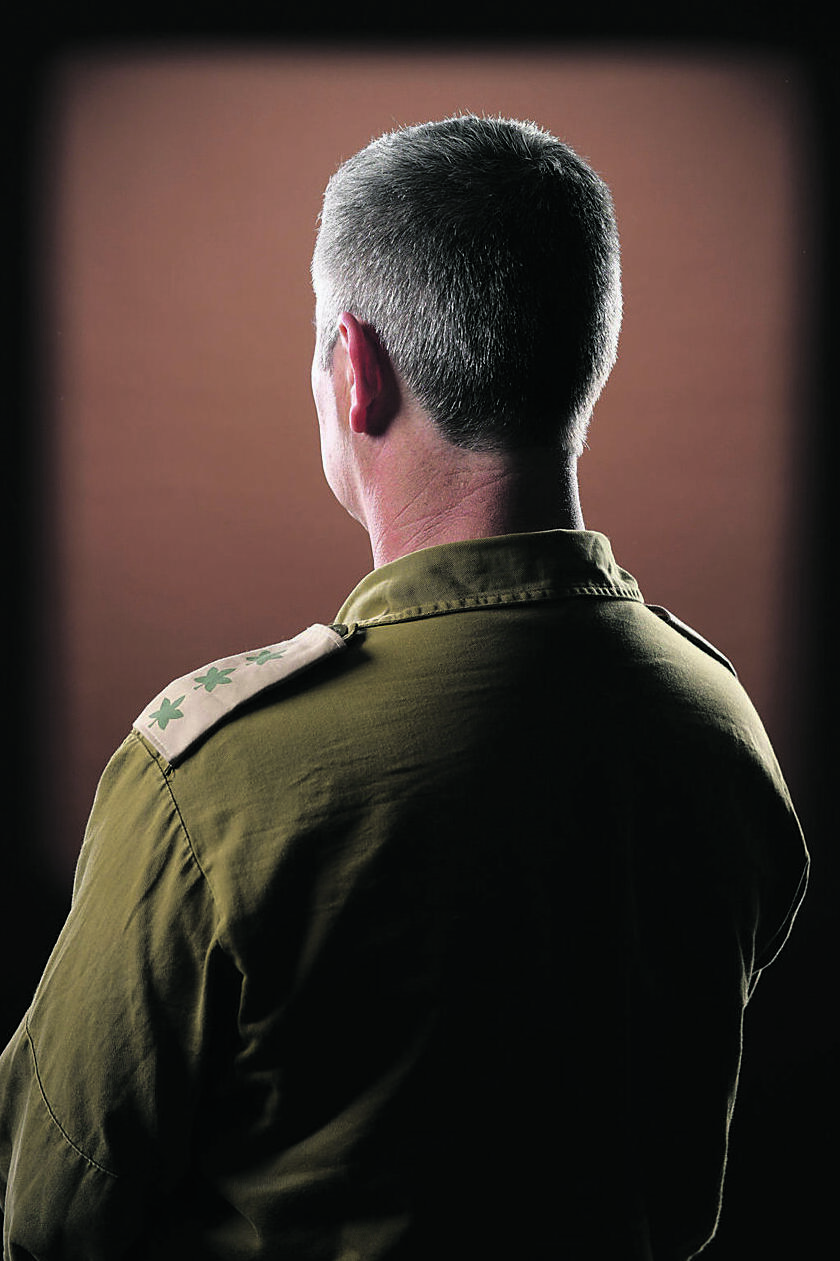
Col. (res.) Moshe
(Photo: Jonathan Bloom)
‘The sense of failure is harder than fear of explosives’
This week, in the tense hours when a body was transferred from Gaza to Israel and before forensic confirmation that it was Dror Or, the last hostage from Be’eri, Moshe was on edge. To deal with the emotional and mental burden, he and other command members undergo processing workshops. People in the command, he says, work seven days a week, without Sabbaths or holidays, waking and going to sleep with the hostages they oversee. “I was a brigade intelligence officer during the second intifada, I was in Defensive Shield, in the hardest events you can imagine. Nothing prepares you for, or resembles, being responsible for a hostage.”
“There is no break from the mission,” he said. “Even if they are hostages who are not yours, everyone holds something. Processing is essential. It’s clear why you process combat experiences when a fighter loses friends. But years from now, when they study people who served in this command, they’ll understand why people considered rear-echelon, sitting in central Israel, went through combat experiences far more intense than a fighter who stepped on an explosive.”
To that extent?
“I’m telling you as someone who experienced both. The numbness after you watch endless horror videos and pictures and testimonies, the way things burn into you even when you close your eyes, the descriptions you hear and where your imagination goes. When you are responsible for a hostage, he is your brother and she is your sister. They’re there and you didn’t bring them home. The sense of failure and frustration is much harder than fear of an explosive. Nothing will free you from the feeling that you were responsible for a hostage who was alive and you brought him back dead.”
‘Many years from now, people will understand why those who served in the IDF Captives and Missing Command went through combat experiences far more intense than a fighter who stepped on an explosive. Nothing will ever free you from the feeling that you were responsible for a living hostage and brought him back dead.’
How do you process failed rescues where soldiers and hostages were killed?
“We made mistakes along the way over these two years, sometimes they came at high cost. The ultimate test of a mistake is how you debrief. Are you willing to be honest with yourself, look and say, ‘Here I erred,’ draw lessons and move forward. You don’t need outside criticism to motivate you to protect your hostage or return him, or to create intelligence or an operational opportunity.”
What moment do you take home from everything you’ve been through?
“When there is a rescue, you don’t take it home. You take home only the people you don’t succeed in bringing back. Those you succeed with, the mission ends. Even for hostages returned in a deal, there was a behind-the-scenes intelligence and operational team working to bring them back without it. Often you know a location but can’t create the operational conditions to extract, because the risk to our forces is too high, because conditions don’t allow it. In the end there isn’t a single hostage, alive or dead, without a team of researchers, intelligence officers and operators thinking about how to find him, keep him from disappearing, bring him out. Crazy things were done, but even crazy things come with no guarantee of success.”
Do you fear the next day and the possibility of another abduction?
“Israel is a villa in the jungle, and at some point bears will come in and try to take someone. I hope to finish this service and deal with captives and missing only by writing a TV series. I need to make sure we reach zero hostages in Gaza and preserve our initiative and determination. What comes after that is mainly a political event. It doesn’t belong to me.”