

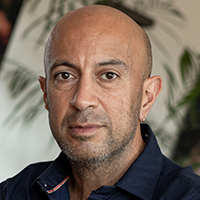
The recovery of the body of Staff Sgt. Oron Shaul from the Gaza Strip in January 2025, like many operations during the war, could easily be described as a nerve-racking thriller. But new details show that in this case, reality went beyond imagination.
Shaul’s body was returned following what officials described as a remarkable intelligence operation involving the Shin Bet security agency, IDF Military Intelligence, Southern Command, elite IDF units and a Palestinian collaborator whose actions ultimately saved the mission.
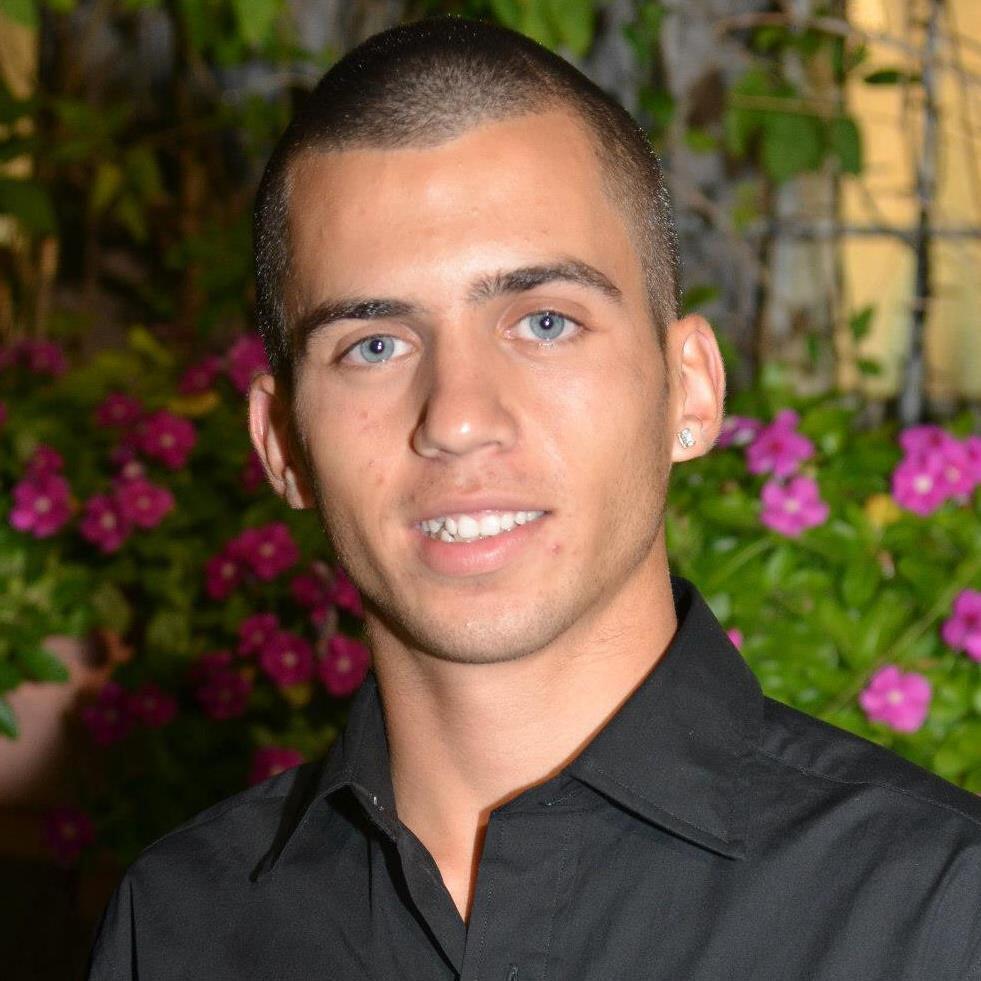
Shaul, a Golani Brigade soldier, was killed in combat during the night of July 19–20, 2014, in the Gaza war. The armored personnel carrier he was riding in was heading toward the Shijaiyah neighborhood but became stuck in the Daraj Tuffah area, where it was hit by Hamas fire. Since then, Hamas referred to him by the code name “the Daraj soldier.”
The first intelligence signals pointing to the possible location of Shaul’s body emerged on the second day of Rosh Hashanah in 2024. During an IDF raid, forces seized a computer containing correspondence between a Hamas operative and senior Hamas military commander in Gaza Izz al-Din Haddad. In the exchange, the operative warned Haddad that among detainees taken from Shifa Hospital was someone who knew where “the Daraj soldier” was being held.
At the time of the 2014 war, Haddad held no formal post, having been sidelined amid internal power struggles within Hamas.
After reviewing detainees from Shifa, Israeli intelligence focused on one suspect. He initially denied any connection, but under intensive interrogation said he had met two Palestinians in the Hamad neighborhood of Khan Younis. According to his account, the two said that Israel had recently detained a Palestinian who had transferred Shaul’s body to a Gazan named Ibrahim Hilo, who had been holding it.
Intelligence checks showed that Hilo had been a Hamas platoon commander in 2014 but was later working as a merchant and living in the Sheikh Radwan neighborhood of Gaza City. According to the detainee, whose reliability was uncertain, Hilo kept Shaul’s body in a freezer beneath his home, in one of three shops on the ground floor. IDF checks revealed that Israeli forces had previously been in the building but had not inspected the freezer.
Officials quickly concluded that a loud military raid on the house was not an option, due to the risk that living hostages might be held nearby. With no certainty the information was accurate, the decision was made that Hilo would need to be abducted covertly, without alerting his surroundings, to prevent the body from being moved.
Preparations then shifted to deception. Intelligence officials learned that Hilo had relocated to a displaced persons camp in Deir al-Balah. Israeli security services made covert contact with him, drawing him into what he believed was a commercial arrangement. Without realizing it, Hilo became an unwitting asset. He rented a warehouse near the Salah al-Din route and was conditioned to arrive there at both regular and unusual hours to receive goods.
As planning continued, the January ceasefire deal came into focus. On Jan. 15, Qatar’s prime minister announced an impending ceasefire between Israel and Hamas. At the time, a senior Israeli delegation, including Mossad chief David Barnea, Shin Bet head Ronen Bar and Maj. Gen. (res.) Nitzan Alon, was in Doha finalizing the agreement, set to take effect on the morning of Jan. 19.
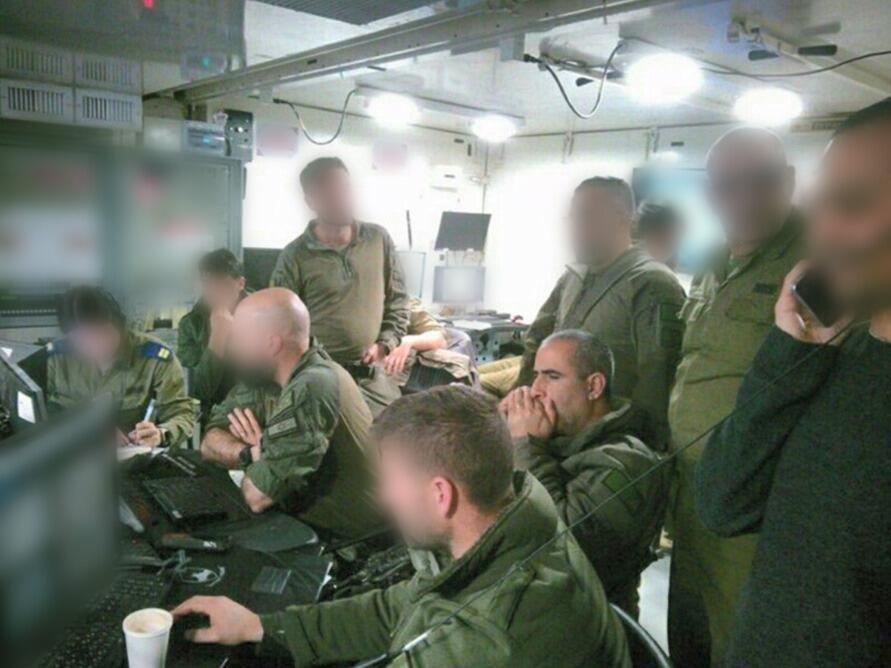
(Photo: IDF)
Under the deal, 25 living Israeli hostages and the bodies of eight others were returned. Even before the agreement was signed, negotiators understood there was no way to secure the return of the bodies of Shaul and Hadar Goldin through the deal. In parallel, a particularly bold plan was taking shape to recover Shaul’s body before the ceasefire began.
Two days before the ceasefire, the families of Shaul and Goldin received a call from Shin Bet chief Ronen Bar informing them that negotiations had failed, even as he knew there was a chance forces would soon launch a daring operation to bring Shaul home.
The operational phase began after the deception effort. Handlers persuaded Hilo to arrive at the warehouse at 11 p.m., where an elite IDF force was preparing to abduct him. Hilo refused several times, turned back en route and had to be convinced again. At the last moment, as the undercover unit moved in, the truck meant to be used in the operation failed to start. After tense minutes, it did, and Hilo was seized.
Under extreme time pressure, Hilo initially denied everything. As the hours passed and the ceasefire drew closer, the dilemma deepened: whether to risk sending forces to his home with no confirmation that Shaul’s body was indeed in the freezer. Late in the day, Hilo broke and confessed that the body was in a locked ice cream freezer beneath his house.
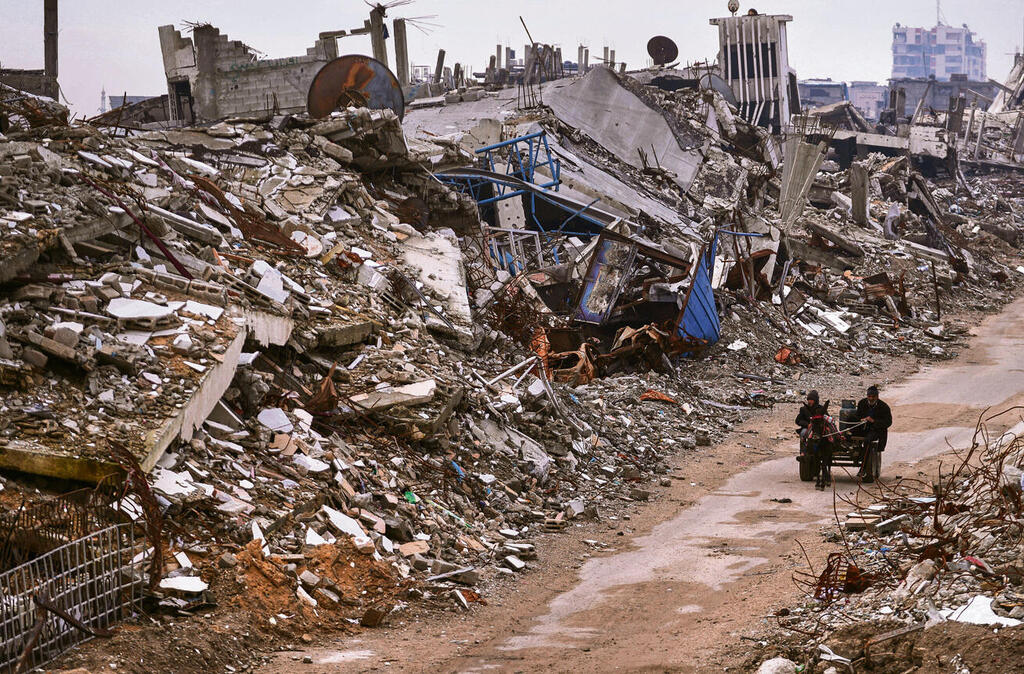
(Photo: Abdel Kareem Hana, AP)
With IDF forces already beginning to withdraw from parts of Gaza, an unconventional idea was approved: sending a Palestinian collaborator alone to retrieve the body.
During the night of Jan. 18–19, just hours before the ceasefire took effect, the collaborator made his way quietly to the house. He found the freezer locked with a heavy padlock and warned his Shin Bet handler that breaking it could wake the neighborhood. The decision was made for the IDF to fire artillery into open areas nearby, creating enough noise to mask the break-in.
Under cover of the bombardment, the collaborator broke the lock, found Shaul’s body, wrapped it in a rug and carried it roughly a mile before meeting IDF forces. The body was taken out in armored Namer vehicles belonging to the Golani Brigade, the unit in which Shaul had served.
More than 10 years after he was killed and taken, Oron Shaul was brought home and laid to rest.