

A month ago, freed hostage Ilana Gritzewsky, 32, stood beneath a wedding canopy wearing a white gown, staging a symbolic ceremony for the life she and her fiancé might have shared if not for the Hamas terrorist assault of October 7.
The event, organized in cooperation with the Hostages and Missing Families Forum, brought together relatives of captives and those killed in Gaza. Friends and supporters surrounded Gritzewsky as she enacted the wedding she and Matan Zangauker, 25, had planned before his abduction from Kibbutz Nir Oz nearly a year earlier.
“My curls, if you hadn’t been kidnapped, we could already be married,” Gritzewsky said beneath the canopy. “I can’t stop thinking about the innocence and love that were taken from us in a single day. Our world collapsed, and you’re not here to hold me — and I can’t be there to strengthen you. I love you and will keep fighting for you until you return. We’ll bring you back alive and rebuild our lives together.”
Families of hostages take part
Among those holding the poles of the canopy were parents of other hostages and victims: Jon Polin, father of Hersh Goldberg-Polin, who was murdered in captivity; Michel Illouz, father of Guy Illouz, whose body remains in Gaza; Yitzhak Horn, father of hostage Eitan Horn; and Yehuda Cohen, father of hostage Nimrod Cohen. Matan’s mother, Einav Zangauker, attended the ceremony wearing a black veil.
“I keep asking myself what more I can do for Matan,” she said. “But that ceremony was incredibly hard. The dream was to stand with Matan under the canopy — not like this. I dreamed of something small and modest, and in the end, my wedding opened the evening news broadcasts.”
From an ordinary morning to horror
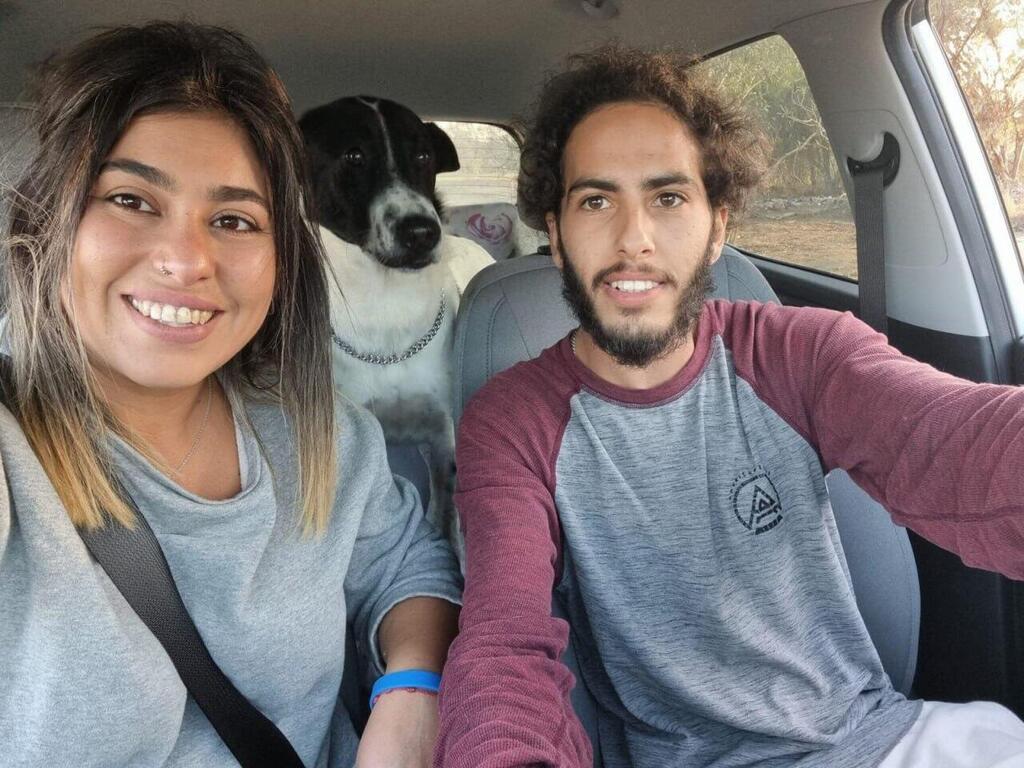
Gritzewsky’s nightmare began early that Saturday morning when Hamas terrorists stormed her kibbutz. She was drinking coffee and smoking a cigarette on her porch in Nir Oz when rocket sirens began to sound.
She had woken up early to take the dog out before she and Matan were to leave for a planned day trip to Jerusalem.
“At first I didn’t pay attention,” she recalled. “But when I realized it wasn’t normal, I woke him up and we ran to the safe room. After about 15 minutes, we started hearing gunfire outside, and I knew things were bad. I was terrified. I must’ve said Shema Yisrael a thousand times. We both knew any moment could be our last.”
“At one point, the terrorists broke into the house, shooting and smashing things. They managed to force open the safe room door, but Matan threw my perfume dresser at them and somehow got the door closed again.”
‘They dragged me outside and aimed their weapons at me’
When Matan realized he could no longer hold the door, he told her, “Open the window, see if it’s clear, and jump. I’ll be right behind you.”
They escaped through the window and ran to a nearby sukkah, but it was too exposed. They then headed to the balcony of Gadi and Judy Weinstein, who were later kidnapped and murdered in captivity.
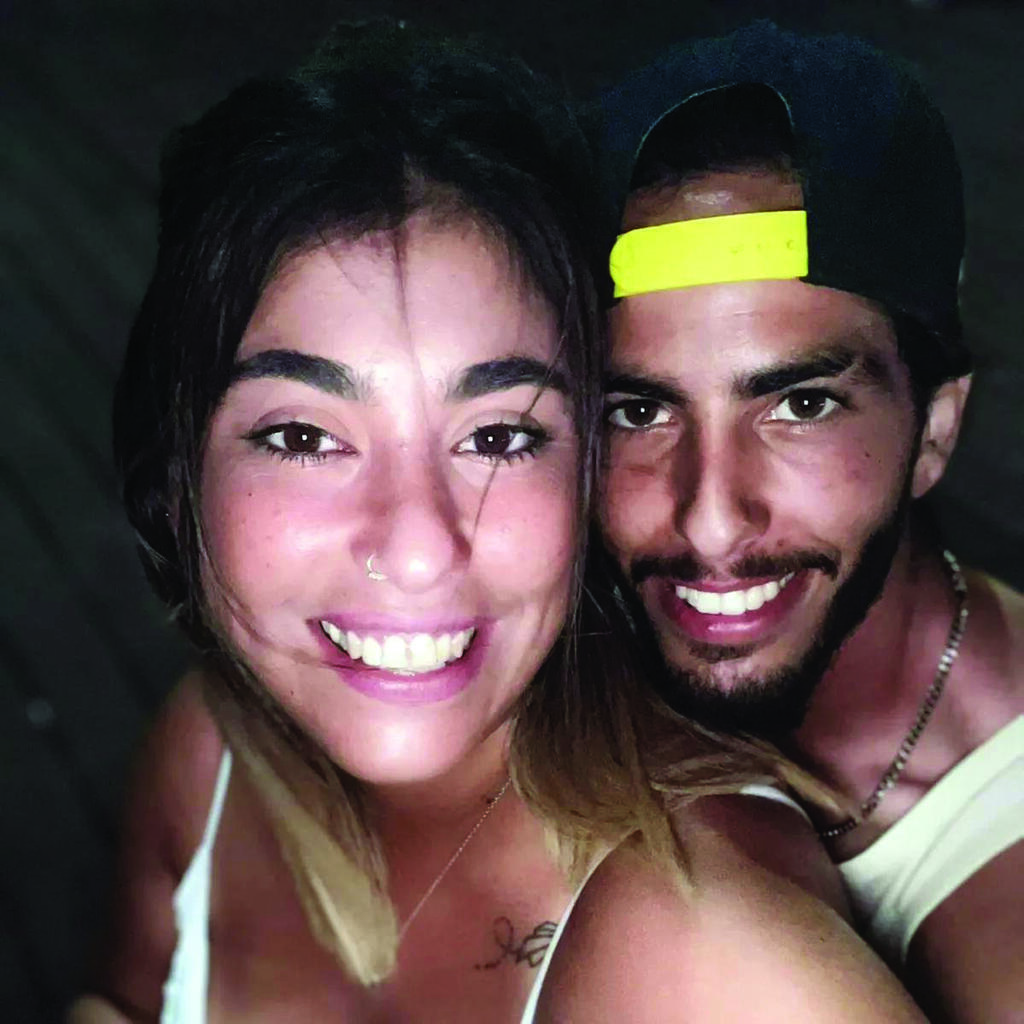
“Houses were burning all around us,” she said. “Matan said, ‘Come on,’ and jumped from the balcony. But I froze. I stayed until I heard footsteps — I said Shema Yisrael again — and then they caught me.”
“They dragged me outside, aimed a gun at me and demanded my phone. All I could think was that they’d record themselves shooting me. I refused to unlock it — I didn’t want my mother to see my murder. They got angry, hit me and put me on a motorcycle to Gaza. In my heart, I thought, Thank God, Matan must have escaped.”
Fifty-five days in captivity
Gritzewsky was held in Gaza for 55 days, transferred between several locations before ending up in a tunnel. She was released during the seventh and final phase of the first hostage deal in late November 2023.
After her release, she spoke before the United Nations Security Council and gave an interview to The New York Times, recounting sexual assaults and physical abuse.
“I was lucky not to be raped,” she said, “but I was sexually assaulted. They looked at me like a prize. How many times can you tell them you have your period? Once I said that, and they got so angry they beat me until they broke my pelvis. I was in so much shock I didn’t even realize it had happened — just that I was in pain and could barely move. When you’re facing death, you don’t focus on pain.”

Ilana and Einav
(Photo: Paulina Patimer)
“I lost 12 kilos. I barely slept. I was afraid they’d touch me, shoot me or that a bomb would fall on my head. One day I was so desperate I locked myself in the bathroom and said, ‘That’s it, I’m jumping out the window and ending it.’ The other hostage with me convinced me to open the door before they’d hurt us.”
‘The terrorist told me where Matan was’
“Twice they told us we were going home — and both times it didn’t happen,” Gritzewsky said. “Once, we even got into the car, excited, and then the terrorist turned around and said in Hebrew, ‘You’re going down to the tunnel.’ I started crying, everything went black.”
In the tunnel, she met other hostages — David Cunio and Eitan Horn.
“I asked if anyone had seen Matan,” she said. “One terrorist asked, ‘From Ofakim?’ I said yes. He said, ‘He’s here, in another tunnel.’”
“I didn’t even know how to feel — relief that he was alive, or pain that he was suffering like me. A few days later, they told me I was being released.”
But freedom brought guilt.
“I asked myself why I was getting out and leaving my friends behind. What about Matan? I live with the question why me and not them all the time.”
Life after captivity
Now living in Kiryat Gat with other displaced members of Kibbutz Nir Oz, Gritzewsky was born in Mexico and immigrated to Israel at 16 through the Na’aleh youth program run by the Jewish Agency.
Her mother, Miriam, 65, immigrated a year and a half ago after her daughter’s release. Her older brother, Chaim, 37, a photographer, still lives in Mexico.
Her father, who divorced her mother when she was a child, later immigrated to Israel and now lives in Harish with his new family.
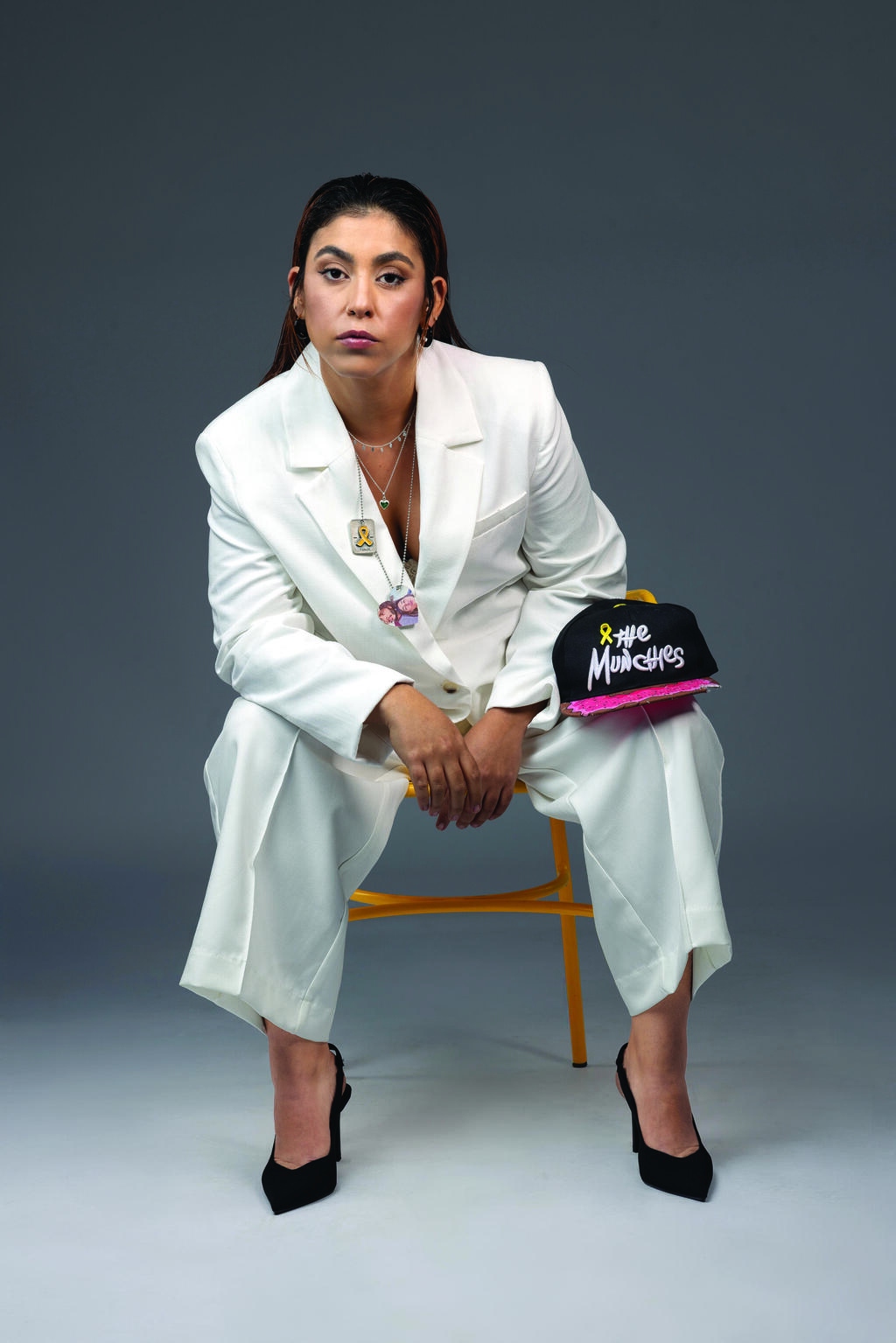
(Photo: Osher Eden Pshinski)
“In Mexico, we celebrated all the holidays and went to synagogue every Friday night,” she said. “At one youth camp, a representative of the Jewish Agency told us about a study program in Israel. I knew that in Mexico it would be hard to meet a Jewish man, so I decided to come here.”
She studied at a high school in Kibbutz Kfar Ruppin, where she was adopted by the Barkiahu family, whom she still calls “Mom and Dad.”
After serving in the army as an ambulance driver, she moved to Eilat to work in security and later opened a small cake business. Friends later convinced her to move to Nir Oz to work in the CannDoc medical cannabis greenhouses.
‘He saw a woman struggling to build a cabinet — and came to help’
“I was managing the nursery, and he worked in another greenhouse,” she said. “One day I was trying to assemble a cabinet. I like to think I’m an independent woman, but building furniture is not my talent. He noticed I was struggling, came over to help, and that’s how we got close.”
“At first I hesitated — he’s seven years younger, and I was worried we were at different stages in life. But soon I told myself, He’s a great guy — why not?”
‘Advocacy and activism’
Since her release, Gritzewsky has devoted herself to the campaign for Matan’s freedom, rarely pausing to deal with her own trauma.
“I can’t focus on my recovery — physically or emotionally,” she said. “I have to keep Matan in the public consciousness.”
She has formed a close bond with his mother, Einav.
“We have an amazing relationship,” she said. “People were surprised by how forcefully she fights, but anyone who knows her knows she’s fierce when it comes to her children. Two weeks after I was released, we set up a protest tent outside the IDF headquarters in Tel Aviv and launched the Begin Protest. I travel around the world to push for Matan’s release because he’s in real danger.”

(Photo: Amnon Kaplan)
Asked whether she fears what will happen when he returns, she answered softly:
“I’m not only afraid of the condition he’ll come back in — I’m afraid he might not come back at all. I’m also afraid for myself, wondering how we’ll rebuild our lives from the point where everything stopped.”
“Who can promise me that Matan isn’t being used as a human shield? I can’t sleep anymore. I can barely breathe. Since I was 16, I’ve dreamed of building a Jewish home here — and in one moment, it was all taken from me.”
‘I’m strong, but it’s out of my hands’
A video released last month showed Matan in captivity.
“He looked thin, lifeless, broken,” Ilana said. “It’s him — and yet it’s not him. I worry about his muscle atrophy, about what two years in a tunnel without sunlight or proper food have done to him, physically and mentally. What if he comes back and doesn’t like me anymore? What if my PTSD flares up — how will I stay strong for him if I fall apart?”
Hamas video of Matan Zangauker


She is in therapy, “as much as possible,” she said, “but 90 percent of my time is fighting.”
“What I’ve learned about myself,” she added, “is that I’m a strong woman. I know how to fight. But it’s not in my hands. I’m turning to my prime minister — who’s supposed to be the father and mother of us all — and he has the power to bring back my partner and my friends, but he’s not doing it. I came from Mexico because there, the government doesn’t care about its citizens. Turns out, here it’s not much different.”
‘We’re fighting for him’
Asked what message she would send to Matan if he could somehow hear her words, Gritzewsky did not hesitate.
“That we’re fighting for him,” she said. “That I know how hard it is to survive there, but I also know he’s holding on — for me, for his mother, for his sisters who need him. And that I love him, and I’m waiting for him.”