

On the day Ran Gvili's body was returned to Israel from Gaza, Orly Gilboa, the mother of lookout soldier Daniella Gilboa, still had a yellow ribbon and his picture on her car.
“Only after I paid a shiva call to the family did I hold a small ceremony,” she said, referring to the traditional seven-day Jewish mourning period. “I took it down and said, ‘That chapter of our lives is over and done with.’”
“I meant our immediate family, and the miracle by which the girls came back. Of course I remember there are other families who lost children, and for them that chapter will never close.”
“Even now, when the chapter of bringing back the living and the dead is over, the past has not really passed,” added Ayelet Levy, the mother of Naama Levy. “Everything that happened to us really happened, and I’m not sure people see that enough, or even that I give it enough space myself. Sometimes I have to remind myself that it happened,” she said, her hands tightening on the table.
“On the one hand, Naama is home, she is home. On the other hand, she was there for more than a year and three months, and it’s a phantom pain you still feel.”
Shira Albag, the mother of Liri Albag, who was abducted along with Levy and Gilboa, added: “Until someone kidnaps your child, you don’t understand what it means that there is no life and you cannot breathe. So even when Liri had already come home and was sleeping in her own bed, we still couldn’t stop thinking about those who were left there.
“I could only breathe in October, when the living hostages returned. And when the dead were also brought back, I finally felt I didn’t have to apologize for being happy,” she said, looking at the other women with an unspoken understanding. “I was afraid that if, God forbid, there were hostages left who would never return, living or dead, it would follow Liri and the girls for the rest of their lives. It’s clear that now their recovery is completely different.”
Hugging, laughing, exchanging compliments
On Jan. 25, 2025, after 477 days in Gaza, four surveillance soldiers — Liri Albag, Daniella Gilboa, Naama Levy and Karina Ariev — were released from Hamas captivity. Five days later, Agam Berger was also released.
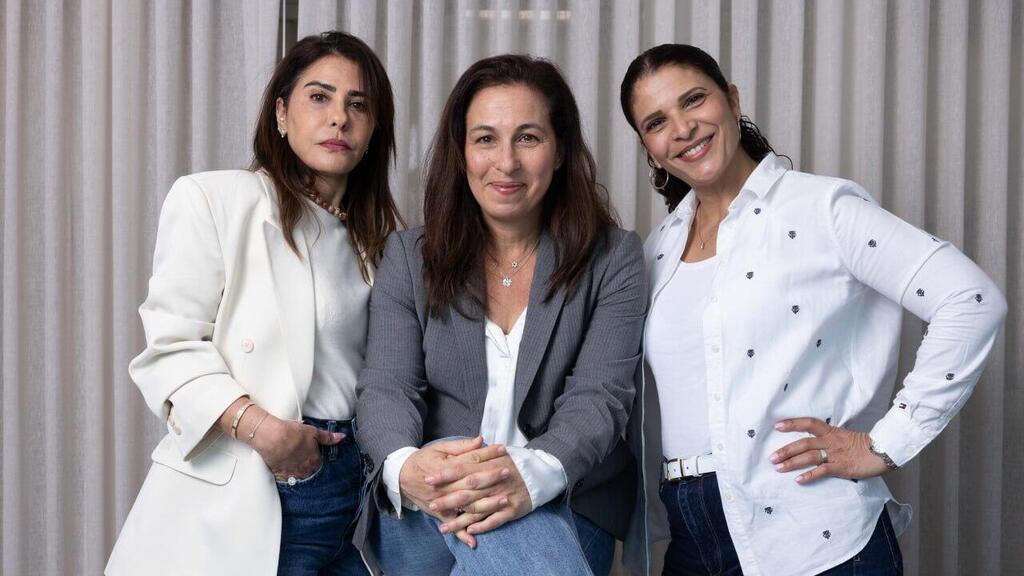
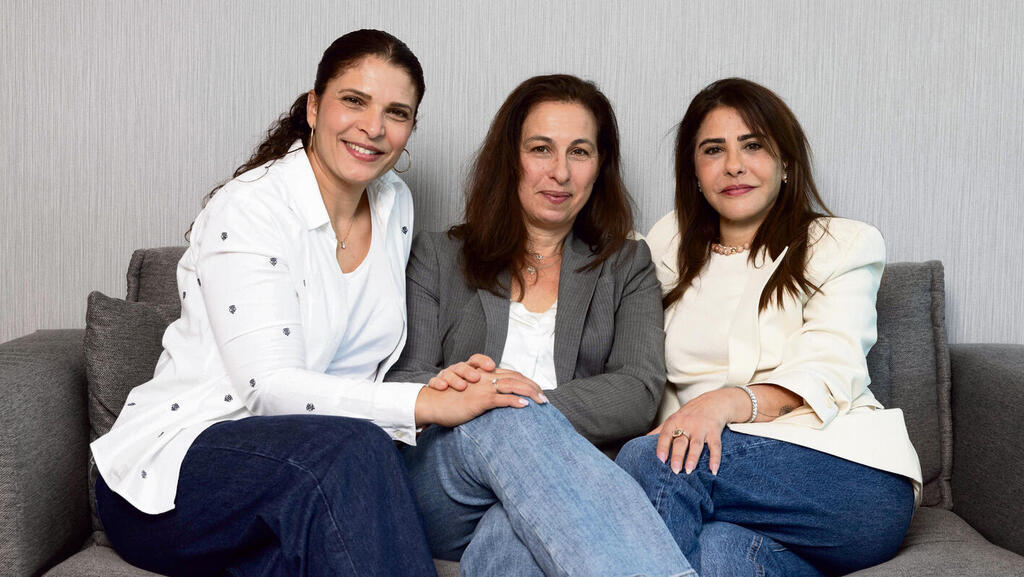
Marking a year and a quarter of freedom, Shira Albag, Ayelet Levy and Orly Gilboa — the mothers of three of the surviellance soldiers — met for our camera as photographer Oz looked at them through the lens.
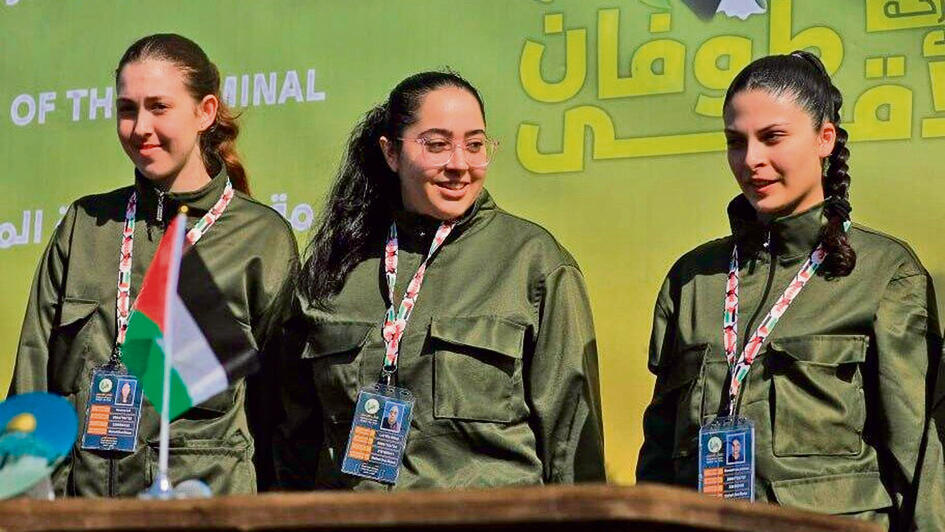
From right: Daniella, Liri and Naama on the day of their release
“It’s nice to see your eyes shining,” he said as the three hugged, laughed and complimented one another on nail polish or a new outfit (Shira: “I passed along the clothes I wore to Hostages Square”), and spoke about their spring plans: the Albag family will travel to Thailand, the Levy family will visit their son Amit, who is traveling in Costa Rica, and the Gilboa family will hold a traditional Passover Seder at home in Petah Tikva.
And what about future plans?
Orly: “It’s hard for them to plan long term. The planning is short term, to live in the moment, because sadly they understand that no one knows what will happen next, just as they never imagined what would happen on Oct. 7.”
Shira: “One day people hug you and you’re fine with it, and another day you don’t want anyone to say, ‘Liri, you’re amazing.’ It depends on how the night went and what the triggers are. And beyond that, they are still adolescents, because they were abducted very young.”
Ayelet: “I agree with Orly. For Naama, life is only here and now. The furthest plans are maybe two months ahead.” The three agree that the year and a quarter in which time stood still created significant gaps in their daughters’ coming-of-age process.
“Quite often when we talk about something, Liri reminds us: ‘You forget I wasn’t home for a year and three months,’” Shira said.
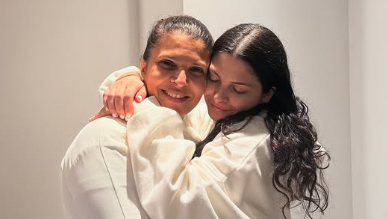
Daniella Gilboa embraces her mother, Orly, after her release
“Sometimes Naama asks about something trivial she has no idea happened, and I say, ‘She really wasn’t here, and a gap was created,’” Ayelet added.
Shira continued: “Yesterday my nephew made an angry hand gesture, and suddenly Liri told him, ‘Don’t do that. That’s a terrorist gesture, it reminds me of Hamas members.’
“So yes, they came back wanting to seize life, to make up for what they missed. Still, there are many triggers we are not always aware of,” she said.
A silence fell, until Orly suggested they might need to give more space to what the girls went through — a reality that is hard even to imagine. Shira responded that the choice to move forward is clear, “because no one wants to take them back in their thoughts to places that are hard to touch.”
Like thoughts about possible sexual abuse they may have endured?
The three mothers grew protective and said little.
“The thoughts about what might be happening to them were always with us,” Shira said.
“There were many fears along the way,” Orly added.
And how did you cope? By repressing it?
“Don’t underestimate the power of repression,” Ayelet said.
Orly said repression helped her get through the period and function around the clock to bring the girls home.
“People always ask me, ‘How did you get through it?’” Shira said. “I think today, after everything I know we went through, I wouldn’t be able to do it again. Where did we get the strength?”
Where did it come from?
“From understanding that Liri survived Oct. 7, that she was there, kidnapped in Gaza, and that if not us, there was no one who would fight to bring her home.”
Ayelet: “I remember a moment when my oldest son, my partner and my sister — who were by my side the whole time — were literally holding me up, because I had no strength left. There were moments when I said they had even taken away my right to kill myself, because how can I do that when my daughter is there? ‘You have no choice. You have strength,’ that’s what I told myself.”
Orly added: “I’m a realistic and active person, and it was clear to me that I had to get up and fight for Daniella. There was no option of waiting and mourning my fate.”
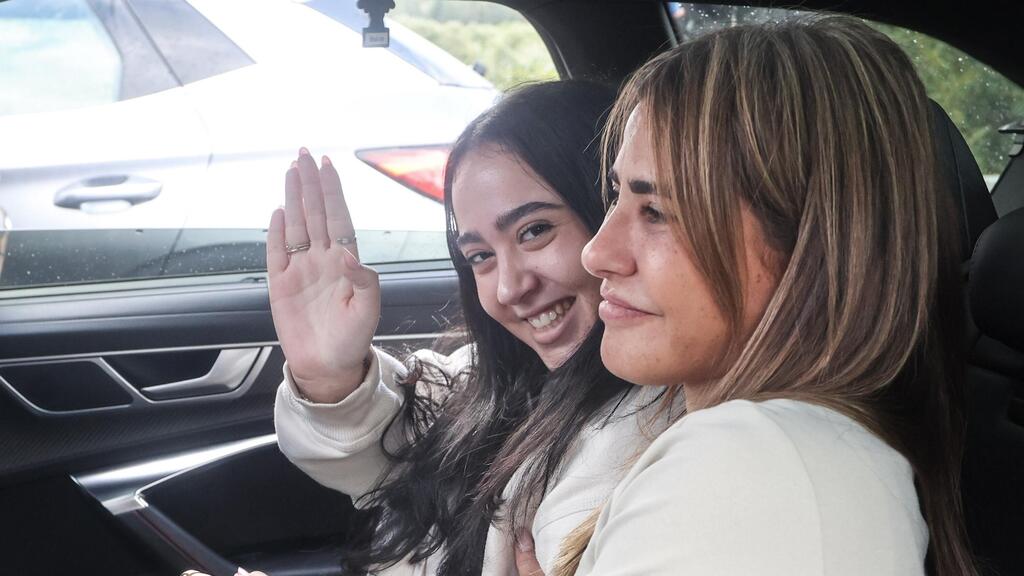
Liri Albag returns home with her mother, Shira
(Photo: Gil Nechushtan)
Racing against time
It is not only the mothers, brought together by fate, who remain in touch. The girls do as well, communicating in a shared WhatsApp group, meeting on birthdays and going out together.
And you don’t hold them back out of fear?
“They don’t ask us at all,” Shira said with a laugh.
Orly said Daniella has moved in with her boyfriend, Roy, and their dog, Zik. “I still try to accompany her places, as much as she lets me, but she’s independent and doesn’t ask me where to go or when.”
Shira: “Liri still lives at home. We’re not letting her leave so quickly. She’s racing against time, going to sleep late and wanting to do everything — friends, the army, recovery. She does a lot of boxing, and it gave her back her confidence.”
Ayelet: “The most significant part of Naama’s recovery is that her life remains private. She’s not comfortable being a public figure, except when it was focused on the struggle to bring the hostages back. She knows the day will come to gather everything she went through into a story from her own perspective, but everyone has their own pace.
“And as for worry, surprisingly I’ve gone back to being the non-worried mother I was before. I let go. Naama is a young woman and does what she thinks is right.”
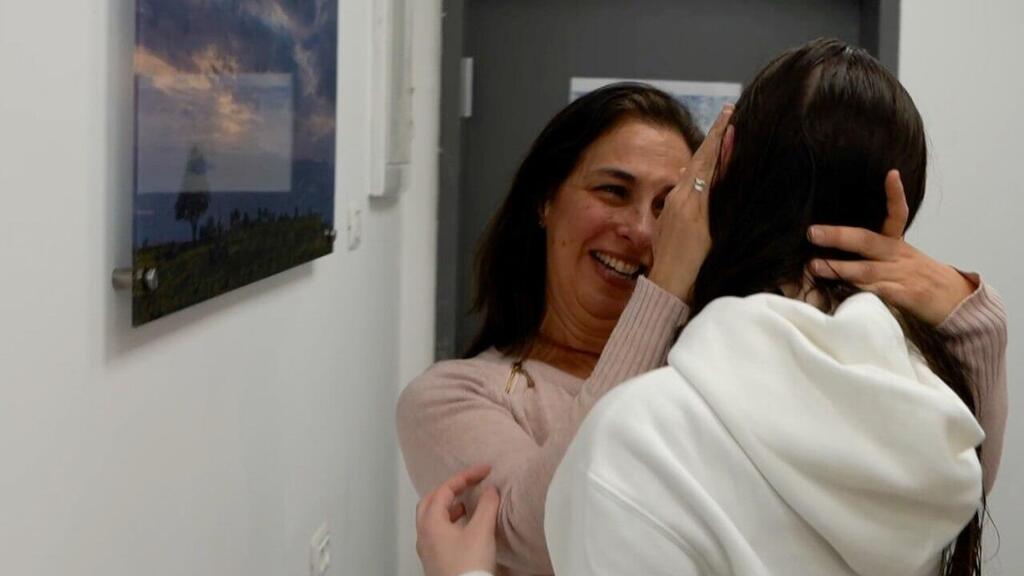
Naama Levy and her mother, Ayelet, at their first meeting after her release from captivity
(Photo: IDF)
“We’ve already been through the worst, so what could happen now, they’ll kidnap her again?” Shira said with a laugh, adding that unlike before, she now makes sure to speak with her children every few hours. “Because now I understand that everything can change in an instant, so I check in every few hours to see where everyone is.”
“I don’t let it take over me, and I won’t let fear stop Noam, who is already 17 and talking about enlisting,” Orly said, though it was clear the wound remains deep.
The hardest times are on weekends and holidays
The hardest times, they said, were Fridays, Saturdays and holidays. On Friday afternoons, toward evening, the mothers would speak with one another and try to encourage each other.
Go back to the moment you thought the girls might not return.
Shira: “We always believed they would come back, we just didn’t know when. My first crisis was when Noa Marciano was murdered.”
Orly: “Because it disrupted what we were told — that they were protected because they were an asset for Hamas, that nothing would happen to them. Then Noa was murdered, and we understood no one was safe there.
“Another major breaking point was when three hostages were killed by our own forces, and you think to yourself, ‘Just let the girls not try to escape.’ And then when the six were murdered,” she said, recalling traumatic milestones etched into the Israeli public consciousness.
Ayelet: “But I always had faith, and I also took very practical steps — and some not so practical. For example, I lit five candles, one for each girl, and said each of their names. To the point that now, when my son is in South America and has an earache, right after giving him medical advice, I light a candle. I felt like I had a system,” she said with a laugh. (Ayelet is a family physician.)
(Photo: Oz Moalem)
How did they cope with the war with Iran?
Shira: “The earlier round with Iran was close to their return and triggered more reactions.”
“The first times during the previous round were very difficult for Daniella, and it throws us back again. We are all post-traumatic,” Orly said, adding that she is now processing everything through writing — a kind of war diary she hopes to publish as a book.
When Orly says “we are all post-traumatic,” she is referring to all the hostage families — 255 families who discovered that despite assistance from various sources, there is still no comprehensive support system to help them return to daily life. As a result, together with the Shashua Family Foundation, they established “Organization 255.”
Ayelet: “‘Organization 255’ provides each person with the tools they need for rehabilitation. I, for example, cut my routine in half, and all my energy is invested in my work as a community physician — but I don’t have state support for that, not even financially, which is significant. The organization asks what our needs are and fights for recognition and support.”
Shira: “Just as when there was no state framework, the Hostages Headquarters was established and took care of us — this organization is just as important. With time, I understand how post-traumatic we are.
“When the girls were kidnapped, we were in ‘fight mode.’ When they came back, we were in ‘euphoria mode.’ Now we understand what happened to us. We went through trauma. We are not the same people, and we can’t return to the same lives. Even after a hostage comes back, life is different. There is a need for an organization that understands and helps.”
Ayelet summed it up in what could serve as the headline of their conversation:
“The past has not passed. We will always be mothers of girls who were held captive, and we don’t know where it will meet them — or us — a decade from now.”