

Six months ago, I met Amit Soussana high in Nepal’s Annapurna range, in a frozen landscape where warm friendships were formed. Now we are sitting in Herzliya, in the heat of the Israeli summer. The only ice is floating in a glass of cola. We have good reason to raise our glasses: this week, we published a book together. Over the course of writing it, we met many times. Still, some questions remained unasked. So now, two chronic animal lovers sit down to tie up a few loose ends.
Tell me, was it worth being kidnapped and coming back two months later as a celebrity?
Amit gives me a look that suggests I may have gone too far.
“I’m actually glad you asked that stupid question,” she says, “because it comes up in living-room conversations more than people admit, and it’s time to answer it once and for all.
“As you know, on the evening of October 6, I was in Sderot with my mother, and she suggested I stay the night. If you asked me, in a ‘sliding doors’ scenario, whether I would have stayed there and spared myself everything that happened afterward, my answer is that I would choose to go through it all again. But not because of any ‘celebrity’ that came with it. I would choose it because everything I have gone through since October 7 made me who I am today. And I love who I am today.”
Footage from Amit Soussana’s abduction on October 7
(Photo: Used under Section 27A of the Copyright Law)


What is the hardest part of being a hostage?
“The hardest thing is the denial of basic freedom. You are not the one who decides when to sleep, when to wake up or where to go. You are held without choice, and you have no control over the questions: ‘When am I going home?’ and ‘Will I even get out of here alive?’
“A second earlier, I had a normal, free life, and suddenly I was chained in the dark. A prisoner in jail has a defined sentence; he knows how long he is going in for, no one denies him the most basic biological freedoms: a shower, a bathroom, food and water. In captivity, those rights do not exist.
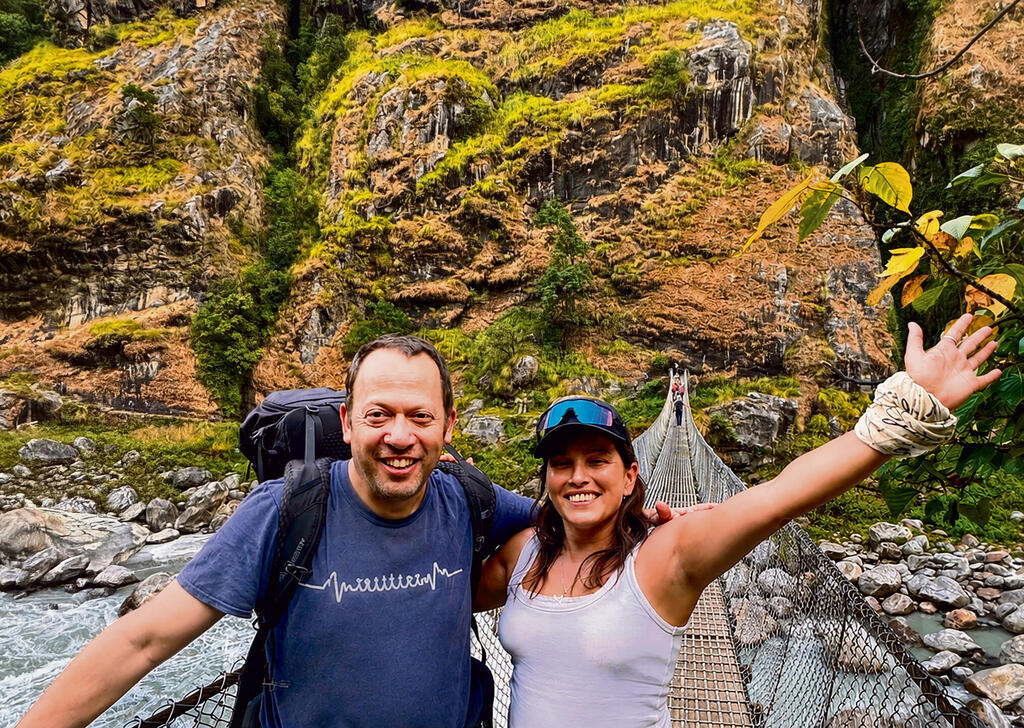
Another thing that drives you crazy is knowing that home is five minutes away, and you are being held in another world.
“By the way, on that very point, one of the 'gifts' I received from this ‘experience’ is the ability to appreciate the most basic things people usually take for granted. I understand how lucky we are to have control and the ability to choose. Every time things are hard for me, I remember that and draw strength from it. It is a gift that someone who has not gone through captivity or a drastic change in life, such as an accident that left them disabled, cannot truly understand.”
I think for a moment about the ordeal she endured and the difficulties she is still facing. Soussana was kidnapped from her home in Kfar Aza on October 7 and held by Hamas for 55 days. During her captivity, Hamas terrorists abused her emotionally and physically. Since her release, she has been on a complex journey of recovery.
If you were sitting with God over coffee, what would you ask?
“I would ask, ‘What do you want from me? What did I do to deserve this? Why did I have to go through all of it?’
“In captivity, we used to repeat the saying, ‘In life, you get what you can handle', trying to make sense of what was happening. But how much more hardship am I supposed to handle? I just want life to feel easier already. I want to wake up every morning with a smile. I want the present to feel hopeful enough that I can say, with a full heart: what happened, happened, but from now on, things will be much better.”
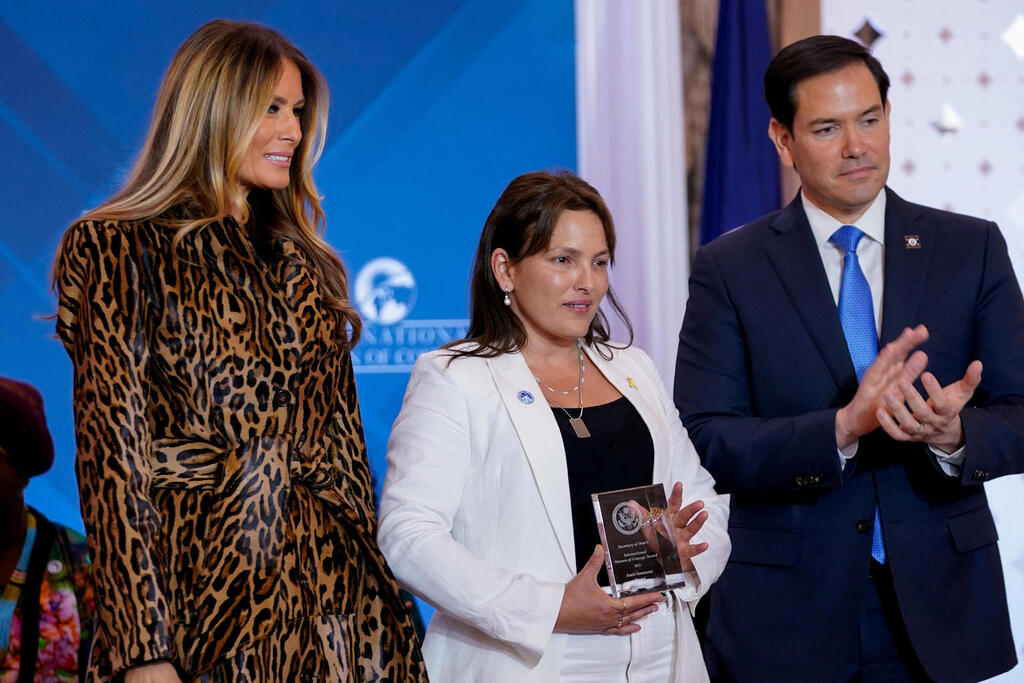
Soussana receives the U.S. Secretary of State’s International Women of Courage Award
(Photo: REUTERS/Nathan Howard)
And if God said, ‘Fine, I hear you. I went too far, and I’ll grant you one wish,’ what would you ask for?
“That he give me the strength to face whatever comes next, just as he helped me then. That he help me stay strong in life after captivity. That I never forget how lucky I was to get out, and how nothing in this life can be taken for granted: freedom, air, open space. And that I remember all of that in the moments when I feel I have no strength left to keep going.”
Do you feel that what you went through made you more sensitive to the hidden suffering of others?
“Without a doubt. I’m extremely sensitive. I always was, but now it can feel unbearable. It’s as if my heart is too open, and sometimes it’s too much to contain.
“Whenever I hear someone describe a captivity experience similar to mine, I break down. It is hard for me. I start crying from a place very deep inside. In some ways, it is easier for me to connect to someone else’s pain and let the sadness out. When I think about what happened to me, I still repress it.”
Regaining strength
The questions that stayed with me during the journey have not let go. As someone who has never been taken hostage, I keep trying to understand how deeply such an experience can reshape a person’s inner world.
Do you think there will come a day when you can say, ‘I am no longer defined as a hostage; My recovery is complete’?
“I hope the day will come when captivity is only one chapter in my story and not the headline. Obviously, you cannot erase such an experience. The trauma will always be part of me. But I believe you can reach a place where it no longer manages you.
“Maybe recovery is not a destination you reach, but a path you slowly learn to walk. I feel my identity becoming wider again, bigger than the word ‘hostage,’ and to me, that is a victory.”
“The journey to Nepal reminded me that I can still set goals and face difficulty. It was an important milestone, but only one step in a recovery that is still unfolding. “It gave me a chance to see myself not only through what I survived, but through what I am still capable of doing. In that sense, the Annapurna journey became a real milestone in my recovery.”
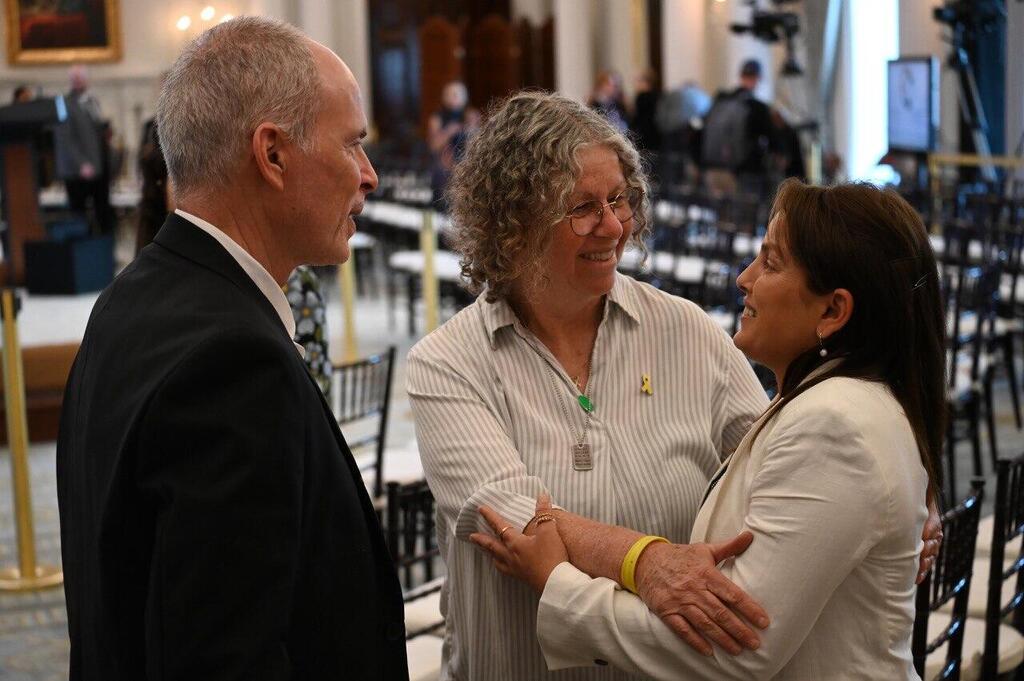
Soussana with former hostages Aviva and Keith Siegel, with whom she was held for part of her captivity
(Photo: Liri Agami)
Which parts of your life feel restored? Which parts still feel fragile and in need of further healing?
“I feel I have rebuilt a lot of my trust in myself, and in people in general. I have started dreaming again, setting goals and doing things that fill me.
“I feel that it only really began once all the hostages came back from Gaza. Until then, I could not even start thinking about those things. The guilt was so heavy that I did not want to think about the future, about normal life, or about anything unrelated to the hostages. Once they returned, something loosened. Suddenly, I could do something enjoyable without feeling guilty.”
In what ways do you feel you have changed?
“Maybe the most noticeable change is my energy. My energy and concentration dropped sharply, but they are improving. Today, I can do things that were much harder a year ago, simple everyday things like watching a movie, walking in the park or even cleaning the house.
“For a long time, almost all my energy went into just coping. Now I have more room for other things: friends, family and joy. I still have to listen to myself, and I still cannot always commit to things the way I would like, but I feel my strength gradually returning.”
“In one session with my psychologist, I could identify the change. Until then, most of our conversations dealt with what I had been through. In that conversation, I simply talked to her about life itself: a date I went on, someone who annoyed me, ordinary things everyone goes through. She smiled and said she was happy those were the topics of conversation. Suddenly, I understood that my life no longer revolved only around the trauma. There was room for the most ordinary things too, and to me that is a meaningful part of recovery.
“It also shows in the fact that I speak less about what happened. Not because it matters less or hurts less, but because it no longer fills every moment and every thought.
“Don’t get me wrong. It’s not that everything is easy now. There are mornings when I wake up with a heaviness and sadness that are hard to soothe. But I am working on it, trying to get up every day and move toward another positive change, because I hate feeling that way.
“And when it comes to feeling safe, there are still days when my body and mind remind me of what I went through, even though I know I am safe. I have learned that recovery does not necessarily mean returning to who I was before, but building a new life that is full and meaningful.”
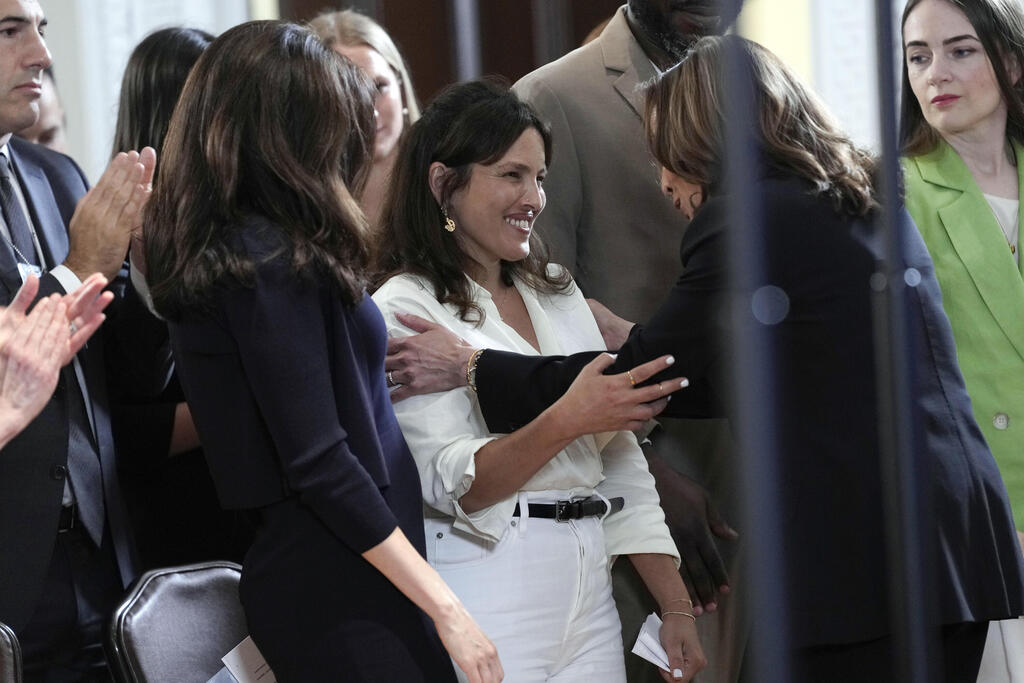
Soussana during a meeting with Kamala Harris
(Photo: AP Photo/Susan Walsh)
When you look today at the 'Amit of late 2023', the one who was there in captivity, do you feel she is a different person, or do you see a clear line connecting her to the Amit sitting across from me?
“I think there is a very clear line connecting us. Many things in me have changed, but the core is still the same. I am still the same Amit who always loved her quiet, who was always sensitive, stubborn, optimistic and believed in people.
"Of course captivity changed me. It changed the way I look at life, at people and at what truly matters. It taught me to appreciate things that once felt obvious, and it left scars that will always be with me. But I do not feel that captivity took away who I am.”
“I think one of the things that helped me survive was that, somehow, I did not give up on myself. Even when everything around me was trying to break me, I kept believing that I just had to hold on a little longer, that eventually I would be okay, get out and come home.
“In the end, captivity changed my life profoundly, but it did not change who I am or what I believe in: my compassion, my optimism, my values. It means so much to me that it did not manage to take those things from me. Sometimes, I even feel it strengthened those qualities.”
You returned to a country still living through the same event, with the war ongoing and other hostages still in Gaza. How do you go through such a personal, intimate recovery process when everything around you remains so loud, painful and public?
“When I was in captivity, I constantly imagined what would happen if I got out alive. I thought that the moment I was released, I would be the happiest person in the universe and leave the trauma and pain behind me.
“I imagined going straight to the kibbutz to bring back my cats. I thought I would live in Sderot and return to my job. I had no idea how much the world I knew had changed. I did not know about everything that had happened here during the two months I was held captive.”
“At first, after my release, people tried to shield me from everything that had happened. But I could still feel it in the air and see the rupture on people’s faces.
“I understood that my recovery would not take place in silence. I had entered a new reality in which I was not only trying to heal, but also becoming a public figure. The love and support I received amazed me. Strangers told me how much they had prayed for me. I spoke before audiences, gave interviews, traveled the world, made my voice heard and tried to speak for those who could not speak for themselves.”
“And there was the constant pain of knowing my friends were still in captivity. It is hard to explain: on the one hand, you are free, but your heart and soul are still there. Every time I tried to return to life, I carried them with me. I could almost feel what they were feeling there, and it destroyed me. I felt a deep obligation to do everything I could to remind people they were still there, and that we could not stop fighting for them.”
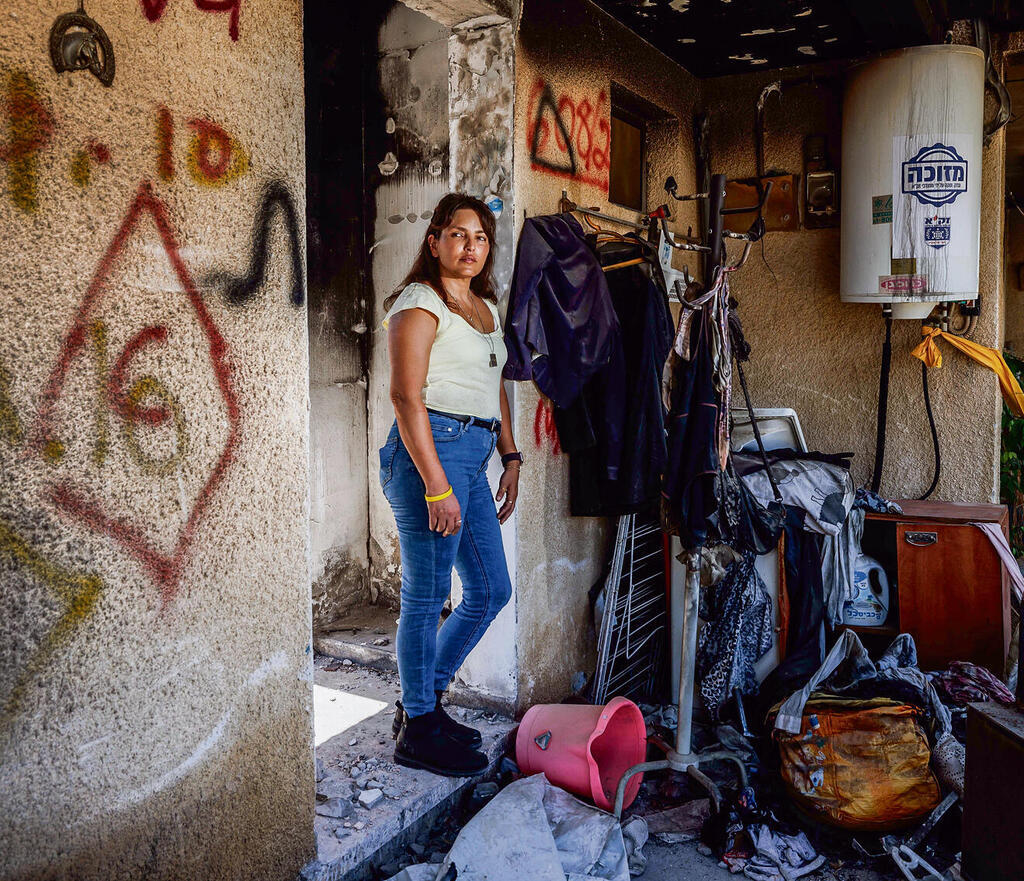
‘You are free, but your soul is still there’
(Photo: Ziv Koren)
“The greatest challenge was finding a balance between the two: allowing myself to recover, while also continuing the public fight responsibly. It was not easy. Even when I wanted to go out, speak and fight, I did not always have the strength. I kept feeling I should be doing more, that I was not doing enough, but I truly was not capable. Over time, I found more balance between my recovery and the public struggle. But until they returned, that tension was always with me.”
‘For the first time, I was not Amit the hostage’
For me, the Annapurna journey was nothing less than a life-dividing experience. I wonder whether Amit and I are on the same page.
Six months after the Annapurna journey ended, what do you feel it gave you?
“So much. It was the first time after captivity that I was not ‘Amit the hostage.’ I was just one of the group, part of an amazing group in which everyone had their own story. We went through something difficult together, but it was a difficulty we had chosen. Unlike captivity, it was not forced on me. I entered that adventure with open eyes. I knew it would be hard, especially because I suffer from knee and foot pain. It was mentally difficult too, but that is exactly what gave me a renewed sense of capability.”
Were there moments when you broke down during the journey?
“Of course. Many times I asked myself why the hell I had chosen to do this. What was so bad about my comfortable life at home, with a hot shower and Netflix? I kept thinking, ‘What, didn’t I suffer enough?’ But in the end, the incredible people around me, the landscapes and the sense of accomplishment were stronger than the freezing showers.”
Tell me about one especially hard moment.
“On the first night in Kathmandu, I had a panic attack that caught me completely unprepared. The room I was supposed to sleep in reminded me of Gaza: the colors, the shower, the smell. Suddenly, I was thrown back into captivity.
“Ori Kaiser, a dear friend and one of the trip’s organizers, asked if I wanted to change rooms and said they would try to find a solution. I said no. I decided to cope. When I returned to the room a few hours later, I felt much more at ease.”
“Look, this needs to be understood in a broader context. As a returned hostage, people were always extremely considerate toward me. If something made me uncomfortable, it was stopped immediately. Suddenly, I was part of a group with schedules to keep, and it was clear that the room for special consideration was much smaller. At first, it was hard, especially so far from home. I felt trapped. But in the end, I managed. I kept up with the schedule and was like everyone else.”
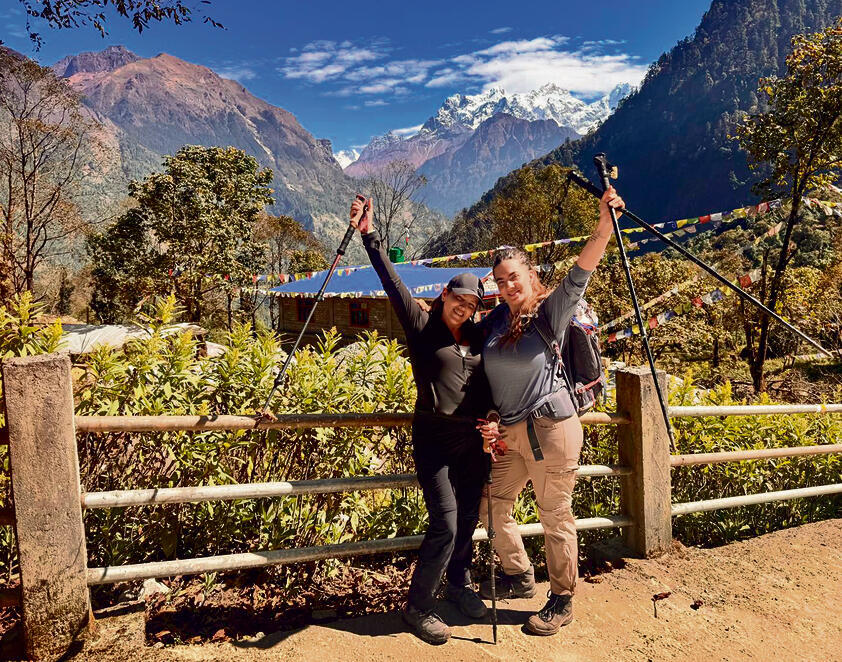
‘I entered the adventure with open eyes’. Soussana (left) with Shir Eisen in Nepal
Because the delegation had more than 100 people, I wonder if she and I connected to the same souls.
Tell me about people you met on the journey, people who touched your heart.
“I met many people. Even you, Asher, although we got off on the wrong foot because of your pathological lack of tact. It took me a little while, but eventually I realized you were less hopeless than I first suspected, and thanks to that journey, our book came into the world.”
“I believe everything happens for a reason. I also met Avida Bachar, who lost his son Carmel and his wife Dana in the massacre at Kibbutz Be’eri. To be honest, one of the things that really pushed me to go was hearing that he would be there too. I had seen many interviews with him and felt a strong connection to what he said. I immediately saw what a special, strong person he is, and how painful what he went through was.”
“There are Shir, Shahar and Lital, the wonderful women I am so happy I met. They were assigned to accompany me on the journey, good souls and friends for life. And of course dear Ori Kaiser, who invited me on the journey. I will be grateful to him forever. He is a true friend.”
Which part of the journey will you never forget?
“The hardest part, which was also the most moving. I am talking about the crazy day when we walked nearly 15 kilometers (about 9 miles) through knee-deep snow while a storm raged outside. It was freezing and I was soaked to the bone. Despite the difficulty, I was determined to continue with the group that decided to complete the entire route and descend to the lower village, whose name I cannot remember because my brain was so frozen.
“When we arrived at the village down the mountain, exhausted and completely wet, just as the last light was fading, we discovered there were no rooms left. All the guesthouses were full. We sat in one of the restaurants to warm up by the fire, and I just broke down. My legs hurt badly, and I thought I would have nowhere to sleep.
“Then people from the group stepped in. Yoni was incredible, running from guesthouse to guesthouse looking for vacant rooms. He was determined not to rest until everyone had a place to sleep, and said he would take care of himself last. Tal and Noam helped me warm up, ordered food, comforted me and cared for me with so much love.”
“I hate showing weakness and accepting help, but in that moment I simply let go and allowed them to be there for me. It was amazing. Later, an Israeli guy I did not know came over. He had recognized me there, in the middle of the mountains in Nepal, in the middle of nowhere, and said he was traveling with friends who wanted to help. They had booked several rooms and wanted to give me one of them. When I reached the room, I found a moving note and chocolates waiting for me on the bed.”
“A moment earlier, I had been walking soaked through a wild storm. Suddenly, I was surrounded by so much support. That is an amazing side of our people, and it is a shame it does not get more attention. It is what truly gives hope when everything around us feels so fragile and frightening.”
And what was it like to come back?
“Strangely, coming back to Israel was actually the harder part. You return to the warm bed, the shower and the TV shows you had fantasized about, and suddenly there is a crash. You miss the group, the people, the walking. A kind of emptiness takes hold, even after I thought I was coming back stronger.
“But I got through that too. I feel that every journey, every path, everything I do today, like flying abroad to speak with communities, gives me meaning and fills me up, but afterward, there is always a drop, almost a kind of depression. Little by little, I am learning to regulate those swings, to give more room to the good parts so the harder part becomes shorter.”
Being simply Amit
The bond between Amit and me, two people who love nature, travel and animals, led to the writing of the book My Kidnapped Friend, published by Yedioth Books. It tells the story of a climb from the depths of the tunnels to the summit of a mountain.
What did you feel when you first held the book that tells your story?
“When I held the book for the first time, I felt it summed up more than just the writing process. The process itself was not always simple. Sometimes it was even frightening. But when I opened the book and saw all the small details, from the opening poem to the epilogue, suddenly everything came together. I felt it was a historical document.
“What moved me especially was that the epilogue was written after the last hostage had returned. For me, that created a very strong sense of closure, as if reality itself had allowed the book to end at the right point in time. When I held the book for the first time, I did not see only the story of captivity, but the path I had taken since then to return to being simply Amit.”
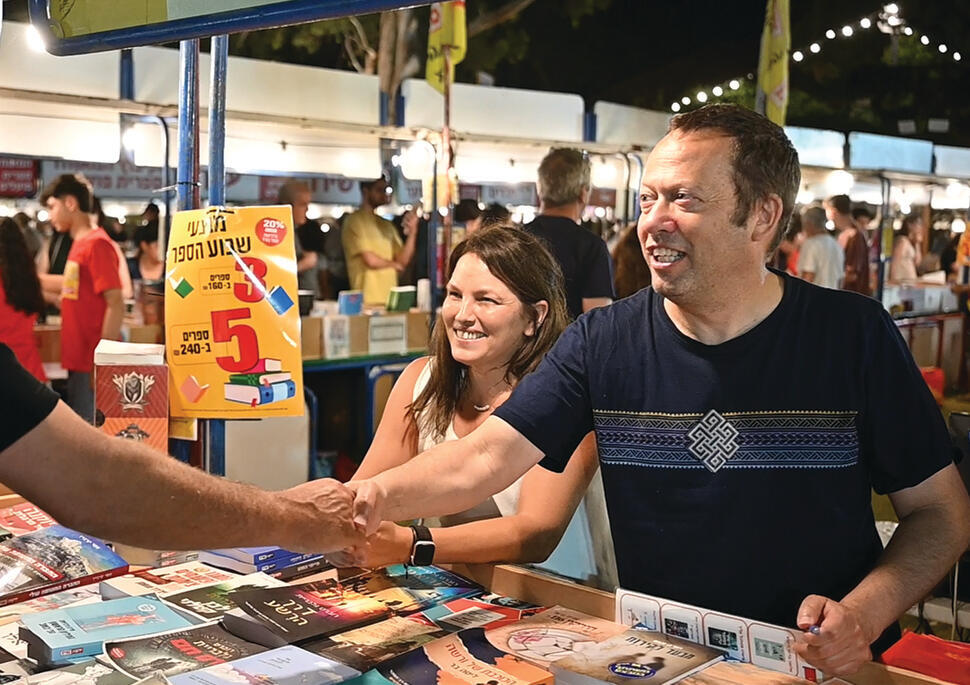
‘Reality allowed the book to end at the right point in time'. Soussana and Kravitz at Hebrew Book Week
Did you have any concerns while the book was being written?
“There were concerns. First, it was not a book I wrote on my own. If someone else was going to tell my story, it was very important to me that it stay true to me, to the facts, to the emotions, to my voice and to who I really am.
“I also think there was a kind of avoidance in me. It was hard to go back there and reopen what I had been through. Looking back, I understand that maybe I simply was not ready yet, though I could not even say that to myself at the time. I also wondered whether it was too soon. Was I already able to look at it from the outside, or was I still too close to what had happened?”
“What helped me was time, and above all the trust we built slowly and carefully. I got to know you and learned to trust you. I knew you were really listening, that you understood my pace and respected it, even when I suddenly disappeared for a week. I trusted you, and I felt we were writing the book together, that you were listening to every comment I had. As the process went on, I felt you really knew me, and that gave me the confidence to continue.
“Today, I understand that I did not have to be completely ready to begin. In a way, the process itself helped me become ready.”
How did your family respond to the book?
“It was complex for them. It was almost as if each of them read a different book. Each one of them connected to a different part of the story, depending on what they had gone through themselves. It is my story, but it is also theirs. They were part of it, and each of them experienced the fear, difficulty and pain in their own way. The book brought them back to moments they had lived through and filled in the picture from the Gaza side of the border. It gave them what I could not, or did not want to, tell them after I came back. There is something about reading that allows people to pause and understand more deeply.”
“I feel my family sees the book not only as documentation of what I went through in captivity, but also as documentation of the road I have taken since. For me, that was no less important. I also think it gave them a way to understand me a little differently. Sometimes, through writing, you can say things that are hard to say out loud. I feel they are proud of me for managing to take my case and turn it into something that can give strength to others.”
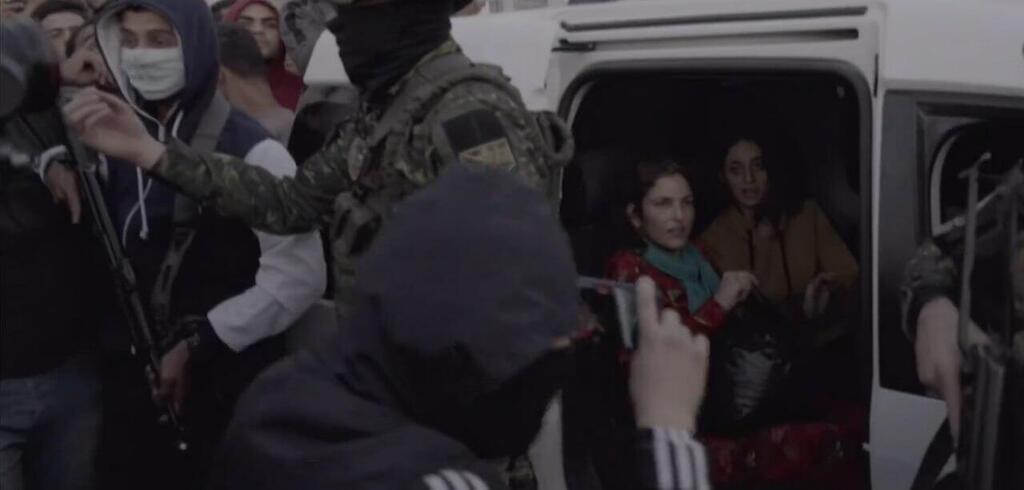
Soussana on the day she was released from captivity
If you could place the book in the hands of three people and say, ‘Read this,’ who would they be?
“The truth is, I think less in terms of specific people and more in terms of groups. The first group is people who follow what happened on October 7. We were all exposed to many videos and testimonies, but behind every testimony and every video is a person whose entire world was shattered. I would want the book to help readers see the human place beyond the facts. Behind every story is a person and a family trying to rebuild, and to me, that is the most important perspective to share.”
“The second group is people who accompany trauma survivors: family members, friends, educators and therapists. Not necessarily to learn my story, but to understand something broader about trauma and recovery. People sometimes tend to think that if someone looks strong, smiles or ‘functions,’ it means they have already overcome the trauma. But reality is much more complex. You can be very strong and still fight every day, still carry inside you what you went through.
“I think one of the things I most want people to understand is that ‘resilience’ does not mean there is no more pain. Sometimes it simply means you have learned to live with the pain. It is truly a daily war, but I believe you must not give up, because the will to live and be happy is stronger than anything.
“The third group is teenagers, who, in my view, are the main audience the book was written for. I believe teenagers can contain complexity more than we sometimes think. If the book helps them develop a better understanding of what happened to us on October 7 and throughout the period that followed, then we did the right thing. I want the book to help them discover empathy, responsibility and an understanding of reality. Young people are the generation that will have to carry the memory forward, and I believe a personal story can reach them in a better way than lists of facts and figures.”
Would you want the book translated into Arabic?
“Yes. I do not know who would read it or how they would respond, but I believe every testimony should be accessible to anyone willing to listen. If the book can also reach Arabic-speaking readers with open hearts, then of course I support that. The story was not written from anger, hatred or revenge. It was written to bear witness to what happened to me, as it happened to many others, and to remind people what it means to lose freedom and humanity. I want people to understand that what happened is not about politics, but about humanity, about good and evil.”
The waiter arrives and asks whether he can clear the table. “Yes,” I say, winking at Amit. “Thank you. We are done with the salty, the bitter and the sour. Now we need something sweet.”