

Aviation is built around strict procedures, redundant systems and layer upon layer of safety. Yet over the decades, there have been moments when reality proved stranger than anything a screenwriter could invent.
Human error, rare mechanical failures, unexpected decisions and almost impossible coincidences have produced incidents that continued to fascinate investigators, aircrews and aviation enthusiasts for years. Here are 10 of the strangest, most surprising and unforgettable.
Gallery
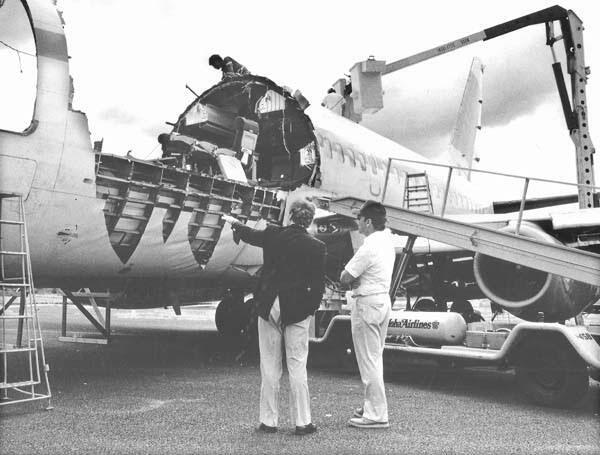
Aloha Airlines aircraft after a large section of the cabin roof tore off in midair, 1988
(Photo: FAA)
Flying without a roof
On April 28, 1988, Aloha Airlines Flight 243 took off from Hilo, Hawaii, bound for Honolulu. About 20 minutes after departure, as the Boeing 737 flew at roughly 24,000 feet, it suffered a catastrophic structural failure: a large section of the upper fuselage tore away in flight, leaving an entire stretch of the passenger cabin completely open to the sky.
Passengers sitting in the area suddenly found themselves inside what looked almost like a flying convertible, exposed to violent winds, deafening noise and rapid decompression.
Flight attendant Clarabelle Lansing, who was standing in the aisle at the time, was swept from the aircraft and her body was never found. Despite the extreme damage and fears that the plane could break apart, the flight crew managed to retain control and land safely at Kahului Airport on Maui. Everyone else aboard survived, although dozens were injured.
Investigators concluded that metal fatigue and accumulated damage to the fuselage, partly linked to the aircraft’s enormous number of takeoff-and-landing cycles in a marine environment, contributed to the extraordinary rupture.
The captain sucked out of the plane, and survived
On the morning of June 10, 1990, British Airways Flight 5390 departed Birmingham for Malaga with 81 passengers and six crew members aboard. About 13 minutes after takeoff, as the aircraft climbed through roughly 17,300 feet, a deafening bang erupted in the cockpit.
One of the front windshields, on Captain Tim Lancaster’s side, had blown out because of the pressure difference. The explosive decompression ripped Lancaster from his seat and pulled his upper body outside the aircraft, while his legs remained inside the cockpit.
Flight attendant Nigel Ogden lunged forward and grabbed him, with other crew members later joining the effort to hold Lancaster against the tremendous airflow and freezing temperatures. For portions of the roughly 20-minute ordeal, they believed the captain might already be dead, but refused to let go.
First Officer Alastair Atchison, meanwhile, took sole control of the aircraft and made an emergency landing at Southampton. Lancaster survived with fractures, bruising and frostbite.
The investigation revealed how the extraordinary incident began. The windshield had been replaced shortly before the flight, and 84 of the 90 bolts securing it were smaller in diameter than required. The remaining six were also the wrong size.
The plane that landed itself
On February 2, 1970, a U.S. Air Force F-106 Delta Dart interceptor took off from Montana on a training flight. During an air-combat exercise, the aircraft entered a flat spin, rotating almost horizontally while losing altitude, and the pilot was unable to recover.
After every attempt to regain control failed, he made the obvious decision and ejected, leaving behind a fighter jet that appeared certain to crash within minutes.
Instead, the opposite happened. The change in weight and balance caused by the pilot’s ejection altered the aircraft’s behavior, and the F-106 recovered from the spin on its own.
With nobody in the cockpit, it continued descending, stabilized and eventually made an astonishingly gentle belly landing in a snow-covered field near Big Sandy, Montana.
The damage was relatively minor. The aircraft was recovered, repaired and even returned to operational service. The incident earned it the famous nickname "Cornfield Bomber," although it was neither a bomber nor, at the time, sitting in an active cornfield. The aircraft survives to this day and is displayed at the National Museum of the U.S. Air Force.
All four engines died, then came back to life
On June 24, 1982, British Airways Flight 9 was flying from London to Auckland, with stops in Asia and Australia. As the Boeing 747 cruised at night at around 37,000 feet over Indonesia, the crew began noticing strange phenomena: a bluish glow around the windows, a sharp smell of smoke and what appeared to be dust flowing over the wings.
Within minutes, one engine began losing power, followed by another, then a third and finally the fourth. All four engines had shut down.
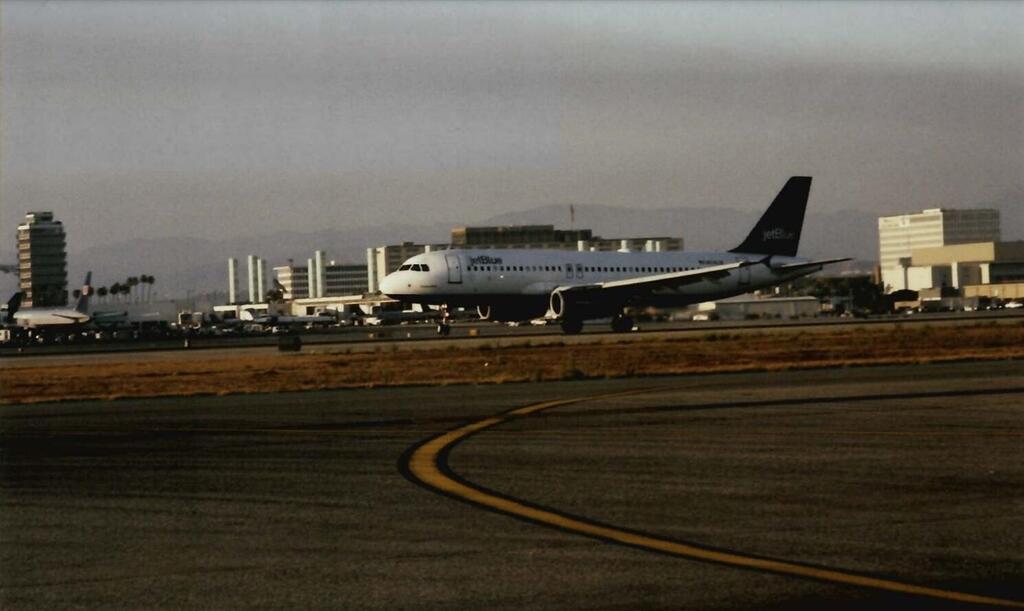
JetBlue Flight 292 during its emergency landing in Los Angeles, 2005
(Photo: FBI)
Without the crew realizing it, the aircraft had flown into a cloud of volcanic ash from Mount Galunggung.
The 747 became a giant glider and began losing altitude as the crew repeatedly attempted to restart the engines and prepared passengers for the possibility of ditching in the sea.
After several long minutes of gliding, the aircraft emerged from the ash cloud. The pilots were then able to restart the engines gradually.
Even then, the ordeal was not over. The ash had sandblasted the cockpit windows until visibility through them was severely reduced. Despite that, the crew managed to land safely in Jakarta. There were no fatalities.
The airship that came home without its crew
On the morning of August 16, 1942, the U.S. Navy airship L-8 departed Treasure Island in San Francisco Bay on a routine anti-submarine patrol. Only two crew members were aboard, Ernest Cody and Charles Adams.
Some time after takeoff, they radioed that they had spotted what appeared to be an oil slick at sea and intended to investigate. It was effectively their final meaningful communication.
Hours later, residents around Daly City were stunned to see the airship returning from the ocean alone, losing altitude before eventually crashing to the ground.
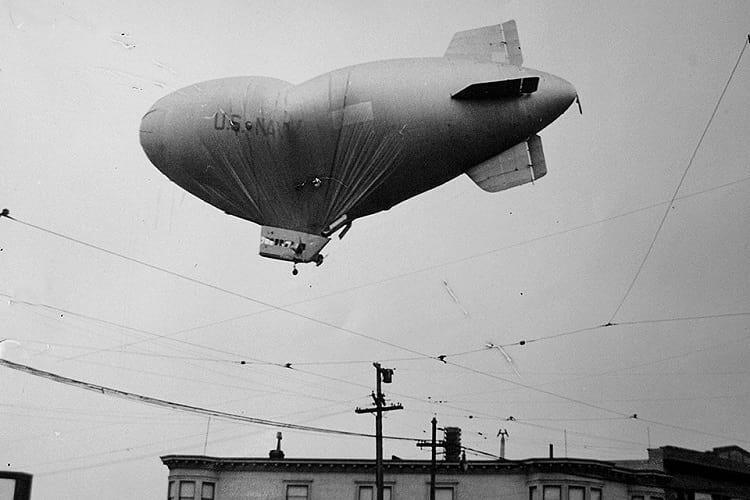
The L-8 airship after returning without its two crew members, California, 1942
(Photo: U.S. National Archives)
When Navy personnel examined the aircraft, the truly strange part of the story emerged. The crew compartment was empty, yet investigators found no obvious evidence of a struggle or disaster that could explain how both men had disappeared in flight.
They were never found.
The L-8 itself already had a notable history. Months earlier, it had delivered critical equipment to the aircraft carrier USS Hornet ahead of the Doolittle Raid on Japan. But what happened to Cody and Adams remains one of the strangest mysteries in World War II military aviation.
The teenager who embarrassed the Soviet Union
On May 28, 1987, Mathias Rust, a 19-year-old amateur West German pilot with only a few dozen hours of flying experience, took off from Helsinki in a rented Cessna 172. His real destination was not listed in his flight plan: Moscow.
At the height of the Cold War, Rust penetrated Soviet airspace and flew hundreds of miles through one of the world’s most formidable air-defense systems.
Contrary to the myth that later developed around the incident, the Cessna was not invisible. Soviet radar detected it at several points, but a chain of identification, coordination and decision-making failures allowed it to continue.
After nearly five and a half hours, Rust reached central Moscow, searched for somewhere to land near the Kremlin, brought the Cessna down on a bridge over the Moskva River and then taxied toward Red Square, near St. Basil’s Cathedral.
Stunned bystanders surrounded the aircraft before Rust was arrested.
The humiliation for the Soviet military was immense. The penetration exposed serious weaknesses in a system considered nearly impenetrable, and senior defense officials were dismissed in the aftermath.
Rust, who said he had wanted to create a "bridge" of peace between East and West, was sentenced to four years in prison.
The ground worker who stole an airliner and went stunt flying
On the evening of August 10, 2018, something that initially seemed almost impossible unfolded at Seattle-Tacoma International Airport. Richard Russell, a 28-year-old Horizon Air ground employee, entered an empty Bombardier Q400 passenger aircraft alone, started it, taxied to a runway and simply took off.
Russell did not have a pilot’s license, and investigators found no evidence that he had received formal flight training. Through his work, however, he was familiar with some aircraft systems, knew how to operate its auxiliary power unit and had experience moving planes on the ground. The FBI also found that he had watched flight-instruction videos online.
For more than an hour, Russell flew over the Puget Sound area, performed unusual maneuvers and held lengthy, at times strikingly calm, conversations with air traffic controllers who tried to persuade him to land.
At 8:46 p.m., the flight ended when the aircraft crashed on Ketron Island. Russell was the only person aboard. The FBI investigation found no accomplices, terrorist motive or broader plot. Analysis of the flight data showed that the final descent toward the ground was deliberate. The medical examiner ruled his death a suicide.
Passengers watched their own emergency landing on live TV
On September 21, 2005, JetBlue Flight 292 took off from Burbank, California, bound for New York. Shortly after departure, the pilots discovered an unusual problem. The Airbus A320’s nose landing gear had remained extended, with its two wheels turned sideways and locked at a 90-degree angle to the direction of travel.
The crew decided to divert to Los Angeles and remain in the air for hours to reduce the aircraft’s weight before attempting a landing.
But the passengers had something few people aboard an emergency flight ever experience: live television on JetBlue’s seatback screens.
News networks soon began broadcasting live footage of the aircraft circling Los Angeles. The people sitting inside it could watch anchors and aviation experts discussing, in real time, the chances that their own flight would land safely.
Passengers later said watching the coverage only heightened their anxiety. The live feed was switched off before the landing itself.
The pilot touched down first on the main landing gear and kept the nose in the air as long as possible before finally lowering the damaged gear onto the runway. Its tires shredded, sparks flew and flames appeared beneath the nose, but the aircraft came to a safe stop. Nobody was injured.
The pilot who let his son fly the plane, with catastrophic consequences
On March 23, 1994, Aeroflot Flight 593 was flying from Moscow to Hong Kong when something happened in the cockpit of the Airbus A310 that should never have happened.
During cruise, the relief captain brought his two children into the cockpit and allowed them, one at a time, to sit in the pilot’s seat and touch the controls while the aircraft was being flown by autopilot.
When his 15-year-old son applied sustained pressure to the control column, the force was sufficient to partially override the autopilot on the roll axis. The entire system did not disengage at once, meaning the developing situation was not immediately obvious to the crew.
Gradually, the aircraft began banking, with the angle becoming increasingly severe. By the time the crew realized something was wrong, they were facing a rapidly developing sequence of altitude and speed changes and a loss of control.
At one stage, the pilots almost managed to stabilize the aircraft, but the correction that followed caused a loss of speed and created another dangerous situation. There was not enough altitude left for a complete recovery. The A310 crashed in the Kemerovo region of Siberia, killing all 75 people aboard.
The investigation concluded that the central cause was the partial, unintentional disengagement of the autopilot after an unauthorized person had been allowed to occupy the pilot’s position.
The airliner that became a glider
On July 23, 1983, Air Canada Flight 143 was flying from Montreal to Edmonton via Ottawa. The Boeing 767 was still relatively new to the airline’s fleet, and Air Canada was in the process of switching from imperial measurements to the metric system.
The aircraft’s fuel quantity indication system was not functioning properly, meaning crews had to manually calculate how much fuel was in the tanks and how much needed to be added.
That was where the critical error occurred. The calculation used a fuel-density figure measured in pounds per liter instead of kilograms per liter. As a result, the crew believed the aircraft was carrying far more fuel than it actually had. At 41,000 feet over Canada, one engine shut down. Soon afterward, the second engine failed as well.
Suddenly, a wide-body passenger jet weighing tens of tons had become a glider. Captain Bob Pearson and First Officer Maurice Quintal realized they would not reach their planned airport and instead chose a former military base at Gimli.
There was another complication. One of the old runways had been converted into a motor-racing track, and people were on it that day. Pearson managed to land the 767 without engine power. The nose landing gear collapsed as the aircraft slowed, but nobody was killed.
The plane was repaired and returned to service, earning a nickname that has followed it ever since: the "Gimli Glider."