

Four years ago, Yael Yechieli looked at the dwindling number of women serving in Israel’s Knesset, government ministries and senior public-sector positions and decided that being frustrated by the numbers was no longer enough.
She wanted to do something about them. Yechieli founded 50:50, an initiative promoting equal representation for women in Israel’s centers of political and public decision-making.
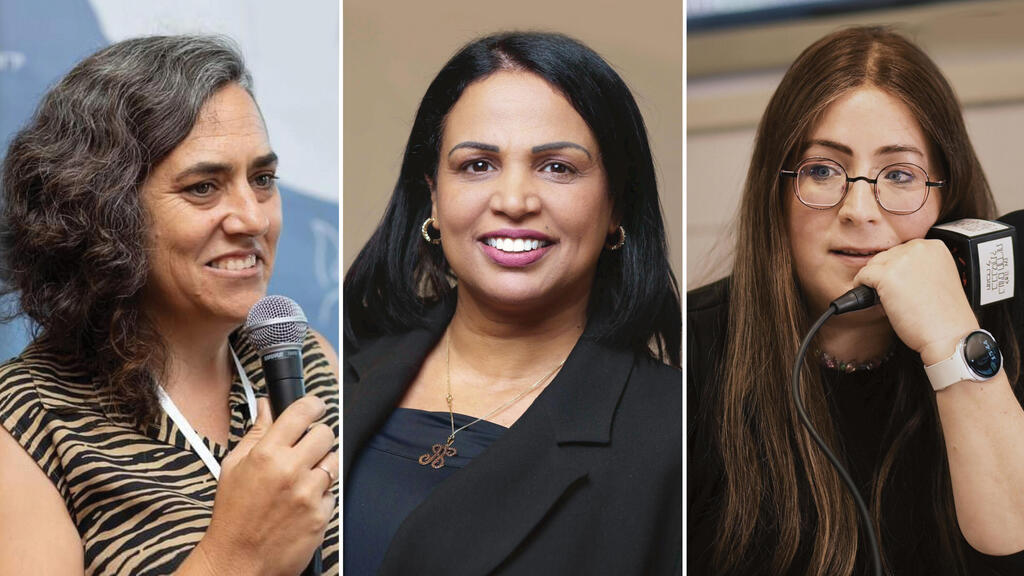
From left: Yael Yechieli, Hanan Alsana and Fany Sukenik
(Photo: Rivki Tauber, Avigail Piperno-Beer and Tal Shahar)
Its premise is simple: women should make up half of the people in the rooms where decisions affecting the country are made.
That principle now shapes the group’s activity across a range of arenas. It presses conference organizers to invite equal numbers of women and men, arguing that there is no shortage of qualified female speakers. It encourages women to put themselves forward for major honors, including the Israel Prize.
Most importantly now, with Israel 2026 elections on the agenda, the initiative is pushing political parties to adopt gender-balanced candidate lists.
Yechieli is under no illusion about the scale of the challenge. She sees the figures, hears the resistance and knows that changing entrenched political structures is a long process.
But for her, the case for women’s representation does not depend on ideology, ethnic background or religious identity. Women, she argues, need to be present wherever decisions are made because those decisions directly shape their lives.
Since its founding, 50:50 has expanded to include women from very different sectors of Israeli society, among them Hanan Alsana, a Bedouin human rights lawyer, and Fainy Sukenik, a Haredi social activist.
Each works within her own community, encouraging women to enter public life, raising the issue in the media and pressing politicians to move toward gender-balanced lists.
They know change will not happen by itself. They also insist that the familiar argument that there are simply “not enough qualified women” no longer withstands scrutiny.
Yael Yechieli calls on Israelis to imagine a different reality
Tell us briefly about yourself.
“I’m 49, a Jerusalemite, a social activist, with a bachelor’s degree in philosophy and sociology and a master’s degree in Jewish studies. I’m married, a mother of two, live in Jerusalem and love the city.”
What is the main obstacle you encounter when trying to convince people that women need equal representation?
“The perception that the current situation is natural and normal. Many people think the absence of women from politics is the result of free choice rather than political, cultural and social structures.
“It is difficult to persuade people to imagine a different political reality in which women make up 50% of every decision-making body.”
“The second obstacle is the tendency to treat women’s representation as a “women’s issue” rather than a broader democratic concern. In fact, it is a question that affects the quality of democracy and our ability to make better decisions.”
A discouraging moment in your work recently?
“When I see what is happening in right-wing and Arab political parties. Women within those parties are working hard to increase representation to 50%, yet the results remain far from parity. It’s terrible because I know how much effort has gone into trying to change it.
“My heart breaks when I see what my Arab and Haredi partners have to deal with. The amount of hostility and contempt they face is enormous. I truly admire them for continuing.”
And a happy moment?
“Hearing party leaders gradually move toward accepting the principle of equal representation and seeing more women and men join the campaign.”
What should every woman reading this do?
“Get involved in politics. It is not a dirty word. I understand why people are put off by it, but in the end these are decisions being made about all of our lives and our children’s lives. We need more women in politics.”
One interesting thing people should know about you?
“The woman promoting the 50:50 initiative is, ironically, the mother of two boys.”
Fany Sukenik calls on women to join forces
Tell us briefly about yourself.
“I’m 44, married, a mother of six and live in Jerusalem. I’m a Haredi social entrepreneur and activist.
“I founded Ba’asher Telchi, an organization that supports religious and Haredi women going through separation and divorce, and I have worked extensively on preventing domestic violence and promoting social change.
“More recently, I helped lead an unofficial Haredi women’s primary and came in second behind Israeli media personality Sivan Rahav-Meir.”
What is the main obstacle you encounter when trying to convince people that women need equal representation?
“That the absence of women no longer looks strange to people. When I walk into a room with 20 men and no women, I still see it. There are men and women who no longer see it at all. They start calling it ‘tradition.’
“In Haredi society, there is also a personal price. Women know what can happen when you stand out too much, speak too loudly or enter a place that was not previously marked as a ‘women’s place.’ Sometimes the price is social, sometimes familial and sometimes professional.
“We need to reach a point where a woman does not have to be a hero simply to sit at the decision-making table.”
A discouraging moment in your work recently?
“Hearing exactly the same arguments in 2026 that I heard years ago: ‘Haredi women don’t want it.’ ‘They’re not interested.’ ‘There aren’t enough qualified women.’
“Sometimes it is almost surreal. You bring women, names, résumés and records of public service, and someone still explains to you that somehow none of it really exists.”
And a happy moment?
“The Haredi women’s primary. Of course I was pleased to finish second, but what mattered more was seeing the full list. Dozens of talented, experienced Haredi women, very different from one another and with different worldviews.”
“For years people have asked us, ‘Where are these women? Who are they?’ Well, here they are. Now it is much harder to say, ‘There are no women.’ Now you have to explain why, despite the fact that they are here, there is still no place for them.”
What should every woman reading this do?
“Understand that this is not a struggle belonging to ‘other women.’ The lack of representation of Haredi women is not our private problem. The exclusion of women never stays confined to one sector. We do not have to agree on everything in order to fight together for the right of all of us to be in the room where decisions are made.”
One interesting thing people should know about you?
“I volunteer as an emergency medical technician with Magen David Adom, and I do most of my ambulance shifts at night. There too, I see how meaningful the presence of a woman on the team can be.
“Sometimes when you are treating a woman or a teenage girl at a very vulnerable moment, simply having a woman on the team changes something.”
Hanan Alsana refuses to accept excuses
Tell us briefly about yourself.
“I’m 47, married and a mother of four. I live in Be'er Sheva. I’m a Bedouin feminist, human rights lawyer, social activist and peace activist, and co-executive director of Itach Ma’aki, an Israeli organization of women lawyers working for social justice.”
What is the main obstacle you encounter when trying to convince people that women need equal representation?
“People often find it convenient to say the obstacle is Arab ‘culture,’ or that women simply do not want politics.
“I do not accept that explanation.
“Responsibility does not rest only with women and not only with society.
“It also rests with the state, political parties, institutions and power structures that were built and are still largely run according to male rules.
“The ballot box is only the final stop on a much longer journey.
“Long before Election Day, women receive the message that public and political space does not really belong to them.”
A discouraging moment in your work recently?
“I don’t like the word ‘despair’. There have been many points in my life when people told me, ‘It’s impossible. You can’t. It won’t happen.’”
“I learned that ‘impossible’ is sometimes simply a description of reality before a woman decides to change it.”
And a happy moment?
“When a woman tells me, ‘I want to run,’ ‘I want to have influence’ or ‘I never thought this place belonged to me too.’”
What should every woman reading this do?
“Vote, of course, but do not stop your involvement on Election Day. Ask the party you support: Where are the women? What positions are they in? Who is sitting around the negotiating table?
“And, of course, support other women and stand beside them when they enter public life.”
One interesting thing people should know about you?
“I’m the youngest of 11 siblings. You could say that was my first school of negotiation. When you grow up in such a large family, you learn pretty quickly how to make sure your voice is heard.
“And perhaps that explains something about the path I have taken today: I never believed you should wait for someone else to make room for you.”